HISTORY: Closed and Merged Schools in Singapore (PART 3)

WARNING: This post requires high amount of bandwidth! Wi-Fi connection advised.

Hello everyone!

First of all, wow. I can’t thank all of you enough for your overwhelming support to my first two HISTORY posts. I truly appreciate every word of encouragement from the bottom of my heart, not forgetting all the valuable contribution I have received the past few weeks. They have been really helpful in the completion of this post and I hope the final product will be equally enlightening to you. With this instalment, I would have covered most of the remaining defunct schools. Of course, you can always drop me a message if you do not see your school here (but is it really gone? Could it have taken on a new name?)

Also, my sincere apologies for taking such a long time to get this post up! I understand the anxiety of not seeing your schools in the post so I was trying my best to complete this post during my recess week but poor time management on top of having to revise for my mid-terms destined to make this plan fail.

Your school is definitely NOT forgotten! Because they will be in this post 🙂

Check out PART 1, PART 2 and PART 4 if you haven’t!

Here is the continued list of closed and merged schools in Singapore:

* * *

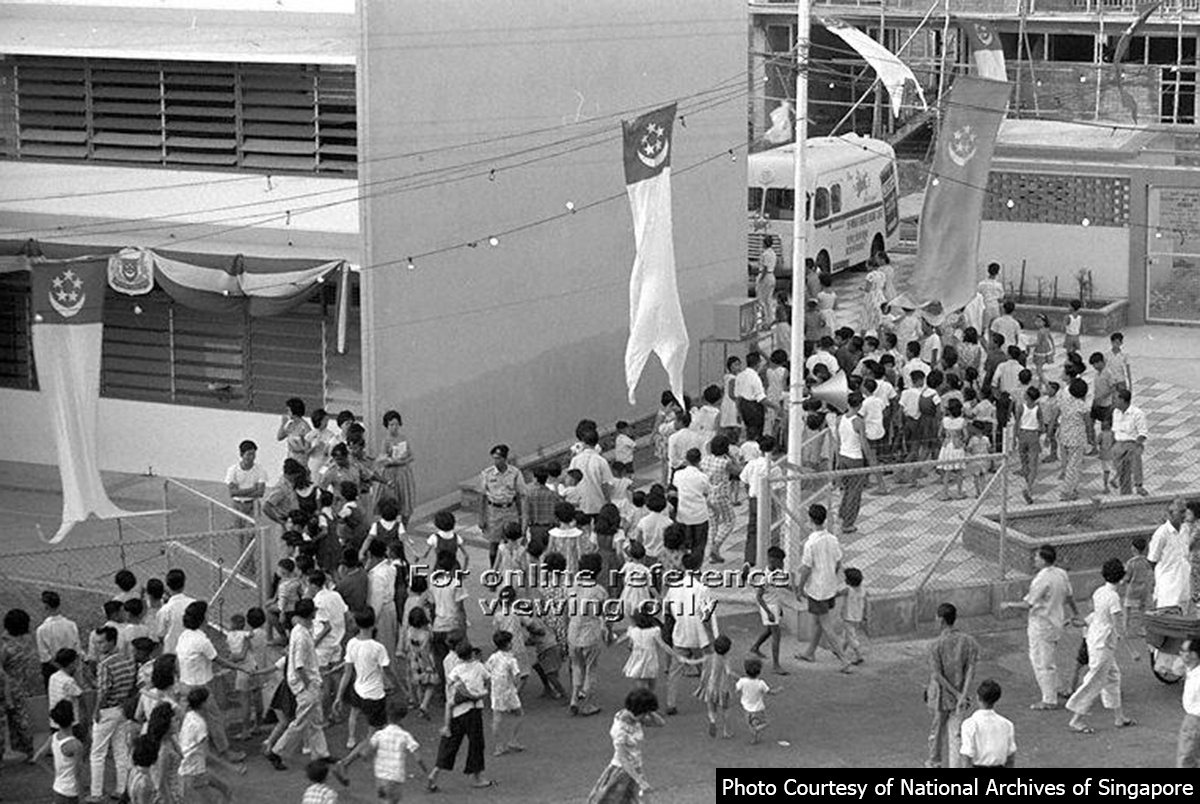
Peixin Primary School (Yishun)

Merged into Yishun Primary School in 2009

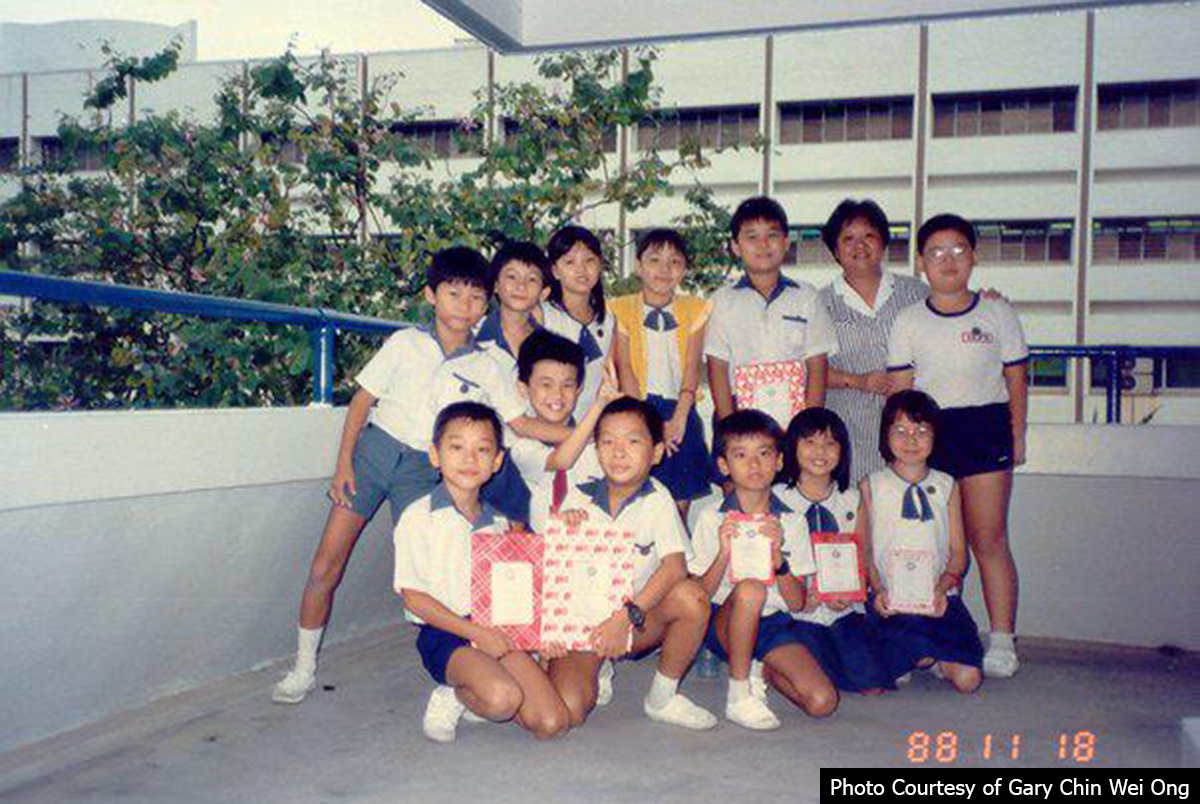
Established in 1985 in one of the then-Housing Board new towns, its name “Peixin” in Chinese means “to nurture the young”. Lessons were conducted at Yishun Primary before its building was ready for occupation.

Youth Science Festival 1999

The new merged school now functions at the former Peixin Primary premise at Yishun Ring Road which underwent PRIME from October 2006 to December 2008, just a month shy of the merger.

Source: [1] [2] [3]


Anthony Road Girls’ School (Newton)

Closed in 1983

An English school so popular that parents often had to take their children to other schools, it was built most likely in 1950 opposite what we now know as Newton Hawker Centre. Students wore green pinafore and white blouse and there were only female teachers in that school (since it was an all-girls school). Most girls from Cairnhill Primary were transferred to Anthony Road Girls’ when the former closed. The school compound was also used by St. Margaret’s Primary School (Singapore’s oldest girls’ school) when its building was undergoing a revamp from end 1983 to 1986.

Anthony Road Girls’ School’s play field in 1953

Anthony Road Girls’ School closed somewhere between September to November 1983 – not even completing a year – and it was highly possible that school was absorbed by St Margaret’s Primary. According to Kimmy Lim, an ex-student of St. Margaret’s, she recalled shifting to the Anthony Road site temporarily in 1984 when she was in Primary 2. In that year, she noticed the number of classes in her cohort expanded from 3 to 5, and so did classes in other grades as well. Her kindergarten mates who studied in Anthony Road Girls’ School had now become her primary schoolmates.

After St Margaret’s vacated the area, Chao Yang Special School for the educationally subnormal (now APSN) took over the site in 1986.

Source: [1] [2] [3] [4] [5] [6]


Whitley Primary School (Novena)
Nam Ann School (Toa Payoh)

Merged in 1976 to form MacRitchie Primary School

Located at the now infamous Whitley Detention Centre (where Mas Selamat escaped from), Whitley Primary was established in the early 1950s and was also known as Whitley Road Primary School. Nam Ann, on the other hand, was probably established way before 1949 (as a fund raising activity was done for the school in that year). It was located at Ah Hood Road. Both schools were closed in 1975.

No further information can be found and both do not have a Facebook group. If you’re an ex-student of either school, please feel free to provide more details!

The history of the merged school (MacRitchie Primary) can be found in the second instalment.

Source: [1] [2] [3] [4]


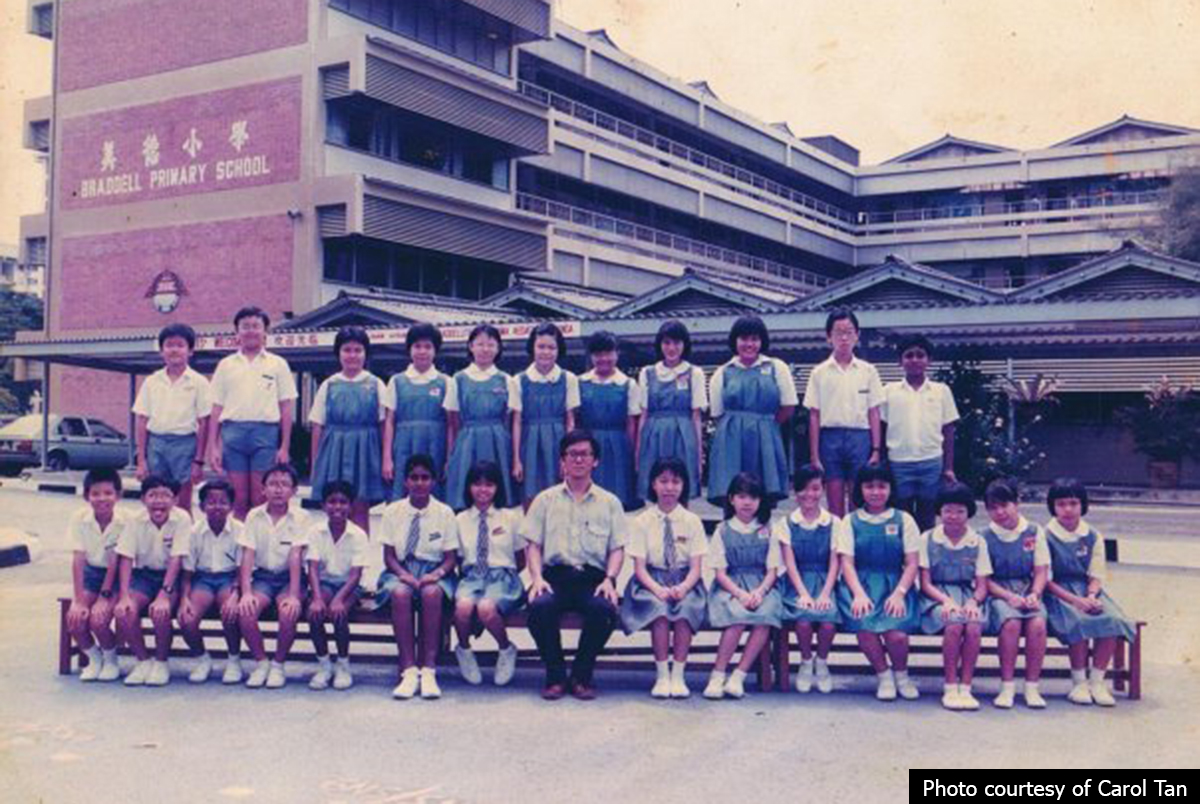
Braddell Rise School (Thomson)

Closed in 1986/1987 (verification needed)

Beside Mount Alvenia Hospital stood Braddell Rise School established in the early 1950s (most likely in 1951). During the existence of the school, there would be a pineapple drinks seller stationed outside the school gate. This friendly seller sold pineapple drinks at 5 cents each and would allow students to extra helping of the water without additional charges.

braddellrisesch_almostcomplete1950_NAS

The building of Braddell Rise School in 1950.. Almost complete!

braddellrisesch_sgfilmhunter

Exact year of closure is unknown but it could be 1986 or 1987 according to a 1987 tender notice.

braddellrisesch_PE-1956_NAS

PE session in 1956

braddellrisesch_ladyblack-wife-of-sg-governor1956_NAS

With Lady Black, wife of Singapore’s governor in 1956

Since its closure, the school premises have been utilised for the provision of nursing services. They were renovated for temporary occupation of the Tampines Home a few years later. The current Assissi Hospice was built on what was formerly Braddell Rise’s sports field. In 2013, it was reported that the remaining blocks of the school would be torn down to give way to the construction of a new six-storey Assissi Hospice.

Read more about Braddell Rise School here.

Source: [1] [2]


Lee Kuo Chuan School (Thomson)
Rayman School (Whampoa/Novena)
Thomson Primary School (Toa Payoh)

Merged in 1985 to form Lee Kuo Chuan Primary School
Absorbed Balestier Hill Primary School* in 1989
Closed in 1997

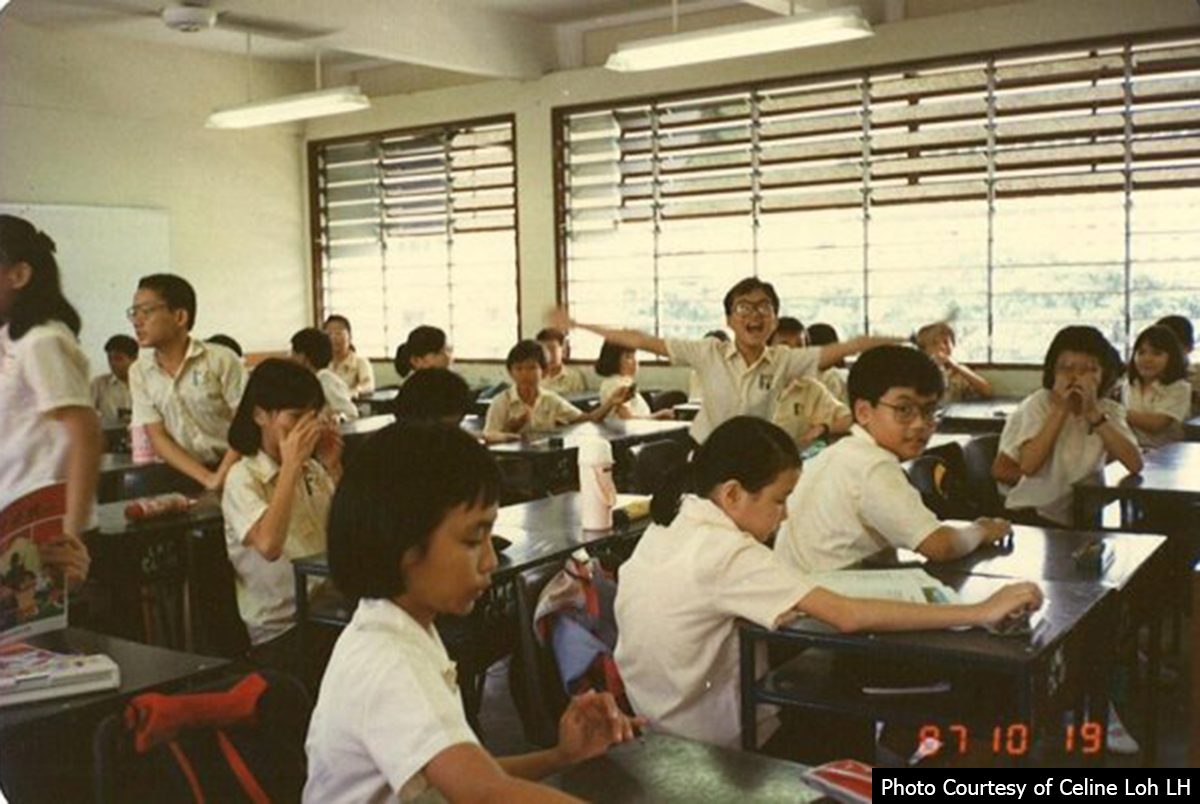
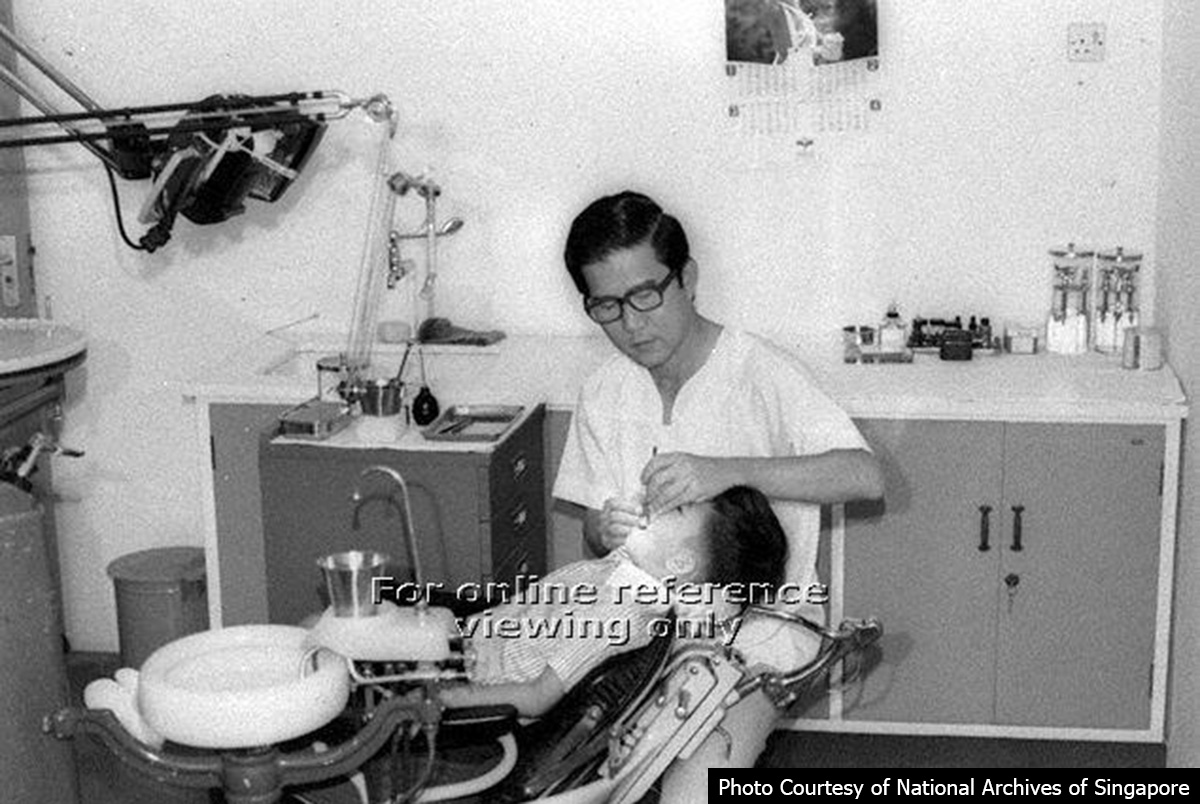
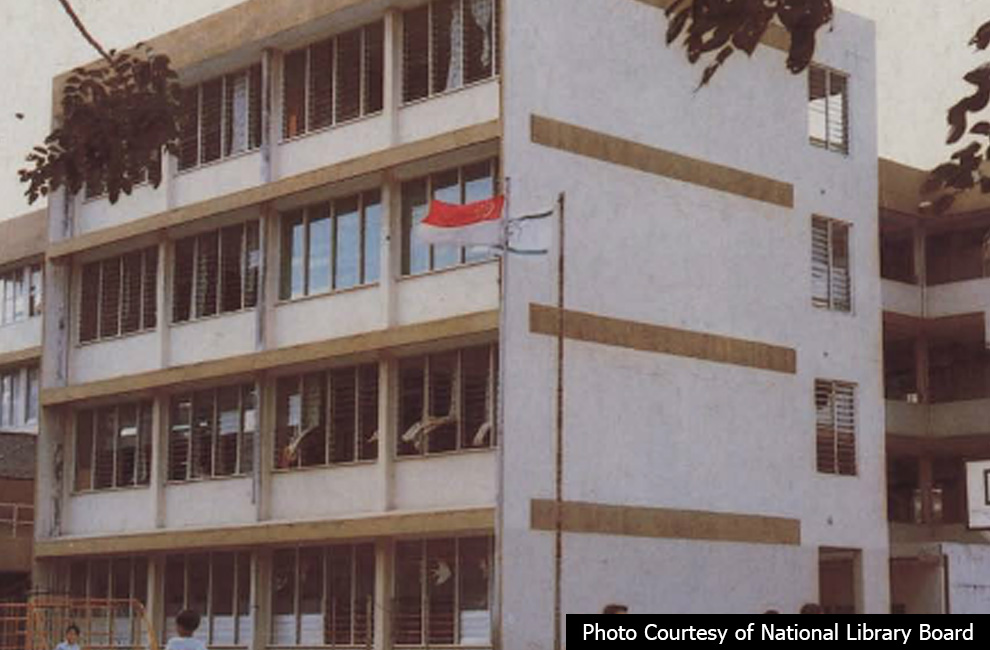
Named after Dato Lee Kong Chian’s father, Lee Kuo Chuan School was founded in 1950 on a three-acres land donated by the late Dato Lee. Often mistaken as an aided Chinese-medium school, it was actually a government English co-ed primary school well-known for its extracurricular activities such as swimming, volleyball and basketball. Also not forgetting the tooth-brushing programme for its students which was observed by foreign visitors from as far as the USA.
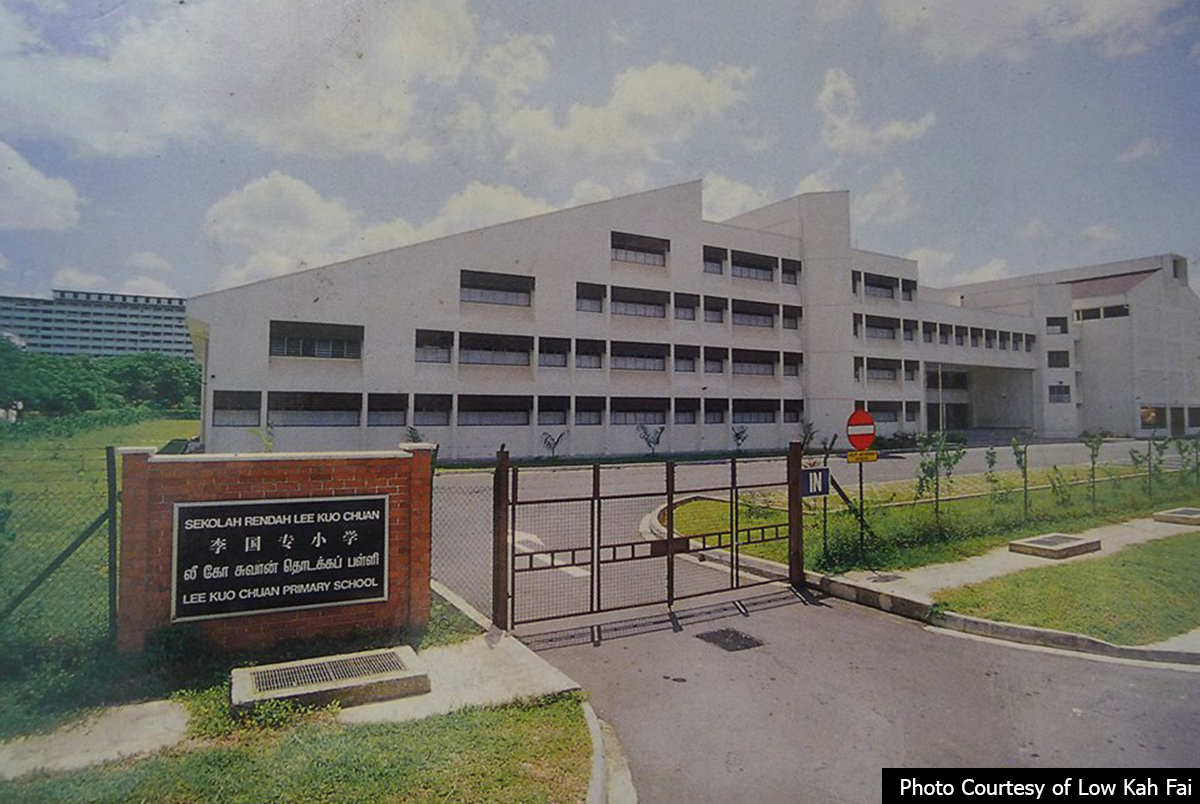
leekuochuanpri_low-kah-fai

Lee Kuo Chuan Primary School

leekuochuanpri_class6aaof1987_celine-loh-LH

Class P6A of 1987

leekuochuanpri_library_low-kah-fai

Lee Kuo Chuan Primary School’s library

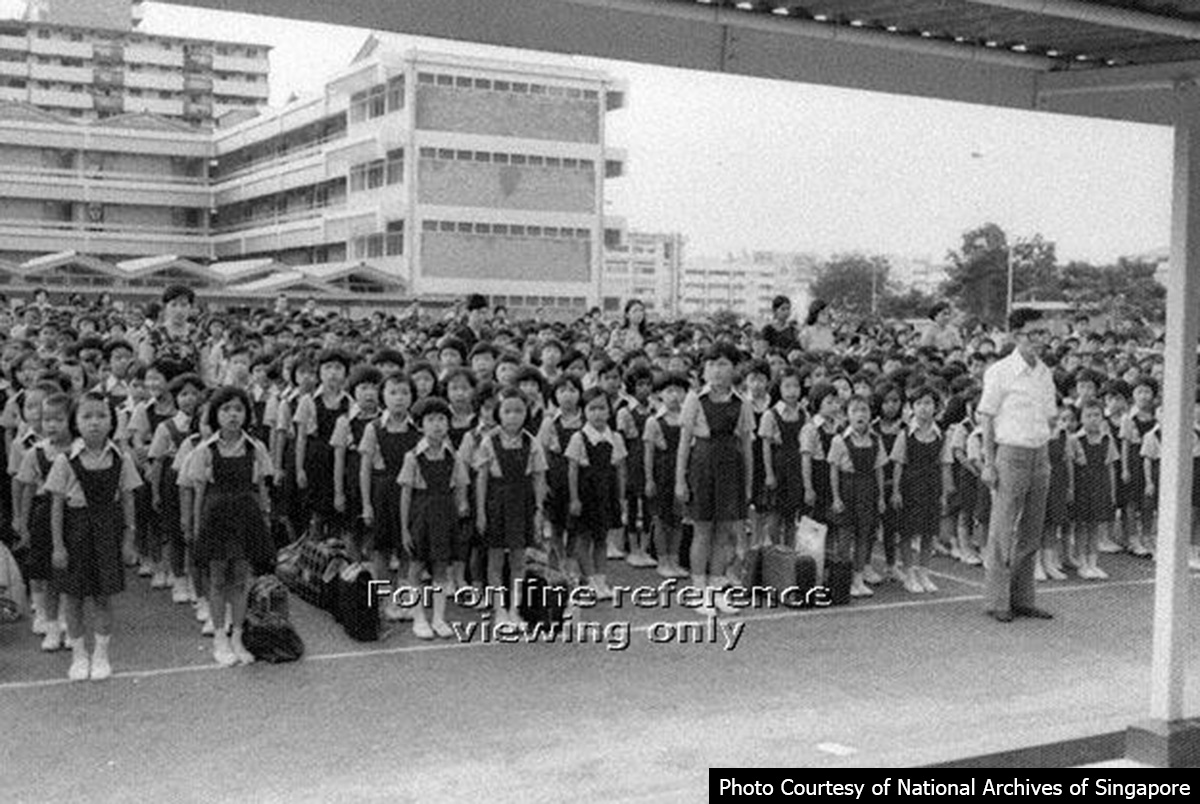
The school was also one of the settings for SBC’s (now known as Mediacorp) TV drama 雾锁南洋 II (The Awakening II) in 1984. The production crew apparently came during one of the morning assemblies and students on the assembly ground were instructed to clap for a scene and they had to do so several times until the director was satisfied! Haha. The premises were later leased out to Lee Ah Mooi Old Age Home, which continues to use the premises at 1 Thomson Lane today.
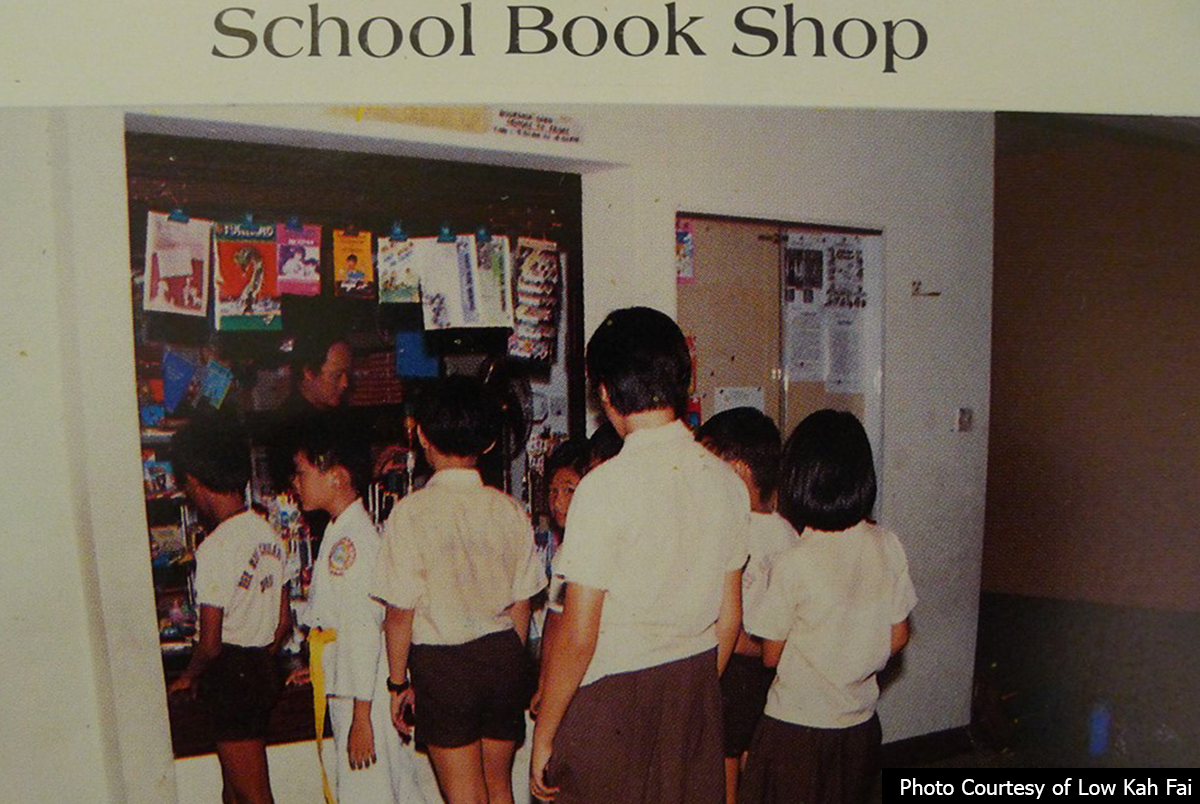
leekuochuanpri_bookshop_low-kah-fai

Lee Kuo Chuan Primary’s book shop

leekuochuansch_p2Aof1958_chong-meng

Class P2A of 1958

leekuochuanpri_theawakeningII_ben-looi

The scene from The Awakening II

Rayman School was established in 1954 in Rayman Estate. Following its closure in 1984, the school was converted into a centre for disabled people (VAPC). Rayman Estate today is known as Whampoa Estate. (no pictures for this school, sorry!)

Thomson Primary, known as Toa Payoh Integrated Primary before 1970, started some time between 1954-55 to serve the growing population of Toa Payoh. It was situated along Thomson Road opposite to the former Police Academy and was recognised for its Choir and Softball. Then it was closed due to dwindling enrolment and the deteriorating state of the building (leaking roof etc.). The school is now occupied by SJI International School.

thomsonpri_pri1of1977_iskandaria-masduki-harvey

Thomson Primary School, class P1 of 1977

thomsonpri_sportsday70s_suzy-tan-egan_loy-chee-wan

Thomson Primary School, sports day in the 70s

Four years after the first merger, the school absorbed Balestier Hill Primary in 1989. This Balestier Hill Primary is NOT to be confused with the similarly-named school formed by the merger of Swiss Cottage and Moulmein Primary in 2002. The original Balestier Hill Primary was in fact an amalgamated school of Balestier Hill East (later Balester Hill Primary) and West schools which opened and merged in 1965 and 1986 respectively. In other words, there are two different Balestier Hill Primary schools.

Over 2000 students from its parent schools moved to the new four-storey building built along Ah Hood Road. Lee Kuo Chuan Primary was the 23rd school to be built in Toa Payoh and over the years, it had been popular with foreign students from Indonesia, Taiwan and Malaysia.

The premises today are leased to East Asia Institute of Management.

Source: [1] [2] [3] [4] [5] [6] [7] [8] [9] [10] [11] [12] [13]


Stamford Girls’ School
Waterloo School (Bugis)

Merged in 1984 to form Stamford Primary School

Stamford Girls’ was founded in 1951 at Waterloo Street. From 1955 to 1984, it began to function side by side with Waterloo Primary (year of establishment unknown, but it was definitely in the early 50s). The school underwent several name changes, from the original Stamford Girls’ School to Stamford Girls’ Afternoon School (when Raffles Girls’ Afternoon, its affiliated school, moved to the Stamford Girls’ building) and ultimately in 1955, changed to Waterloo Girls’ School.

stamfordgirlssch_1982_NLB

Stamford Girls’ School in 1982

stamfordgirls-waterloopri-NLB

Before the merger, Stamford Girls’ and Waterloo Primary shared a school field, and very often students from both sides would quarrel over the use of the field.
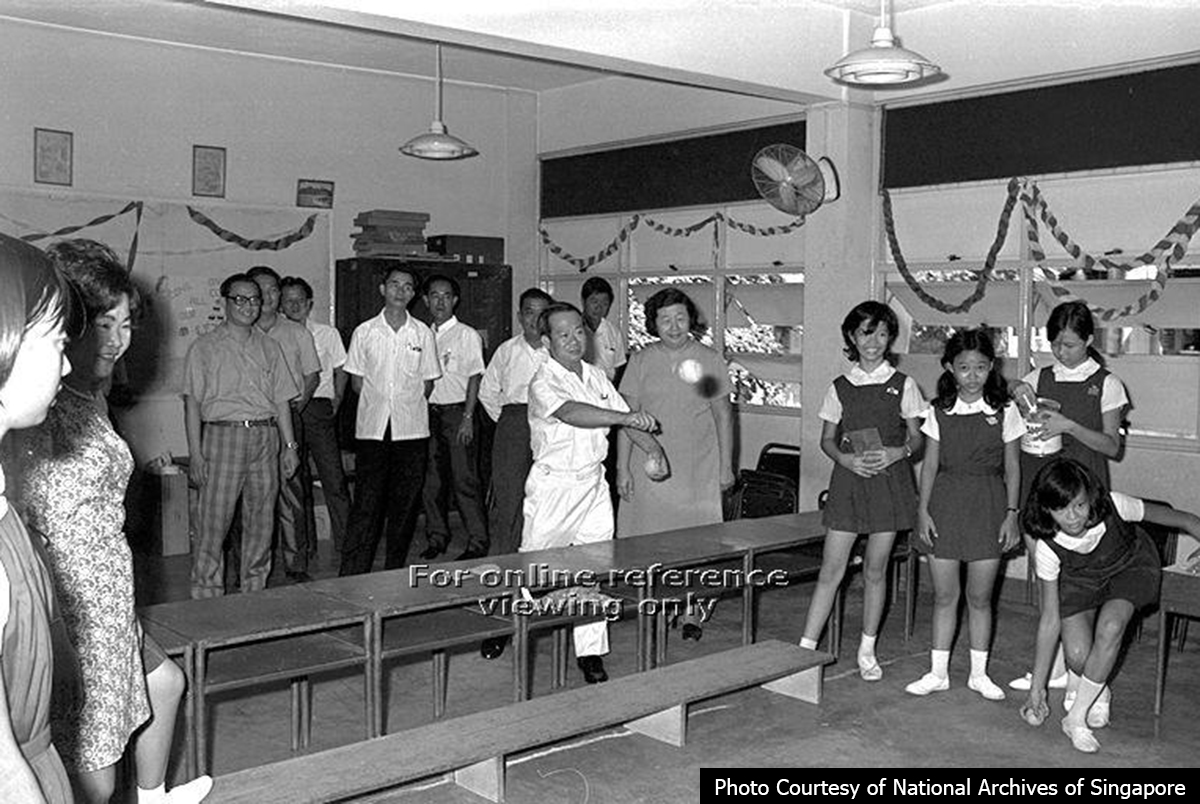
waterloopri_foodandfunfair-1972-NAS

Waterloo Primary’s Food and Fun Fair in 1972

Two years after the merger, the new co-ed school moved to her present location at Victoria Lane. The amalgamated school used Waterloo Primary’s school crest but was named after Stamford Girls’. Fair and square. The previous Stamford Girls’ building is now known as Stamford Arts Centre.

Source: [1] [2] [3] [4] [5] [6]


Selegie Primary School

Merged into Stamford Primary School in 1987

Selegie Primary was known to be the first high-rise school in Singapore. The 1o-storey high building was once the tallest school in Southeast Asia until 12-storey Pearl’s Hill School (covered in PART 1) took over the title in 1971. The building still stands along Selegie Road today but as student hostels and a private institution (was once occupied by NAFA). Formerly known as Selegie Integrated School (integrated = co-ed), it was officially opened in 1963 by Dr Toh Chin Chye. It had two canteens on separate floors and two large cargo-sized lifts to cater to the large number of students. One lift could transport an entire class of 40 students at once to their classroom every morning AND that’s not all. They even had a liftman (Mr Ahmad) oh my God? That’s really one-of-a-kind. Primary schoolers today don’t even have the luxury of taking elevators to their classrooms!

Note: A different account (thanks Hong Wee!) says that the lift could only transport half the class each time, while the rest had to use the stairs. Still a very remarkable feature to have in my opinion.

selegiepri_1962_NAS

Yup, 10 levels. This was in 1962.

selegiepri_1963_NAS

1963

One well-known alumnus of Selegie School is drag queen Kumar 🙂 Ex-students of Selegie Primary can reconnect through the school’s Facebook page here.

selegiepri_2000s_NAS

Today: the colourful building was once Selegie Primary!

selegiepri_Hong-Contented

Anyway, I saw the Stamford Primary personally during my stay at nearby Hotel Clover last month and on the surface, the blue building definitely looked like it needed to be refurbished (last major upgrading was in 2003, more than 1o years ago). It is also situated in a very unusual location if you ask me and I really wonder where most of its student population come from. Here’s hoping that the school will last for many years to come!

Source: [1] [2] [3] [4] [5]


Telok Ayer Primary School (Raffles Place)
Peck Seah Primary School (Tanjong Pagar)

Merged into Yeung Ching School (now Yangzheng Primary School) in 1985

Established in 1963 as Telok Ayer Integrated School, the four-storey building was the 34th school built by the PAP government. As the city became more developed, Telok Ayer Primary began to suffer from serious noise pollution in the bustling Cecil Street. It finally closed in 1984 due to dwindling enrolment and the building was converted to Telok Ayer Performing Arts Centre (closed in 2013) which saw the demolishment of the school hall.

telokayerpri_brushingteethexercise-1969_NAS

Telok Ayer Primary’s teeth brushing exercise in 1969

Peck Seah Primary was a co-ed seven-storey school formed in 1967 which used English and Tamil as the media of instruction. It was named after Peck Seah Street, which was named in honour of Seah Peck Seah, son of Seah Eu Chin (founder of Ngee Ann Kongsi) and brother of Seah Liang Seah (go Seah clan!! Haha). In 1984, the school was supposedly, as mentioned on a newspaper article, closed to make way for “Maxwell MRT station” but as everyone knows, it did not exist before the Thomson-East Coast Line was proposed in 2008 so I highly believe that it meant Tanjong Pagar MRT station instead. True enough, it was not torn down until several developers claimed the site in 2013 for a mixed development project comprising of commercial and residential buildings.
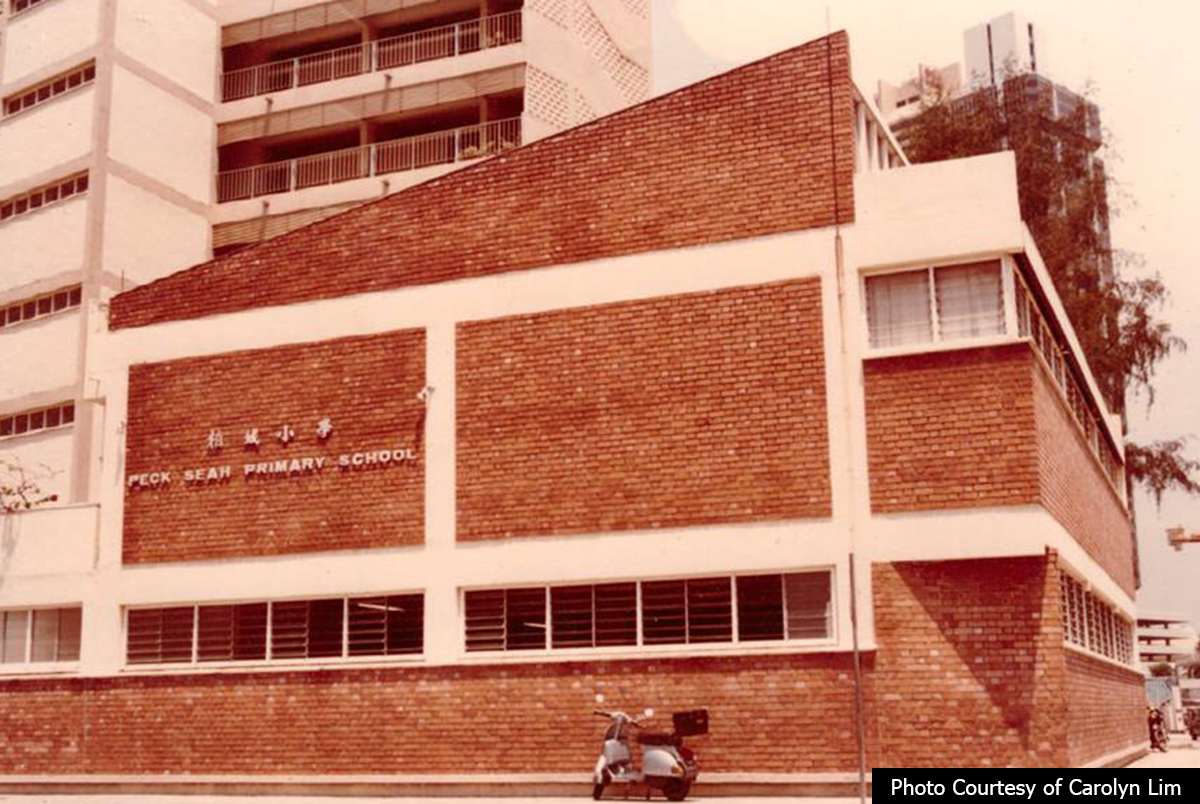
peckseahpri2_carolyn-lim

Peck Seah Primay School

peckseahpri_carolyn-lim

Peck Seah Primay School

peckseahpri3_carolyn-lim

Peck Seah Primay School

peckseahpri_michael-phong

Students of Peck Seah Primay School

Mr Png Eng Huat (Minister of Parliament of Hougang Constituency) from the Workers’ Party is an ex-student of Peck Seah Primary.

Yangzheng Primary is presently at Serangoon Avenue 3.

Source: [1] [2] [3] [4] [5] [6]


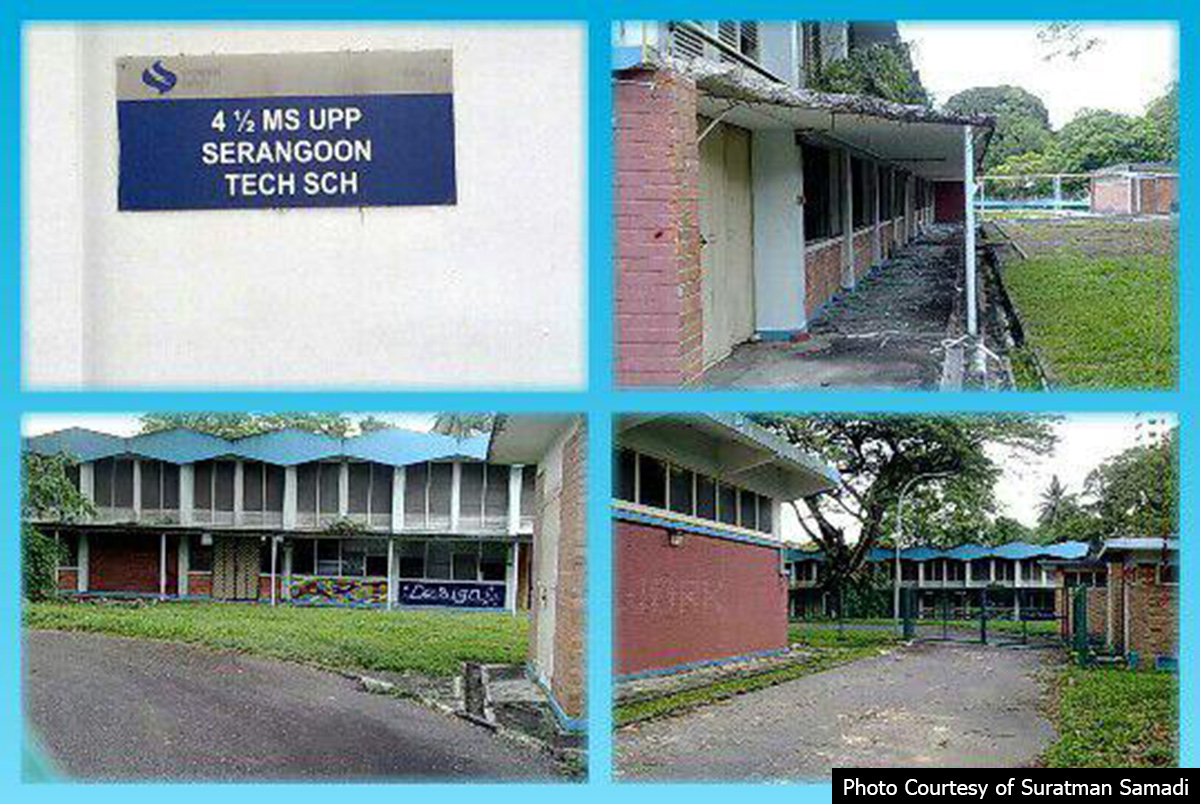
Serangoon Garden Technical School (Serangoon)

Merged into Serangoon Garden Secondary School in 2003

Established in 1964 as Serangoon Garden Integrated Secondary Technical School, it was the third technical school to be established in Singapore and was officially opened by then-Prime Minister Lee Kuan Yew. It started off with 26 classes and an enrolment of 1002 students from Chinese and English streams. As the stress was then on Technical education, the school had to cater for students whose aptitude was for Technical subjects. With the introduction of Centralised Scheme in 1973, students from other schools such as Sin Min High School, Mount Vernon Secondary, Parry Secondary, Hwi Yoh Secondary, St Joseph’s Convent, Hai Sing Girls’ High and Yio Chu Kang Secondary went to Serangoon Garden Technical for Technical subjects.

serangoongardentech_xing-chuteng

serangoongardentech_dave-limcs

The school merged with Serangoon Garden Secondary due to falling enrolment and this made the 38-year-old institution the last school to lose its technical name. Today, the building is The Lifestyle Hub @ Burghley and partially a Foreign Workers quarters.

Local actor Chen Tianwen completed his “O” levels at Serangoon Garden Technical. Fish & Co Ricky Chew was also educated there.

Source: [1] [2] [3]


Aroozoo School (Hougang)

Merged into Charlton School in 1991

More than 50 years ago in 1963, there used to be an Aroozoo Integrated School (what it was known as) located off Upper Serangoon Road at Aroozoo Avenue.

aroozoosch_class6Aof1971_jack-tan

Class P6A of 1971

Aroozoo Primary’s principal Mr A.V. Miles was part of a popular three-man group in the late 1950s and early 1960s called The Bambinos, long before he became an educator. He was a singer back then but the change of his profession didn’t stop him from singing. Ex-students had fond memories of Mr Miles playing the piano to the tune of “My Bonnie Lies over the Ocean” during morning assembly. They would then sing along with him.

The premises are now taken over by DPS International School.

Source: [1] [2]


Kwong Avenue School (MacPherson)

Merged with Sennett Estate Primary in 1979 (verification needed) to form Sennett Primary School

Kwong Avenue School started in 1953/1954 at 10 Kwong Avenue Road. It was a school well-known for its achievement in sports, especially soccer.

kwongavenuesch_fb

Mr Ang Hin Kee, a Member of Parliament from the PAP (Ang Mo Kio GRC) and veteran actress Aileen Tan were ex-students.

Other than the above, no other information can be found.

Students donned blue uniform and this attire was later adopted by Sennett Primary school when the former merged with neighbour school Sennette Estate Primary.

The site today sits SIT International Hostel.

Source: [1] [2] [3] [4]


Cedar Boys’ Primary School
Cedar Girls’ Primary School (Woodleigh)

Merged in 1985 to form Cedar Primary School

Both Cedar Boys’ and Girls’ were incepted in 1957 at Cedar Avenue. Like many other single-sex schools bearing similar names in that era, they stood next to each other (later named blocks A and B), separated by a small house where students dreaded going. Yes, I’m talking about the dentist.

cedarpri_oldbuilding_alvin-sitoh

Old Cedar Primary School building

There was also a blue house where all sports equipment were kept. Also not forgetting the Banyan tree in front of the building where students used to play “Police Catch Thief”.

cedarboyspri_pr6A-of1981_vincent-yap

Cedar Boys’ Primary, class P6A of 1981

Morning assemblies at Cedar Girls’ Primary were never complete with a mass exercise led by gymnastics teacher Ms Fernandez. Its gymnastics team also brought glory to the school by winning many gold medals. The legacy continued even after the school became co-ed.

cedargirlspri_p2Aof1965_adelinelim-sgmemory

Cedar Girls’ Primary, class P2A of 1965
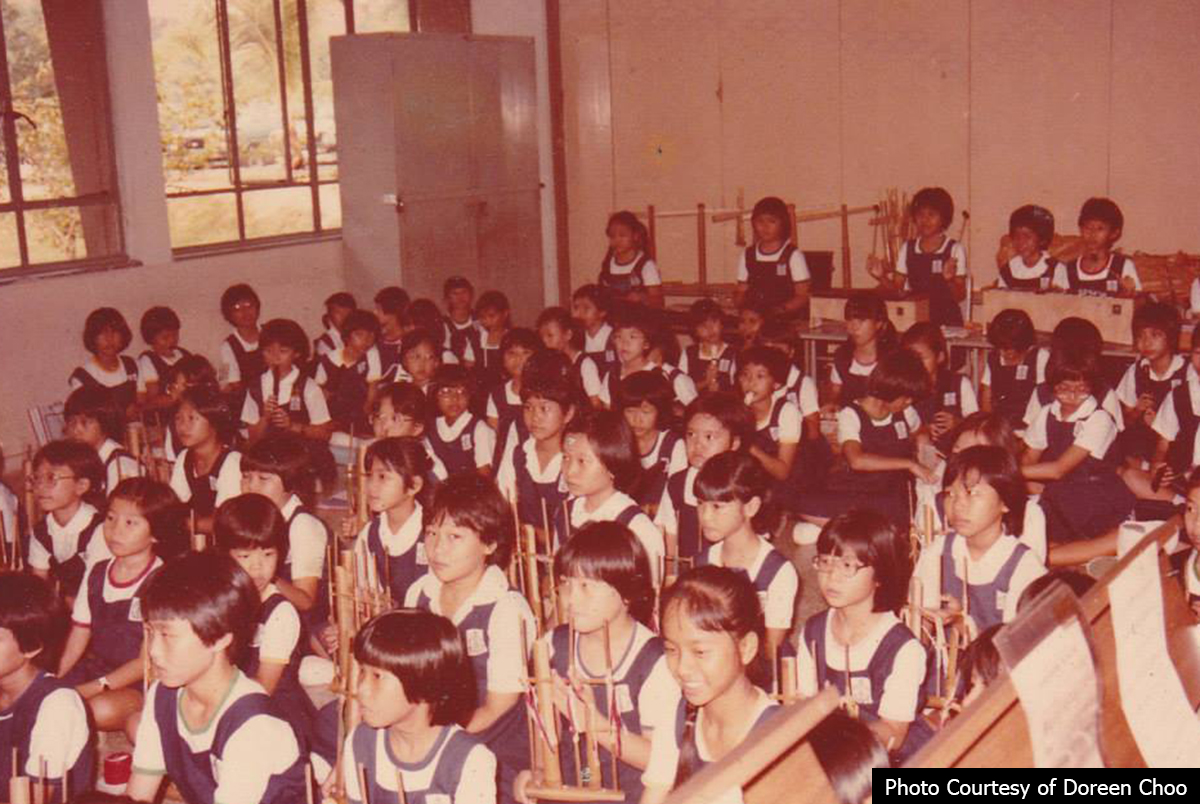
cedargirlspri_angklung-class_doreen-choo

Cedar Girls’ Primary, Angklung class

Both schools held their annual sports meet at Cedar Girls’ Secondary. If I’m not wrong, they utilised the well-known 400m running track behind Cedar Girls’ Secondary, which unfortunately will make way for the new Bidadari estate in 2018.

Source: [1] [2] [3]


Rangoon Road Secondary School (Farrer Park)

Merged into Balestier Hill Secondary School in 2001

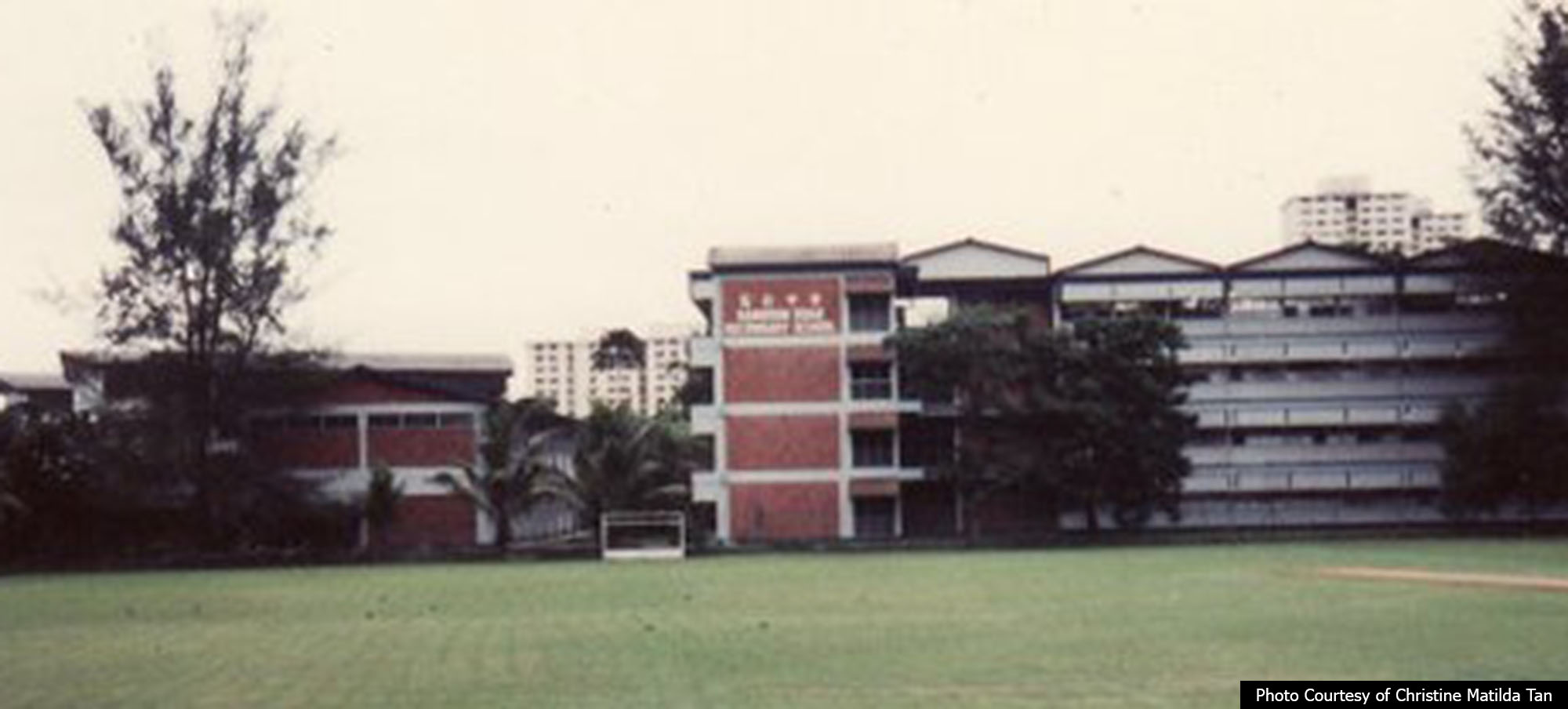
Established in 1967 and officially opened in 1968, the school offered courses in Art, Science, Technical and Commercial subjects to students from English and Chinese streams. In 1985 however, the Chinese stream was phased out and since then, the school had become an English school. When the school started in 1967, it only had two uniform groups, the Scout Troop and St. John’s Ambulance Brigade. These were followed by the formation of the National Cadet Corps, National Police Cadet Corps and Girl Guides in 1968. in 1972, the school had its own school band.
rangoonroadsec_christine-matilda-tan

rangoonroadsec_2000-1_NLB

rangoonroadsec_2000_NLB

rangoonroadsec_loh-swee-meng

rangoonroadsec_schbuildingin1969_NAS

School building in 1969

The late Mr A. K. Sigamoney was Rangoon Road Secondary’s first school principal who later went on to be the headmaster of Raffles Institution. Ex-students remember him for his strong passion for astronomy.

Rangoon Road Secondary was later known as just Rangoon Secondary.

Source: [1] [2] [3] [4]


Joo Avenue School (Farrer Park)

Closed in 1984

Joo Avenue School at Rangoon Lane was the 39th school to be established by the PAP Government. Originally named Joo Avenue Integrated Primary School, its first batch of students wearing white and brown uniform were enrolled in 1964. Next to the school was Rangoon Road Secondary School which I’ve already covered above. Both schools shared the same field in those days. There used to be a caretaker who lived near to the school gate within the school compound and people who were unaware would be puzzled to see him during the weekends.

jooavenuesch_2013_ka-sing-choo

Building still existed in 2013. Not sure about now.

jooavenuesch_dentalclinic_sean-lim

This was the dental clinic in the school.

In 1965, a 11-year-old Joo Avenue School student made a bomb hoax call to his own school. The school was evacuated by the principal because of that. The boy was eventually fined $100 and placed on 18 months’ probation by the Juvenile Court for making false statement.

jooavenuesch_1968_david-tan-aik-bing

1968

jooavenuesch_p6n1of1984_spencer-yuen

Class P6N1 of 1984. N stands for “Normal” (6 years of primary education instead of 8)

jooavenuesch_spencer-yuen

After Joo Avenue School closed, students were transferred to Balestier Primary which is also featured in this post (see below).

Source: [1] [2] [3] [4] [5]


Playfair School (Tai Seng)

Closed after 1980 (exact year unknown)

Playfair Primary was a single-storey school established in the early 1950’s with double sessions, completed with a school field.

playfairpri_hira-gurung

In 1970, ex-teacher Simon Mervyn Pereira was convicted of molesting 15 schoolgirls of Playfair School where he was teaching between April 1968 and October 1969. He was sentenced to one year in prison. Seven months after the verdict, the school principal Mrs Mary Whissell was asked by the Public Service Commission to retire “in the public interest”. Since then, Mrs Whissell fell into a deep depression and finally jumped to her death from a block of flats at Kallang some months later in the same year.

playfairpri_FB

The school was closed due to dwindling student enrolment.

Source: [1] [2] [3] [4]


Willow Avenue Secondary School (Potong Pasir)

Closed in 1991

Founded in 1965, it was named after a road (like every other schools then) which was in turn named after a tree.

willowavesec_fb

Students had to run through a cemetery (now a park) behind the school during P.E. lessons. On top of that, the school’s NPCC was very accomplished, having won the NPCC parade competition several times, the “Best Unit” and “Best Boys’ Marksmanship” awards.

willowavesec_khoo-hoon-teng

willowavesec_kee-mont

Closed due to declining student enrolment, the site was subsequently taken over by Cedar Girls’ Secondary School which needed space for expansion, but did not wish to relocate.

willowavesec_stewart-ong

The end of Willow Ave Secondary.

Veteran actress Aileen Tan attended Willow Ave Secondary and was in NPCC. Perhaps that’s why she fits the role of Head Investigation Officer in C.L.I.F. so well? 😉

Source: [1] [2] [3] [4] [5] [6]


Tun Seri Lanang School (Mountbatten)

Closed in 1987

Named after the Bendahara (Prime Minister) to the Sultan of Johor at a time when the Johor sultanate was under attacked by the Portuguese and the Acehnese, Tun Seri Lanang School was a Malay-stream school providing secondary education. It was officially opened in 1963 (hence most likely established in 1962)

tunserilanangsch_koranreadingcontestwinner_1964

Koran reading contest winner in 1964

The school’s Facebook group is locked thus I am unable to retrieve any additional pictures. Any contribution would be greatly appreciated!

Since the closure of the school, the sprawling cluster of buildings have been occupied by several art studios over the years: LASALLE College of the Arts from 1992 to 2007, School of the Arts (Sota) from 2007 to 2009 and finally Goodman Arts Centre which is still there today.

Source: [1] [2] [3] [4]


Broadrick Primary School (Dakota)

Closed in 1987

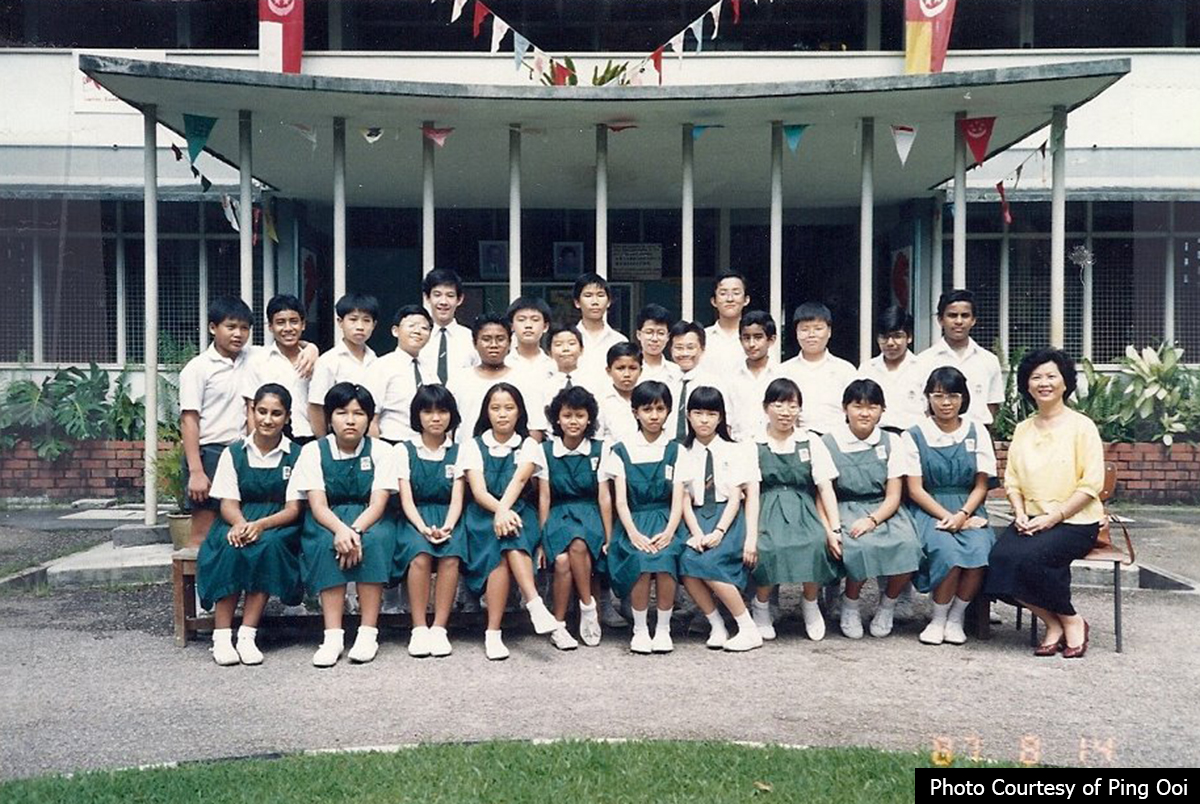
Established in 1967, the school started out without a uniform nor a tuckshop. It became a full-day school in 1981 but chosen to drop out of the programme in 1984 due to shortage of teachers.
broadrickprimary_p6of1987_ping-ooi

Class P6 of 1987

Beneath many layers of paint on the walls along the school staircase from levels 1 to 4 hid paintings drawn by a talented office assistant in the mid 1970s. They lasted for 1-2 years until a new principal came on board. He probably didn’t appreciate the paintings and decided to coat them with a new layer of paint, and more layers as the years went by. Now that the secret is out, would this hidden treasure be uncovered one day? I’m interested to find out what the paintings are too!

EtonHouse International School now occupies the former site of Broadrick Primary.

Local actress Nora Samosir (more active in the Singapore theatre scene) attended Broadrick Primary from Primary 3 onwards.

Source: [1] [2]


Balestier Boys’ School
Balestier Mixed School (Boon Keng)

Merged in 1984 to form Balestier Primary School
Closed in 1991

I am unable to find when exactly both schools started functioning but it could be as early as the 1940s after Singapore Polo Club left the grounds at Balestier Road in 1941 which later housed the three Balestier schools. Before the merger, Balestier Mixed was smacked in between Balestier Boys’ and Girls’. Both Balestier Boys’ and Girls’ schools were low buildings (single-storey) whereas the Mixed one had three levels.

balestierboyspri_david-kong

Balestier Boys’ Primary

From 1975 to 1980, Balestier Boys’ won many accolades in the school sporting arena, including football, hockey and athletics.

The late Mr N. Govindasamy (MP for Telok Blangah) was a teacher at Balestier Boys’ School from 1950 to 1962.

Balestier Primary was often confused with the old Balestier Hill Primary (and vice versa), even up ’til now.

balestiermixedpri_1959_NAS

Balestier Mixed Primary in 1959

balestiermixedpri_1959-1_NAS

Balestier Mixed Primary in 1959

Demand began to slip towards the late 80’s and it stopped accepting Primary 1 registration in 1991. Classes in other levels were continued while the Education Ministry studied the situation. Unfortunately the demand failed to pick up in the following year and hence the school had to close.

balestierpri_susan-teo

Balestier Primary.

Source: [1] [2] [3] [4] [5] [6]


Balestier Girls’ School (Boon Keng)

Merged with then-Griffiths School in 1983 to form Moulmein Primary School

Balestier Girls’ was a single-storey school formed in the 1940’s which shared the same field as Balestier Boys’ and Mixed schools. The school history is somewhat similar to her brother schools mentioned above. Balestier Girls’ students wore white uniform but they had no problem keeping them dirt-free at all. Here’s why:

Many years before the Education Ministry started deploying trained principals to schools, there was a serious shortage of principals and many girls’ schools had to borrow nuns from convent schools to be their headmistress. In Balestier Girls’ case, they had the help of a nun (and her assistant) from St. Anthony’s Convent who instilled the importance of personal hygiene and discipline in the students, thus turning these students into refined girls.

A politician who studied at Balestier Girls’ School is Ms Denise Phua (MP for Moulmein-Kallang GRC).

Source: [1] [2] [3] [4] [5]


Jalan Daud School (Eunos)

Closed in 1983

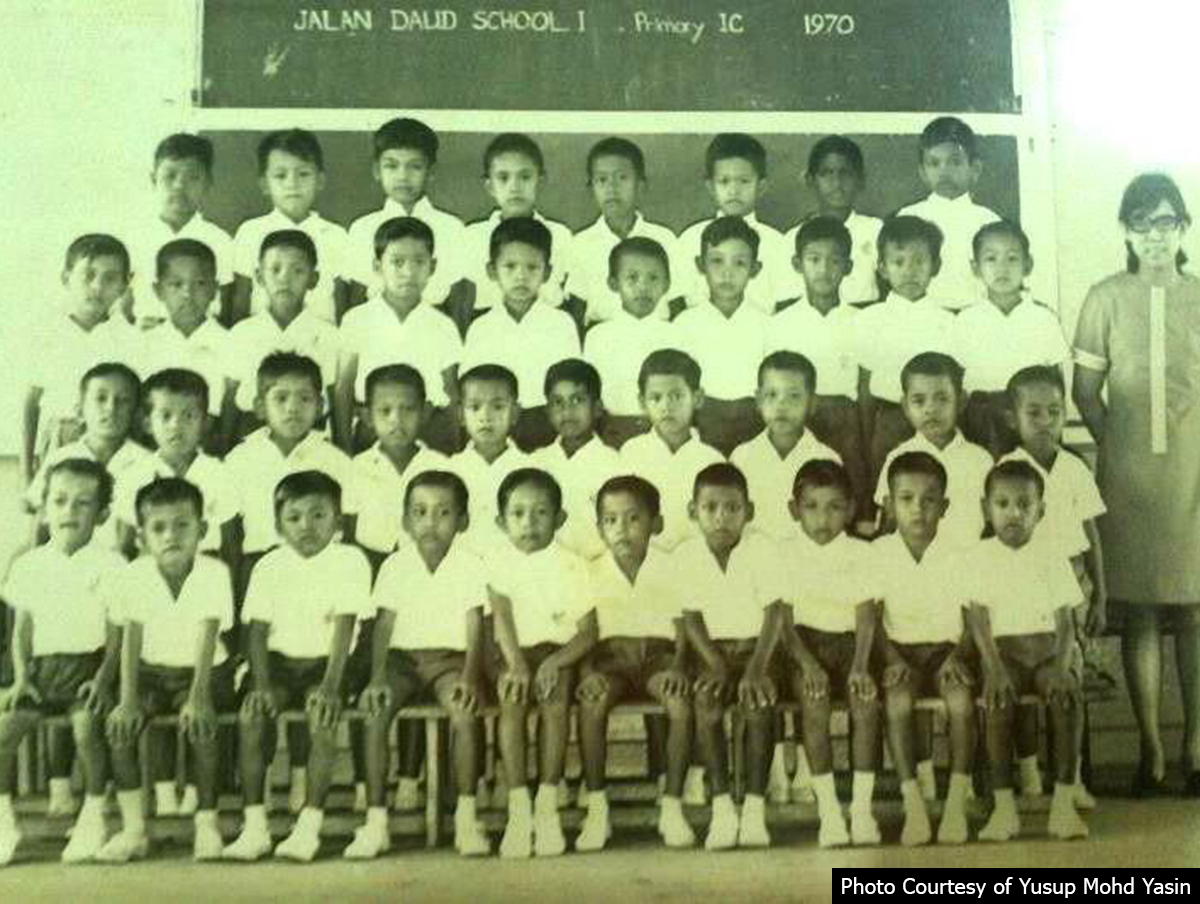
Established in 1956, Mr Ting Tiew Ling was the first principal of the all-boys school. The school then was surrounded with kampong houses, fruit trees, coconut trees and a rubber plantation.  A bilingual policy came into existence in 1960 and the school started offering Malay and Chinese as second languages, though Malay pupils seemed to make up most of its population.

jalandaudsch_ikang-fauzy

jalandaudsch_yusup-mohd-yasin

All boys in 1970

In 1974, Jalan Daud School admitted its first batch of girl pupils into its primary one classes.

jalandaudsch_2_diana-mustafa

Teaching and learning during the period 1974 to 1980 were the most difficult as teachers and students had to endure the deafening noise created by the piling machines first for the construction of the sewerage system, then the Housing and Development Board flats and then later the flyover of the Pan Island Expressway. The school was eventually demolished to make way for Eunos Primary School. Thereafter, students were moved from Jaya Primary (closed, mentioned in part 2) in 1983 and then back to Eunos Primary in 1984 which still occupies the former site of Jalan Eunos and Jalan Daud Primary Schools today.

jalandaudsch_diana-mustafa

Dr Kirpal Singh (poet, literary and cultural critic, and an Associate Professor with the Singapore Management University) and Zainul Abidin (former Member of Parliament representing Aljunied GRC until 2011 and former Senior Minister of State) attended Jalan Daud School. Back in those days, schools really didn’t matter!

Source: [1] [2] [3] [4] [5]


Jalan Eunos School (Eunos)

Closed in 1980

Just opposite Jalan Daud School was Jalan Eunos School which established in 1954. It was first housed in Siglap Secondary School as their three-storey building was not ready. It started with 12 classes of primary one pupils and 12 untrained teachers who were less than 20 years of age. Students were mostly Malays and Chinese and with some Indians.

jalaneunos_sadiah-khamis

The initial stage of HDB apparent in the background

jalaneunossch_field-between-jds-jes_sadiah-khamis

The field between Jalan Daud and Jalan Eunos Schools

Jalan Eunos School is not related to nor upgraded from the current Eunos Primary School even though the latter occupies the former site of Jalan Eunos and Jalan Daud schools today.

jalaneunossch_staff-last-day_norhayah-bonawi

Staff group picture taken on the final school day before its closure

jalaneunossch_p6-am-of1977_saidah-abdullah

Class P6(am) of 1977

jalaneunossch_muhd-hozir-bonawi

The school had their last reunion with their very first (and also the school’s longest-serving) principal, the late Mrs Beryl Constance O’Hara, in 2011. Mrs O’Hara who is also the grandmother of Mr Christopher De Souza (MP for Holland-Bukit Timah GRC) had passed away in 2012. The reunion garnered extensive media coverage across the country. If you have some time to spare, do take a look at this heartwarming video that depicted ex-students seeing Mrs O’Hara for the first time in 30 over years.

Source: [1] [2]


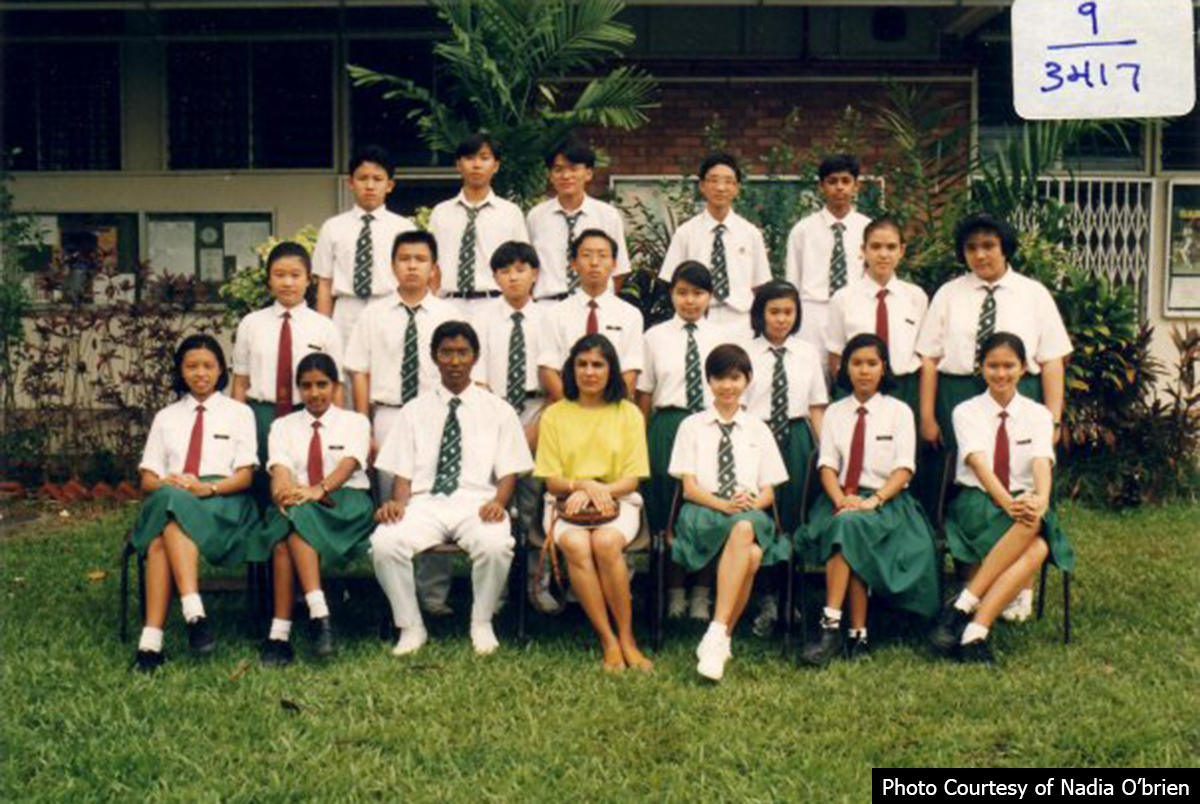
Telok Kurau Secondary School (Eunos)

Merged into Broadrick Secondary School in 2011

Established in 1965, Telok Kurau Secondary was a school that excelled in sports and extra-curricular activities, but not quite in the academic field in the 1970s. Gradually, the school showed improvements in its academic standards and had achieved value-added academic results for the GCE “O” level exams from 2004 to 2006.

telokkurausec_1974_NAS

1974

telokkurausec_youtube

In recent years, it had regarded itself as a “boutique” or “niche” school which did not condone the idea of corporal punishment (i.e. no caning). However, in exchange for that, students had to have their behaviour in public scrutinised by grassroot leaders with a special “warrant card”. Students who misbehaved (e.g. smoking and behaving rowdily at void decks) would have their particulars taken down and then counselled by the school, and could even face suspension depending on the seriousness of their actions. These policies were developed by the school’s last principal, Mr Harphal Singh.

telokkurausec_1986_NAS

1986

telokkurausec_nadia-o'brien

telokkurausec_2009_googlemaps

2009

It was one of the few schools in Singapore which allowed boys to wear long trousers even in lower secondary levels (because pupils are treated as ladies and gentlemen), It also rewarded parents if their children excelled academically in school.

Source: [1] [2] [3] [4] [5] [6] [7]


Chai Chee Secondary School (Bedok)

Merged into Bedok Town Secondary School in 2011
To merge with Ping Yi Secondary School in 2016

Founded in 1969 as Sennett Road Secondary School, it was officially named Chai Chee Secondary in 1971 after the school was drawn into the Kampong Chai Chee parliamentary constituency.

chaicheesec_FB

However constituency boundaries changed again a year later and having found itself in the Siglap constituency for the next decade at Upper East Coast Road, Chai Chee Secondary debated with the Minister of State (Culture) to have its name changed again. And this time, to East Coast Secondary School. Other reasons cited for the change was the literal meaning of “Chai Chee” – “vegetable market (菜市)” in Chinese – which was thought to be an uncomplimentary name for the school. This proposal was however turned down because “the ministry was against changing school names too often” and “a change of name would mean that students would have to change their school badges and exercise books”. I feel that the most important reason though, was that “”Chai Chee” was not an inappropriate name for a school” and changing it would degrade the residents of Chai Chee.

chaicheesec_FB2

When news about its merger with Bedok Town Secondary broke, an online “war” between both schools broke out with students from both schools bashing each other on their blogs. This kind of brouhaha is very common when it comes to school mergers.

chaicheesec_sec4-1of1992marilyn-tan

Class Sec4-1 of 1992

The Singapore Hokkien Huay Kuan Pre-school is now at the site of former Chai Chee Secondary.

Source: [1] [2] [3] [4] [5] [6]


Telok Paku School (Changi)

Closed in 1976

The very first batch of students joined the school in 1951. It was near Changi Road, next to Changi Military Airport. The school mainly comprised of a few long row of buildings with classroom and a 3 or 4-storey building where their AV & Hall were. It had a field surrounded by cashew nut trees and students would also grow vegetables as part of their Science lessons which were also taken care by people living in the nearby servants’ quarters.

telokpakusch_shukor-bro-bo-zahari

Telok Paku was demolished to make way for Changi Airport, or part of its runway to be precise.

Source: [1] [2] [3] [4] [5]


Duchess School (Bukit Timah)

Closed in 1984

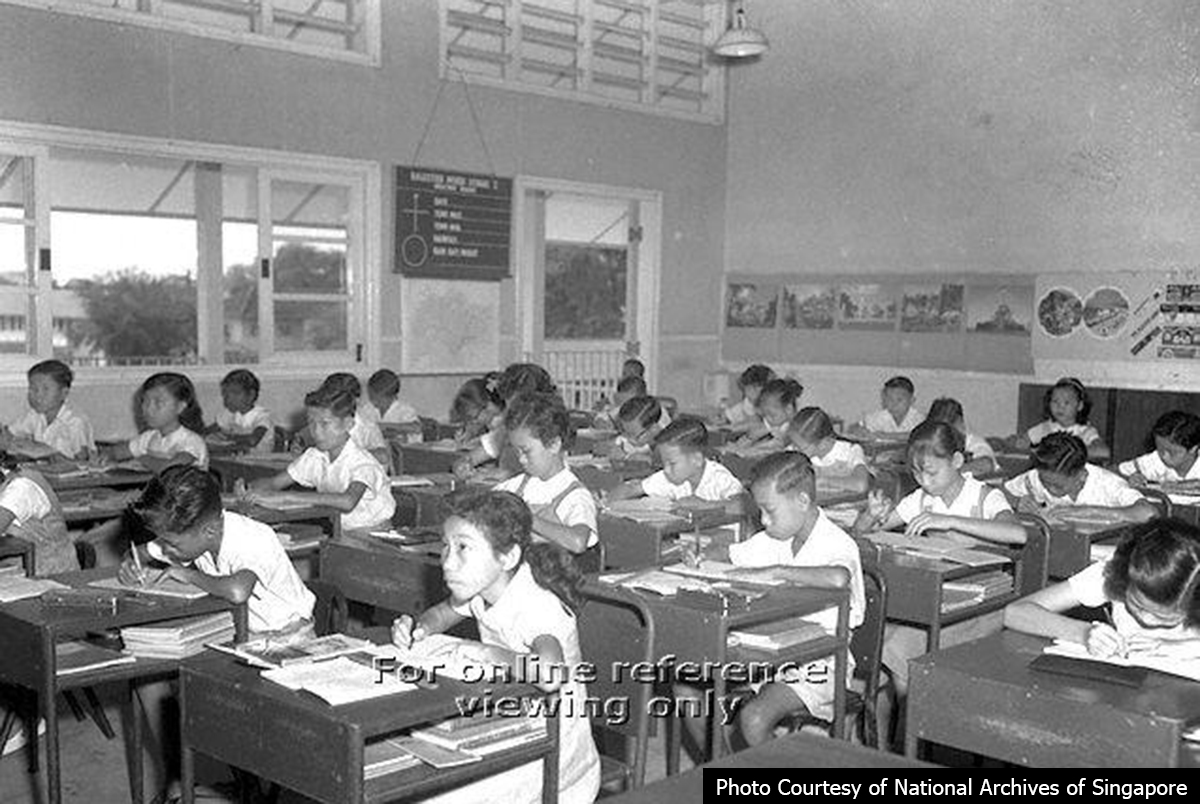
Built in 1950, the old single-storey primary school along Duchess Avenue was originally named Duchess Road School. In 1963, a new four-storey block was added.

duchesspri_schoolfield1954_NAS

Duchess School’s field in 1954

Students would play Police and Thief along the corridors. It was also rumoured that the toilet next to the Music room was haunted.
duchesspri_p6aof1979_roslinda-abdul-samat

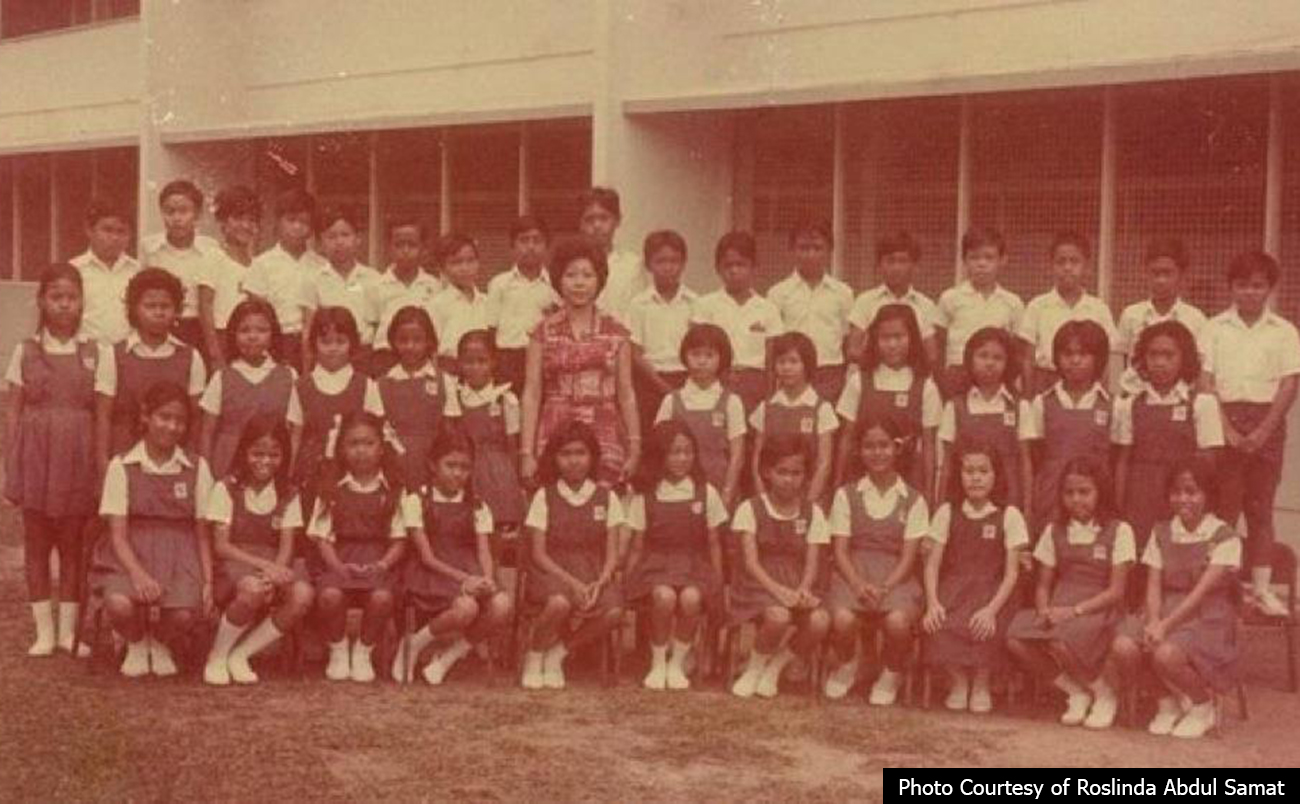
Class P6A of 1979

It had since given way for a condominium development. When the school closed, students were transferred to Farrer Primary School.

duchesspri_1977_misrudin-anwar

1977

Dr Maliki Osman (MP for East Coast GRC) was educated at Duchess Primary.

Source: [1] [2] [3]


Farrer Primary School (Bukit Timah)
Permaisura Primary School (Queenstown)

Merged into New Town Primary School in 1992

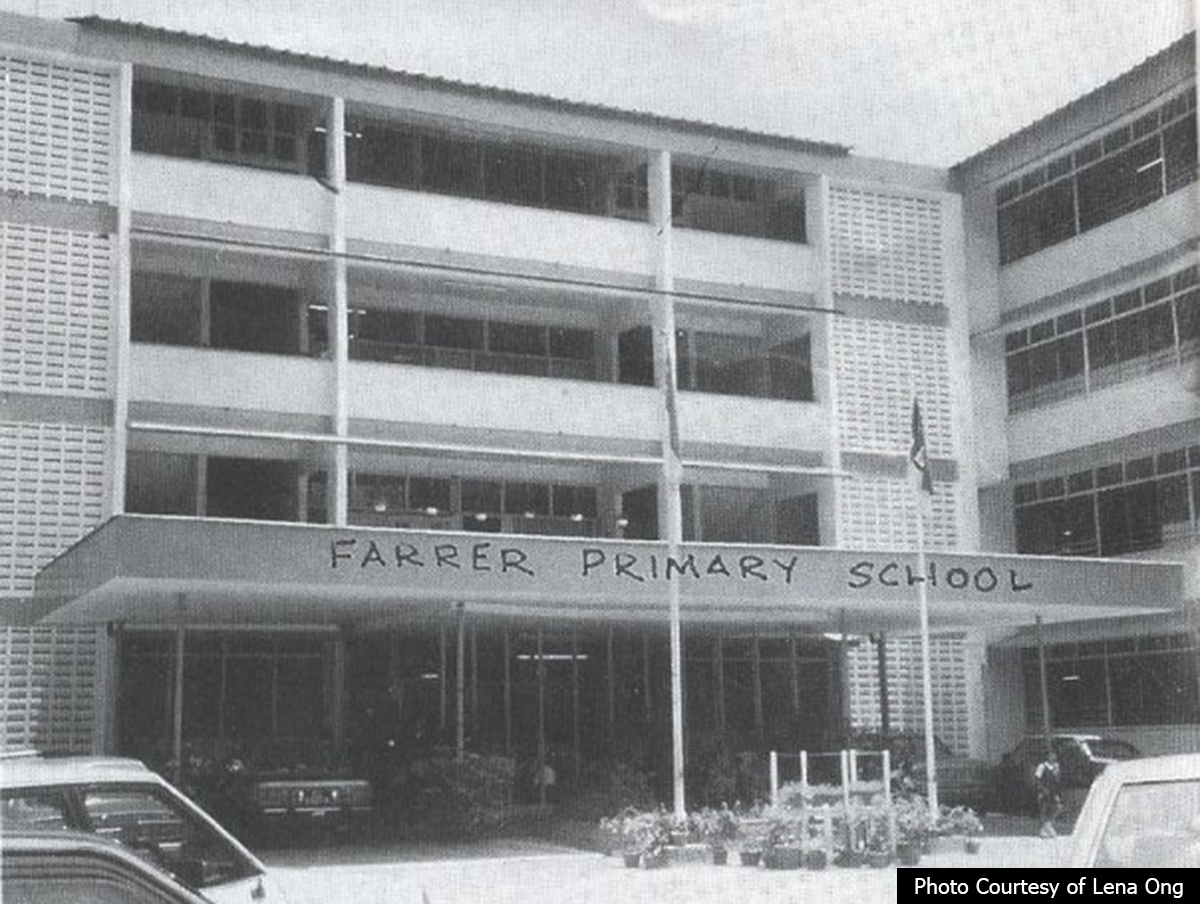
I bet many of you didn’t know this but yes, Farrer Primary, although not located in Queenstown, is indeed part of New Town Primary. This is not mentioned in the latter’s history. Farrer Primary was founded in 1966 at Duke’s Road, offering education in English, Chinese and Malay. It later became an English-medium school with Chinese, Malay and Tamil taught as Second languages. In 1993, the former Farrer Primary premises at Lutheran Road was acquired for use by Nanyang Primary School for its Primary 1 and 2 levels but they had moved out in 1999. Now the site is being used as a hostel for international school students.
farrerpri_lena-ong

Farrer Primary School

farrerpri_1988_NAS

1988, when Farrer Primary was made one of the polling stations
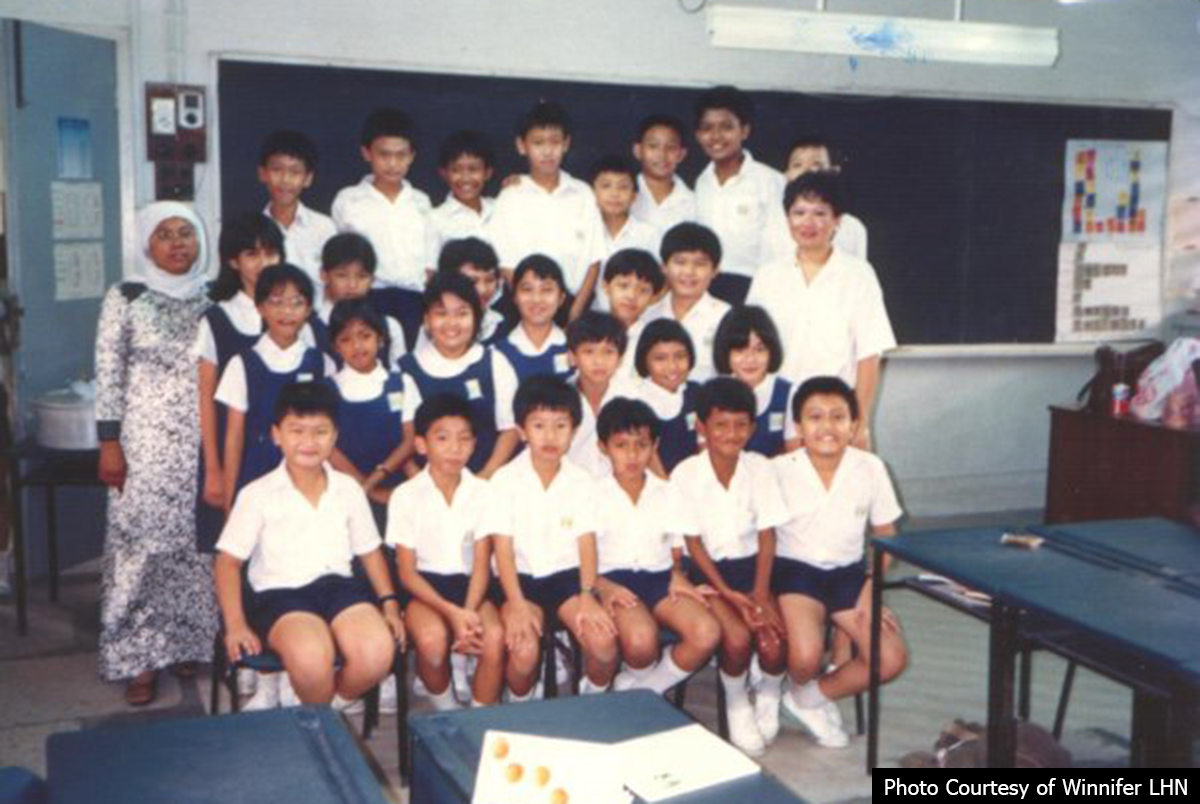
farrerpri_pri4-1of1988_winnifer-lhn

Farrer Primary School, class P4-1 of 1988

Permaisura Primary was officially opened in 1965, around the same time as the old New Town Primary School. Both schools were beside each other. in 1984, Serena Zheng Mei Ailing, a primary four student at Permaisura Primary won a world art competition organised by the Ministry of Education in Chile. She won two flight tickets to Chile, including food and lodging for her six-day stay there. Wow, that’s an insanely awesome prize that’s worth a lot of money even today!

permaisurapri_regina-jawad-baig

permaisurapri_1982_hercules-lim

1982

permaisurapri_tarandeep-kaur-rimal

Unfortunately, the school closed down due to dwindling enrolment and its site was occupied by the new New Town Primary until its relocation in 2008. Four years later, the buildings formerly used by Permaisura and New Town Primary at Commonwealth Drive were converted to MOE Heritage Centre.

Source: [1] [2] [3] [4] [5] [6] [7]


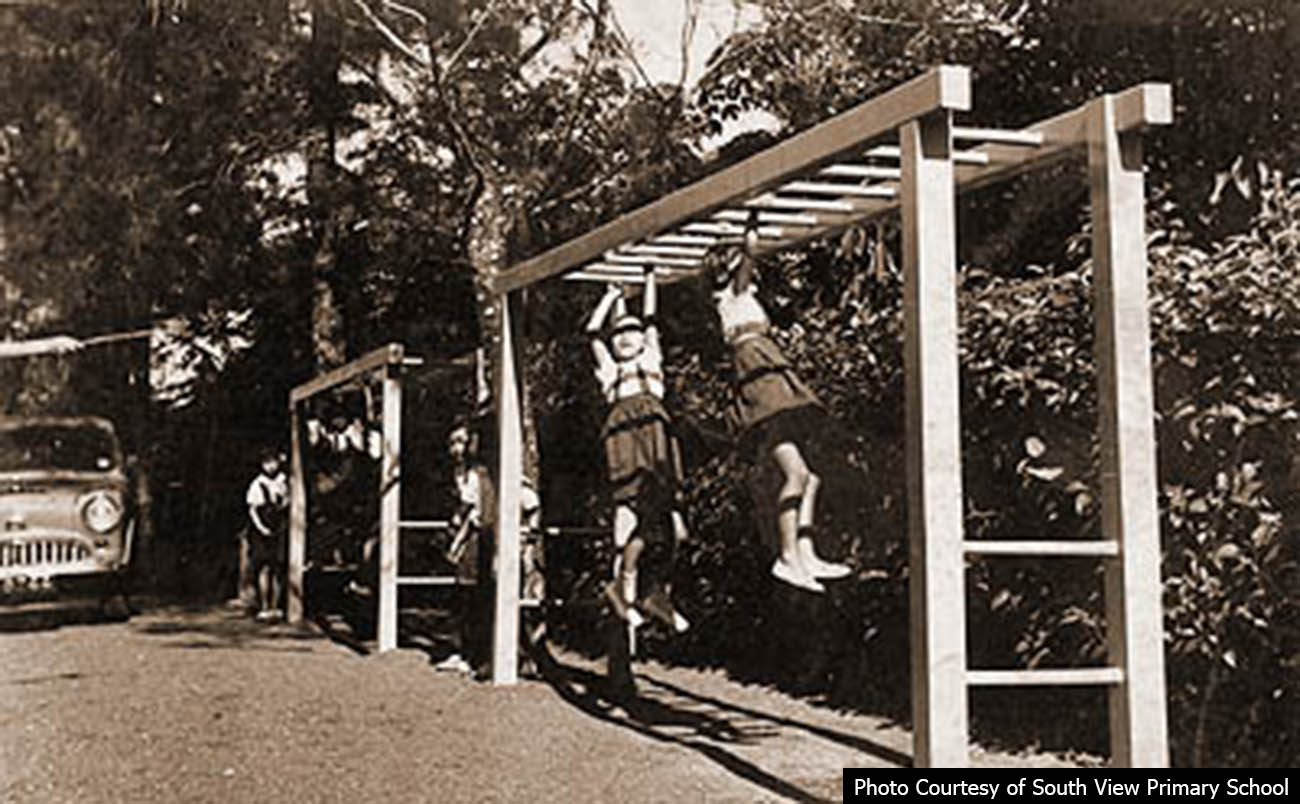
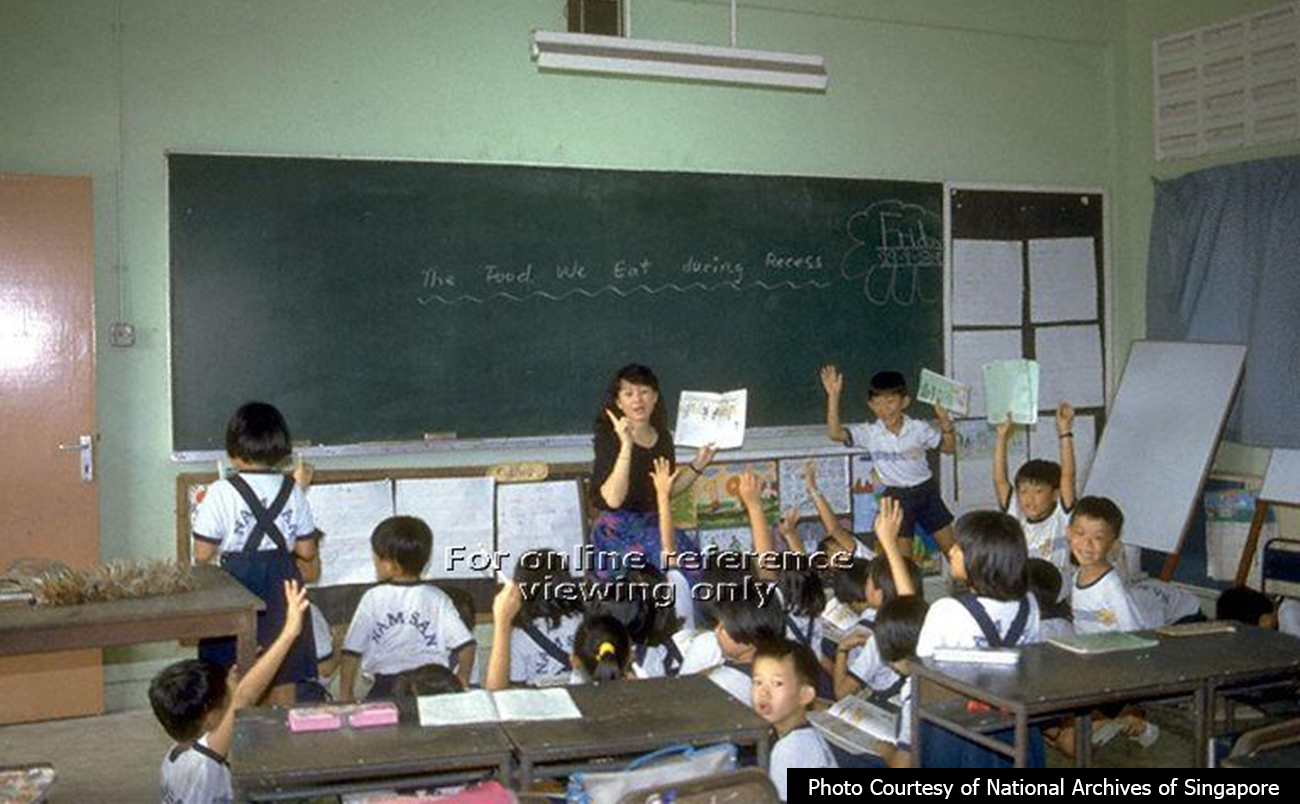
Ama Keng School (Lim Chu Kang)
Nam San School (Choa Chu Kang)

Merged in 1990 to form South View Primary School

Ama Keng School was established in 1951 as part of the colonial’s Ten Year Plan. The name “Ama Keng” derives from the Hokkien/Teochew meaning of “grandmother” (ama) and “temple” (keng). Located off the main road of Lim Chu Kang, the school catered mainly to children whose family resided in the village. Most of the pupils came from Chinese-speaking homes.

amakengsch_eileen-ang

Ama Keng School

amakengsch_thomas-dear-dear

Ama Keng School

The school first started with only 53 students having their classes in three simple single-storey buildings of 14 classrooms. There was also a double-storey block that served as the teachers’ quarters for teachers who stayed far from the school (their families were allowed to stay with them). With the resettlement of families from other parts of the island, an extension wing – a four-storey block – was built and officially opened in 1971 to cope with the increasing demand. It eventually closed with the resettlement of the Lim Chu Kang residents in the late eighties. The buildings are now used as a… you guessed it: dormitory for foreign workers.

amakengsch_thomas-dear-dear2

Ama Keng School

amakengsch_1954-playing-field_NAS

Ama Keng School’s playing field in 1954

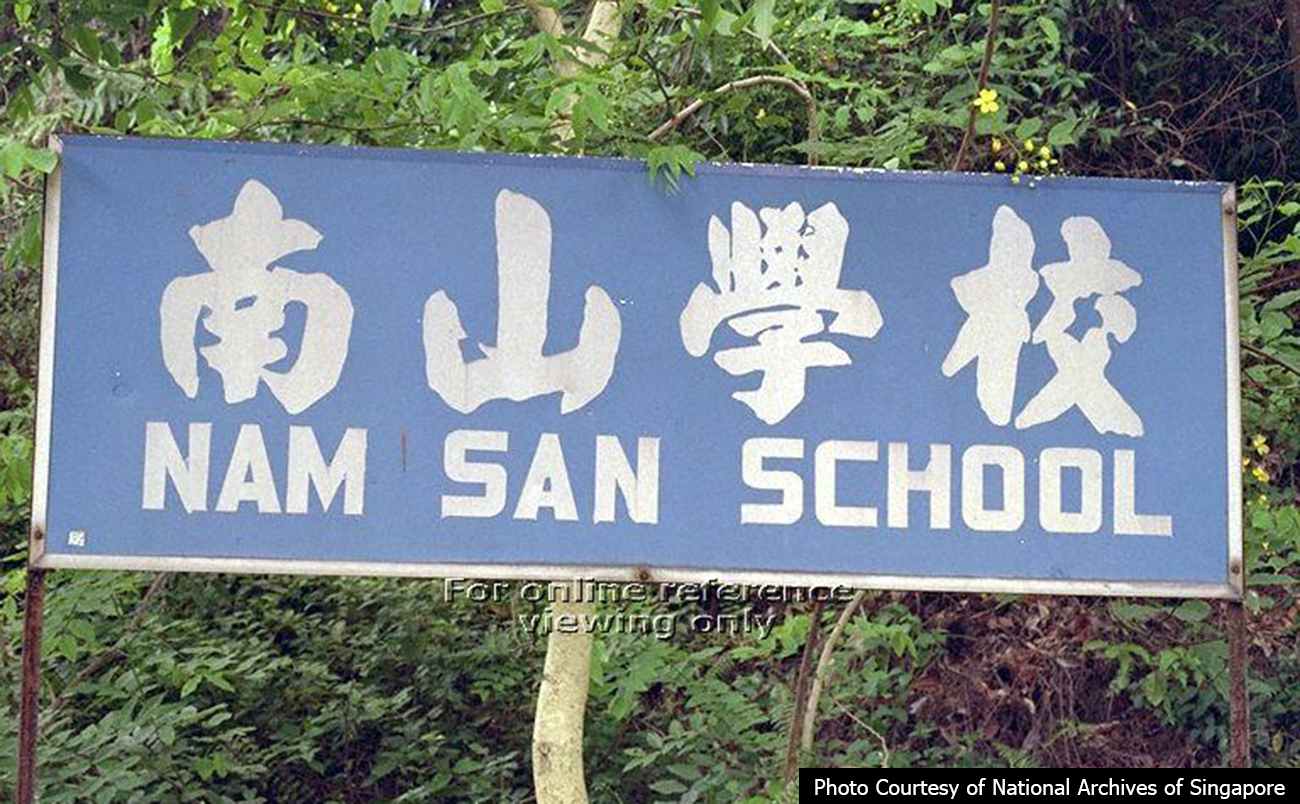
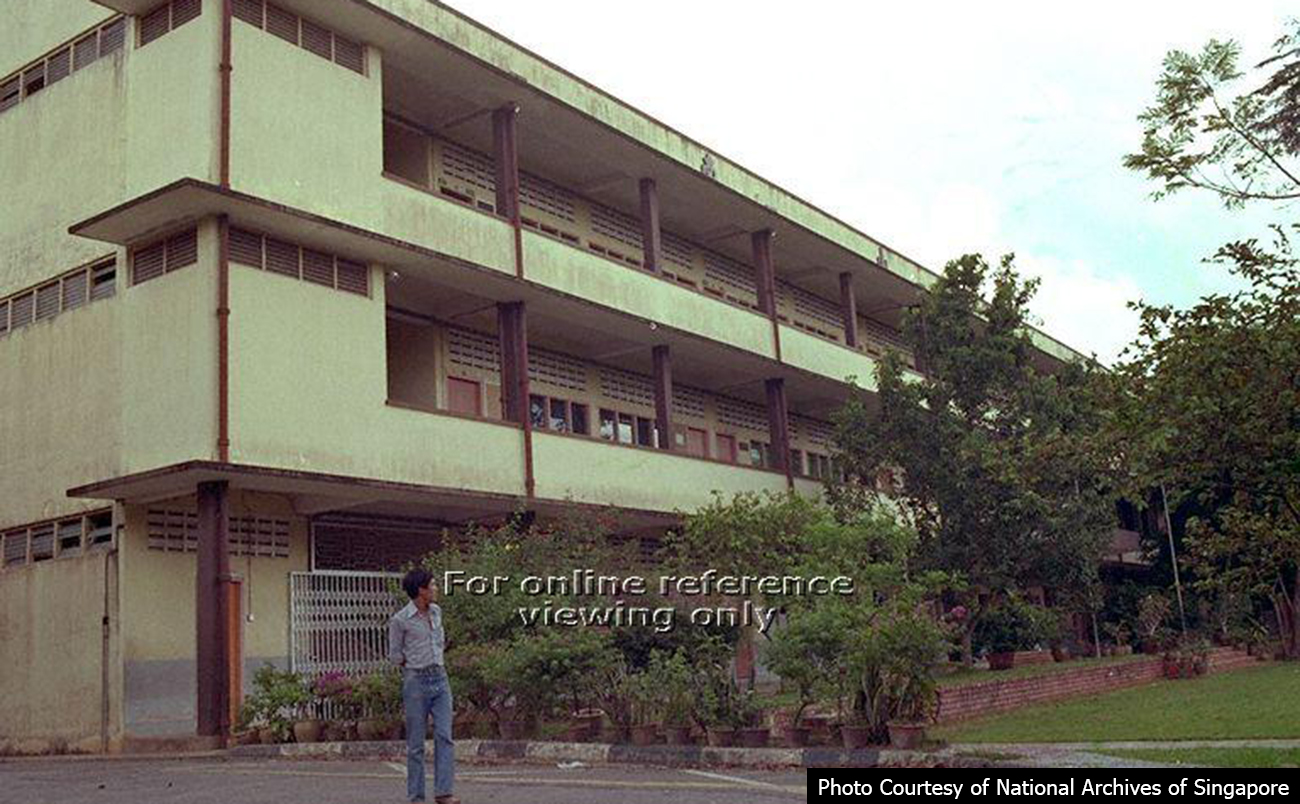
The building of Nam San School first started during the Japanese Occupation and during its construction, the Japanese actually mistook the clearing as an army camp and bombed the area, killing the donor of the land for the school and several other village members. The school was eventually founded in 1946 with students housed in three separate locations: temple, wayang stage and warehouse. It started with 157 students, and villagers, most of whom ran chicken and vegetable farms, contributed $13000 to fund its operations. By March 1947, a building with five classrooms for Nam San was erected. In 1978, a new building for Nam San School was officially opened.
namsansch_1986_NAS2

namsansch_1986_NAS

Nam San School in 1986

namsansch_southviewpri

Nam San School

namsansch_1989_NAS3

Nam San School in 1989

Source: [1] [2] [3] [4] [5] [6] [7]


Toh Tuck Secondary School (Bukit Batok/Bukit Timah)

Closed in 1991

Established in 1965, Toh Tuck Secondary at Toh Tuck Road was built at a cost of $1.1 million to provide academic and technical studies with facilities comparable to those in established secondary schools.

tohtucksec_FB2

tohtucksec_FB

The school was host to Singapore Science Centre’s first Science Fortnight (now known as Shell Singapore Youth Science Festival or SSYSF) to promote Science education. Dr Tony Tan (then-Senior Minister of State for Education) gave a speech at the opening ceremony.

tohtucksec_genevieve-loraine-anderson

In 1987, Toh Tuck Secondary also bagged home the top prize for the first debate (“Beauty competitions are insulting and degrading to women”) organised for pre-university centres.
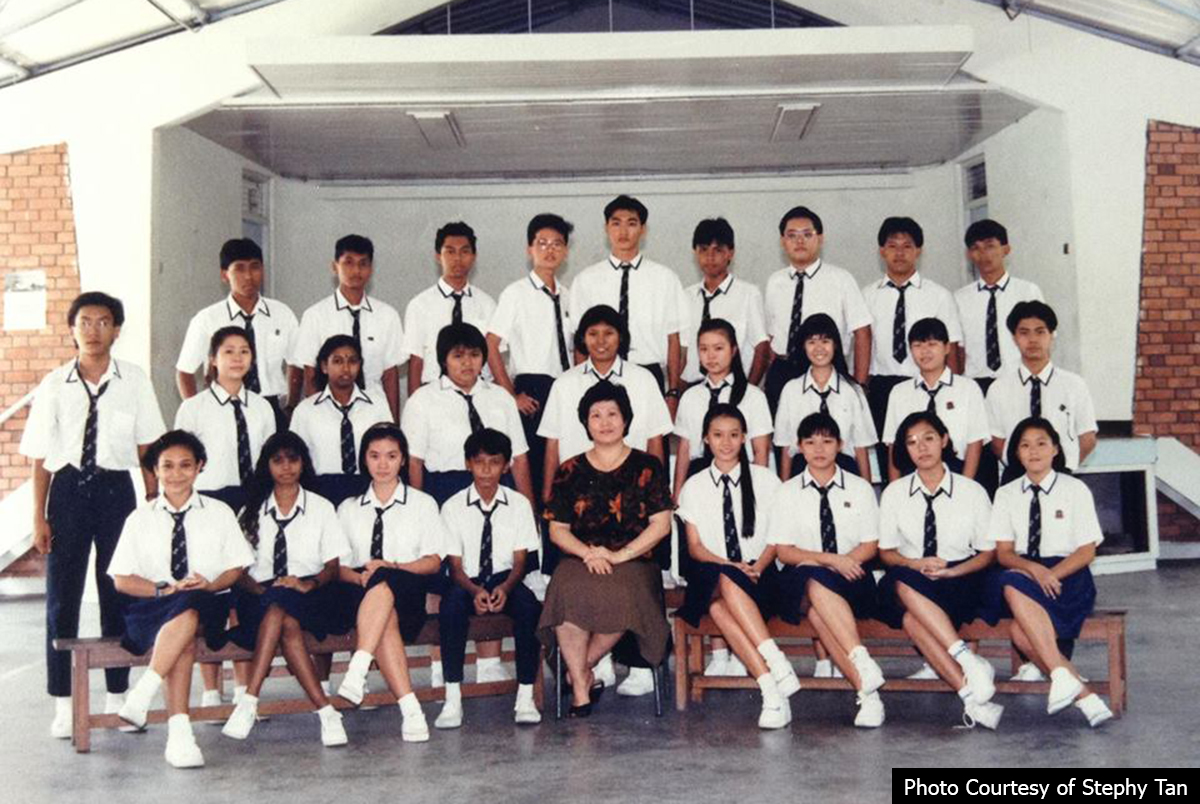
tohtucksec_sec4-4of1990_stephy-tan

Sec4-4 of 1990

There were quite a number of death cases related to Toh Tuck Secondary. In 1967, what meant to be a fun picnic outing turned tragic for a 17-year-old schoolboy. Ramanathan Kulendran, a senior student from Toh Tuck Secondary drowned in a sea off Pulau Ubin while he was out with about 300 members of the Indian Movie News Readers’ Club. In 1973, Chua Poh Choon, a Secondary Four schoolgirl from Toh Tuck was found raped and murdered in a vacant lot at Clementi Park. She was believed to be attacked while returning from school on a Friday evening.

After the school was closed, the building became a holding site for many schools that underwent PRIME. These schools include Raffles Girls Primary School and Millenia Institute and the now-defunct Jurong Institute.

Source: [1] [2] [3] [4] [5] [6] [7] [8]


Toh Tuck Primary School (Bukit Batok/Bukit Timah)

Closed in 1987

Situated in a a quaint and serenade environment filled with greenery and peace was Toh Tuck Primary, founded in 1967.

tohtuckpri_today_jennifer-yap

Toh Tuck Primary today

tohtuckpri_meow-meow

Months before the rape and murder case of the Toh Tuck Secondary schoolgirl mentioned above, another girl from Toh Tuck Primary also suffered from the same fate. The nine-year-old girl was believe to be pounced on while taking a shortcut home through a block of unoccupied terrace bungalows.
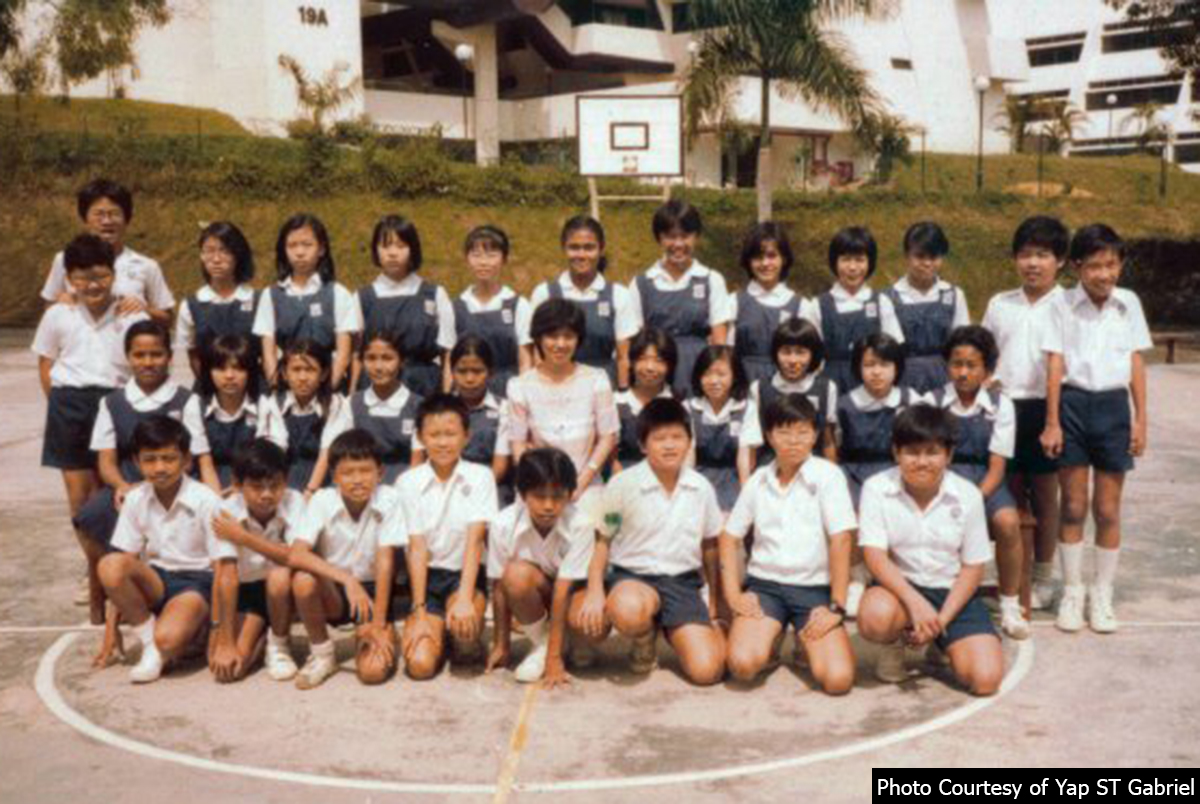
tohtuckpri_1984_yap-ST-gabriel

1984

tohtuckpri_jann-ak

The school was closed to due lack of demand and most students were transferred to the nearby Bukit Batok Primary School. Toh Tuck Primary is now a holding site for Primary 1 and 2 students of Nanyang Primary. Previously, it was occupied by Canadian International School.

Source: [1] [2] [3] [4]


Birkhall Road School (Queenstown)

Merged into Queenstown Primary School in 1984

Founded in 1956, the school was located in the middle of the stretch of Margaret Drive. Its name also had many variations and what it’s called depends on how old you were when you attended the school. If you have come across “Birkhall School”, “Birkhall Primary School” and “Birkhall Road School”, they ultimately refer to the same place. Of course, there would be a minority (the not-so-eloquent in English) who would call it “Bo Ho” School instead. Some would also tend to mispell “Birkhall” as “Birdhall”. There is no report about the origin of the school name although there were arguments that “Birkhall” could be named after a British official.

birkhallpri_60s_desmond-wong

Birkhall School in the 60s

A single block with the canteen, staff room, music room on the ground floor and classrooms on the 2nd and 3rd floor, it also shared a field with Strathmore and Queenstown Primary schools where fights always broke out when territories were crossed.
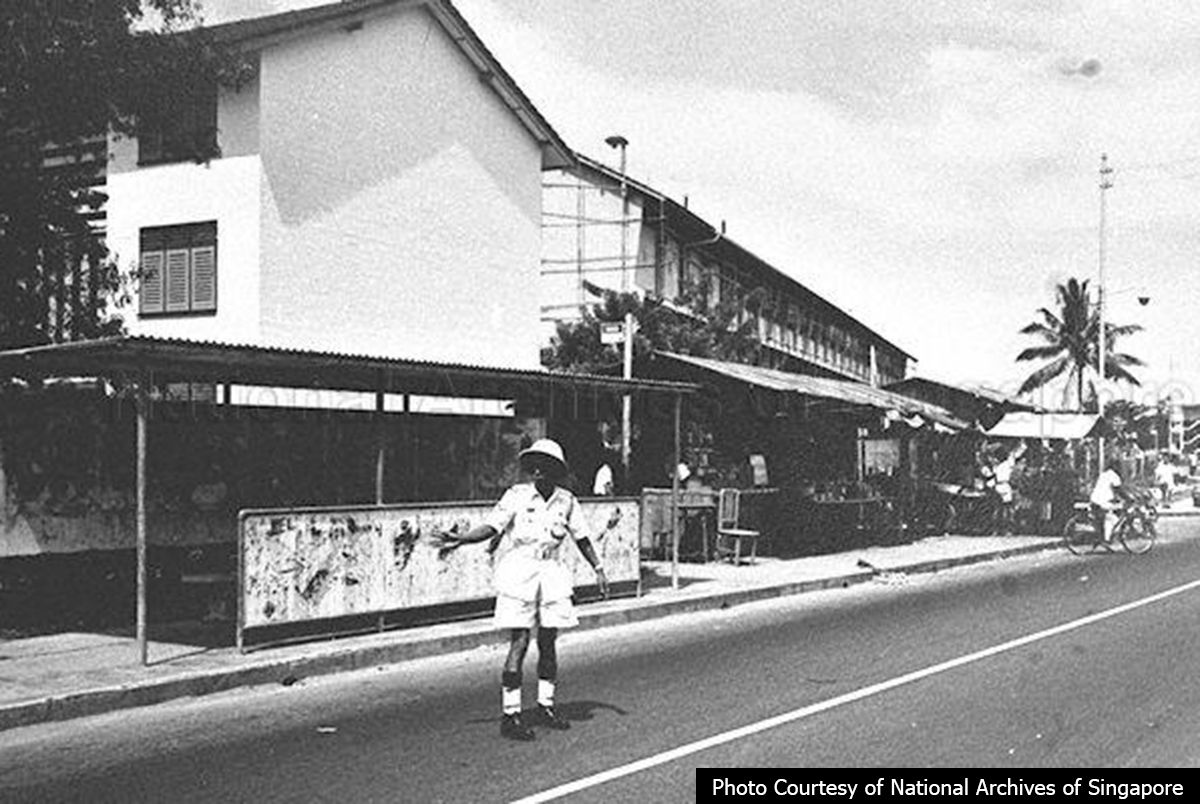
birkhallpri_1962_NAS

1962

Having won many inter-school competitions, its brass band was probably the most iconic of the school.

birkhallpri_1964_rosewiththorn.bs

1964

birkhallpri_kevin-ong

Chef Benny Se Teo (founder of Eighteen Chefs) was educated at Birkhall School.

Source: [1] [2] [3] [4] [5] [6]


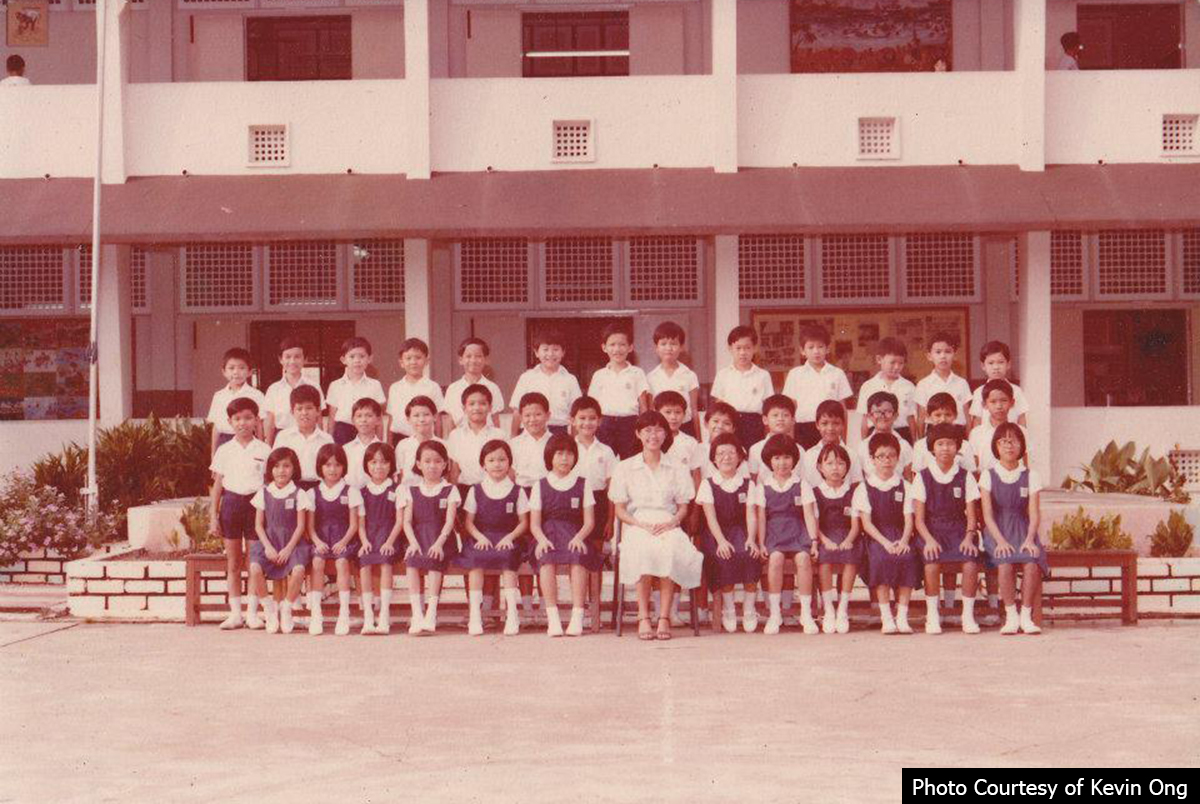
Mei Chin Primary School
Tanglin Primary School (Queenstown)

Merged into Queenstown Primary School in 2002

Mei Chin Primary started functioning at Mei Chin Road in 1976 with about 1,400 pupils in 35 classes and with 76 teachers. It was one of the few primary schools, and the first in the Queesntown area, to initiate a comprehensive IT programme for its pupils. However in 1999, the pupil enrolment dropped to 588 pupils in 7 classes and with 29 teachers due to population shift and aging population.

meichinpri_joysnow-yong

Mei Chin Primary School

meichinpri_PL-Lui

Mei Chin Primary School

A notable alumna of Mei Chin Primary is Marine Parade GRC MP Tin Pei Ling.

meichinpri_sugi-L'Xia

Mei Chin Primary School

Tanglin Primary on the other hand was established in 1964 as Tanglin Integrated Primary School with a different school crest in the shape of the letter ‘T’. The name and logo were changed in the late 70’s. The four-storey building was the 43rd school built by the PAP Government with 24 classrooms that could accommodate 2000 students in its morning and afternoon sessions, 3 special rooms, a teacher’s common room and an office. Instructions were given in Malay and English.

tanglinpri_jane-lim

Tanglin Integrated Primary School

tanglinpri_1964_NAS

Tanglin Primary School in 1964

tanglinpri_milk-drinking1986_NAS

Every student in Singapore was given free milk packets because of underweight issues! This picture shows students from Tanglin Primary drinking their milk.

Both schools were closed due to falling student intake. The former Mei Chin Primary is now occupied by Global Indian International School, and New Town Primary has taken over the premises of Tanglin Primary.

If you are one of the students from Tanglin Primary’s pioneer batch (1964-1967), do consider joining this group. Your peers are eager to be in touch with you 🙂

Source: [1] [2] [3] [4] [5]


Mei Chin Secondary School (Queenstown)

Closed in 1999

Established in 1975, the school was praised for its clean and well-maintained compound. Other than that, the canteen also earned praises for its culinary excellence. I’m referring in particular to the sliced chicken mushroom noodle/horfun sold at a corner stall which was so popular that students had to order in advance. There also used to be an old driving range where students would hide and escape from classes.

meichinsec_1977_NAS

1977

meichinsec_1986_samuel-leonard-wong

1986

Its remaining students were transferred to Queensway Secondary School after it closed. The Global Indian International School took over former Mei Chin Secondary site in 2004 after it was left vacant for awhile (yup, it is currently using both Mei Chin Primary and Secondary).

meichinsec_1986_FB

1986

Source: [1] [2] [3] [4] [5]


Strathmore School (Queenstown)
Friendly Hill School (Telok Blangah)

Merged into Keng Seng Primary School in 1979 

One of the three schools along Margaret Drive was Strathmore School . The four-storey school was then relocated to Kay Siang Road in 1969/1970. In 1969, students of Strathmore School built their own fountain outside their classrooms in 1969 to mark Singapore’s 150th anniversary. The site at Margaret Drive is now Queenstown Primary School.

strathmorepri_zoo_yayah-ismail

Strathmore Primary students at the zoo!

strathmorepri_yayah-ismail

Students who went through the merger would have two report books.

Friendly Hill School is one school that’s not widely known and therefore information about it is very limited. The school was located at Preston Road/Depot Road. In 1977. 30 pupils were hit by food poisoning after consuming food from the school canteen  The school was later closed due to falling enrolment.

The closure of Keng Seng Primary is documented in part 1.

Source: [1] [2] [3] [4] [5] [6] [7]


Hua Yi Primary School (Queenstown)

Closed/Merged with Queenstown Primary School in 1991

Established in 1965 as Hua Yi Integrated School at Margaret Drive, it was most well-known for its band.
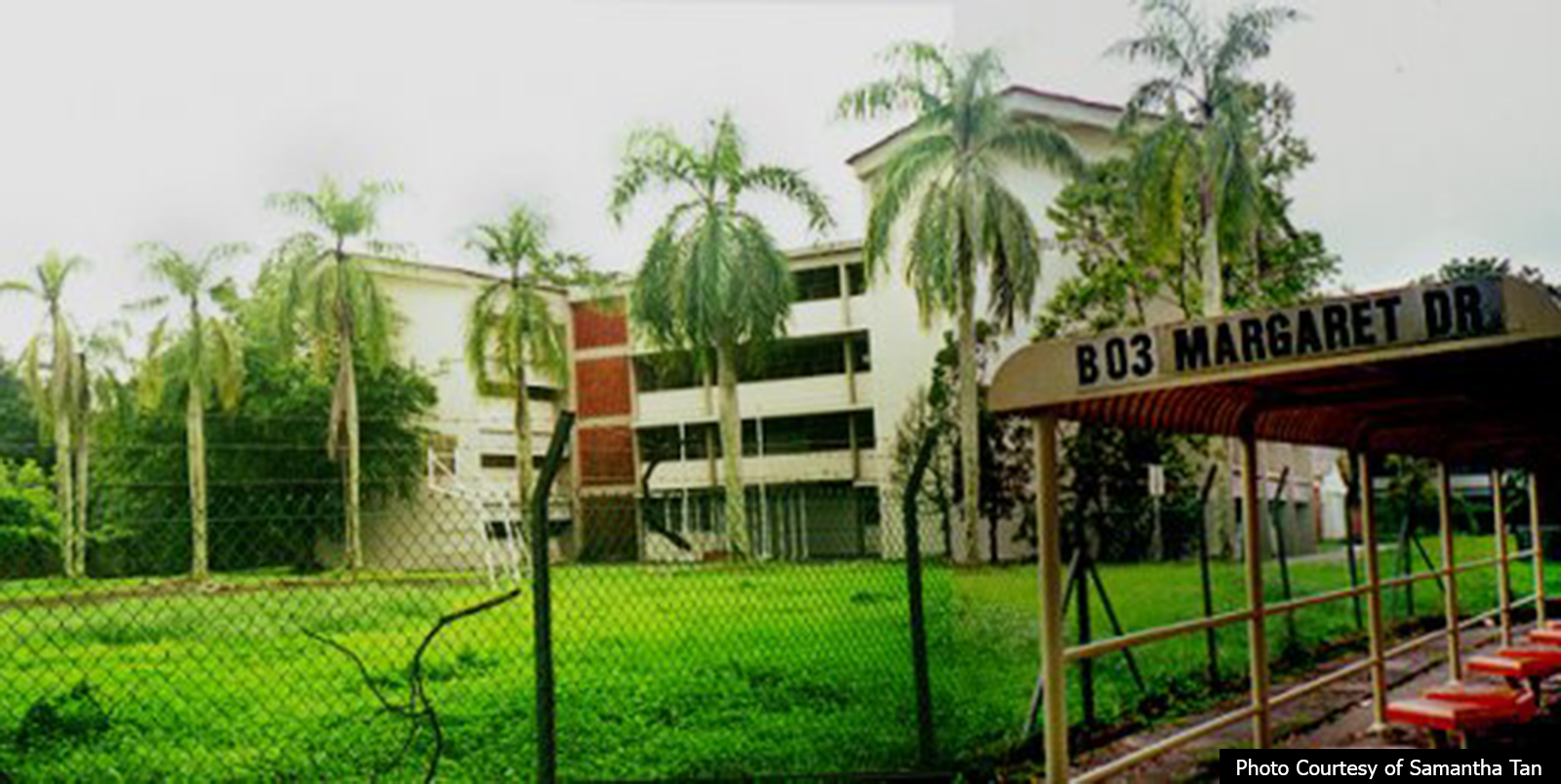
huayipri_samantha-tan2

The band was also formed in 1965 as a Bugle and Fife band. In 1970, it was converted to a brass band. Woodwind instruments were introduced in 1975. The band performed regularly at community functions and school concerts, as well as over the air and on television. It had been among the top three bands in the annual band competition for 12 consecutive years from 1967 to 1978. The band also won the Best Drum Major Award from 1973 to 1978. The band switched to playing concert music from 1979. It was awarded silver plaques in the 1980 and 1984 In-door Primary School Band Presentations. The band had been on Good-will Tours to West Malaysia and Brunei. (History lifted from Facebook)

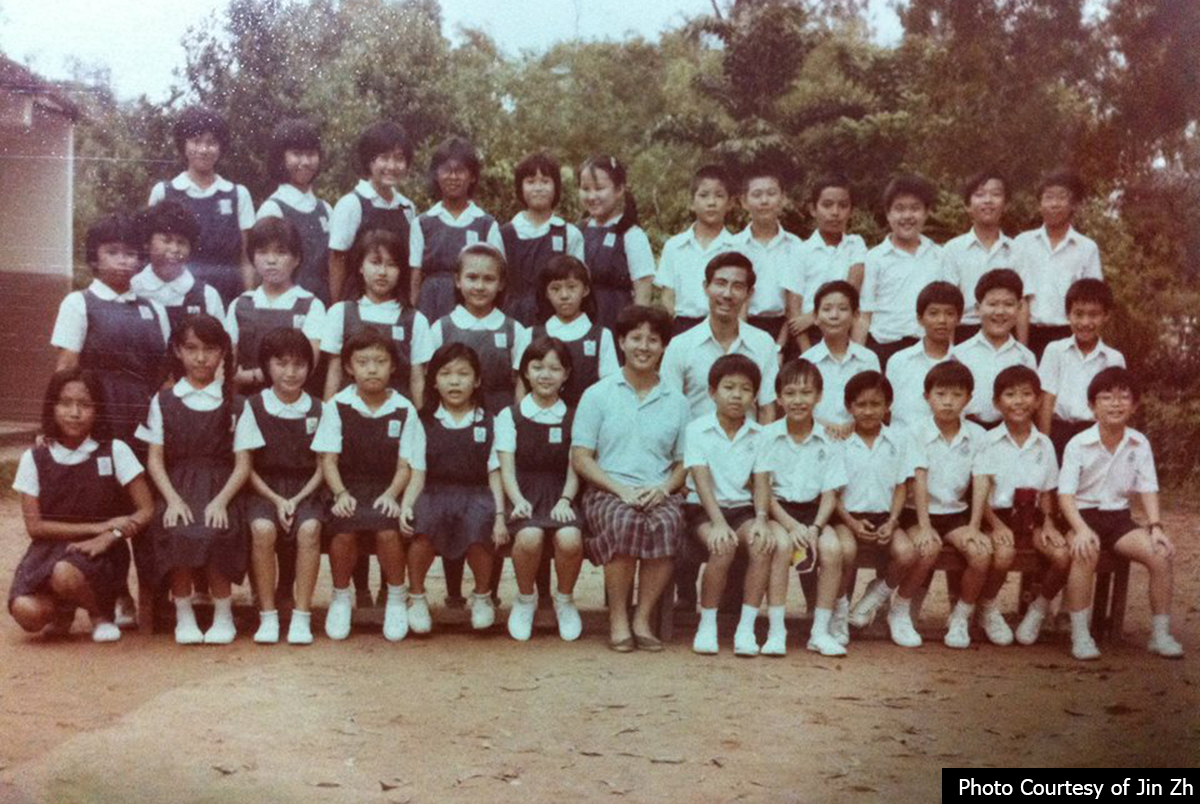
huayipri_samantha-tan

huayipri_Jin-Zh

To further prove how significant the school band was, it was even featured on the old Singapore’s fifty-dollar note:

huayipri_50dollarnote_md-noor

Hua Yi Primary was not demolished until 2009 and prior to that, it was an examination centre owned by MOE. The area is now however, a piece of flatten land.

Source: [1]


Seng Poh School (Tiong Bahru)

Closed in 1987

The Chinese-medium school was established as “Seng Poh Government Chinese Primary School” in 1956 and named after Mr. Tan Seng Poh (1830-1879). The three-storey school was located at Seng Poh Road (Zion Road) but was initially housed in two temporary buildings when it first started.

It was the first of the Government-controlled Chinese Primary Schools to be established and had, in its first year, expected to enroll some 680 pupils. This school proved popular with the Chinese community living in and around Tiong Bahru. It continued as a Chinese-medium school with both primary and secondary classes till 1981 when it was converted into an English-medium school. Like most schools in the vicinity, the Seng Poh Road School faced falling enrolment and was finally closed in 1987. The school building has since been demolished.

Source: [1] [2]


Kim Seng West School
Kim Seng East School (Tiong Bahru)

Merged to form Kim Seng Primary School in 1982

The year of establishment for both schools is not known, but it could be as early as in the 1950s. Located next to each other, the uniform for Kim Seng West was a white and green while Kim Seng East was white and blue. Due to their close proximity to Great World Amusement Park (just directly opposite along Kim Seng Road, now Great World City), most students would flock there after school.

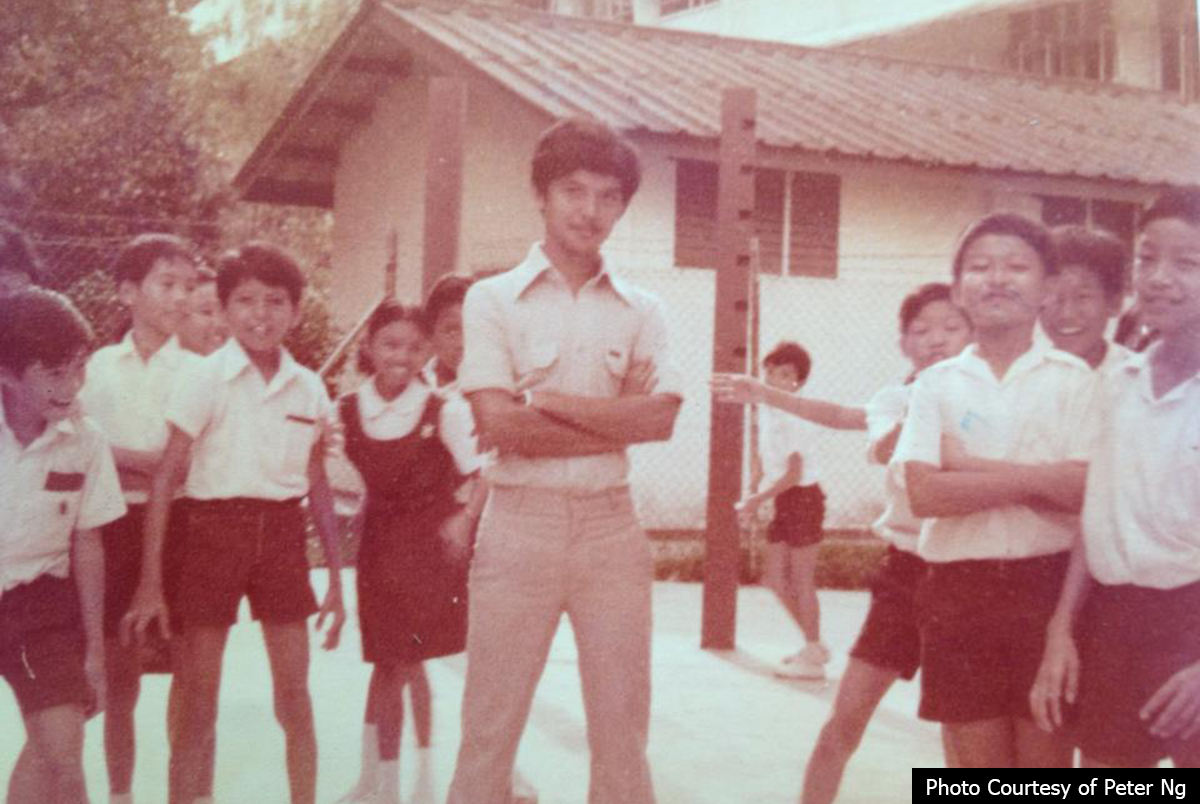
kimsengeastpri_peter-ng3

Kim Seng East School

Several schools in the Kim Seng Road area transformed to emergency relief centres for victims of the Bukit Ho Swee fire in 1961 with Kim Seng West School serving as the headquarters.
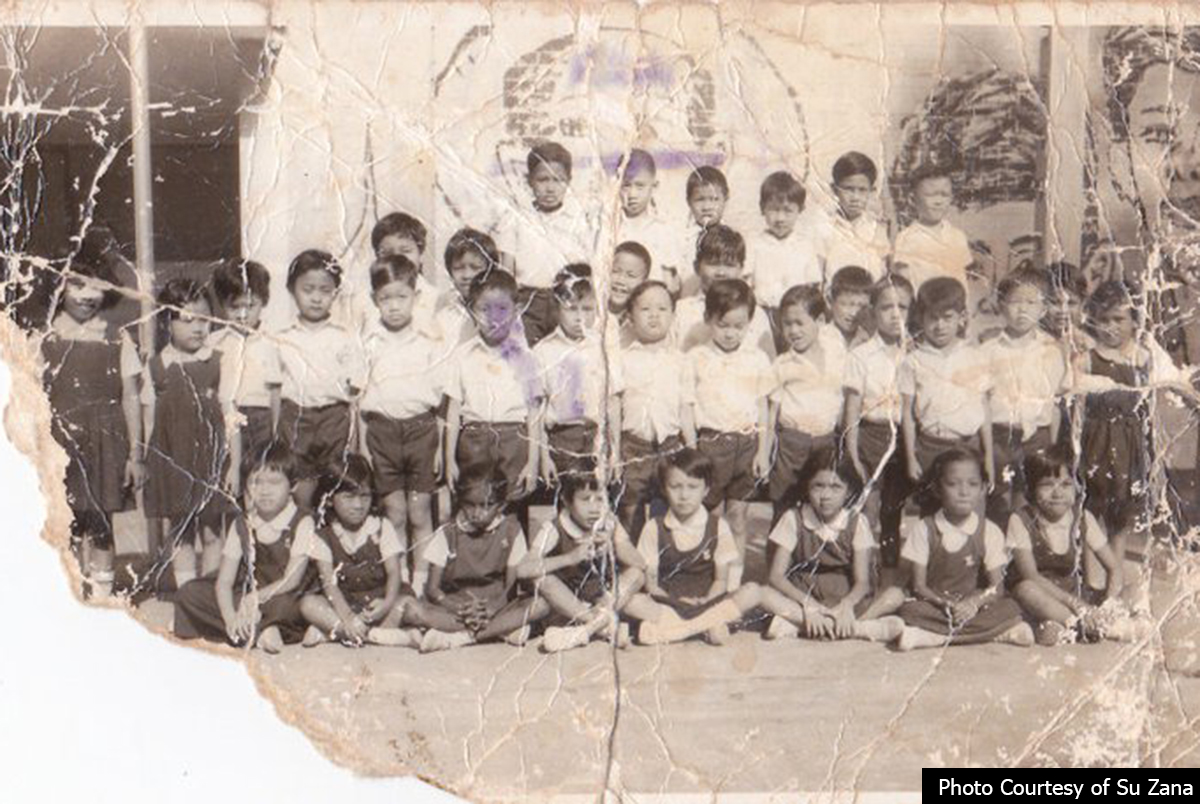
kimsengeastpri_su-zana

Kim Seng East School

kimsengeastpri_peter-ng2

Kim Seng East School

kimsengeastpri_peter-ng

Kim Seng East School

The campuses of Kim Seng West and East Schools and Kim Seng Technical Secondary School later became the Ministry of Manpower Employment Inspectorate building. However it has already been torn down and the land is now awaiting construction plans for the Great World station of the Thomson MRT line (but the station won’t be on the site itself).
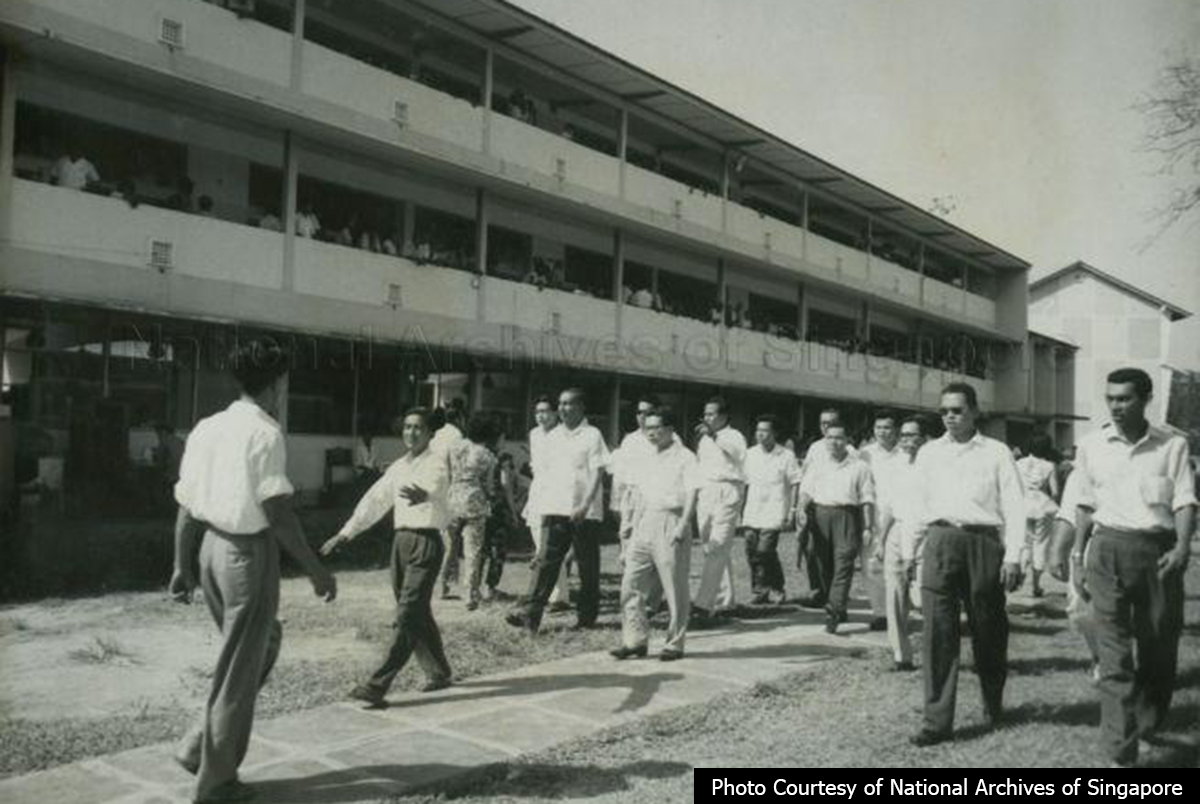
kimsengsch_yusofishak1961_NAS

One of the Kim Seng Primary Schools.. not sure what because NAS didn’t state.

Source: [1] [2] [3]


Kim Seng Primary School
River Valley English School
River Valley Government Chinese School (Tiong Bahru)

Merged in 1985 to form River Valley Primary School

Kim Seng Primary School was an amalgamation of Kim Seng East and West Schools (read above) formed in 1982.

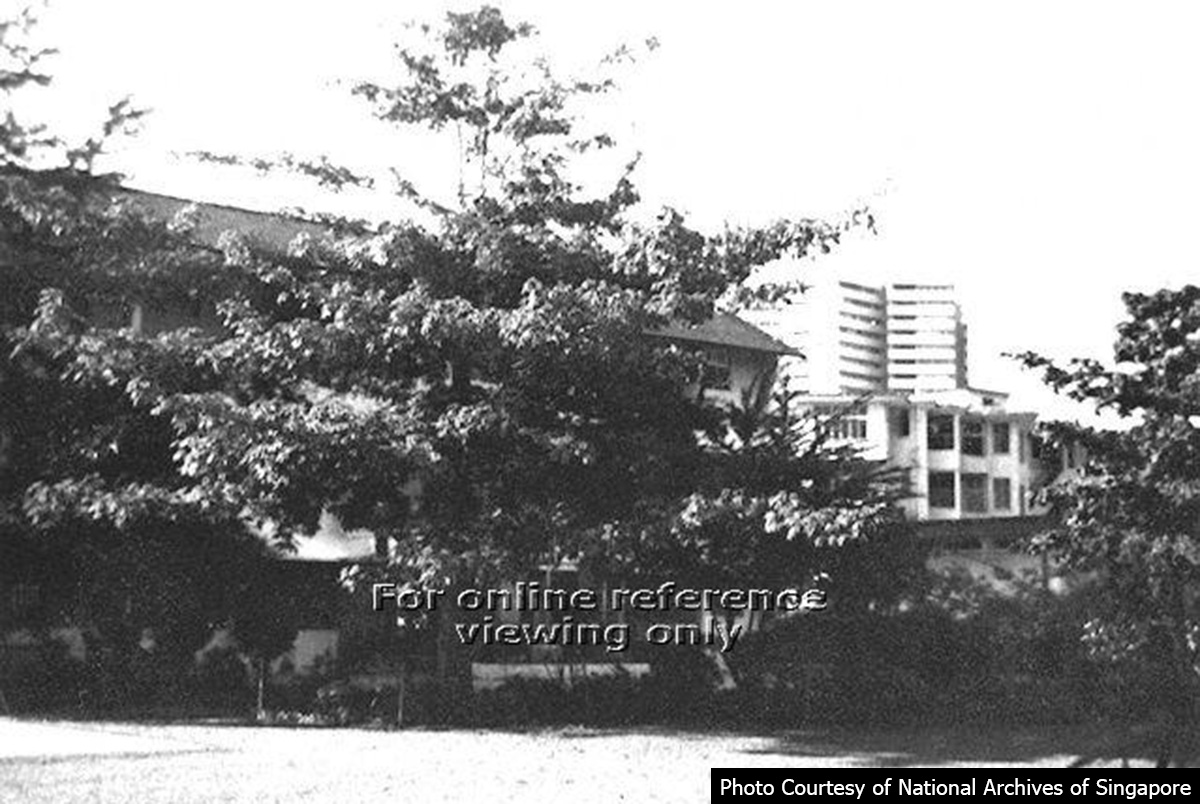
River Valley English School (RVES) was founded in 1959 along River Valley Road. What stood out about the school was the noodle stall which had been operating in the canteen since early 1960s. According to ex-students, the vendor allowed weekly or monthly orders where parents would pay for a week’s or month’s worth of noodles for their children. Thereafter, each child would be given a number that would be written in chalk on the tuckshop table just before recess. The student would then find his/her bowl of noodles brimmed with hot tasty soup awaiting his/her arrival on the table during the break. There was another vendor in the Chinese school that devised the same system reported on the newspapers so it could probably be referring to the same stall. This was implemented to save children the trouble of queuing up for food and to give them more time at the playground.

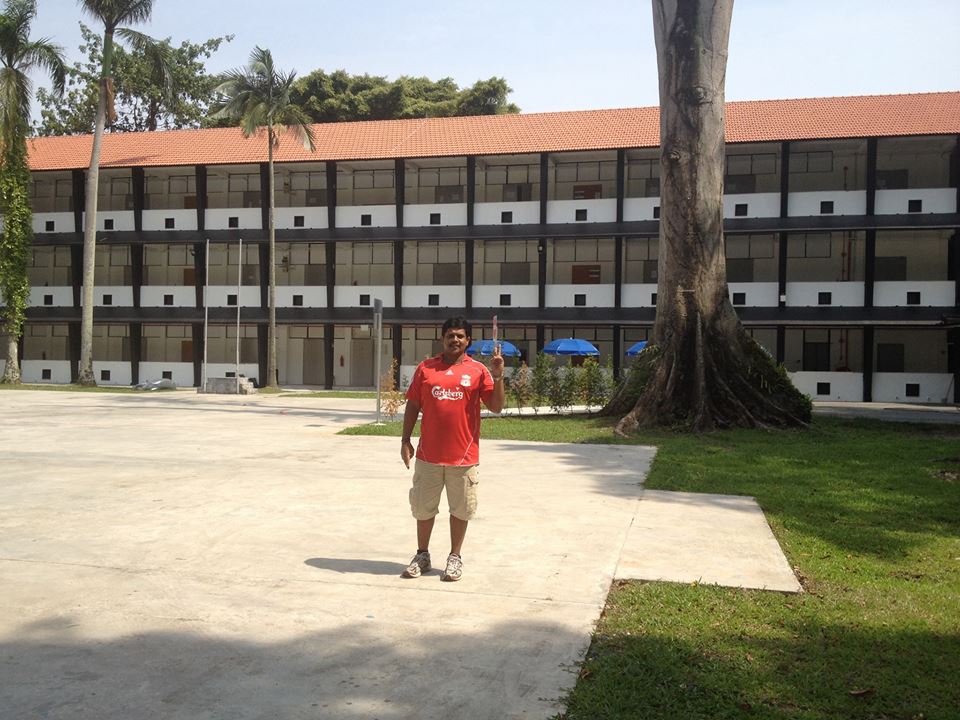
rivervalleyengsch_chionh-choon-lee2

River Valley English School

The stall relocated to the new River Valley Primary after the merger and ran for the next 2-3 decades. In those days, a bowl of noodles only costed 20 cents (it was 50 cents during my time. I believe it’s double the amount now). 20 cents for such VIP treatment! Where can you find such good deal now?

rivervalleyengsch_1975_NAS

River Valley English School in 1975

rivervalleyengsch_1972-1_NAS

River Valley English School in 1972.. RVES students absolutely running hehe.

rivervalleyengsch_1972_NAS

River Valley English School in 1972

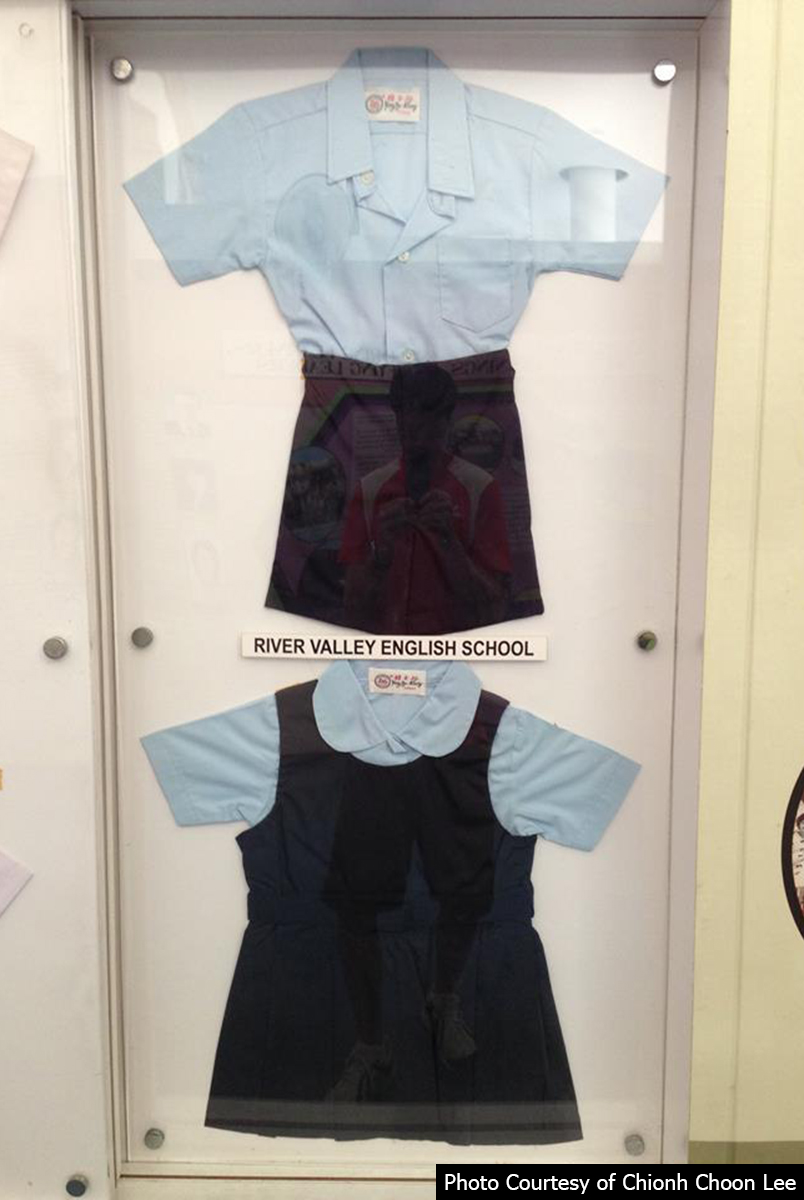
rivervalleyengsch_chionh-choon-lee

Uniform for River Valley English School (exhibited in River Valley Primary School). The blue has faded a bit.

Its Chinese counterpart, River Valley Government Chinese School, was located beside it, separated by a dental hut once again. Year of establishment is not know for this school but it could be around the same time as RVES, or maybe a year earlier. The River Valley schools also served as emergency relief centres after the 1961 Bukit Ho Swee fire.

rivervalleychinesesch_FB2

River Valley Government Chinese School

rivervalleychinesesch_FB

River Valley Government Chinese School

RVES’ school song (what’s left of it) is adapted in the new River Valley Primary’s school song. Actually I wouldn’t say it’s adapted because it’s ultimately the same thing. Only the school name mentioned in the song was changed. Also, on River Valley Primary’s school crest are three interlocked rings and each of these rings represent its parent schools. It’s probably the first crest I’ve come across so far that reflects the school history.

RVES, together with Kim Seng and River Valley Government Chinese schools, has already been torn down and its site is now designated to be the Great World MRT station.

Source: [1] [2] [3] [4] [5]


Havelock Primary School (Tiong Bahru)

Closed in 1984

Once known as Havelock Road School, it was a small mixed single-storey school established in 1952. It was located at 105 Ganges Avenue where Boys Brigade HQ and Training Centre presently is. Most of its students came from Hokkien-speaking homes.
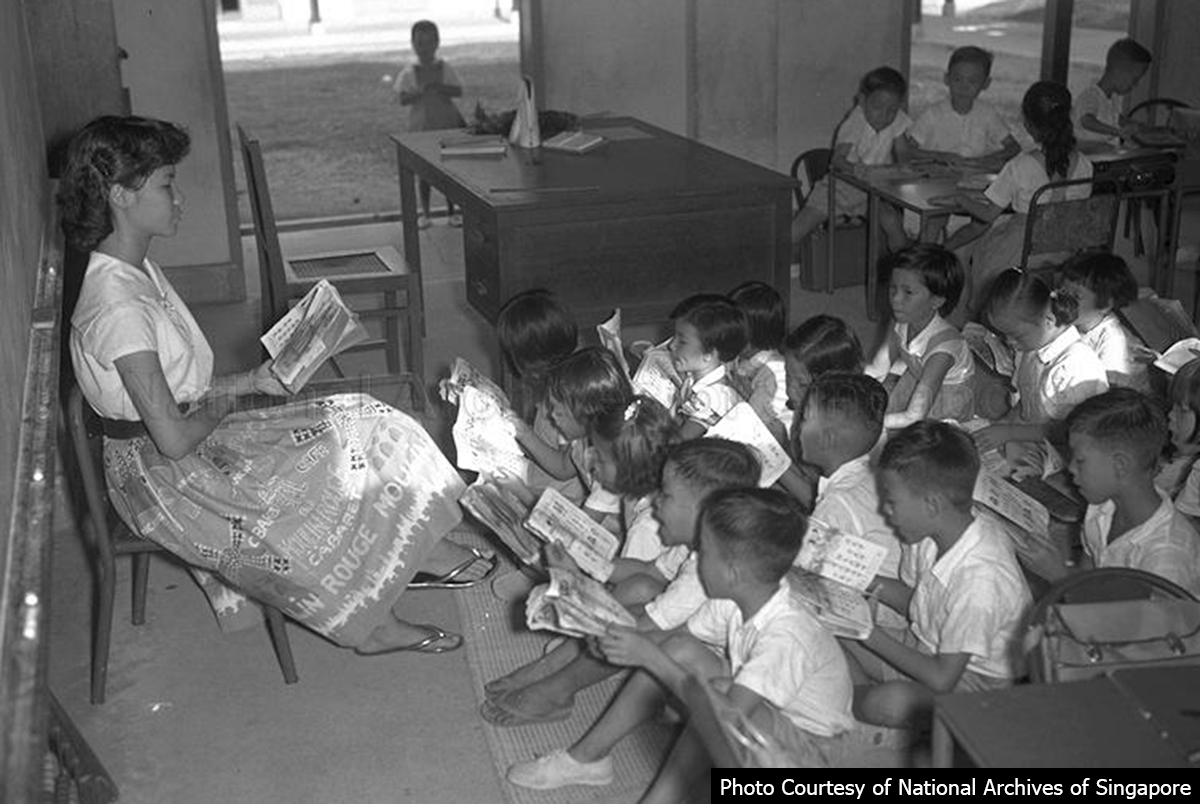
havelockpri_1959_NAS

1959

The school performed well academically with 100% passes in the 1981 PSLE.
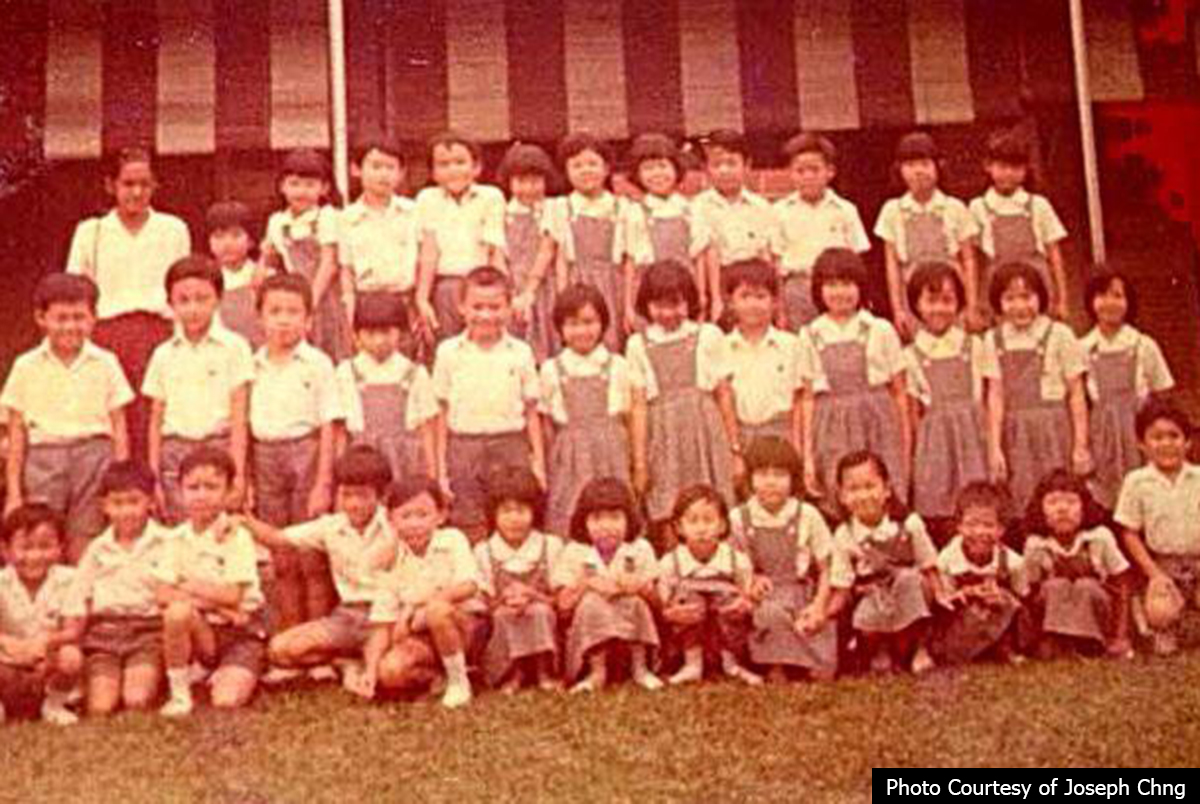
havelockpri_1983_joseph-chng

1983

Havelock Primary was closed due to declining enrolment and 520 students from the school subsequently joined Delta Primary (see below).

Source: [1] [2] [3] [4] [5] [6]


Delta East Primary School
Delta West Primary School (Tiong Bahru)

Merged in 1985 to become Delta Primary School
Closed in 1990

Delta East (founded in 1955, was known as just Delta Primary School before Delta West sprang up) and Delta West (founded in 1961) were separated by a low fence and a monsoon drain. The barrier represented a boundary, and also a gateway to Delta East grounds where they had delicious home-made red bean ice cream that wouldn’t drip and dirty your uniform. However, the alert prefects who guarded the entrance of Delta East made intrusion difficult. It was also very easy to spot students from Delta West due to the difference in uniform because in contrast to the chocolate brown and white uniform East students wore, they were in blue in white.

deltawestpri_1971_NAS

Delta West Primary in 1971

The close proximity of both schools meant that they would frequently engage in friendly races to outdo each other in sporting and academic performances. There would always be sports competitions between both schools.

After the merger, Delta Primary took over two school compounds and two canteens. However the red bean ice cream was no-more by then. There used to be an F&N factory somewhere behind both schools too!

Source: [1] [2]


Delta Circus Primary School (Tiong Bahru)

Closed in 1991

The four-storey H-shape building was built in 1967 (beside Tiong Bahru Secondary School) and officially opened in 1970. It was named after the traffic circus at the junction of Havelock Road, Alexandra Road and Delta Road where the school was located but probably due to the lengthiness of the name, students chose to call it “Dog Cat Pig School” instead (using the school’s initials). Opposite the school was a food centre at Tiong Bahru Park where students would buy drinks after playing.
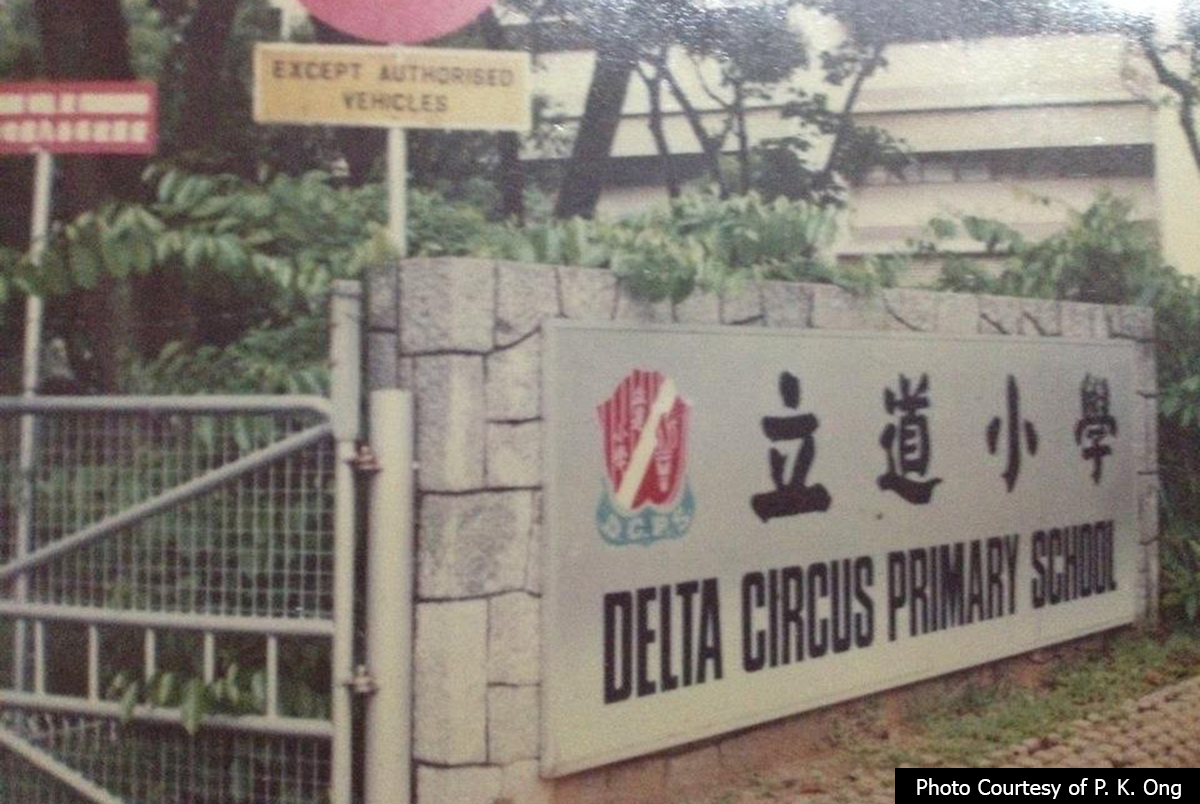
deltacircuspri_p.k.-ong3

Entrance

deltacircuspri_p.k.-ong

deltacircuspri_p.k.-ong2

deltacircuspri_p.k.-ong4

deltacircuspri_1974_NAS

1974

In its 24 years of existence, there were quite a number of well-known figures who visited the school. They include Queen Elizabeth, Danny Kaye (actor, singer, dancer, comedian and first ambassador-at-large of UNICEF) and our dear Mr Lee Kuan Yew for the Use-Your-Hands campaign.

Source: [1] [2] [3]


Kim Seng Technical Secondary School (Tiong Bahru)

Merged into Delta Secondary School in 1993
Merged into Bukit Merah Secondary School in 2004

Established in 1965, the school started with only Secondary 1 classes – 24 classes in the English stream and 16 in the Chinese stream.
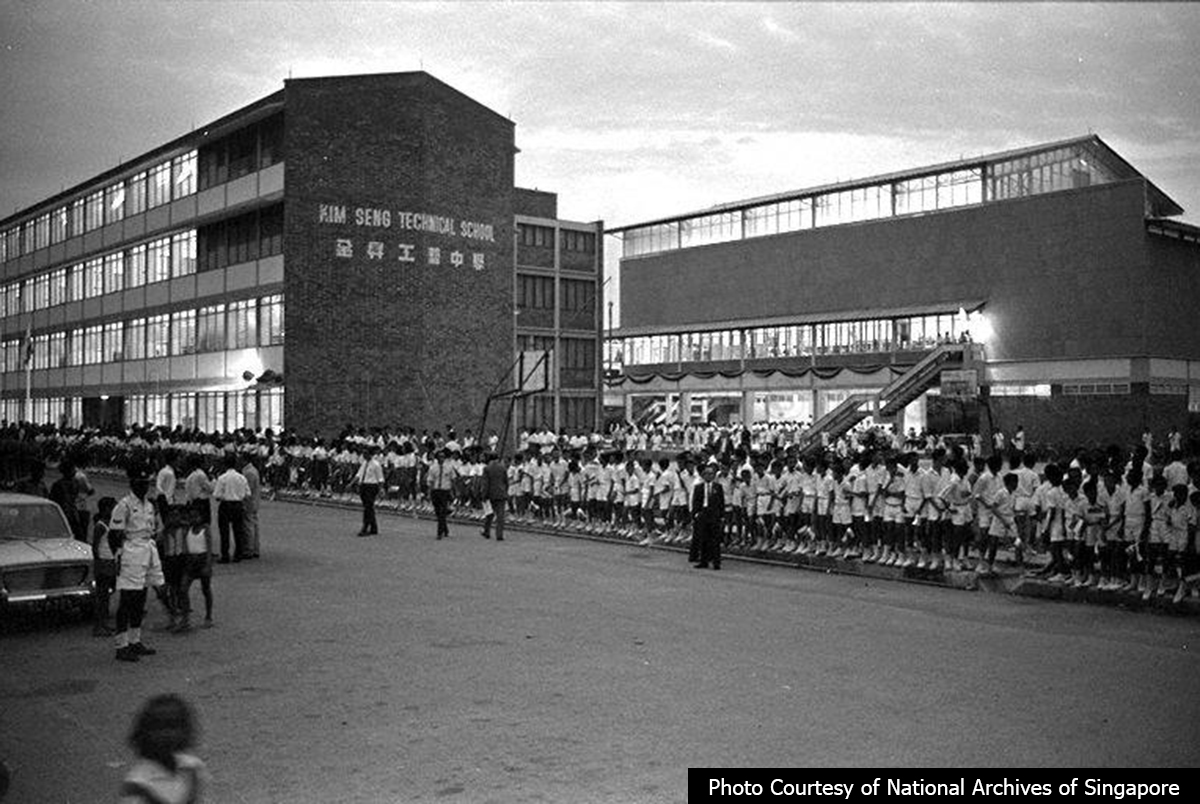
kimsengtechsec_1966_NAS

1966 official opening of Kim Seng Technical School

Kim Seng Technical had several blocks. The main four-storey block comprises 16 classrooms, a lecture room cum AVA room, a language room, a library, a reading room, a computer room, a typewriting room, an art-and-craft room, a bookshop, a multi-purpose room, a staff room, a general office and the principal’s room. The other units in the school premises are a two-storey block comprising the hall-cum-canteen, a single-storey science block with four laboratories and a single-storey block housing the judo room and music room.

kimsengtechsec_yearbook

kimsengtechsec_NLB

As the school started without a field (it eventually had one), they had to make use of River Valley Chinese Middle School’s (now known as River Valley High School before it relocated to Jurong West) field for their PE lessons and sport practices for a number of years.

kimsengtechsec_1971_NAS

1971

After the school was closed down, it became Temasek Poly’s third campus (for its engineering courses) until 1995. Then, it was taken over by Ministry of Manpower (Foreign Manpower Management Division). The building has already been torn down.

Source: [1] [2]


Tuan Mong High School (River Valley)

Closed in 1994

Tuan Mong School (端蒙学校) was set up in 1906 as a primary school by public-spirited Teochew clan leaders. It was at 52 Hill Street until 1918 when it was relocated to Tank Road, which is on the fringe of the Central Business District. It was also very near to shopping malls like Plaza Singapura and Daimaru (Liang Court) where students would always roam after school (they were not supposed to do that, as repeatedly reminded by their principal!).
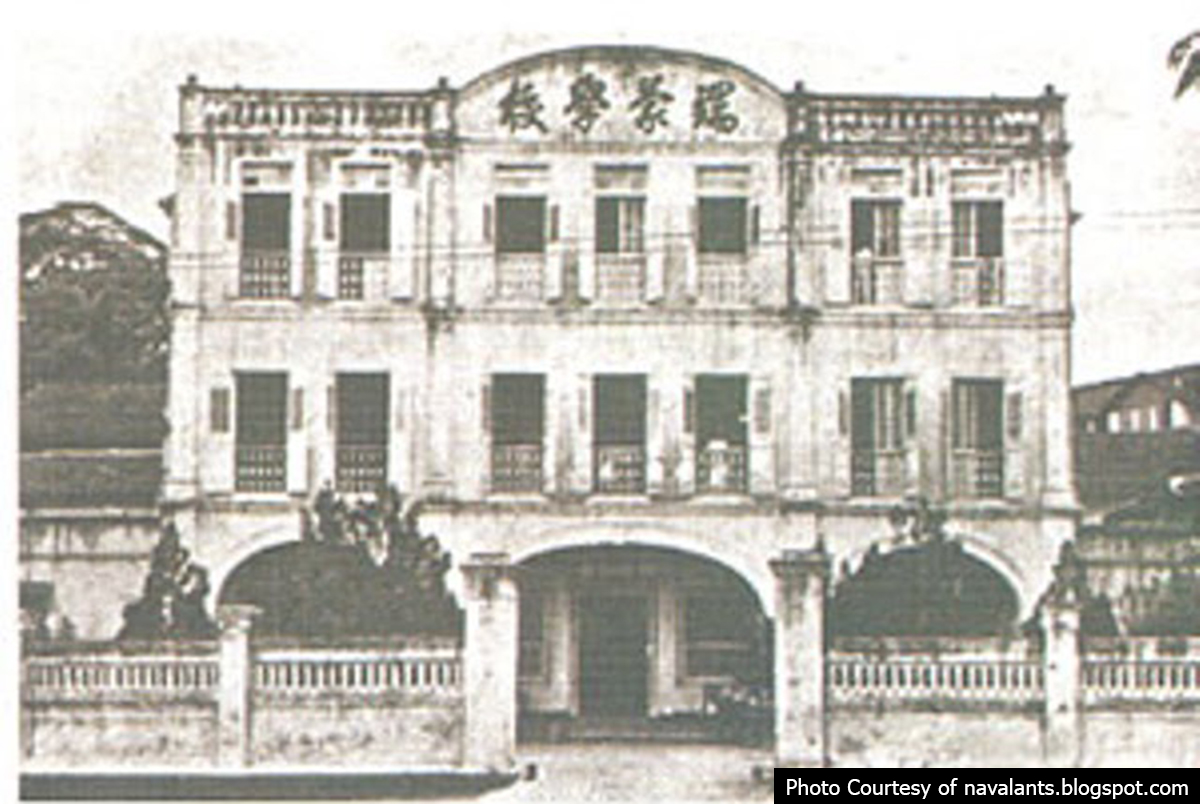
tuanmongsch_52hillstreet_navalants.bs

Old Tuan Mong School at 52 Hill Street

As with schools built by the various clan associations in Singapore, Tuan Mong served the education needs of Teochew children and was staffed by Teochew teachers using the dialect as the medium of instruction in its early days. It later used Mandarin and also English.

In 1953, the Ngee Ann Kongsi took over the management of the school. Two years later, it became known as Tuan Mong High School (端蒙中学) when secondary levels were included.

tuanmonghighsch_1999_heshang-jeep-and-sianghwee

Spot Tuan Mong High School’s signage on bottom left corner

In 1960, the old building gave way to a brand new structure at the same site. It made newspaper headlines for its many “firsts”.

The new building. built at a cost of about $1 million, was a combination of eastern and western architecture styles. It incorporated modern features with a striking ancient Chinese-styled tiled roof.

It was also installed with the latest communication and broadcast facilities. The school was the first in then Malaya to have a complete built-in two-way public address system with an inter-communication unit attached. This enabled two-way communication between the headmaster and the students.

Tuan Mong also had a “master clock system” which controlled the 48 classrooms, canteens and halls. At set intervals, the central system automatically set off chimes in the various classes to signal the end of a class, recess or the end of a school day.

The school, which took in about 1,900 students in 1960, occupied the three upper floors of the four-storey Teochew Building. The lower floor housed the offices of the Ngee Ann Kongsi and the Teochew Poit Ip Huay Kuan.
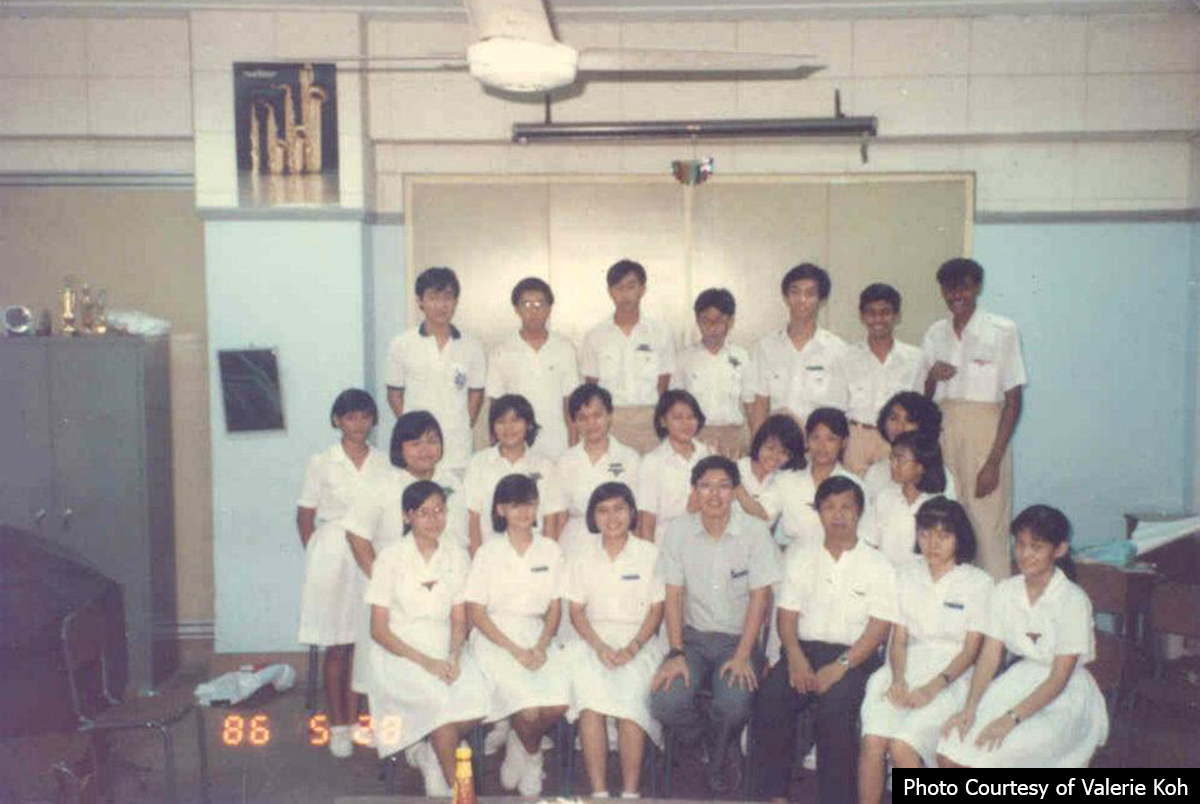
tuanmonghighsch_valerie-koh

In 1980, the Education Ministry posted four English-stream secondary one classes to the school. However, the school closed due to falling enrolment as more schools were built away from the city area and nearer to housing estates where the bulk of Singapore’s population lived.

The building still stands today as the Teochew Building. Some of its classrooms are currently used by Ngee Ann-Adelaide Education Centre.

(History quoted from TMHS’ Facebook page with some revision)

Source: [1] [2] [3]


Trafalgar School (Tanjong Pagar)

Closed in early 1980s

Trafalgar Primary was a co-ed school established by the British (before 1950, I suppose, or early 1950s) beside the sea at South Quay, a Malay kampung area. It had a very nice environment with coconut tree plantations in the vicinity. The rocky sea fronted the single-storey school and students would go there to catch crabs after lessons.

trafalgarpri_sg-quitters.bs

Lessons were taught in English and even though the school was formed by the British, most of the teachers there were Asians.

On a side note, there used to be a Trafalgar Street at Tanjong Pagar district but it has already been struck off from the map.

Trafalgar School was demolished for the expansion of the Tanjong Pagar container terminal and the sea is now a reclaimed land.

Source: [1] [2] [3] [4] [5]


St. Teresa’s High School (Bukit Merah)

Closed in 1998

This co-ed school (yup, not a girls’ school like St. Theresa’s Convent) was established in 1935 by Reverend Father Stephen Lee (of The Church of St Teresa) as St. Teresa’s Sino English Primary School in a rented bungalow at 514, Kampong Bahru Road to provide Chinese vernacular education for Chinese (usually the Hokkien and Teochew speaking) children within the neighbourhood. A new school building (Block B) was later built next to the Church of St. Teresa at 480, Kampong Bahru Road and was officially opened by Apostolate Delegate Archbishop Leo Kierkles 28 October 1938. Lessons were disrupted during the Japanese Occupation and the building was served as a refugee centre. After the war, it became a school-cum-orphanage with the founding of St Teresa’s Orphanage. During this period, the church also founded the De La Salle School (previously an all-boys school, now at Choa Chu Kang) and Sacred Hearts Boys’ School (now defunct) within its premises.

stteresashigh_1970-1_NAS

1970

stteresashigh_1970_NAS

1970

In 1965, it branched out into secondary education and at the same time, renamed the school St. Teresa’s Sino English School. A new wing (later Block A) was built and completed in 1971 as a result. Students took technical classes at St. Thomas Secondary School and the school also took in St. Teresa’s High students when it closed.
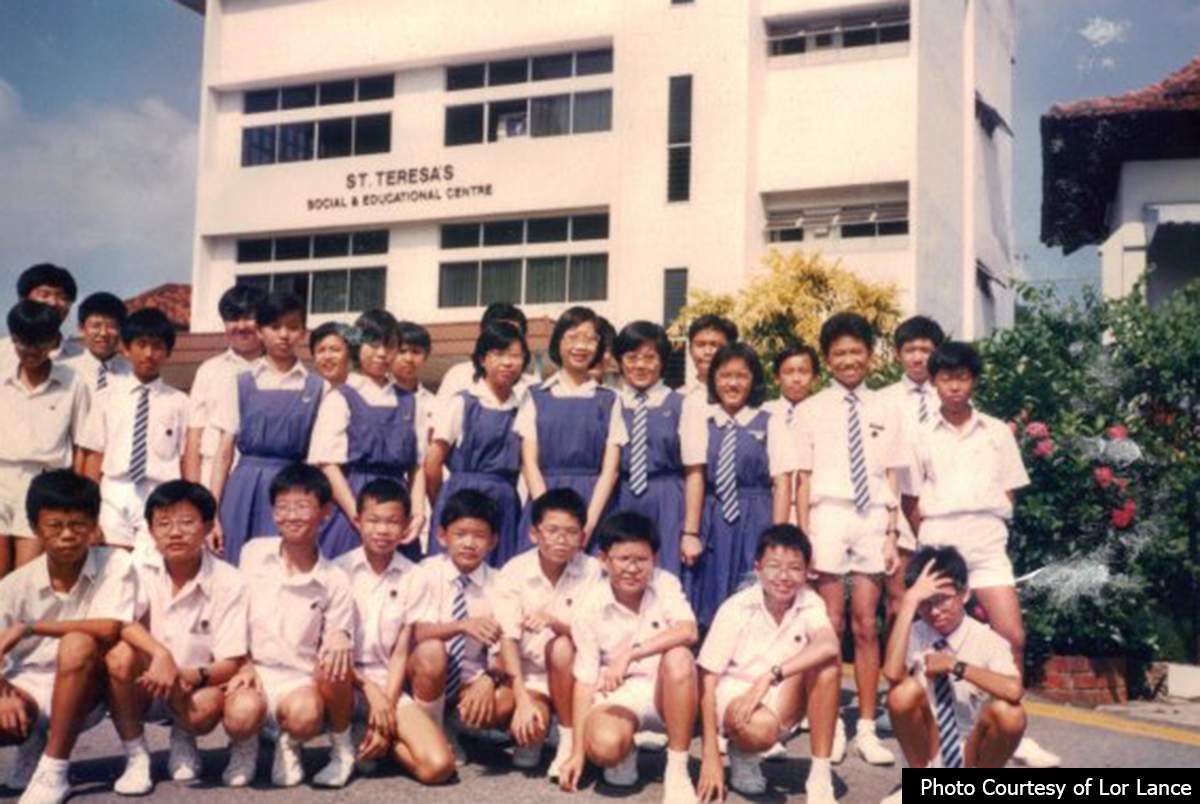
stteresashigh_class1Aof1987_Lor-Lance

Class Sec1A of 1987

stteresashigh_volleyball_Sharon-Goh

Volley ball team

stteresashigh_class2cof1972_Lam-Jen-Mun

Class Sec2C of 1972

Ex-students recalled playing block catching at Bukit Purmei and Chinatown Point. When questioned by the irritated residents in that area, the girls claimed to be from CHIJ St Theresa’s Convent while the boys from Gan Eng Seng School (naughty, naughty). In another incident, one St Teresa’s High schoolgirl, still in her uniform, was found drenched in blood at one of the HDB blocks nearby. She was apparently stabbed at the shoulder area by her then-boyfriend, who was later imprisoned for 7 years because of that.

Source: [1] [2] [3] [4]


St. Thomas Secondary School (Telok Blangah)

Closed in 2000

Founded in 1955, the government-aided secondary school was originally located at Mar Thoma Road (Whampoa). It relocated to Telok Blangah in 1983 when the government acquired its former site to build the Central Expressway (CTE).

stthomassec_FB

The new school at Telok Blangah Street 31 was officially opened by the Rt Rev Joseph Mar Irenaeus, the Diocesan Bishop of the Mar Thoma Syrian Church in Singapore. It had four blocks – a four-storey classroom block, a science block which included an audio-visual aid room, a three-storey workshop block and a two-storey assembly hall and canteen block. A rifle range was also added as part of the school’s facilities. Just by this alone you could already visualise how huge the school was.

In 2000 (which was the school’s final operating year), two students of St. Thomas Secondary ganged up with three teenage friends and broke into the school where they stole stationery, canned drinks and $2 in cash (huh?).

Notable alumni of St. Thomas include MP for Aljunied GRC Pritam Singh (from the Workers’ Party) and 2006 Project Superstar contestant-turned-Mediacorp actor Jeremy Chan Ming Yao.

Source: [1] [2] [3] [4] [5] [6] [7]


Pasir Panjang Secondary School (Pasir Panjang)

Closed in 1995

Founded in 1955, Pasir Panjang Secondary first shared the same building with Crescent Girls School – or Alexandra Estate Secondary School when it was still a mixed school – until the latter’s own building was ready. A year later, boys from Alexandra Estate Secondary transferred to Pasir Panjang Secondary which became an all-boys school until 1962. Thereafter, it remained co-ed until it closed down.

pasirpanjangsec_FB

P/S: “The Duyong” is the name given for the school’s annual magazine. “Duyong” means “mermaid” in Malay.

pasirpanjangsec_FB2

pasirpanjangsec_FB3

The school performed well in debates, sports (e.g. soccer, basketball, cricket) and the arts. The school had organised several art exhibitions to display exhibits done by its pupils since 1950s. In 1959, Teo Eng Seng (now artist and Cultural Medallion recipient), a Secondary Five student who was also the president of the school’s art society, became the first schoolboy to hold a “one man (art) exhibition” while still at school. In the same year, 18-year-old Tan Cheng Yeow won the first prize in the “symbol design competition” organised by Singapore Health Education Council for all secondary schools. What outstanding achievement!

Hence it’s no wonder that the school was able to produce talented artistic individuals like Ong Kim Seng,

Pasir Panjang Secondary was also the first school to use computer to teach Hanyu Pinyin.
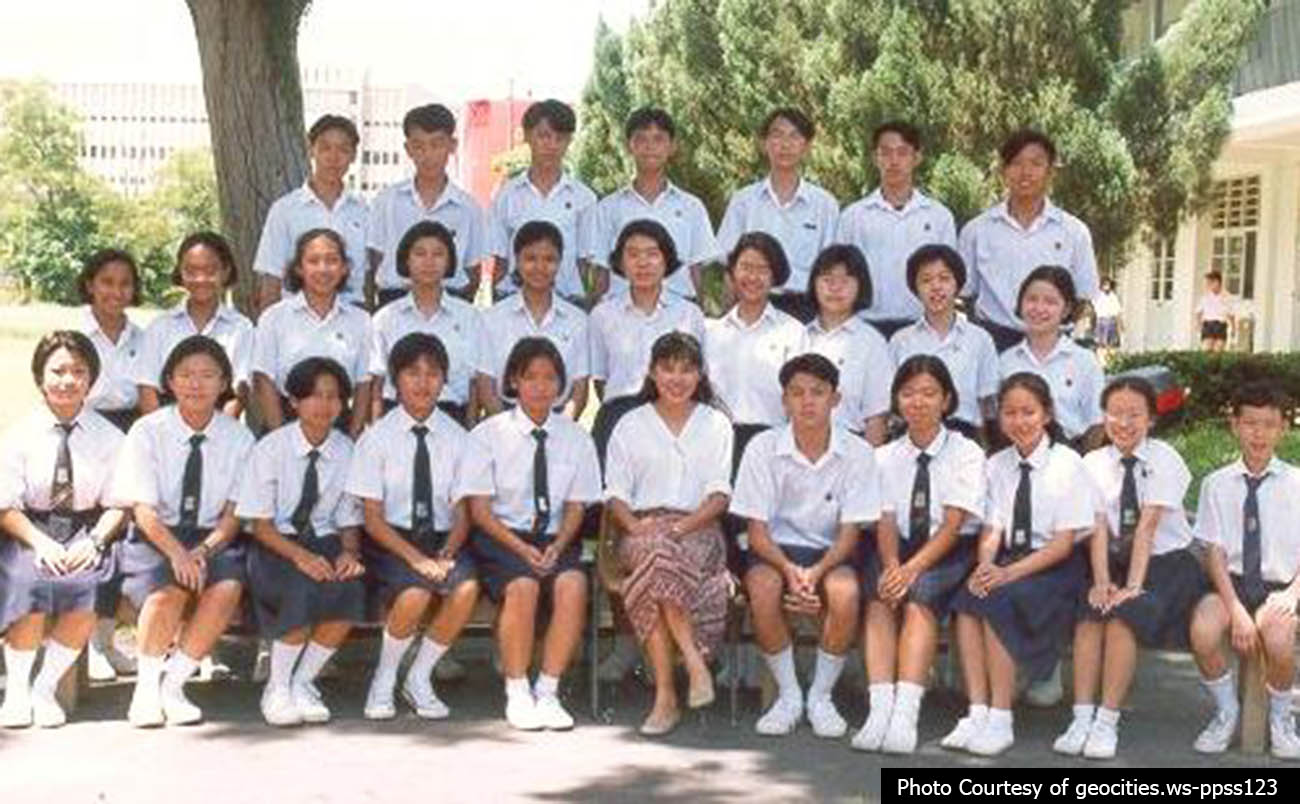
pasirpanjangsec_1995_geocities.ws-ppss123

1995

Despite its glorious moments, the school couldn’t escape the effect of declining birth rate and population shift. It was earmarked in 1988 to close due if demand still continued to wane in the following years. In 1987, it only had 575 students which was below the average of 1200 students in other schools. It didn’t manage to keep up with the numbers and hence had to close. The rest of its students continued their studies at Hua Yi Secondary School.

Source: [1] [2] [3] [4] [5] [6] [7] [8] [9] [10]


Batu Berlayar School (Pasir Panjang)

Closed in early 1980s

Established in the 1950s (according to the dates of relevant news articles), Betu Berlayar was a primary school named after a large historic rock that is shaped like a sail. It was largely populated by Tamil students.

Details about this school are unfortunately limited. Provision of additional information from ex-students is highly appreciated 🙂

Source: [1] [2]


Jin Shan Primary School (Clementi)

Closed in 1997

Founded in 1982 and officially opened in 1986 at Sunset Grove, it had a 36-classroom block with special rooms for audio-visual aids, television, extra-curricular activities and second-language laboratories. It also had a multi-purporse hall, library and science laboratories. It shifted to Clementi New Town in 1984.

jinshanpri_shanthi-selvarajan

Jin Shan was one of the few schools to start an after-school care scheme to promote the welfare of pupils from low-income families who were unsupervised after school. The school canteen seemed to have awesome food as well with.. stall 1 (Malay) selling unique-tasting chicken wings and drumlets in a blue basket, stall 2 (Chinese) selling bite-sized snacks such as fried wanton and nuggets, stall 3 (drinks) selling pink champagne drink which was a hit among the students, stall 4 selling noodles and stall 5 selling curry and sardine puffs (epok-epok!). Wow, typing that just made my stomach growl.

jinshanpri_hazel-laymun

Nan Hua Primary School is now located at former Jin Shan Primary at Jalan Lempeng.

Source: [1] [2] [3] [4]

* * *

Another record breaker with 9600 words! Strange, because it feels a lot shorter than the previous two posts.

Thanks for reading once again! I hope you enjoyed this entry nonetheless! I will still continue to churn out more HISTORY posts if necessary 🙂 I aim to keep these entries as accurate as possible so please let me know if you spot any errors in the comments below, or if you have pictures to provide for schools that don’t have any above. Also, lots of thanks to those who have contributed additional information and pictures for my previous posts. I really appreciate the gesture and will find time this week to include them in the write-up.

Have a story to share about your decommissioned school? Let me know in the comments below! I may include that in my next write-up (in progress) 🙂 And as you can see, some schools mentioned above don’t come with pictures. That’s because I can’t find them online so if you have some pictures of your school, feel free to share them!

Main source:
National Archives of Singapore
NewspaperSG (National Library Board)
Singapore Memory Portal
Facebook Pages of Schools
(In case some of these links become inaccessible, you may retrieve them through Archives.org)

Read also:
HISTORY: Closed and Merged Schools in Singapore (PART 1)
HISTORY: Closed and Merged Schools in Singapore (PART 2)
HISTORY: Closed and Merged Schools in Singapore (PART 4)

HISTORY: Closed and Merged Schools in Singapore (PART 2)

WARNING: This post requires high amount of bandwidth! Wi-Fi connection advised.

Hello again, everyone!

This post has come earlier than planned because of the recent news about the merger of 8 secondary schools. It’s pretty sad as some of these schools were once a merging party not long ago, and now they have to face it again. Since there are many more schools that I did not cover previously, I thought I should do a follow-up post to try and include as many defunct schools as possible including the 8 latest victims.

In my previous entry, I mentioned some causes that could have led to the closure of most schools (e.g. population shift, ageing facilities etc.) but I failed to mention one crucial point. Remember the post World-War II baby boom during the late 1940s to 1950s? The sudden increase in population called for more schools to be built then (which makes sense, considering that most of these closed schools were built in the late 1950s-60s when most of the children were ready to be schooled) and some even had insufficient vacancies. Then came the 1970s-1980 when the Stop at Two programme was introduced to control the population growth in Singapore. The programme pushed for small nuclear families and penalised couples for having more than three children (no priority given in school registration to third and subsequent kids of parents who had not been sterilised before the age of 40). As the existing children got older, the number of schooling kids in the estate reduced (since no one dared to procreate anymore). Thus, the enrolment in most neighbourhood (or “estate”) schools started declining which subsequently forced them to close.

Therefore it was very common for students to keep changing schools as a result of school closures in the past, so don’t be taken aback by people who have attended numerous schools back then. They simply had no choice!

Check out PART 1, PART 3 and PART 4 if you haven’t!

Anyway, back to my topic on defunct schools. Here is the continued list in no particular order again (I try my best to rearrange them according to districts):

* * *

Monk’s Hill Secondary School (Newton)

Merged into Balestier Hill Secondary School in 2007

The school’s history began in 1958 on a plot of land that was once the site of a Chinese monastery, hence the name ‘Monk’s Hill’. It became an integrated school in 1961, offering both English- and Malay-medium education to its intake of pupils but both mediums were merge in 1976. From then on, it has established itself as an English-medium school. It became a single-session school when it shifted to its new premises at 12 Winstedt Road in 1993.

OLYMPUS DIGITAL CAMERA

monkshillsec_nama-kita-zana

Sec4-3 of 1991

Sec4-3 of 1991

In 1960, Monk’s Hill presented its first batch of candidates for the national School Certificate Examination. In 1964, the school song was composed and it held its first Speech and Prize-Presentation Day in 1967.

Source: [1] [2] [3]


Newton Boys’ School (Newton)

Merged into Monk’s Hill Primary School in 1978

Newton Boys’ was established in 1956, right next to Monk’s Hill Primary School. It was one of the schools in Cairnhill-Newton area that was hit by declining enrolment. Due to its inability to sustain economically, it ceased operations 21 years after its opening. While students could still utilise Newton Boys’ premises, they were to be under the charge of Monk’s Hill Primary School.

1968

1968

2013

2013

1970

1970

1961

1961

1968

1968

No further information can be found. I did come across “Winstedt School” (also in the vicinity but closed in 1973) while trying to gather more information about Newton Boys’ but I am not certain if these two schools were in any way related.

Source: [1] [2] [3]


Monk’s Hill Primary School (Newton)

Closed after 1986 (exact year unknown)

Like Newton Boys’, Monk’s Hill Primary started out as an all-boys school. Monk’s Hill Primary and Newton Boys’ were relatively near to each other and students from both schools would come together to play the “Police and Thief” game. Otherwise, they (the boys in particular) would be “fighting” over girls from neighbouring Anthony Road Girls’ School.

The school’s year of establishment is not known, but it could have been around since 1950.

monkshillpri_khamis-mhps

monkshillpri_roslinda-mohd

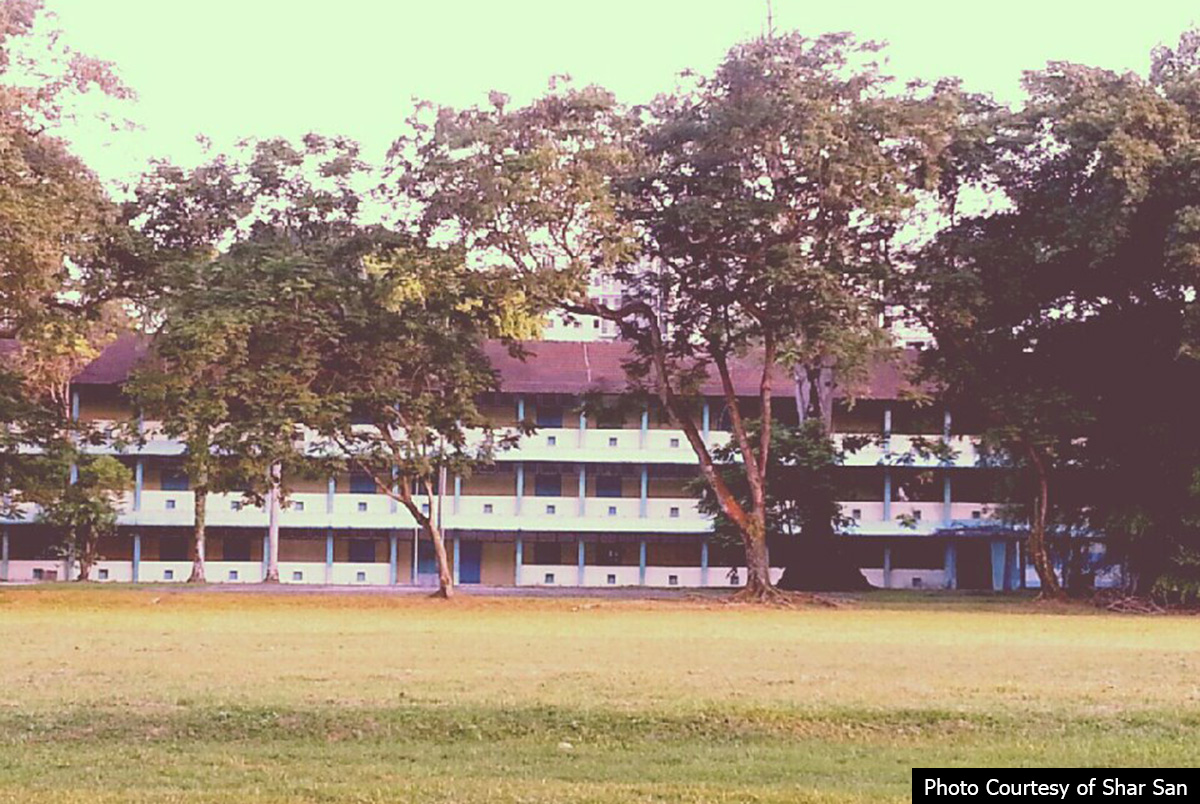
monkshillpri_shar-san

Monk’s Hill Primary merged with Newton Boys’ School in 1978 and operated out of the latter’s campus. One block of its building was converted into a language centre for secondary and junior college students taking French, German and Japanese under a special Education Ministry scheme. Prior to that, it was used by the Vocational and Industrial Training Board.

In 1957, Hua Yi Secondary School moved to Monk’s Hill Primary’s building (probably shared) and only stayed there for a year before shifting again to its very own building at Margaret Drive.

Source: [1] [2] [3]


Cairnhill Primary School (Newton)

Closed in 1980

Started as an all-girls school in 1958 (verification needed) at the present site of Raffles Girls’ Secondary School today, it shifted to Cairnhill Road a year later and possibly at the same time became co-ed. (History quoted from Hamida Pagi)

Following a steady decline in its enrolment, the Ministry of Education then decided to phase out the school by the end of 1980. Its students were given alternative places in nearby schools such as Monk’s Hill Primary and Anthony Road Girls’ School which were also plagued by poor enrolment. Both said schools are no longer existent today.

cairnhillpri_1960_NAS

1960

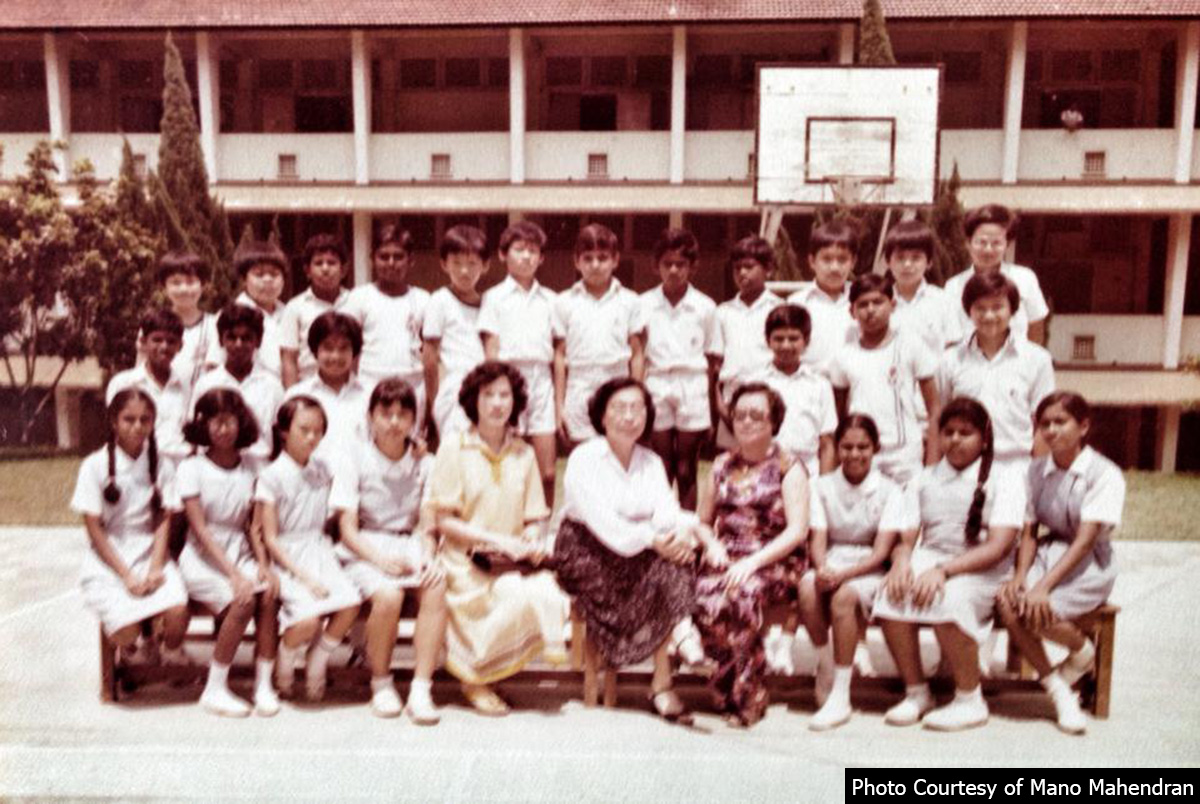
cairnhillpri_mano-mahendran

After Cairnhill was demolished, Anglo Chinese School (Junior) took over its site for about two decades before finally shifting to its present location at Windstedt Road. The site at Cairnhill Road is now occupied by Ministry of Education Language Centre (Newton). The facade of Cairnhill Primary can still be seen today.

Local actor Adrian Pang, comedian Kumar and singer Rahima Rahim attended Cairnhill Primary School. Wow, if Rangoon Road Primary (mentioned in PART 1) was a school that groomed a generation of politicians, then Cairnhill Primary definitely was one that groomed a troupe of performers!!

Source: [1] [2]


Elling North School
Elling South School (Bartley)

Merged in 1985 to form Elling Primary School (verification needed)
Closed in 1996

Elling North School started functioning as a boys’ school in 1958 until 1960. It was renamed to Elling North Primary School in 1979 when it became a fully English-medium school. The school buildings were later converted into JAMIYAH Children’s Home (Darul Ma’wa) in 1993.

ellingnorthsch_NLB

Elling North School

ellingpri_91to96batch_kabita-gurung

Elling Primary School – Batch 1991-1996

ellingsouthsch_1981_derek-goh

Elling South School – Class of 1981

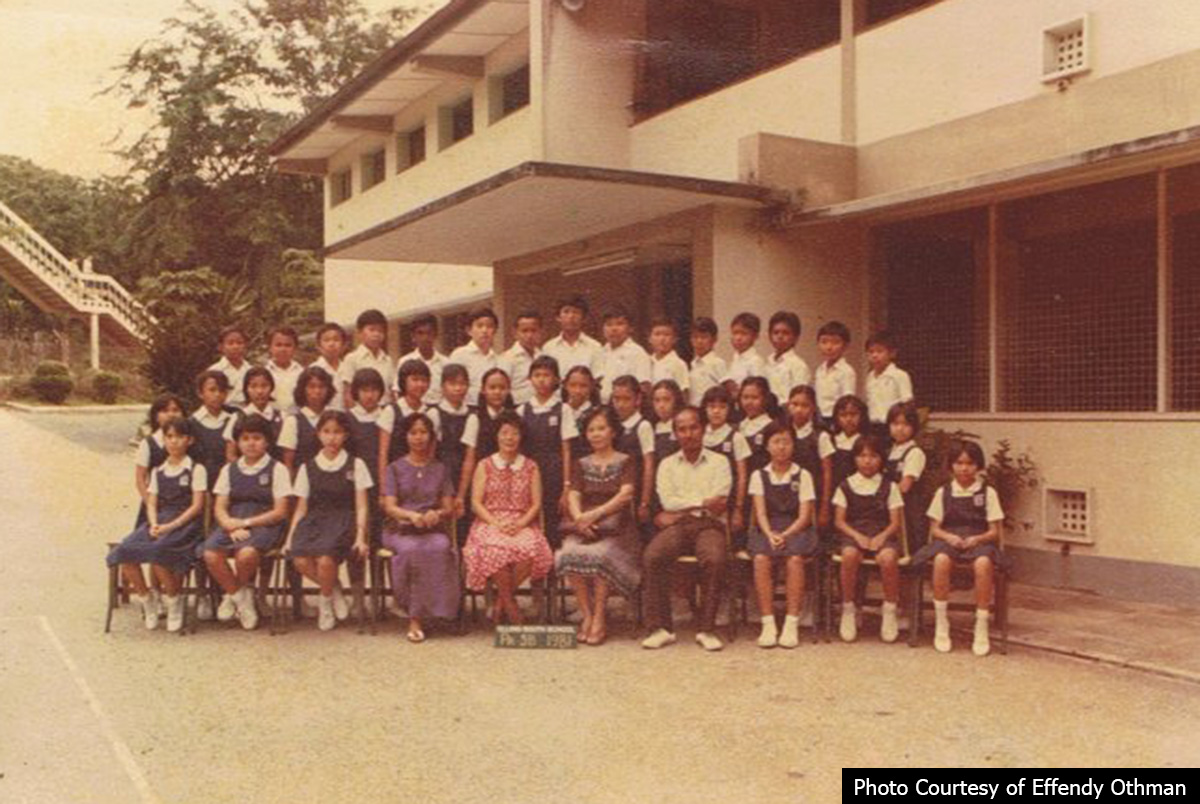
ellingsouthsch_p5bof1981_effendy-othman

Elling South School – Class P5B of 1981

No further information can be found for Elling South and the amalgamated school except for the fact that Singapore’s first female commercial pilot Teo Ah Hong was from Elling South School.

Source: [1] [2] [3]


Maju Secondary School (Dakota)

Merged into Broadrick Secondary School in 1996

The school was established in 1968. According to a Malay teacher there, female Maju students (or “Majuans”, as they called themselves) were allowed to wear uniform in either baju kurung or blouse. Some of the Chinese students followed suit and wore baju kurung. Not sure how true that is because all the class photos I found on Maju Sec’s Facebook page had no female students in baju kurung.

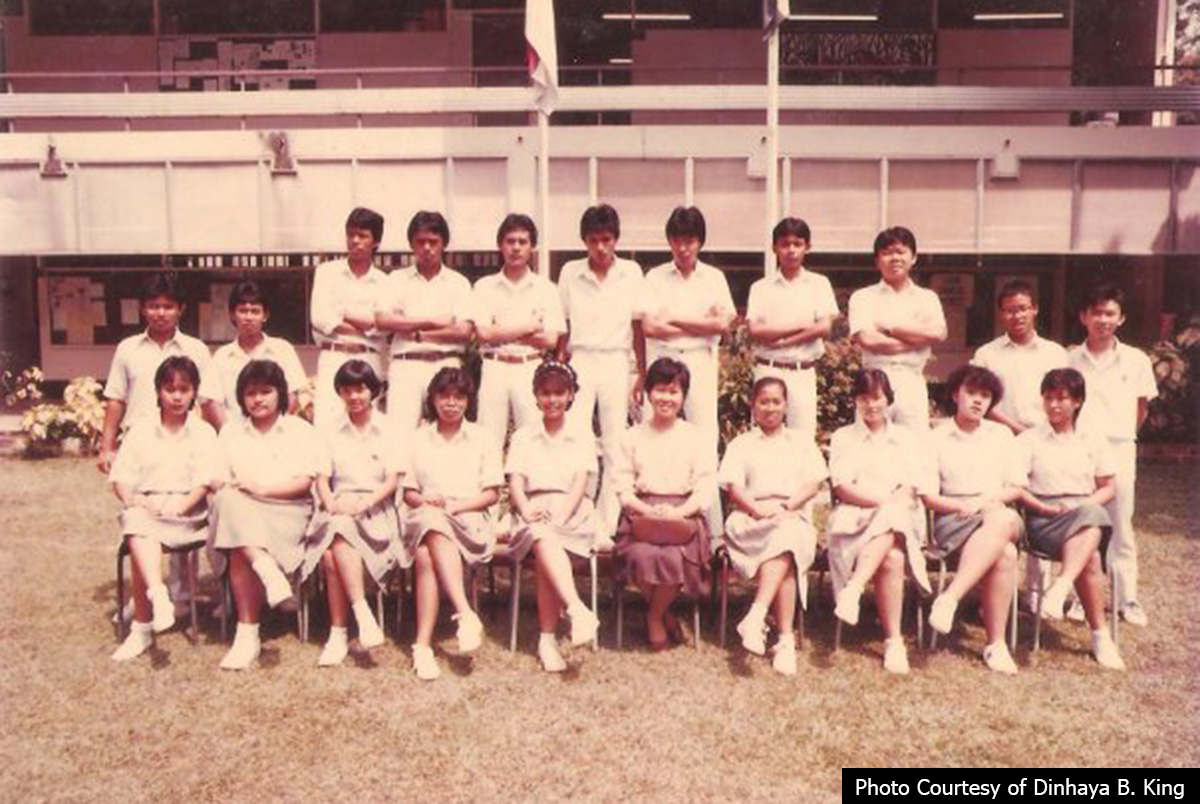
majusec_class4-5of1985_dinhaya-b-king

Class Sec4-5 of 1985

majusec_courtyard_NAS

Courtyard

majusec_1995_sweetie-sue

1995

Correct me if I’m wrong (I can’t find any supporting references), but the school gives me an impression that it was a Malay-populated school. So could it be one of the few Malay-medium schools in the early days of Singapore’s independence?

Maju Secondary was also one of the few French centres set up in 1978 to allow students to take up French as their second or third language. The centre was closed in 1983.

Source: [1] [2] [3] [4] [5] [6] [7]


Mount Vernon Secondary School (Potong Pasir/MacPherson)

Closed in 1990/1991 (verification needed)

The school was opened in 1969 but was never known to produce excellent academic results until one of its deaf pupils appeared on the news for topping the two Secondary 5 classes for GCE “O” level in 1986. Having received extra coaching from a resource teacher who could do signs and lip reading, Mount Vernon was one of the few normal schools then that accepted handicapped (or in this case, mute-deaf) students. They had as many as 50 students with such disabilities in 1986.

The school was also the first and only one then to represent Singapore in a United Nations’ peace project.

To join Mount Vernon Secondary’s Alumni Facebook page (closed group), click here.

Source: [1] [2] [3] [4]


Sang Nila Utama Secondary School (Aljunied)

Closed in 1988

The school was the first Malay-medium secondary school established in Singapore and the third secondary school built after Singapore achieved self-government in 1959. Named after Sang Nila Utama, the Prince of Palembang who was believed to be the founder of Singapura, it was officially opened in 1961. The opening of the secondary school was seen as the most significant milestone in the development of Malay education in Singapore since the establishment of the first Malay primary school at Telok Blangah in 1856.

1969

1969

sangnilautamasec_1978_NAS

1978

sangnilautamasec_FB

Following the Ministry of Education’s decision to phase out all non-English-medium pre-university centres by 1981, Sang Nila Utama Secondary School stopped accepting pre-university students at the beginning of 1979. The existing pre-university Malay stream classes were transferred to Bartley Secondary School. The school intake of Malay-stream secondary classes also suffered a decline over the years. By 1984, only two classes remained, with an enrolment of 37 students. The school building served as temporary accommodation for the nearby Cedar Girls’ Secondary School when the latter’s school building was undergoing renovation. The building currently houses the Gurkha Contingent.

(History lifted from NLB)

Source: [1]


Kallang Primary School (Mountbatten)

Closed/Merged into Guillemard West Primary School in 1987 (verification needed)

Founded in the 1960s, the school was formerly known as Kallang Integrated Primary School – a merged school between Kallang Government Chinese Primary School and Kallang English School.

Receipt for school fees payment

Receipt for school fees payment. All schools had it.

kallangpri_daniel-wong

kallangpri_eugene-lian

It had a very remarkable principal (Mrs Molly Chan, transferred to Swiss Cottage Primary in 1983) who pioneered the Care, Save and Share programme “to save many innocent children from going astray”. You can read snippets of her interview here. Principals like her who tries to build rapport with staff and students are hard to come by these days..

Source: [1] [2] [3] [4]


Beng Wan Primary School (Kallang)

Merged into Bendemeer Primary School in 2004

The school (秉文小学) started functioning in 1977 with pupils from Griffiths Primary, Beatty Primary, Balestier Boys’ School, Balestier Girls’ School, Balestier Primary and Kwong Avenue schools. At the same year, Bendemeer Secondary functioned at Beng Wan’s building for three months before it shifted to its new building. Beng Wan Primary was also where the first Hindi classes (organised by the Pro-Tem Hindi Committee to look into the study of Hindi in Singapore) were conducted.

bengwanpri_aerialview1978_NAS

Aerial view in 1978

bengwanpri_dentist1970s_NAS

The most-feared person in schools.. (except for me. I loved visiting the dentist. Always wished that my milk teeth would be shaky so that I could visit the school dentist LOL I’m hella weird)

bengwanpri_morningassembly1970s_NAS

Morning assembly in the 1970s

The main Beng Wan Primary Facebook page is locked so I am unable to retrieve information from there. To join, click here.

Source: [1] [2] [3]


Jaya Primary School (Bedok)

Closed in 1998

Opened in 1984 when a growing emphasis was placed upon the use of English, Jaya Primary was as an English-medium school which offered Chinese, Malay and Tamil languages just like any other schools today. However even before the school was officially opened, there were feedback about the inconvenience of the school for it was located near light industries and away from the major portion of the residential area. There were also no direct bus service to the school. Could all these be the reasons for its closure?

jayapri_flickr-gleyfox

jayapri_yogeswaran-ranjen

Anyway, it’s quite common for primary schools in the past to have a mini “zoo” within the school compound. For Jaya, they had 2 geese named Ganda and Gandi which were, according to some ex-students, killed by some thieves who broke into the school.

Sadly, the school had a really short history. Its remaining students were received by East Coast Primary School when it closed.

Source: [1] [2] [3] [4] [5] [6]


Bedok North Primary School (Bedok)

Merged into East Coast Primary School in 2001

One of the many primary schools in Bedok (quite evident from this post and the last), this school was established in 1980 and was the first of the new generation schools to be built in Bedok North HDB estate. It however received poor enrolment even when registration first started, probably due to the excessive number of new schools (way too many if you ask me) built in the same area at the same time and stiff competition from other popular schools. Like Jaya Primary, it was pretty short-lived and was also absorbed by East Coast Primary upon its closure.

bedoknorthpri_FB3

bedoknorthpri_FB

bedoknorthpri_FB2

Source: [1] [2] [3]


Bedok Town Primary School (Bedok)

Merged into Telok Kurau Primary School in 2001

The small school started in 1982. 19 years later, it got merged with Telok Kuraru Primary. The land that used to sit Bedok Town Primary is now an open field. Right beside that plot of land is Bedok Town Secondary, also closing by the end of 2015.

Source: [1] [2]


Bedok South Primary School
Bedok View Primary School (Bedok)

Merged in 2002 to form Bedok Green Primary School

Officially opened in 1981 (but started accepting students in 1980), Bedok South was the second (newer?) primary school built in Bedok. The school was recognised for its exemplary performance in sports – soccer in particular – as it won in an inter-school soccer match against schools from all over Singapore in the 1980s. One of their players was Nordin Khalil, who got selected to play in the national soccer team.

bedoksouthpri_straitstimes1797

bedoksouthpri_d'zahidi-ismail

Bedok South Primary School

Bedok View was opened in 1977 and was joined by students from Pin Ghee High School at Chai Chee, and Bedok Primary when both schools closed in 1976 and 1996 respectively. It shifted from the junction of New Upper Changi Road and Bedok South Avenue 3 (now Katong School run by Association for Persons with Special Needs since 2007) to Bedok South Avenue 2.

bedokviewpri_NLB

Bedok View Primary School

Local actress Priscelia Chan attended Bedok View Primary.

Source: [1] [2] [3] [4] [5] [6]

Fun fact: Including schools that were closed previously, there are more than 20 schools bearing the name “Bedok”. They include Bedok North Primary, Bedok North Secondary, Bedok Primary, Bedok South Primary, Bedok South Secondary, Bedok Town Primary, Bedok Town Secondary, Bedok View Primary, Bedok View Secondary, Bedok West Primary, Bedok Girls’ School and Bedok Boys’ School. All of these schools experienced receiving letters and calls addressed to other schools at least once. Well, you can’t really blame the postman. Being someone who rarely travels to the east, I am genuinely confused either. [Source]


Min Xin Primary School (Bedok)

Merged into Yu Neng Primary School in 2003

Located next to Yu Neng Primary (which made merging so convenient), Min Xin was started in early 1960’s by a group of Chinese businessmen to promote Chinese education in Singapore. It was originally at Jalan Bumbun Utara (also in Bedok) and called Bin Sin Chinese School. In 1982, the school was taken over by the Government and the medium language was converted to English. It was also renamed to Min Xin Primary and relocated to Bedok North Street 3.

minxinpri_hasrat-faddil

Then

minxinpri_Mohamed-Ridhwan2_thrutheyears87.bs

Now (it should be gone by now)

minxinpri_xin-yi-cindy

The school exterior

minxinpri_muhammad-junaidi

Min Xin Primary, I believe, is one of those schools that people can hardly remember today. This is not surprising considering that when you try Googling its name, “Xinmin Primary” shows up in the results instead. No, they are not affiliated to each other.

Today its premises are occupied by the Rumah Kebajikan Muhammadiyah (RKM) or Muhammadiyah Welfare Home for the youth and children.

(History quoted from ex-student Mohamed Ridhwan)

Source: [1] [2] [3]


Ping Yi Primary School (Bedok)

Merged into Fengshan Primary School in 2001

Did you know that prior to the construction of Ping Yi Primary (unable to find when), that land was dedicated to a cemetery? I know, everyone says something similar about their schools and there’s indeed no concrete evidence to this hearsay, but there are quite a number of spooky stories about Ping Yi Primary floating around on the net. So whether you believe it or not, it’s up to you. 😀

pingyipri_map_mark-wong

Old map that shows the location of Ping Yi Primary

pingyipri_muzz-tazly

pingyipri_muzz-tazly2

pingyipri_muzz-tazly3

pingyipri_shawn-lee

The merged school is now functioning at the new school built at Bedok North Rd (former Ping Yi Primary Site). Part of the Ping Yi’s building has also been demolished and converted into Fengshan’s school field.

Source: [1] [2] [3]


Telok Kurau Malay Girls’ School
Telok Kurau West School (Bedok)

Merged in 1983 to form Telok Kurau West Primary School
Merged with Telok Kurau East School in 1985 to form Telok Kurau Primary School
Merged with Bedok Town Primary School in 2001 to form Telok Kurau Primary School

As you can see, the Telok Kurau Primary we have today is actually an amalgamation of several schools – Telok Kurau Malay Girls (formed 1960), Telok Kurau West (formed 1692), Telok Kurau English School (formed 1926, later renamed to Telok Kurau East School in 1962) and lastly, Bedok Town Primary schools (read history above).  Our Minister Mentor Lee Kuan Yew was an ex-student of Telok Kurau English School – a fact that the school today boasts about. A lot.

telokkuraueast_FB

Telok Kurau East School

telokkuraueast_FB2

Telok Kurau East School

Telok Kurau Malay Girls’, as the name suggests, is a Malay medium primary school. On the other hand, Telok Kurau West and English schools had their lessons conducted mainly in English and they only admitted boys until the former changed its name and both schools merged.

Source: [1] [2] [3]


Woodsville Primary School (Geylang)

Merged into MacPherson Primary School in 2002

The school was officially opened in 1979 at the junction of Jalan Kolam Ayer and Aljunied Road (near to housing estates but it was very congested) and was the second school to be opened that year.

In 1987, the school adopted an unusual programme to instill a sense of responsibility among its students, and foster goodwill among the teachers. This programme included a free-wheeling book system where students could pick up books and keep them for as long as they wanted without having to step into the library and going through any formal lending procedures. On top of that, (now here’s the interesting part) teachers were encouraged to “adopt” students from broken families by giving them pocket money, buying them books or supplying them uniforms. According to the principal, the scheme worked but whoa, if it were to be devised today, I’m pretty sure it would backfire. Haha.

woodsvillepri_steve-chong

woodsvillepri_mohd-sharani

During the same period, the school also had a discipline master (Mr Clifford Oliveiro) who was also an accomplished musician. Every week when teachers were having contact time, the students had to read their storybooks until the meeting ended. To save the entire school from boredom, Mr Oliveiro would go on stage with his guitar and strum to a variety of songs (e.g. El Condor Pasa, Those Were The Days) that got the whole school singing. The school’s winning of their first SYF Gold Award was probably attributed to the frequent singing “practices” the students had.

(While writing this portion of text, I had the sudden urge to listen to songs by Simon and Garfunkel (I’m an oldie junkie, remember?). If you’re feeling the same, you can listen to them on Spotify hehe)

What an incredibly cool school!!

Source: [1] [2] [3]


Woodsville Secondary School (Geylang)

Merged into MacPherson Secondary School in 2004

A quick search on the school’s name online would reveal that the school (formed in 1977) was pretty adroit at sports. It had a swimmer (Sandy Ang) who created Singapore track history when he became the first schoolboy to smash the 22-second barrier in the 200-metre relay in 1984.  Even famous local blogger Bong Qiuqiu, also an old girl from Woodsville, was part of the school’s netball team. There are also reports of the school participating in various sports competition such as basketball, badminton and gymnastics.

woodsvillesec_sec4-6of1983_ng-li-choo

Sec 4-6 of 1983

Official Facebook page here.

Source: [1] [2] [3]


Tanjong Rhu Boys’ School
Tanjong Rhu Girls’ School
Tanjong Rhu Primary School (Kallang)

Merged in 1984 to form Tanjong Rhu Primary School
Closed in 1989

Tanjong Rhu Boys’ was built in 1950 beside Tanjong Rhu Girls’, also formed in the same year. Boys would occasionally intrude into the girls’ side of the field, much to the displeasure of the staff from Tanjong Rhu Girls’.

tanjongrhuboys_yeo-hongeng

Tanjong Rhu Boys’ School

tanjongrhugirls_chia-fong-long

Tanjong Rhu Girls’ School

tanjongrhugirls_teo-hong-eng

Tanjong Rhu Girls’ School

tanjongrhugirlsboys_canteen_yeo-hong-eng

Canteen shared by Tanjong Rhu Boys’ and Girls’

Tanjong Rhu Primary already existed before both single-sex schools merged. It was a Chinese-based school until its enrolment started falling and eventually drove the school to become integrated (by having both Chinese and English based curriculum). After the merger, the amalgamated school occupied the grounds of Tanjong Rhu Boys’ and Girls’ while the original Tanjong Rhu Primary building was leased out. The school had been demolished to make way for Dunman High School.

I won’t comment much on the history of these three schools as there are other sites that have done so. These authors had first-hand experience and me paraphrasing what they wrote would seem like I’m discrediting them and disrespecting the schools. So please, click here and here for more information 🙂 These schools also have an (combined) active Facebook group.

Source: [1] [2] [3] [4] [5]


Norfolk Primary School (Farrer Park)

Closed in 1984

Norfolk Primary and Cambridge Primary sat side by side thus it was only economical to share the same field (which was also where the rivalry between both schools began). Norfolk’s year of establishment is not known.

norfolkpri_mohdkhirwan-bin-mohdkhamin

Flooding was a commonplace in the olden days of Singapore. Norfolk and Cambridge (below) were badly affected on several occasions.

When Norfolk shut its doors in 1984, students were conveniently transferred to Cambridge Primary.

Source: [1] [2] [3]


Cambridge Primary School (Farrer Park)

Closed in 1998

Cambridge Primary (est. 1963) and Norfolk Primary have similar history. There used to be a tidbit stall just opposite both schools and students usually flocked there to buy shaved ice. A room on the second level of Cambridge Primary was dedicated to caning students (that’s what one person said.. haha) while the most feared dental room was on the ground floor.  According to most people who studied there, there used to be a well-liked Eurasian principal called Mr Dragon who unfortunately passed away in the 1980s.

Cambridge was also one of the few schools in Singapore to have their school song entirely in Malay.

cambridgepri_mainentrance_mariannie-haniffa

Today, Cambridge Primary serves as dormitory. This is the main entrance.

cambridgepri_naz-hossain

Where flag raising ceremony used to be held at

cambridgepri_sch-back-gate-mariannie-haniffa

The back gate

cambridgepri_schfieldwithnorfolkpri_mariannie-haniffa

The school field shared with Norfolk Primary.

In 1993, the school came first in an Art Olympiad. Beating 33 schools and 99 other pupils, the triumph brought much glory to the school. The event was even reported on a Chinese newspaper!

cambridgepri_artolympiad_alvin-lee

Art Olympiad

The rest of its students joined May Primary School which is now known as Farrer Park Primary School. The site of Cambridge is now a foreign student dormitory.

Source: [1] [2] [3] [4]


Owen School (Farrer Park)

Closed in 1988

The school started in 1955. People who are aware of the 2 missing “McDonald’s” boys in 1986 would most probably know about this school as well, because those two boys studied there and disappeared before just their class commenced. Not a very glamorous thing to be remembered and known for, especially when the school was already on the brink of closure.

owenpri_rahib_faquir-mohd

owenpri_tuckshop_ai-ling-lim

Owen Primary’s tuckshop

owenpri_FB2

owenpri_FB

owenpri_FB3

Owen School didn’t have a multi-purpose hall, so students had to sit on the grass field during assembly. When it poured, the playful ones would take the opportunity to catch earthworms and red ants on the field.

owenpri_kim-tan

The school was at the junction of Owen Road and Oxford Road. The ill-fated Hotel New World (collapsed in 1986) was just nearby along Owen Road.

Apart from the 2 missing Primary 6 boys, there were of course other famous alumni as well, the most well-known being Singapore Democratic Alliance Party’s Desmond Lim (you may remember him as the one who spoke at the SDA’s online rally last January).

Cambridge Primary absorbed the students of Owen Primary when the latter closed. The building of Owen School remained on the ground for decades until it was finally torn down in July this year. At one point it was converted into “Cambridge International Hostel”.

Source: [1] [2] [3] [4] [5]


Dorset Primary School (Newton/Farrer Park)

Closed after 1980 (exact year unknown)

The last in the Farrer Park cluster of primary schools I’m going to talk about. While researching on this school, I found myself getting limited information for “Dorset Primary School” but a lot more when I removed the “Primary” from it. Dorset School, according to an article, was an all-boys school originally named Dorset Road School and established in 1954. But I actually read an ex-student’s account about it being a mixed school (plus all the Dorset Primary photos from NAS have girls in them)! Did Dorset start accepting female students along the way? I don’t know.

Anyway, there’s no reports about its official closure but it could be in 1981 when Catholic High took over the premises of Dorset School completely. Students from Dorset were given the option to transfer to CHS Primary or to other schools but I saw that a lot of Dorset kids went to Cambridge instead. Whatever it is, the facts for this school are a little contradictory so it would be good if more ex-students could come forward and verify the facts.

dorsetpri_1971_NAS

The school was formed around the same time as Owen School. However, Dorset proved to be the more popular choice as it received more applicants than its vacancies. But the popularity obviously didn’t last.

dorsetpri_canteen_NAS

Tuckshop

Ang Mo Kio Primary housed its Primary 1 students at Dorset Primary School for the first three months of its opening in the late seventies while waiting for their own building to be completed.

Ex-students who are interested to join Dorset Primary’s Facebook group can request permission to do so here.

Source: [1] [2] [3] [4]


Parry Secondary School
Hwi Yoh Secondary School (Serangoon)

Merged in 1984 to form Peicai Secondary School

Parry Secondary was formed in 1966 and officially opened in 1968 (first batch in 1969) at Parry Avenue. The school uniform, considered “smart” at that time, comprised of a compulsory school tie where students had to pin the school badge on, a white shirt with light green skirt that had two inverted pleats in front complete with a belt made from the same cloth as the skirt. That’s for the girls, of course. For the boys, I’m not too sure, but pictures suggest that the white top could be paired with white shorts (no long pants – that’s only for prefects!).

parrysec_1981_NLB

Parry Secondary School 1981

parrysec_1981-2_NLB

Parry Secondary School 1981

parrysec_1981-3_NLB

Parry Secondary School 1981

parrysec_1981-4_NLB

Parry Secondary School 1981

It offered Normal and Technical subjects (students were allowed to choose between the two freely). The subjects offered in Normal stream were Geography, Literature, Maths, General Science, Biology, Chinese and Domestic Science (kind of like our present Home Economics). Domestic Science was offered as an “O” level subject. Technical subjects were purely related to carpentry working on machinery.

parrysec_1981-5_NLB

Parry Secondary night view

parrysec_susan-neo-f-s

The school had an exhibition of creations made with paper and wood with Serangoon Garden Secondary in 1980, 3 years before its closure.

After it closed, Rosyth School moved to the site of Parry Secondary due to space constraints in its previous premises.

Hwi Yoh Secondary was completed in 1967 and it admitted its first students in 1968. It was the 103rd school built by the then-government and was judged the cleanest secondary school in the inter-school cleanliness competition in 1971. The school was a centralised workshop catering for students from nine schools due to its availability of facilities for the studies of technical and academic subjects in the English and Chinese medium.

hwiyohsec_1971_NAS

Hwi Yoh Secondary School 1971

Like Parry Secondary, Hwi Yoh actively participated in extramural activities.

In 1982 however, the school’s Principal Mrs Jillian Scully took her own life together with the rest of her family at their home. It was speculated that she, together with their two young children, was coerced by her husband Victor Scully, a swindler who was close to be arrested and jailed for the second time, to do so.

Both schools merged and Peicai Secondary was born, but how did the name Peicai come about? Apparently, Parry in Hanyu Pinyin was “Peili” while Hwi Yoh was “Xicai”. The new name was derived by fusing the head and the tail of the two names in Hanyu Pinyin. The merger, as expected, was a result of falling enrolment and population shifts to new town and these two schools were the only secondary schools that merged that year. Today, Peicai Secondary is located at Serangoon Avenue 4.

Source: [1] [2] [3] [4] [5] [6] [7] [8] [9] [10] [11] [12] [13] [14]


Charlton School (Kovan)

Merged into Xinghua Primary School in 2003

Charlton took in its first batch of students in 1954 and was temporarily housed at Serangoon English Afternoon School because its own building at Arazoo Avenue was not ready for occupation yet. The school was remembered by students to have a little gardening area where pupils could cultivate some flowers and plant some common vegetables. It was also there where students got to interact with one another from different classes.

charltonpri_FB

There is no Facebook group for Charlton except for this which has only 53 likes but the admin doesn’t really post much school-related stuff. Time to start reconnecting with your ex-schoolmates, Charltonians! What do you say? 🙂

Source: [1] [2] [3]


Parry Primary School (Kovan)

Merged into Xinghua Primary School in 2007

Among the primary schools in Kovan in the 1980s were Parry Avenue Boys’ School, Parry Avenue Girls’ School and Parry Ave Government Chinese Middle School (co-ed) which were set up in the mid-late 1950s. All three schools merged in 1981 to become the new Parry Primary School, using the blocks of the parent schools (thus had three canteens). They were labelled blocks A, B and C and were former Parry Avenue Boys’ School, Parry Avenue Girls’ School and Parry Chinese School respectively. Each block hosted different levels of classes – Block A housed the primary threes and sixes, Block B for the primary ones and twos and Block C for the primary fours and fives.

parrypri_blockA-yun-xin

parrypri_schoolfield_melvin-wong

Parry Primary’s oversized school field which was also shared with Rosyth School when latter took over Parry Secondary’s site until it shifted.

Think that you’ve seen the field before somewhere? Well, you had probably seen it on TV in the late 90’s/early 2000s (thanks Tammi!):

Blast to the past: check out 00:26 to 00:34 of Kit Chan’s Royal Umbrella commercial!

parrypri_tan-poh-lian

parrypri_yun-xin

parrypri_alex-kim

The new Parry Primary became one of the first two primary schools in 1981 to go full day (meaning being lessons to function from 7.30am to 2.30pm or 3.00pm depending on the level and thereafter, students would proceed with their ECAs. Of course, homework was lessen and teaching became more laxed) but the programme wasn’t well-received and was eventually scrapped in 1983.

Students there wore blue uniform.

parrypri_azhr-amn

Along Parry Avenue lay a Japanese cemetery, several private and abandoned houses. There were also factories nearby. The school building now is vacant. Previously it was used as a student hostel.

One of Parry’s ex-students is 97.2fm DJ Violet Fenying.

Source: [1] [2] [3] [4] [5]


Jalan Kayu Primary School (Sengkang)

Closed in 1988

Most schools in the past were named after the street the building was built on (you should already be able to tell by now). Jalan Kayu Primary was no different. Built in 1955 and officially opened in 1958, it was named as such due to its locality. Jalan Kayu is Malay for “Wood Road” but colloquially, “Kayu” is used to describe someone stupid. Thus, Jalan Kayu Primary’s students often get teased.

… whenever I say I am from Jalan Kayu (Primary), people reply “Then you must be kayu (dimwitted).”

– 11 year-old Zhang Yijin who was the first student in the school to score 4 A stars in the 1987 PSLE

The school started with every class filled to capacity. Students generally were children of farmers shopkeepers, and technicians and labourers employed by the R.A.F. (Royal Air Force). The school first experienced a dip in enrolment in the early Seventies when people started moving out of the area to other satellite towns.

jalankayupri_from25yrcommbklt-edelweis-yzelman_tan-eng-chai

jalankayupri_1968_waffa-yusoff

Class of 1968

Jalan Kayu Primary (JKPS) has 2 conflicting years of cessation. According to the history of Ang Mo Kio Primary, they were joined by pupils and teachers from JKPS in 1978. However a 1989 article from The Straits Times indicated that the school was only closed in 1988. Not sure which to believe, but I’m sure a national newspaper is a more reliable source. The school is now submersed beneath the TPE (Tampines Expressway).

Source: [1] [2] [3] [4] [5] [6]


Keppel School
Cantonment School (Tanjong Pagar)

Merged in 1984 to form Keppel Primary School
Closed in 1996

Keppel and Cantonment were established in 1954 and situated next to each other without a barrier separating them. Despite that, students were not allowed to cross over to other side. Prior to having their own buildings, students from both schools temporarily accommodated in Gan Eng Seng School.

keppelpri_pri3A-1980-prince-shawn-julius

Primary 3A of 1980

keppelpri_allan-wisdom

Keppel Primary School

The schools were named after the busy roads of Keppel and Cantonment. The noise of traffic using Cantonment Road was so loud that classes had to be conducted using microphone. The government even considered resitting both schools as their sites were uncondusive for learning.

keppelpri_excursion_allan-wisdom2

Students from Keppel Primary going on an excursion to an unknown place

The merged school had a very accomplished band having won several Gold awards. The school also used to conduct lessons at the nearby Yan Kit Swimming Complex. According to an old student, when news about the merger broke, both schools had a swimming competition to determine the name of the school. Cantonment School eventually won but they were kind enough to let Keppel keep its name. Interesting! But this arrangement looks too informal to be true. Can anyone confirm this? Haha.

keppelpri_belinda-chng

The old Cantonment School is not to be confused with the present Cantonment Primary School (established in 2011 at Cantonment Close). The merged school became offices for the Corrupt Practices Investigation Bureau until 2004. Now, the building is used by private businesses as offices.

cantonmentpri_useyourhandscampaign_1978

Our then-Prime Minister Lee Kuan Yew at Cantonment Primary for the Use Your Hands Campaign in 1978

By the end of 1996, Keppel Primary closed its doors and its remaining students joined Zhangde Primary.

Source: [1] [2] [3] [4] [5] [6]


Labrador Primary School (Pasir Panjang)

Closed in 1988

Established in 1961 at Pasir Panjang Road, the four-storey school accommodated students of four streams – English, Chinese, Malay and Tamil. Most of the students seem to be of Malay descent though, judging from the pictures and conversation posted on their Facebook page.

labradorpri_rosli-muhamad

The Labrador Primary School today

labradorpri_muhammad-shafik

Class outing to what seems to be Little Guilin

The school closed because of falling enrolment and its 172 pupils were transferred to Jagoh Primary. The campus was then used by Singapore Polytechnic for its Business Administration course to meet the increased demand for places in the course. Today, it houses Bayanihan Centre (training centre for Philippines association).

Source: [1] [2] [3] [4] [5]


Jagoh Primary School (Telok Blangah)

Closed in 1999

The school was established in 1985, officially opened in 1987 but closed about 14 years later after not offering Primary One places since 1998. That’s a very short survival duration. I don’t get it though.. why build another school when the one nearby (Labrador Primary) was already suffering from declining enrolment?

There used to be a Kampong Jagoh Primary School in the late 1960s too. However I am not sure if both schools were related.

jagohpri_tan-hock-kim-justin

Jagoh Primary School

jagohpri_chinese-class1988_NAS

A Chinese class in 1988

jagohpri_mohammed-arshad

Gosh! Anyone remembers this? This was also implemented during my primary school days (1997-2002)! No one was allowed to exit the class without this. But after awhile, the school kinda stopped reinforcing it haha.

jagohpri_mano-esperanza

After 1999, students were transferred to Blangah Rise Primary School.

The site where Jagoh Primary used to stand is now Telok Blangah MRT station.

Source: [1] [2]


Yuqun Primary School (Jurong East)

Merged into Yuhua Primary School in 2002

Formally known as Joo Koon Public School at Jurong Road, Yuqun Primary shifted to Jurong East Street 24 in 1984 and was officially opened in 1986. It was originally set up by a Chinese businessman (same history as Joo Hwa Public School – now known as Yuhua Primary) in the 1930s but was destroyed during the Japanese occupation. It was rebuilt after the war and subsequently became a government-aided school in 1950.

yuqunpri_fromyuhuapri

I vividly remember the facade of the school because of the chimney-looking roof. The unique roof is still there but has already been painted purple.

Since its closure, its premises have been used as a holding site for schools undergoing PRIME such as Dazhong Primary and St. Anthony’s Primary (presently there until December 2014). You are still able to see the building if take the Jurong East-bound or Marina Bay-bound trains along the North-South line as its somewhere between Jurong East and Bukit Batok stations.

Source: [1] [2]


Pandan Primary School (Jurong East/Teban Gardens)

Merged into Fuhua Primary School in 2008

The school was established in 1981 at West Coast Road. It used to be a popular choice among parents living in that area because of its convenience and good teaching facilities.

pandanpri

Before it got demolished

pandanpri_firstbatchofP1_claraneo_pandanFB

Pandan Primary’s first batch of Primary 1 students

pandanpri_pr2C-1983-Andy-chia

Primary 2C of 1983

pandanpri_schcanteencumhall_steve-share_pandanFB

The school’s canteen-cum-hall

pandanpri_stage_fazillah-akhbar-ali_pandanFB

The school hall

pandanpri_lastda_FB

Pandan Primary’s last day

There was a drain that led to the school compound and latecomers often sneaked in through that secret passage without getting caught (oops, secret exposed!). It has now been barricaded.

Source: [1] [2] [3] [4] [5]


Boon Lay Primary School (Jurong East)

Merged into Jurong Primary School in 2006

Boon Lay Primary started out as Boon Lay Lama Primary at Old Jurong Road in 1960 before it shifted to Jurong East in 1984.

Here’s a more detailed description of the old Boon Lay Lama Primary:

Across the school there was a row of shop houses. There were two entrances into the school. One entrance was next to the girls’ toilet and the other was the main one that leads to the administration and staff, and principal office. There were two rows of buildings that housed all classes. In between the rows, there were at least two small open fields that used for assembly and as a playground. There were three verandas with roof that connect these buildings. To the west, a large football field which was fenced with metal wire and some tall trees along its parameter. The fence separates the Chinese school and ours. The whole school was fenced, once go in there, nobody could escape or leave without authorized permission. One end of the building was the canteen (a.k.a tuckshop) to the north, the boys’ toilet, next was the girls’ toilet. The other side of building was the school keeper’s house

– Extracted from David Yon’s description on the Boon Lay Primary’s Facebook Group

boonlaypri_batch1989_zul-lb

Batch 1989

boonlaypri_born1978-class7E2_jean-ng

Class 7Extended2 (students were born in 1978)

The new Boon Lay Primary produced some of the best national talents such as 10-year-old Loh Xiao Wei who beat 12 other aspirant chess players to win the girls’ National Schools Junior Individual Chess Championship under-10 Championship. She also became the youngest female winner at the 1994 National Championship. Hence, the school was widely known for being strong in chess. The spotlight was shone on the school again in 2004 as Primary 6 pupil Siti Nur Alyssyah emerged as champion among primary and secondary school students in a public speaking competition.

With such exceptional performance, no one would have expected the school to close. In fact, it was also slated to be upgraded by 2007 according to a 2003 report. So what exactly happened?

Anyway, it is also worth noting that our very first Singapore Idol Taufik Batisah attended Boon Lay Primary too 🙂

Source: [1] [2] [3]


Jubilee Primary School (West Coast)

Merged into Qifa Primary School in 1996

Opened in 1967 at Bukit Timah, it was an integrated school using English and Malay as the media of instruction. It was later merged with Jubilee Malay School in 1983 when English education became more popular with parents, and the school relocated to the latter’s site at West Coast.

jubileepri_singaporememory.sg

In 1996, the school closed with impressive PSLE results with a pass rate of 94% and out of which, 76% of them were qualified for the Express stream. Jubilee was the first school to merge with Qifa Primary (the second was Jin Tai Primary, as mentioned in my first entry).

If you are an alumni, do join Jubilee Primary’s Facebook page that has over 900 members to date.

Source: [1] [2] [3]


Buona Vista Secondary School (Commonwealth)

Merged into Queensway Secondary School in 2001

The school opened its doors to pupils in 1967 and was originally known as Chip Bee Secondary (named after the estate). However, the name was changed to what it was last known as on the eve of its official opening in 1968. It was one of the three government schools then which conducted classes in English, Chinese and Malay streams. In the 1970s, the school band joined forces with Tanglin Secondary School band and won several awards.

buonavistasec_lastgradbatch_ros'en-lee

Digress: As I was trying to get more information about this school, I stumbled upon at least two news reports on its students’ suicide. First was a student who plunged into Jurong Lake because she failed her GCE in 1973 while the other took poison after the school principal reproved her for playing truant in 1971.

Okay.

I mean no disrespect but sigh, why is student suicidal so common last time? It’s so depressing. But I’m glad students are more sensible today (I hope). Remember, life isn’t a joke.

buonavistasec_mr-chong_connie-koh

The one in this picture is Mr Chong. If you’re reading this, your student Connie Koh is looking for you!

The building of Buona Vista Secondary is now occupied by Anglo-Chinese School (International).

Queensway Secondary also absorbed Mei Chin Secondary, which closed in 2000.

Source: [1] [2] [3] [4] [5]


Margaret Drive Primary School (Queenstown)

Closed in 1986

The school was formed at a low cost in 1958 with just 17 classrooms, an office and a tuckshop. Over the years, more new and better-equipped schools were built and parents preferred to send their schools elsewhere. With that, the enrolment of Margaret Drive Primary fell and the school closed after 28 years of service.

Photo courtesy of Yahoo News (Wong Kok Leong)

Photo courtesy of Yahoo News (Wong Kok Leong)

margaretdrivepri_ling-ying-ying

Not long after Margaret Drive Primary was demolished, a new building was constructed for Margaret Drive Special School for autistic children. The special school was then renamed to Rainbow Center.

Margaret Drive Primary was legally known as Margaret Drive School, but I choose to include “Primary” to avoid confusion due to the ambiguity in its name.

Source: [1] [2]


Kebun Baru Primary School (Ang Mo Kio)

Merged into Ang Mo Kio Primary School in 2002

The school was the last primary school built for Ang Mo Kio residents in 1985. With the completion of the 188th school built by the government, no more new school were constructed for children in Kebun Baru constituency and the surrounding private residential estates around Yio Chu Kang and Thomson Hills.

kebunbarupri_elliot-chong

Kebun Baru Primary School

kebunbarupri_uniform_tan-jwee-sin-jason

Kebun Baru Primary School uniform – so unique!

kebunbarupri_class6bof1988_jason-lim

Primary 6B of 1988

kebunbahrupri_heng-yong-jin-fujita_FB

It started functioning with an enrolment of 320 students in eight Primary One classes and 11 teachers and lessons were originally held at the now-defunct Li Hua Primary School.

The building is now a holding site for Anderson Primary School which is also a merged school (refer to my previous entry for its history).

Midfielder Fabian Kwok was a student of Kebun Baru Primary.

Source: [1] [2] [3]


Chong Boon Primary School (Ang Mo Kio)

Merged into Da Qiao Primary School in 2000

The school was built in 1980 and used to stand side-by-side at Ang Mo Kio Avenue 4 with Chong Li and Anderson Primary schools. Prior to that, it was known as Chong Boon School in Lorong Kinchir at Braddell and was there since the 1940s. Not sure why it shifted in the end but the school was given an eviction notice in 1956 by the new landlord. It wouldn’t take three decades for the school to move so I guess they eventually succeeded in preventing the notice from being enforced.

chongboonpri_2003_laurens-pang

Chong Boon Primary School in 2003 (before it was demolished)

chongboonpri_class6N6of1987_david-teo

Inside the school

chongboonpri_6n2-1987_jaslyn-Chong-Ho

In the classroom of Primary 6N2 (1987)

The building has been refurbished to accommodate more students from Pathlight School.

Source: [1] [2] [3] [4]


Chong Li Primary School (Ang Mo Kio)

Merged into Teck Ghee Primary School in 2003

Chong Li Primary began in the late 1940s as Chong Lip Chinese School, located off Upper Thomson Road. The school catered to children living in villages that area. It became a government school later on and was officially opened again in 1983 (the school started in 1981), holding classes in the old premises of Braddell Secondary School. As its student population grew bigger, it shifted again to 4 Ang Mo Kio Street 44.

chonglipri_wee-liang

Female students from Chong Li before the 90’s would don in sleeveless blue polka dot blouse with a blue ribbon attached to the middle of collar. But it was later phased out and replaced by a shirt with sewn-on badge to resemble the boys’ attire which remained unchanged throughout the years.

chonglipri_gary-chin-wei-ong

Old uniform for girls can be seen here

chonglipri_rachel-khoo

New girls’ uniform

Source: [1]


Chong De Primary School (Ang Mo Kio)

Closed in 1998

The $4.28-million school was ready for occupation in 1982 but it started accepting students in 1981, who had lessons at neighbouring Ang Mo Kio North Primary and then at Chong Shan Primary School before moving to their own building. Chong De was the 12th primary school constructed in Ang Mo Kio.

chongdepri_petester-pancake

Its remaining students joined Chong Shan Primary School again after its closure. Townsville Primary now sits on the former site of Chong De Primary.

Source: [1] [2] [3] [4]

And yes, I’m equally puzzled by the number of schools in Ang Mo Kio with names beginning with “Chong”. Was it a coincidence? Schools in Ang Mo Kio bearing “Chong” in its name were: Chong Boon Primary, Chong Li Primary, Chong De Primary, Chong Shan Primary and Chong Boon Secondary.


Heng A Khe Bong School (Toa Payoh)

Closed in 1993

Heng A Khe Bong School was an amalgamation between two Chinese primary schools in the vicinity of Telok Ayer. They were Heng A School (est. 1918) and Khe Bong School (est. 1920).  As the schools were poorly equipped and the population around the area was diminishing,  the enrolments in both schools declined steadily. Thus, the management committees of both schools launched a fund-raising project for the construction of a new school in a populated area. Both schools merged and relocated to Toa Payoh New Town in 1971. It was officially opened in 1975.

HAKB_school_NLB

Heng A Khe Bong School

HAKB_sukmei-ng

An ex-student’s impression

HAKB_Inez-Oh

All boys

HAKB_p6Aof1986_jolene-lim

Primary 6A of 1986

Thanks to a donation, the school was the first primary school in Singapore to own a computer.

Source: [1] [2] [3] [4]


MacRitchie Primary School (Toa Payoh)

Closed in 1997

Founded in 1976 and officially opened in 1977, it was located at the modest town of Toa Payoh. It was situated beside an old wet market along Lorong 8, where the school’s main gate overlooked Blk 225 Toa Payoh. The school began as an integrated school comprising 38 English medium classes and 8 Chinese medium classes. The majority of the English medium students and teachers came from Whitley Primary School which closed in 1975. The other group of Chinese medium stream students were from Nam Ann Primary School which also closed in the same year.

macritchiepri_suave-mente

MacRitchie Primary School

macritchiepri_joe-azathoth

The school shared the same field as Braddell Primary School and typically, students from both schools would fight with one another.

macritchiepri_mohd-shahrul

An ex-student’s impression of the school

Dr Koh Poh Koon, a PAP candidate for Punggol East in the 2013 General Election, attended MacRitchie Primary. Other alumni include music composer and singer Azmeer, national footballer Rezal Hassan, Artist-Scriptwriter-Producer Djohan ‘Bobo’ bin Abdul Rahman and Had Adnan from rock band Rancour.

Source: [1] [2] [3]


Upper Serangoon Secondary School (Toa Payoh)

Merged into First Toa Payoh Secondary School in 2004

Located at 279 Upper Serangoon Road, it was previously known as Upper Serangoon Technical School (USTS). USTS officially opened in 1966 to offer technical education for the Malay-medium students. I am not sure if UTST relocated when it was renamed, but my intuition tells me that it could be.

Stamford American International School now stands on the former ground of Upper Serangoon Secondary.

upperserangoonsec_dover-lam

Ex-students visiting their alma mater

upperserangoonsec_USTS_suratman-samadi

Upper Serangoon Technical School

upperserangoonsec_SLA

Upper Serangoon Secondary School

upperserangoonsec_dover-lam2

Upper Serangoon Secondary School

Yam Ah Mee (you may remember him as the one who delivered the results of the 2011 and 2013 General Elections) attended USTS.

Source: [1] [2] [3] [4]


East Payoh Secondary School (Toa Payoh)

Closed in 1998

The school was completed in 1975 and declared open in 1976 along Lorong 7 of the Kim Keat Constituency which was part of the large Toa Payoh estate. It was the 114th school built by the government. The four-storey building offered general and technical education in the English medium for both sexes.

eastpayohsec_quek-chin-hock

Taken from a classroom

eastpayohsec_simon-quek

ECA within the school compound

eastpayohsec_1978_NAS

East Payoh Secondary School in 1978

eastpayohsec_kwee-huay-gan

eastpayohsec_zainal-mohd

After it closed, its remaining students were transferred to Pei Dao Secondary School (renamed to Punggol Secondary in 2001 when it shifted from Toa Payoh to its current site at, duh, Punggol). Pei Chun Public School now occupies the land that East Payoh Secondary once stood on.

Source: [1] [2] [3] [4]

And joining this list with effect from 2016 will be…

Tanglin Secondary School
Clementi Woods Secondary School (West Coast)

To merge in 2016 (name to be advised)

I have covered both schools in my previous history post. Please use ctrl+F (Windows) or cmd+F (Mac) to lead you to the relevant sections.

Source: [1]


First Toa Payoh Secondary School (Toa Payoh)
Bartley Secondary School (Bartley)

To merge in 2016 to form the new Bartley Secondary School

First Toa Payoh Secondary was the first secondary school built to cater to the secondary school population of Singapore’s first satellite town, Toa Payoh. Established in 1975 and officially opened in 1979, it was an integrated school offering both English and Chinese. In 2001, it merged with Thomson Secondary and Pei Dao Secondary, and Upper Serangoon Secondary in 2004. In 2003, it relocated to its new campus with better facilities.

ftpyss_googlemap

First Toa Payoh Secondary School on Google Maps

ftpyss_FB3

First Toa Payoh Secondary School

ftpyss_FB

First Toa Payoh Secondary School

ftpyss_FB2

First Toa Payoh Secondary School

Bartley, the first co-ed secondary school in Singapore, was formed in 1952. However it became a boys’ school in the secondary section (the school had a pre-University level until 1996) when the girls were transferred to Cedar Girls’ School to form the school. It became co-ed again in 1995. It moved to a holding site (former Mount Vernon Secondary) while waiting for its present building to be completed in 1995.

bartleysec_googlemaps

Bartley Secondary School on Google Maps

bartleysec_xodus-lim

Bartley Secondary School students with exchange students from Indonesia (in printed uniform)

bartleysec_oldbuilding_shaiful-love-running

The old Bartley Sec building

bartleysec_barleysec.moe.edu

Barley Secondary school hall

The merged school will function at the site of Bartley Secondary.

Source: [1] [2] [3] [4]


Bedok Town Secondary School (Bedok)

To merge into Ping Yi Secondary School in 2016

Established in 1965 (the year Singapore gained independence) as Kaki Bukit Secondary School, it provided education in the English and Malay media to children living in what was once a rural area of Singapore. Their school song “Sekolah Menengah Kaki Bukit” was written by Mr Zubir Said, the same person that composed our national anthem. Between 1965 and 1984, the school attained the status of a top Malay medium school with good results in the Malay medium GCE ‘O’ level examination.  In addition, the school had also established a reputation for excellence in sports and games such as Sepak Takraw, football, hockey, athletics and cross country.

What an accomplished school, don’t you think? What a pity that it has to go, together with its school song that was written by a legendary person 😦

bedoktownsec_googlemaps

Bedok Town Secondary School on Google Maps. This was taken in the year when Bedok Town and Chai Chee merged.

bedoktownsec_alan-chia

Long before Bedok Town Secondary’s first merger

bedoktownsec_class1ebof1986_patrick-sim

It also merged with Chai Chee Secondary School (previously Sennett Road Secondary) in 2011. When news of the merger broke out, both schools had an online brawl. Hopefully it won’t happen again between Bedok Town and Ping Yi!

Source: [1] [2] [3]


Chestnut Drive Secondary School (Bukit Panjang)

To merge into Fajar Secondary School in 2016 

One of the first secondary schools set up after Singapore gained independence, the school catered to the education and development needs of the children in the Hillview, Woodlands, Teck Whye and Bukit Batok areas. It was established in 1968 and declared opened in 1969. It is the 105th school built by the government.

chestnutdrivesec_hwachong-cip-council

Chestnut Drive Secondary School

chestnutdrivesec_googlemaps

Chestnut Drive Secondary School on Google Maps.

chestnutdrivesec_googlemaps2

Chestnut Drive Secondary School on Google Maps. The school is surrounded by private houses and greenery.

In 2005, the school was reported to be a target of an unidentified sniper with six shots fired. The latest incident damaged a windowpane on the third floor of the school. The shooting was believed to have happened during non-school hours in a duration of three months thus no one was hurt. However the police later established that there was “insufficient evidence to suggest the presence of a sniper, and that no air gun pellets or projectiles had been found at the school.” Till date, the cause of the damage to the windowpane remains a mystery.

Students from Chestnut Drive Sec wore this really nice shade of blue uniform

Students from Chestnut Drive Sec wear uniform in the nicest shade of blue

Come 2016, Chestnut Drive Secondary will merge into Fajar Secondary and will operate out of the latter’s upgraded campus from 2018. In the meantime, Chestnut Drive’s compound will serve as a holding site for the newly merged school, which will also retain Chestnut Drive’s Chinese name “Li Jing”.

I came across this school while choosing my secondary schools in Primary 6 (donkey years ago) and was undoubtedly amused by its name. I’m sure many people who are not familiar with the roads in Singapore would react the same. Apparently, the place Chestnut Drive EXISTS (it’s even part of its address, duh!) and many other roads in Bukit Panjang are actually named after nuts. For example, Cashew Road, Chestnut Drive, Almond Street and Hazel(nut) Park. There are even roads that are named after fruits! Read more here. It’s super intriguing! 🙂

Source: [1] [2] [3] [4] [5] [6] [7]

* * *

Thanks everyone for your warm support and contribution! I hope I have covered more schools this time around and help some of you trace back to your roots (like how I successfully did in my previous entry). Once again, due to the lengthiness of this post as well as time constraints, I can only cover this many. I will definitely be back with a third instalment (believe it or not, I have already compiled another list of closed and merged schools) but that won’t happen so soon as my new school term is commencing next Monday. It’ll probably be up in my next break in December. Meanwhile, if you enjoyed this post or if you find it useful in some ways, please feel free to share it with your peers! 🙂 Thanks for reading this record-breaking 9400-word essay!

Have a story to share about your decommissioned school? Let me know in the comments below! I may include that in my next write-up (in progress) 🙂 And as you can see, some schools mentioned above don’t come with pictures. That’s because I can’t find them online so if you have some pictures of your school, feel free to share them!

Main source:
Ministry of Education (2008 Archive)
The Straits Times (2 January 1988, Page 10)
The Straits Times (11 August 1983, Page  10)
National Archives of Singapore
NewspaperSG (National Library Board)
Singapore Memory Portal
Facebook Pages of Schools
(In case some of these links become inaccessible, you may retrieve them through Archives.org)

Read also:
HISTORY: Closed and Merged Schools in Singapore (PART 1)
HISTORY: Closed and Merged Schools in Singapore (PART 3)
HISTORY: Closed and Merged Schools in Singapore (PART 4)

HISTORY: Closed and Merged Schools in Singapore

(WARNING: Image-heavy post! Best viewed on desktop or with Wi-Fi)

Hey guys!

Long time no update. I was actually working on this blog post about something which has been piquing my interest for some time now. It has got nothing to do with beauty nor lifestyle. It’s about… *drum roll* SCHOOLS!! It took me THREE weeks, but no complaints really, as I enjoyed uncovering the history of these schools. I hope you guys enjoy it as much as I do!

My School Uniform – the first-ever photography project that documents all the school uniforms in Singapore.

Photo book out in stores now! Read review here

Well, what prompted me to do this 6200-word entry?! It was reported on the news four months ago that six schools here will be merged into three next year and that sparked my curiosity about other schools that fell victim to declining enrolment. Yup, school closure is still happening here despite complaints about not having enough schools. Ironic, isn’t it?

Schools facing low enrolment in the past were usually ordered to close. However Ministry of Education (MOE) had decided since 2002 to merge these schools instead to “form a good size school”. This is good news to pioneer schools as they are still able to preserve their history after the merge unlike those unpopular ones before 2002, whose name and history are now only remembered by their alumni. If you are an alumnus of any of the absorbed schools, your child is still eligible to be registered in the merged school under phase 2A(2). However, if your school has been closed for good, you’d have to join the back of the queue again.

Reports showed that falling enrolment is a result of declining birth rate, but I beg to differ. Although it does play a part in the dwindling registration, it is definitely not the main cause. Schools that receive lower number of applications are usually located in more mature estates with no area for further housing development (new flats) thus lowering the number of new young families in that area. Above all, one can still see popular schools receiving more applications than its number of vacancies every year so low birth rate is certainly not the main culprit.

Unpopular schools are issued with marching orders owing to Singaporeans’ choosy nature (can’t deny that I’d rather send my kids to a well-known school too) and it’s sad to see the place where you spent 6 years of your childhood at gone with the wind. Thus I’d like to pay tribute to these unsung pioneer schools by listing them below. Do note that the list is not exhaustive and I welcome any addition in the comments below 🙂

Psst, you may even find your parents’ schools here! My Dad and Mom were from Outram Primary and Alexandra Estate Primary respectively. Both were closed to make way for new developments.

Check out PART 2, PART 3 and PART 4 if you haven’t!

In no particular order…

Alexandra Estate Primary School (Bukit Merah)

Closed in 1987

Established in 1954, it is known to be located beside Crescent Girls School previously. Female students put on their red pinafore dress with white inner blouse while the boys wore white collared top with red shorts to school. Crescent Girls School currently sits on its site. Some of its notable alumni include our Prime Minister’s wife, Ho Ching, as well as her siblings.

aeps1

Taken on the final day of AEPS

Taken on the final day of AEPS

P6C Class of 1987

P6C Class of 1987

A new school named Alexandra Primary School (ALPS) was recently built in the vicinity of where AEPS used to be and it started operations this year. It is highly plausible that its name was derived from there as ALPS is seen sharing the history of AEPS on its Facebook page. However, as ALPS is not a direct amalgamation of AEPS and other schools, parents cannot enroll their children in that school under Phase 2A(2).

Source: [1]


Jervois East Primary School
Jervois West Primary School (Bukit Merah)

Merged in 1986 to form Jervois Primary School
Closed in 1989

After Alexandra Estate Primary closed, their students were given a choice to transfer to the either the newly merged Jervois Primary or Keng Seng Primary in 1987. When Jervois Primary was closed in 1989, most of the students joined Keng Seng Primary.

Apart from knowing that they were all very near to AEPS, I can’t really find much information about these schools but it was mentioned somewhere on the net that the site of Jervois Primary is currently used by a halfway house.

Their Facebook page (to reconnect alumni) aren’t very active either so there’s absolutely no other ways to check.

(Thanks Neko Lim for the added information)

Source: [1] [2] [3]


Membina Primary School (Tiong Bahru)

Closed in 1996

Established in 1975, the 113th school built by the government was situated at the junction of Jalan Membina and Jalan Bukit Merah. It was the first school of the contemporary design built under the Education Ministry’s School Building Programme and had 1817 pupils at time of opening.

membinapri_main

membinapri-jemay-ng


Membina Primary took in students from Tiong Bahru Primary when the latter closed down. However Membina Primary aged with the estate and lost its appeal.

Other schools scheduled to close in 1996 were Elling, Jubilee, Keppel and MacRitchie Primary. (Will cover these schools in my next history post)

Source: [1] [2] [3] [4]


Tiong Bahru Primary School (Tiong Bahru)

Closed in 1990

With its history dated as far back as 1930, this school came a very long way. Previously known as Kaimin Public School and Jiemin Primary School (a merged school between Quan Min Primary and Jie Gu School after the Bukit Ho Swee fire but the latter resurrected in 1985 at Yishun), it was described by Colonel Tan Peng Ann as an L-shaped building, with only a single storey on one side for the administrative office and two storeys on the other for classrooms. As not many people drove then, there wasn’t any major carpark but there was a large school field for recreational purposes.

Edit: a reader (Lee Keng Hua) had argued that the school was in fact shaped like a metal staple with a 2-storey admin block before 1980. The canteen was at the end of the school building, opposite the admin block. Are there any ex-students who can confirm this? Pictures of the school are greatly appreciated!

tbps1_huangyun

tbps2_freesiatan

Its current site is now occupied by a power station.

Psst.. sidetrack a bit, did you know Tiong Bahru means “New Cemetery” (tiong – Chinese for cemetery, bahru – Malay for new) because it was an area dotted with many cemeteries until the 1920s? How many of you actually thought it’s named Tiong Bahru because the area was populated with a lot of Chinese (“Ah Tiong”)? 😛

Source: [1] [2] [3] [4]


Bukit Ho Swee Secondary School
Tiong Bahru Secondary School (Tiong Bahru)

Merged in 1991 to form Delta Secondary School
Merged into Bukit Merah Secondary School in 2004

Bukit Ho Swee Secondary was officially opened in 1967 at the corner of Lower Delta Road and Jalan Bukit Ho Swee while Tiong Bahru Secondary, located beside Lower Delta Road (in front of the present Tiong Bahru Plaza) was established in 1966. Both were the most popular secondary schools in the neighbourhood.

Bukit Ho Swee Secondary

Bukit Ho Swee Secondary

Bukit Ho Swee Secondary opening in 1967

Bukit Ho Swee Secondary opening in 1967

Bukit Ho Swee Secondary opening in 1967 -gmynastic performance

Bukit Ho Swee Secondary opening in 1967 – gymnastic performance

Bukit Ho Swee Secondary - before and now

Bukit Ho Swee Secondary – before and now. The “structure” of the Bukit Ho Swee Secondary School building can still be seen.

Students at "O" Level results collection in 1980

Tiong Bahru Sec Students at “O” Level results collection in 1980

Tiong Bahru Secondary was also where my wilful Mom studied for 2 years before she decided to drop out.

The first merger proved ineffective as enrolment didn’t pick up, probably due to the aging population in the estate and more young families were moving out to new towns. Delta had to merge (again) with Bukit Merah Secondary in 2004.

deltasec_2000_NAS

Delta Secondary School in 2000

The newly merged school is now functioning at the newly built Bukit Merah Secondary School site at Lengkok Bahru. Ex-pupils of Delta Secondary may wish to reconnect with their schoolmates here (restricted access).

Source: [1] [2] [3] [4] [5]


Tanglin Technical School (Tanglin Halt/Commonwealth)

Used to be Tanglin Integrated Secondary Technical School until 1969
Renamed to Tanglin Secondary School in 1993
To merge with Clementi Woods Secondary in 2016
(updated 26/7/2014)

Technical studies were very sought after during the 1960s which prompted the government to set up 2 main technical schools then (the other being Queenstown Technical – now Queenstown Secondary). The purpose of such schools was to educate students and prepare them for engineering and technical working sectors (industrialisation).

tanglintech_timothy-lee

I’ve chosen to feature Tanglin Tech, even though it still exists today, because it’s one of the pioneer technical schools that molded education in the present future. And most importantly, my Dad had his secondary education there.

The school started out as an all-boys school where medium of instructions was Chinese. Then it started admitting female students to its technical courses after the first renaming exercise. 50 years later, it is no longer at Tanglin Halt, but at West Coast Road.

Unfortunately, I spoke too soon. It was reported in the news on Saturday (26/7/2014) that the school will be merging with Clementi Woods Secondary School due to falling enrolment but it will still be operating on the former’s current site. Ex-students of the 50-year-old school are hoping for the merged school to be Tanglin’s namesake. To join the rally, click here. The newly merged school will be Tanglin’s namesake.
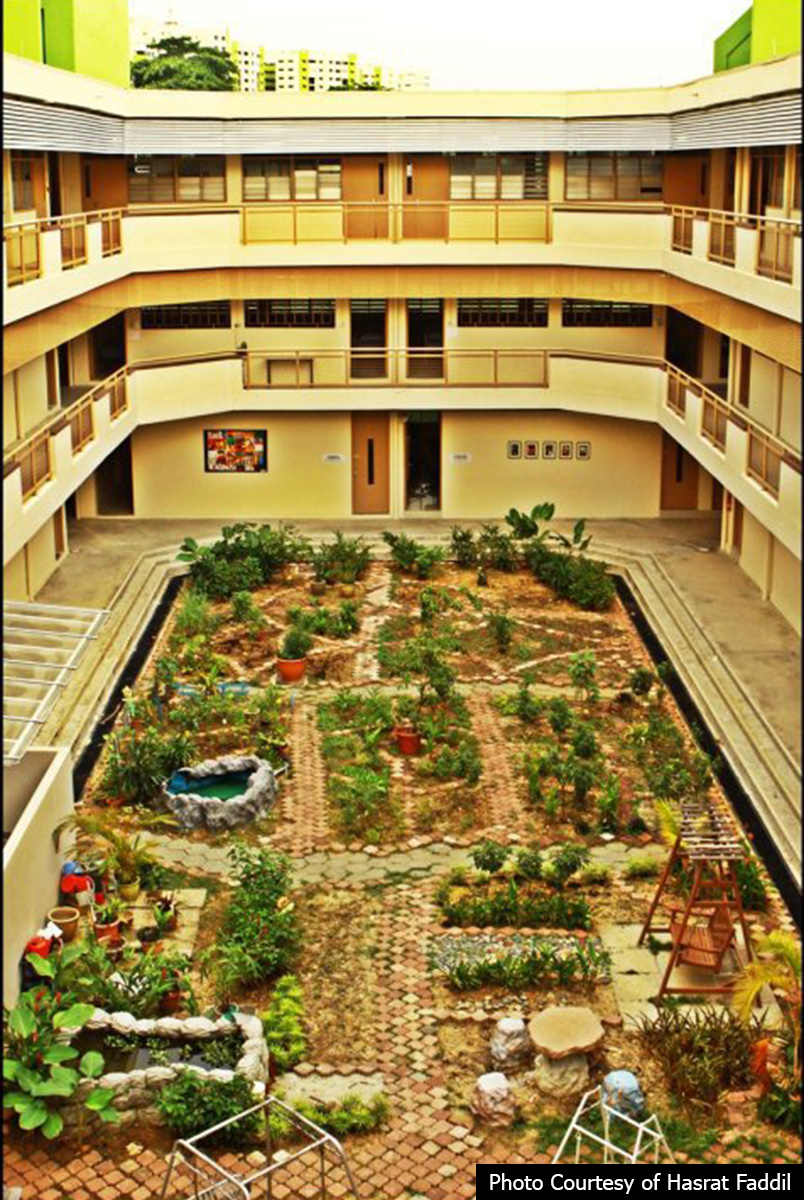
Source: [1] [2] [3] [4] [5]


Tanglin Girls’ School
Kay Siang Primary School (Queenstown)

Merged in 1985 to form Xianglin Primary School

Established in 1957, Tanglin Girls’ was a four-storey high building on top of a slope (was it a trend in the past to place schools on higher altitude? Haha) and was also considered as one of the better schools in Singapore. Students wore white blouse and dark blue pinafore.

Ex-students of Kay Siang spoke briefly of the school being formerly known as Tanglin Boys’ School but in actual fact, Kay Siang and Tanglin Boys’ started out as two separate schools. The 3-storey Tanglin Boys’ School probably merged with Kay Siang along the way and became co-ed.

The first batch of students in Tanglin Girls’ and Boys’ were mostly from Bukit Merah South, Bukit Merah North and Redhill Schools. These three schools also have their own history documented below. Other than this, nothing much can be found about Tanglin and Kay Siang.

tanglingirls_chee-fong-bay

Class 4C of 1976

Class 4C of 1976

Source: [1] [2] [3] [4]


Xianglin Primary School (Queenstown)

Merged with Belvedere School in 1987

The amalgamation between Tanglin Girls’ and Kay Siang Primary proved to be ineffective as the merged school still couldn’t sustain past 2 years. Probably due to dipping enrolment, it was subsequently merged with Belvedere School which was just a road away.


Belvedere School (Bukit Merah)

Closed in December 1990

belvedere1_fb belvedere2_fb belvedere4_fb

The school had a very unique location, at the top of a hill above Crescent Girls’ School. Singapore Poly started in borrowed premises at three sites, one of which was Belvedere School. The school complex was eventually demolished with all the schools under its wings erased from the national school directory forever.

Notable alumni includes Pritam Singh, a Member of Parliament from the Workers’ Party.

Source: [1] [2]


Pearl Park Primary School
Pearl’s Hill School (Outram)

Merged in 1995

Both schools have a history so rich that they have their own article on Singapore Infopedia.

Pearl’s Hill School was established in 1881 and underwent several name change and relocation before settling on its final one in 1914 and 1972 respectively. Initially located at Cross Street, it was among the first batch of government English elementary schools established by the British colonial government. It was affiliated to Outram Road School (later known as Outram Secondary) and students who had finished their Standard One education (PSLE in the olden days) would be posted there. It was finally homed in a 12-storey building on the slopes of Pearl’s Hill at Chin Swee Road, making it the tallest school building ever built in Singapore.

pearlshill_chan-chee-peng

Pearl’s Hill School. I believe it’s the canteen. Oh brings back so much memories about my school too :’)

pearlshill_chan-chee-peng2

I don’t know much about Pearl Park unfortunately, but I do know that the principal (Mr Ang Koon Tin) is actually the father of Daniel from danielfooddiary.com. 🙂

The new Pearl’s Hill School ceased operations in December 2001 due to dwindling enrolment. Hotel Re! presently occupies the building.

Source: [1] [2]


Outram Primary School (Outram Park)

Closed in 1984

Located near Pearl Hill Terrace, it was closed to make way for the construction of Outram Park MRT station. Students and staff from Outram Primary went to Zhangde Primary School (next to Singapore General Hospital) when the school ceased to function.

outrampri_kevinkeong_6Aof1982 outrampri_gatchaman-ken-washio

I’m not sure if this is considered as a merge but it could be, since Outram Primary is mentioned on Zhangde Primary’s history.

Source: [1] [2] [3]


Alexandra Hill Primary School
Bukit Ho Swee Primary School
Henderson Primary School
Keng Seng Primary School (Bukit Merah)

Merged in 2002 to form Gan Eng Seng Primary School

This happened quite recently but it still deserves a mention because they had been around for a long time, at least for Alexandra Hill. Even though its year of establishment isn’t stated anywhere on the net, I reckon that it existed since the 1960s as Dr Amy Khor (Member of Parliament for Hong Kah North) was a student there from 1964 to 1969.

alexhill_bryanfang

Alexandra Hill Primary School

alexhill_mohamed-hanafie_p5Aof1987

Alexandra Hill Primary School – class P5A of 1987

Bukit Ho Swee, on the other hand, was actually a merged school between Bukit Ho Swee East School (English-medium) and Bukit Ho Swee West School (Chinese-medium) formed in January 1986. Prior to the merger, East’s uniform was white and brown while West’s was light blue. Both schools shared a common tuck shop but had two assembly grounds. After they were combined, only Bukit Ho Swee East Primary’s building was utilised. The image of the dilapidated premise is still fresh in my mind because my Dad had to drive past it after visiting my grandparents at Jalan Bukit Ho Swee during my younger days to get home. I kinda foresaw the closure of that godforsaken place. Singapore Exam and Assessment Board had since taken over its site.

Keng Seng Primary seems to get the most limelight from the merger as it even got its own book. Like Bukit Ho Swee, it was also an amalgamation of many schools – three, in fact – namely Keng Seng School, Strathmore Primary School and Friendly Hill Primary School in 1980. You can pretty much tell from here that Keng Seng Primary is an old school.

Keng Seng School came into existence in 1939 through donations from farmers who were supportive of education. These were pig farmers who lived around the area, hence pig faeces along the way school were a common sight for students in those days. Occasionally, the pigs would also break into the classrooms!

However, preference for English education grew by the mid 1970s, leading to the decline of Keng Seng’s popularity among parents. Keng Seng was down to less than 300 students by then and hence had to merge with two other schools. Although the name “Keng Seng” was retained after the merger, it had to take on Friendly Hill’s school crest and Strathmore’s school song. The amalgamated school relocated to Alexandra Road.

More information about the parents schools (Friendly Hill and Strathmore) can be found in part 3.

kengseng_tan-chuan-shin_p6Aof1987

Keng Seng Primary School – class P6A of 1987

As for Henderson Primary, it closed without a trace so I can’t really find any information about it. No one, even its ex-students, documented on its history before the merger? What a waste.

Henderson Primary

Henderson Primary

Henderson Primary

Henderson Primary

Gan Eng Seng Primary is presently located at the former site of Alexandra Hill Primary.

Source: [1] [2] [3] [4] [5]


Redhill School
Bukit Merah North School
Bukit Merah South School (Redhill)

Merged in 1986 to form Bukit Merah Primary School

Redhill Primary School - class P5A of 1979

Redhill Primary School – class P5A of 1979

redhillpri_josephinechua

bukitmerahnorth_FB

bukitmerahsouth_sarinetan

Bukit Merah South School

bukitmerahsouth_shaminahmad

These three schools were adjacent to one another and they shared a big field where cows and other animals roamed. Bukit Merah North School was founded on 10 January 1955, conducting classes at Crescent Girls’ School and then at Delta East School (defunct as well). It only shifted to its latest location at Redhill Close in September 1956. The other 2 schools, I believe, were also there since early 1950s.

Source: [1] [2] [3] [4]


Bukit Merah Primary School (Redhill)

Merged into Alexandra Hill Primary School in 1998

bukitmerahpri_joyceyeow

The ancient OHP projector that we all missed.

Class P5 of 1995

Class P5 of 1995

Bukit Merah Primary School shut its doors 12 years later due to falling enrolment and was subsequently merged with Alexandra Hill Primary School. The newly merged school was then shifted to Telok Blangah a year later and the old site was revamped to the current Gan Eng Seng Primary School. Gan Eng Seng School now sits on a smaller piece of land space, as some land area was cut off to Bukit Merah Secondary School.

(Thanks ‘cornflict’ for the added information)

Did you know? F4’s Ken Chu attended Bukit Merah Primary School during his 8-year stay in Singapore.

Source: [1]


Silat Primary School (Bukit Merah)

Closed in 1992

This school is a result of the merger of two primary schools in 1984 – Silat I Primary and Silat II Primary.

The six-storey white building was at Silat Road in old times. That stretch of road where the school once stood is now renamed to Bukit Merah Road. The school field was also reduced by almost a third to make way for the road that now runs in front of it. Judging from the photographs taken by ex-students (as recent as 2013) who went back to explore, the abandoned building was probably still standing on the same ground not too long ago. But Street View shows something else when I tried to look it up so it could already be gone by now.

silatpri2_christina_superrandomworld.wp

silatpri_christina_superrandomworld.wp

silatpri3_fuzz-lee_1991

The school was closed (last batch was in 1991) following a declining enrolment rate and its students joined Zhangde Primary, which is still existent today.

(Thanks Ginny for the additional input!)

Source: [1] [2] [3] [4]


Sennett Estate School (MacPherson)

Closed in end 1999

Local actress Fann Wong was there from 1978 to 1983 before it was merged with Kwong Avenue School and renamed to Sennett Primary. After not offering primary one places for two years due to low demand, the school was closed in 1999 and students were transferred to nearby Cedar Primary School.

sennettestate_kim-song

At the same time, Jagoh Primary was also earmarked to close due to low enrolment. Its students were transferred to Blangah Rise Primary School.

Source: [1] [2] [3]


Rangoon Road Primary School (Farrer Park)

Closed in the early 1980s

The school was established in 1968 when the staff and former students of McNair School moved to its premise. It’s a pity that the school is no-more as it churned out quite a number of ministers and influential people such as Devan Nair (third President of Singapore), S. Dhanabalan (former chairman of Temasek Holdings), S. Jayakumar (Senior Minister) and Wong Kan Seng (former Deputy Prime Minister and Minister for Home Affairs). I’m pretty sure it’d be one of the most sought-after schools today if it still exists (but of course it needs a name change first…)

Singapore Indian Fine Arts Society presently sits on the former site of Rangoon Road Primary.

Source: [1]


Towner Primary School (Bendemeer)

Closed in 1998 (verification needed)

This school was form by merging two schools – Whampoe School (est. 1950) and Towner School in 1984 – and catered mainly to the population in the immediate vicinity of the school. However, it was demolished to make way for HDB flats and students moved over to May Primary School.

Source: [1] [2] [3]


May Primary School (Boon Keng)

Merged with Boon Keng Primary in 2002 to form Farrer Park Primary

This school was an amalgamation between May South (blue uniform) and May North (green uniform) Primary School and students in the newly established school wore blue and green uniform. When Cambridge Primary shut its doors in December 1998, its remaining students were also absorbed by May Primary. However the school was later vacated and renamed May Adventure Camp. Its park nearby was also converted into an expressway.

maypri3_miboy_lomotion.fr.yuku maypri1_miboy_lomotion.fr.yuku maypri2_miboy_lomotion.fr.yuku

Yam Ah Mee (think General Elections) was from May North Primary School.

Source: [1] [2] [3] [4]


Serangoon Garden North School (Serangoon)

Merged with Serangoon Garden South in 1988

Established in 1956, the school moved into its own premises at 49, Kensington Park Road. Students there used to fight (playfully) with those from Serangoon Garden South when they crossed the centre-line of the field into their territory. However, the latter was later proved to be victorious when it took over Serangoon Garden North to form to new Serangoon Garden South School (probably because it was established a year earlier).

serangoongardennorth_FB4 serangoongardennorth_the-creative-commentor serangoongardennorth_FB serangoongardennorth_FB2 serangoongardennorth_FB3

But that victory was short-lived as in January 2007, the school was merged with Zhonghua Primary School and is now located at Serangoon Ave 4.

Source: [1] [2] [3] [4] [5]


Mattar East School (MacPherson)

Merged with Mattar Primary in 1988
Subsequently closed (year unknown)

Founded in 1963, the school was loosely associated to the police force for having a homophonic name to “mata-mata” (Malay for “Police”). Luckily for them, they had a neighbour with a similar name (Mattar Primary) and a minister named Ahmad Mattar which cushioned the teasing.

Mattar Primary

Mattar Primary

Mattar Primary

Mattar Primary

They had a very big field shared with Mattar Primary and Aljunied Primary. With 3 schools in close proximity vying for students in the fast-maturing estate, it’s no wonder none of them lived til this day. Ex-students of Mattar Primary School (merged with Mattar East) said that the school was later absorbed by MacPherson Primary but this absorption is not stated anywhere on the latter’s history.

Source: [1] [2] [3]


Aljunied Primary School (MacPherson)

Closed in 1997

Rumour has it that the school was built to accommodate the dragon babies born in 1964. In other words, the school started in 1971 (officially opened in 1972) when most schools in Singapore were full. A relatively new school in that era, it had “no past successes to look back upon” as I quote the then-parliament secretary to the minister for education. 26 years went by and the school didn’t seem to gain any recognition but it did churn out a few well-known figures such as local actress Jacelyn Tay (郑秀珍), who was a vice-head prefect of the school.

aljuniedpri_FB

It was absorbed by MacPherson Primary (currently at Aljunied Primary’s site) upon its closure.

(Thanks Gurmit for confirming the school’s history)

Source: [1] [2] [3] [4] [5]


Chong Shan Primary School (Ang Mo Kio)

Merged with Townsville Primary in 2001

Chong Shan started functioning in 1982 and was in fact the 180th school built by the Singapore government. It had a joint official opening with Chong De Primary in 1984.

chongshanpri_lim-wei-chern-jocelyn

chongshanpri_lim-wei-chern-jocelyn1

chongshanpri_lim-wei-chern-jocelyn3

chongshanpri_lim-wei-chern-jocelyn2

Chong De Primary’s students were transferred to Chong Shan when it closed in 1998. More details about Chong De can be found in part 2.

(Special thanks to Lim Wei Chern Jocelyn for her contribution)

Source: [1]


Ang Mo Kio North Primary School
Li Hua Primary School
Hong Dao Primary School (Ang Mo Kio)

Merged in 2000 to form Anderson Primary School

Ang Mo Kio North was established in 1981 and Hong Dao Primary in 1982. Li Hua Primary had a longer history as it originated as a rural school in the fifties, formerly known as Lee Hua Chinese School at Yio Chu Kang Road. Students used to wear all-white before the attire changed to white and blue.

angmokionorthpri_patrick-ang

Ang Mo Kio North Primary

angmokionorthpri_danny-chaly

Li Hua Primary

Li Hua Primary

Li Hua Primary

Li Hua Primary

Li Hua Primary in 1971

Li Hua Primary in 1971

Li Hua Primary

Li Hua Primary

Li Hua Primary

Li Hua Primary

Ang Mo Kio North and Li Hua primary schools shared a field with Presbyterian High School before it moved to a bigger space.

Hong Dao Primary

Hong Dao Primary

Hong Dao Primary

Hong Dao Primary

Source: [1] [2] [3] [4] [5] [6]


Sembawang Hills Estate School (Upper Thomson)

Closed in 1992

The school overlooked the forest reserve by Casuarina Road and students wore white blouse/shirt and brown skirt/shorts. Many ex-students recalled having a prata stall (now known as Casuarina Curry Restaurant) conveniently across the street.

sembawangestate_sharad-haridas

It garnered media attention in 1968 during the Gene Koh murder trial as the mentioned’s decaying body was found by one of the school’s stallholders when he went to relieve himself in the forest at night.

In 1992, the school was closed to make way for private housing development.

Source: [1] [2] [3]


Seraya Primary School (Katong)

Merged with Fowlie School in 1986

Seraya Primary and Fowlie School were like sister schools to each other for they shared the same field back then before both schools were merged to form Fowlie Primary. Both schools were also opposite each other and very often, students from Seraya would go over to Fowlie’s canteen to eat.

Seraya Primary school band

Seraya Primary school band

serayapri_FB serayapri_FB2

Other schools in the vicinity were St Hilda’s, Tong Cai, Haig Boys’ and Girls’ School.

Source: [1] [2] [3] [4] [5]


Fowlie Primary School
Mountbatten Primary School
Haig Boys’ School (Mountbatten)

Merged in 2001 to form Tanjong Katong Primary School

For a brief history of Fowlie, refer to Seraya Primary.

Unfortunately I’m unable to obtain any details of Mountbatten Primary but if you’re an ex-student, you may consider joining this members-only Facebook group here. Please feel free to provide me with the history of Mountbatten Primary if you’re familiar with the school.

Haig Boys’, on the other hand, isn’t as mysterious as its other counterparts. Founded in 1951, it was named after Field Marshal Sir Douglas Haig, British Commander-in-Chief during the Battle of the Somme. Its original location was at Haig Road in Katong but was later relocated to Mountbatten Road.

Haig Boys' school staff in 1968

Haig Boys’ school staff in 1968

Haig Boys'

Haig Boys’

Haig Boys' badminton team in 1968

Haig Boys’ badminton team in 1968

Today, Tanjong Katong Primary is a popular school with the expatriate community in Singapore with about 40% of its students coming from 30 over countries. Some parents even started queuing as early as 3 days before the opening of Phase 3 registration to vie for a spot in the school. Judging from its popularity, this school is definitely going to be around for a long time and this is certainly good news to Fowlie’s alumni, whose alma mater had merged twice in its history.

Source: [1] [2] [3] [4]


Guillemard East Primary School (Kallang)

Closed in 1987

Known to be located behind Singapore Badminton Hall, its remaining students were taken in by Guillemard Primary (previously known as Guillemard Road English School but merged with Guillemard West Primary in 1984) upon closure. However, Guillemard Primary also suffered from the same fate some years later.

guillemardeastpri_FB3 guillemardeastpri_FB2 guillemardeastpri_FB guillemardeastpri_tom-wu_born1969

While we’re at it, allow me to also give a special mention to affiliated schools like Kallang Primary (previously known as Kallang Integrated Primary School, closed in 1987) and Guillemard West Primary in the region. Sadly, none of these schools exists today.

Source: [1] [2] [3] [4]


Bedok Girls’ School
Bedok Boys’ School
Bedok Primary School (Bedok)

Merged in 1986 to form Bedok Primary School
Closed in 1998

Bedok Girls’ and Bedok Boys’ were built in 1952 and located along Bedok Road in the middle of a ridge. Each of them is a single-storey building with 14 classrooms. They shared a field and a canteen which was on top a flight of stairs. Students who attended both schools live in villages in that area.

Bedok Girls' - class P4A of 1975

Bedok Girls’ – class P4A of 1975

Bedok Girls' - class P6 of 1987

Bedok Girls’ – class P6 of 1987

Bedok Boys'

Bedok Boys’

Bedok Girls'

Bedok Girls’

Bedok Primary, on the other hand, was founded in the early 1960s. However due to its falling enrolment, all 3 schools mentioned were merged to form a new co-ed school. Bedok Primary has quite a number of famous alumni though, such as Vikram Nair (MP from PAP) and Clarence Lee, a renowned professional make-up artist, just to name a few.

Bedok Primary farewell ceremony

Bedok Primary farewell ceremony

Bedok Primary

Bedok Primary

Bedok Primary

Bedok Primary

Bedok Primary class P6N1 of 1989

Bedok Primary class P6N1 of 1989

Bedok Primary

Bedok Primary

The new Bedok Primary closed in 1998 and students were transferred to Bedok View Primary (which ceased operation and students moved over to Bedok South, which became Bedok Green in the end). In 2003, Bedok South Secondary School took over its former site.

Source: [1] [2] [3] [4] [5] [6]


Braddell Primary School
Westlake Primary School
San Shan Primary School (Toa Payoh)

Merged in 2002 with First Toa Payoh Primary to form the last

Braddell Primary started in 1976 and was also used by Mensa for its initial admission test sessions. It gained media attention when one of its student, seven-year-old Wong Chong Kum, was kidnapped by a man and a woman in January 1985 at the school (see source 4-6) who sought a random of S$30,000. All principals had to undergo an anti-kidnap briefing because of this.

Braddell Primary

Braddell Primary

Braddell Primary

Braddell Primary

Braddell Primary canteen

Braddell Primary. Not sure where this is but it looks like an assembly hall

Braddell Primary in the midst of tearing down in 2011

Braddell Primary in the midst of tearing down in 2011

The school building was demolished in 2011, about 9 years after the merge for Marymount Centre, which shifted from Thomson Road due to the construction of the North-South Expressway.

westlakepri_Kevin-Soh_double-image.bs_lastday

Westlake Primary canteen

Westlake Primary canteen

Westlake Primary

Westlake Primary

Westlake Primary mural

Westlake Primary mural

westlakepri_jay-komuda

Westlake Primary had its first batch in 1977 and used to be surrounded by 2 neighbouring schools – Westlake Secondary and Braddell Secondary (read below). The premises of Westlake Primary and Secondary were used to film the 2002 movie “I Not Stupid”. There is also a mosaic mural in Westlake Primary that depicts the Singapore of the mid-1970s and the early 1980s (see picture below) and it’s probably still there.

sanshanpri_Christine-Zeng-10thannisouvenirmag

San Shan School, established in 1929, used to be a Chinese-medium school at Sophia Road but was relocated to Toa Payoh and renamed to San Shan Primary in 1982. The old building, still around today, used to be a holding site for Methodist Girls’ School for a short period and one of NAFA’s campuses. The new school building at Toa Payoh had already been torn down for Beatty Secondary.

Source: [1] [2] [3] [4] [5] [6] [7] [8] [9] [10] [11] [12] [13]


Braddell Secondary School
Westlake Secondary School (Braddell)

Merged in 2000 to form Braddell-Westlake Secondary School
Closed in 2005

Braddell and Westlake Secondary were founded in 1981 and 1978 respectively.

braddellwestlakesec_tan-guo-sheng2

Westlake Secondary

Westlake Secondary

Braddell Secondary

Braddell Secondary

Braddell-Westlake Secondary

Braddell-Westlake Secondary

Westlake Secondary

Westlake Secondary

Braddell-Westlake Secondary

Braddell-Westlake Secondary

In order to boost falling enrolment, both schools were merged but their premises were retained and utilised, thus making them known for being one of the few secondary schools to occupy two separate campuses. Its enrolment continued to decline, leading to its official closure in 2005 and remaining students and staff were transferred to Guangyang Secondary School. Since 2012, the area has been earmarked for the shift of Raffles Girls’ Secondary.

Source: [1] [2] [3] [4]


Swiss Cottage Primary School (Dunearn)
Moulmein Primary School (Balestier)

Merged in 2002 to form Balestier Hill Primary School

To combine two schools that were quite distant from each other.. this was certainly a very unusual merge. If you ask me, it seemed like an attempt to rid the less-popular Swiss Cottage from the plot of land populated by famous schools such as SCGS, Raffles Girls’ Primary and ACS Primary.. but of course, that’s just my opinion. MOE has a reason for everything they do, right?

swisscottagepri_pbase

Swiss Cottage Primary was, no doubt, a school which lacked publicity. Before my “research” for the purpose of this entry, I had never heard of this school despite its presence since the 1960s. Swiss Cottage SECONDARY yes, but not the primary version of it (which could be because Bukit Batok was my place of residence for 23 years and everyone there knows that Swiss Cottage Sec is the best secondary school in the neighbourhood). The school’s last enrolment was 710, paling in comparison with Moulmein Primary’s 1030 in 2001, which was one of the factors that led to the cessation of the school in name.

moulmeinpri_lu-yucai2

Moulmein Primary

moulmeinpri_heng-seng moulmeinpri_lu-yucai

I knew about Moulmein Primary though, thanks to the TV drama “Moulmein High” on Channel 5 in the early 2000s. Trivia aside, Moulmein Primary was formed by the merger of Griffiths School when it first closed (Now Griffiths Primary School) and Balestier Girls’ School in 1983. Subsequently, it also absorbed Kim Keat Primary.

Source: [1] [2] [3]


Bukit Batok East Primary School
Bukit Batok West Primary School (Jalan Jurong Kechil)

Merged in 1984 to form Bukit Timah Primary School

Bukit Batok East Primary

Bukit Batok East Primary

The unified school was actually called Bukit Batok Primary School before it changed to its current name. That’s an appropriate change as I don’t recall seeing the school at all in Bukit Batok. The principal (Mr Lim/Lee – ex-students, please verify!) then was a skinny man with black frame glasses and white hair who portrayed a rather regimental look. (Quoted from Kian Wee in the comments)

Bukit Batok East was probably founded in 1955 (reference from some MOE correspondence sheet with restricted access) but I’m clueless about the history of Bukit Batok West (not very popular I guess) except for the fact that the land is now occupied by German European School.

Source: [1] [2]


Clementi North Primary School
Clementi Town Primary School (Clementi)

Merged in 2001 to form Clementi Primary School

A Clementi North Primary student

A Clementi North Primary student

Clementi North Primary and Clementi Town Primary were established in 1980. Probably due to competition from neighbouring schools such as Nan Hua Primary and Pei Tong Primary, they saw their enrolment dwindling and were eventually made to merge.

Clementi Town Primary - primary 1 students in 1982

Clementi Town Primary – primary 1 students in 1982

To accommodate the expansion from the merge, a new school building was built on the former site of Clementi Town Primary School. While the construction took place, students from both schools occupied Clementi North Primary premises.

Source: [1] [2] [3]


Ghim Moh Primary School (Commonwealth)

Merged with New Town Primary School in 2008 to form the latter

The school was founded in 1977 and used to be at Queenstown area. The site of Ghim Moh Primary has now been converted to Singapore Chinese Language Centre.

ghimmohpri_darren-foo-mow-chien ghimmohpri_du-yue-sheng ghimmohpri_Lim-chon-kah

Source: [1] [2] [3]


Ghim Moh Secondary School
Jin Tai Secondary School (Ghim Moh)

Merged in 2007 to form Clementi Woods Secondary School

Ghim Moh Sec - alumni (of batch 1986) gathering

Ghim Moh Secondary – alumni (of batch 1986) gathering

Ghim Moh Secondary, formerly known as Alexandra English Elementary School at Portsdown Road, started in 1976 with only 8 classes of students – 6 class of boys and 2 of girls. The first batch of students had no tuckshop (otherwise known as canteen today). The school was relocated to Ghim Moh estate a year later. (History of Ghim Moh Secondary quoted from Tan Helward)

Jin Tai Secondary achievement

Jin Tai Secondary achievement

Jin Tai Secondary was established in 1982 and judging from the pictures posted by ex-student on the Facebook group, I can say that the school was adept at sports especially soccer. Unfortunately, it wasn’t widely known for its achievements but instead for an infamous incident in 1999 where a mock attack was staged as part of a Total Defence Day exercise. The mock attack, conducted by eight student-officers aged between 16 and 18 in the National Cadet Corps (NCC) to simulate the Japanese Occupation of Singapore and teach students the importance of psychological defence, turned real and fourteen students had to be treated for injuries with 3 warded (source 4).

Source: [1] [2] [3] [4]


Jin Tai Primary School (West Coast)

Merged with Qifa Primary in 2008 to form the latter

Jin Tai was officially opened 1984 and like Jin Tai Secondary, it appeared on the news many times for its outstanding achievement in sports. However both remarkable schools bearing the same name are no longer existent. It was the second school absorbed by Qifa Primary – first was Jubilee Primary when it ceased operations in 1996.

Jin Tai was also involved in the high profile 2004 murder case of eight-year-old Huang Na as the deceased was enrolled in that school. Sidetrack a bit, oh gosh.. if Huang Na is still alive, she’d be 18 today can you believe it!?

Source: [1] [2] [3] [4]


Yung An Primary School
Merlimau Primary School
Jurong Town Primary School (Jurong West)

Merged in 2003 to form Lakeside Primary School

Yung An, Merlimau and Jurong Town started functioning in 1977, 1966, 1968 respectively. These were the first few schools in Taman Jurong for the early settlers in that estate.

The first-mentioned was originally at Yuan Ching Road and before the school building was ready for occupation, students were housed in Boon Lay Garden Primary.

Merlimau was initially a Malay school named Pulau Merlimau Primary from Jurong Island. It was renamed to Merlimau Primary when it shifted to Taman Jurong and had an alumnus who was awarded the most coveted President’s scholarship in 1999.

Merlimau Primary in 1989

Merlimau Primary in 1989

Merlimau Primary

Merlimau Primary

Merlimau Primary in 1988

Merlimau Primary in 1988

Before the merge, Yuan Ching Secondary, Yung An Primary and Merlimau Primary shared the same football field but now it has become Yuan Ching Secondary’s property… so are both neighbouring primary school buildings.

Jurong Town Primary in 1986

Jurong Town Primary in 1986

Jurong Town Primary in 1986

Jurong Town Primary in 1986

Jurong Town Primary

Jurong Town Primary

Jurong Town was a pretty popular school when it first started due to the lack of schools in the area. The demand was so great that they had to borrow classrooms from nearby secondary schools to accommodate the large number of students. However as more schools were built and completed, the demand waned.

As of today, there are about 13 primary schools just in Boon Lay estate alone, some equipped with newer and better facilities. Thus it isn’t surprising to see the pioneering schools in Jurong losing out in competitive advantage.

Source: [1] [2] [3] [4] [5] [6] [7] [8]


Outram Institute (Bartley)
Jurong Institute (Jurong West)

Merged in 2004 to form Millenia Institute

They were two of the “four original centralised institutes (CI) in Singapore and one of the pre-university centres in Singapore that offers a three-year curriculum leading to the Singapore Cambridge (UCLES) General Certificate of Education Advanced Level examination” (Wikipedia). Due to dipping enrolment, they were merged to form the nation’s only centralised institute, Millenia Institute, at Bukit Batok.

Source: [1] [2]


Seletar Institute (Thomson)
Townsville Institute (Queenstown)

Closed in 1997 and 1995 respectively

Seletar Institute started in 1988 at the old campus of Upper Thomson Secondary School (now known as North View Secondary). Similarly, Townsville was also in the same year. Like the two institutes mentioned above, they offered a three-year pre-university programme based on the students’ O-level L1R4. However they weren’t as lucky as they were closed down altogether.

According to reader Adam, local host/actor Bryan Wong is an alumnus of Townsville Institute.

Seletar Institute has a very detailed write-up (more comprehensive than the others in fact) on its history on Wikipedia and here’s one part which got me snickering:

Due to the “Kampung spirit” and small cohort, many of the students ended up in a relationship with no less than 10 couples in a student population with less than 200. The school leadership force a reshuffling of the students to ensure that those in a relationship do not end up in the same class in Year Two.

– Wikipedia (Seletar Institute)

Source: [1] [2]

Due to time constraint and the impossibility to cover every single closed/merged schools in Singapore, I’ll briefly mention some of those not discussed in detail here: Bedok Town Primary, Dorset Primary (Farrer Park), Yuqun Primary, Pandan Primary (Teban Gardens), Jalan Kayu Primary, Kebun Baru Primary (Ang Mo Kio), Tanjong Rhu Boys’ School and Tanjong Rhu Girls’ School (both merged to form the now-defunct Tanjong Rhu Primary School), Chong Boon Primary and the list goes on.. and on.. and on.

I’ll do a follow-up if time permits, probably in my next long break. Haha. PART 2 here!

And joining the list with effect from next year will be..

Qiaonan Primary School
Griffiths Primary School (Tampines)

To merge in 2015 to form Angsana Primary School

I’m shocked at the closure of Qiaonan as it’s inarguably one of the oldest schools in Singapore to have been around for 81 years. I guess it’s just not popular enough in terms of academics despite its long history. To prove this point, the school only received 30 registration out of its possible maximum intake of 120 in last year

Qiaonan Primary

Qiaonan Primary

Founded by Wenzou Clan Association in 1933, it was known as Kiau Nam School and classes then were conducted in rental units in the now-defunct Lorong Koo Chye. 7 years later, students were schooled in a donated house (by the school director of school board) at Paya Lebar Road. Then came World War II, which saw the school closed during the mayhem until it was over. During the war, the school principal and a handful of teachers stood their ground and did not flee, hence were all executed. In the late 1950s, classes were also conducted in a Chinese temple to accommodate the growing numbers.

Qiaonan Primary

Qiaonan Primary

Qiaonan Primary

Qiaonan Primary

Qiaonan Primary school uniform

Qiaonan Primary school uniform

Griffiths Primary was formerly known as Towner Road Primary due to its locality. Started in 1950, it was then renamed to Griffiths Primary in honour of Mr James Griffiths. However, the school closed down once in 1982 and its pupils were transferred to Moulmein Primary (history above) as a result. The school was subsequently resurrected in 1988 and was operating at Junyuan Primary School before the completion of its premises at Tampines 22. Who would have expected its closure again 20 over years later? 😦

griffiths_hawa-ahamad

From Griffith’s 30th Anniversary Souvenir

griffiths_googlemaps

And seriously, Angsana?? Couldn’t the naming committee think of something more modern?

Source: [1] [2] [3] [4] [5]


Hong Kah Primary School (Bukit Gombak)

To merge with Lianhua Primary School in 2015

I used to live about 15 minutes walk away from the school, which started in 1994. Being a resident of Bukit Gombak for 20 over years, I’m pretty familiar with the schools in the neighbourhood. Moreover, two of my best friends were ex-students of Hong Kah Primary as well. From their account, I have to say that this absorption is inevitable.

There are 4 primary schools in the small housing area of Bukit Gombak alone – St. Anthony’s (my alma mater), Lianhua, Dazhong and Hong Kah – and sad to say, Hong Kah is the least popular among all. It faces very stiff competition from neighbouring schools like St Anthony’s, the most popular in the area with oversubscription in phase 2C. According to my friends, parents only enroll their kids there as a last resort when they can’t get a spot at St. Anthony’s :\ Some never even considered about Hong Kah Primary.

hongkah_googlemaps hongkah_sch hongkah_sharon-tan hongkah_uniform

With just 23 applicants for its 150 vacancies in 2014, I’m also unsure of the reason for its unpopularity. Could it be due to its less than exceptional academic performance? Nevertheless, I’m certain that it’s remote location plays a part in its closure.

Source: [1] [2]


Bedok West Primary School (Bedok)

To merge with Damai Primary School in 2015

Formerly known as Kaki Bukit Primary School, it was renamed Bedok West when it shifted to 50 Bedok Reservoir in 1984. For many years since its relocation, the school functioned as a single session school until the end of 1995 when there was a demand for more places and the school had to function both sessions. Its pupil population increased and hit 1468 in 40 classes in a particular year. The school serves pupils living in Bedok area and the neighbouring areas such as Eunos, Tampines, Pasir Ris and Changkat Changi.

bedokwest_googlemaps

kbps

kbps1

kbps11

kbps10

kbps ockestra1

kbps12

kbps8

Probably due to population shift, the school suffered a precipitous drop in enrolment in recent years. The last recorded population in 2013 was 600. During P1 registration last year, it only had 35 pupils registered out of a possible 150.

(Special thanks to Hadi Chik for the pictures)

Source: [1] [2]

* * *

Looking at these pictures made me reminisce about the past. I’m sure kids born in and before the 90’s had a much enjoyable childhood as compared to the new generation.

Have a story to share about your decommissioned school? Let me know in the comments below! I may include that in my next write-up 🙂 And as you can see, some schools mentioned above don’t come with pictures. That’s because I can’t find them online so if you have some pictures of your school, feel free to share them!

Credits go to sgschoolmemories for their very comprehensive lists of schools in mature estates which gave me a good head start in this blog entry.

Special thanks to Kuek Jinhua and Andrew for providing me with additional research for Jervois Primary, Tanglin Boy’ and Girls’ Primary, Kay Siang Primary, May Primary, Boon Keng Primary and Bukit Ho Swee Primary schools.

Read also:
HISTORY: Closed and Merged Schools in Singapore (PART 2)
HISTORY: Closed and Merged Schools in Singapore (PART 3)
HISTORY: Closed and Merged Schools in Singapore (PART 4)