Madame Tussauds FINALLY opened in Singapore on Saturday and the very exited me bought the admission tickets as soon as I got wind of their sale. I remember seeing a standee at Bangkok promoting their Madame Tussauds a few years back but didn’t have the chance to go because we wanted to set aside more money for shopping. But deep in my heart I really wanted to tour Madame Tussauds and see how realistic the wax figures are! Thus, needless to say, I was really elated when I first read the news about the opening of Madame Tussauds here. But what took them so long?!
Buying tickets is a breeze . With the Internet these days, you can beat the crowd (expected for new attractions) and just purchase tickets online! PLUS, if you book your tickets 24 hours in advance (valid ’til 31 December 2014), you only need to pay S$20 instead of S$30! Being such a sucker for discounts, I immediately got a pair despite being so broke this week from all the shopping. But twenty bucks is really a steal and worth the awesome experience I had at the wax museum.
The only thing I didn’t like was its location though because on top of the S$20 admission fee, I had to pay S$2 (bus) or S$4 (monorail) just to enter Sentosa -_- So expensive just for a short distance argh *nags incessantly*
I went with my boyfriend and we actually planned to go on the day of opening. But later we realised that there wouldn’t be enough time for us to go around the museum after having to attend my niece’s first birthday party in the afternoon (and going to a Sephora sale event hehe) so we postponed the trip to the following day!
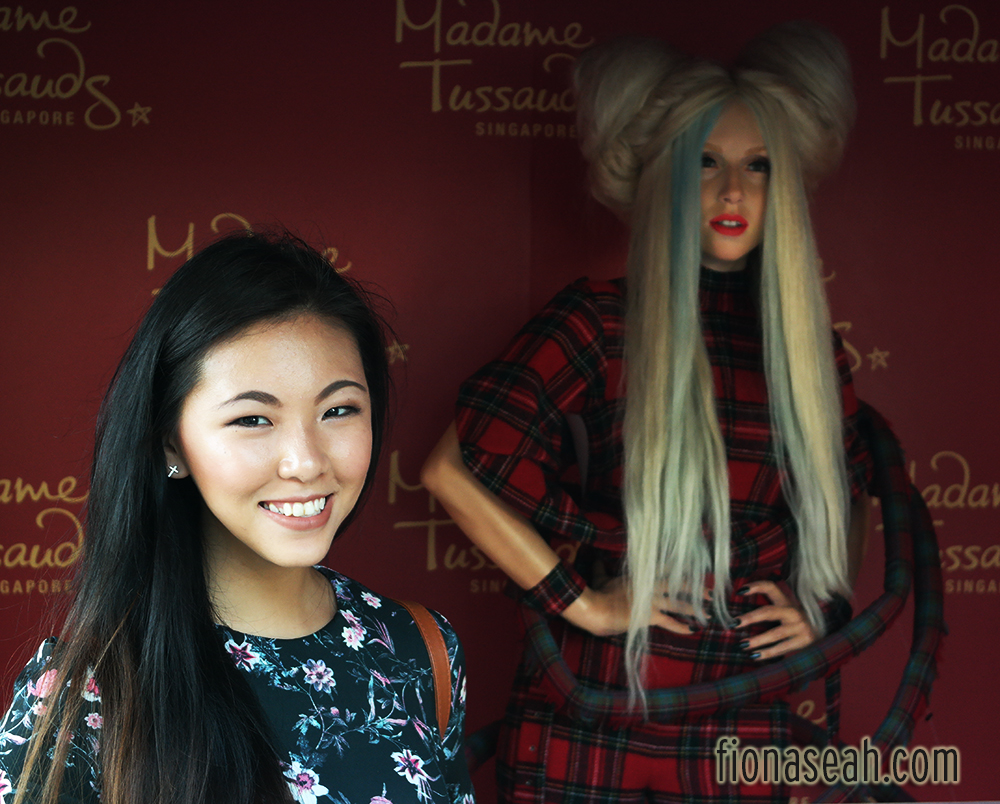
To reach Madame Tussauds, you’d need to take the monorail to Imbiah station and walk to Merlion Plaza where you’d find 3 flights of escalators leading to this white mansion which I can’t really remember what it used to be. I hope those escalators are well-maintained because nobody likes climbing stairs. If you can’t find the escalators, try looking for Lady Gaga:
Greetings from Merlion Plaza
We arrived at about 6pm , 1.5 hours before the time of last entry, and there wasn’t many people waiting to go in. In fact there was no crowd at all! We either came too late or people are avoiding the museum until the resumption of the boat ride or… the museum is under-promoted. If it’s due to the second reason, you will be glad to know that you’d be given free tickets (valid ’til 30 November 2014) to visit the place again! So yup, I paid S$20 for a ticket and got an additional one free! How awesome is that? 😀 And I will definitely go again because there will be more wax figures coming over!
Entrance
2 + 2 complimentary tickets! And a $10 booklet which we bought for keepsake. There’re also discount vouchers (for your hand cast in wax and photo-taking sessions) inside!
Less talking, more pictures! Most of the photos were taken by Bf 🙂
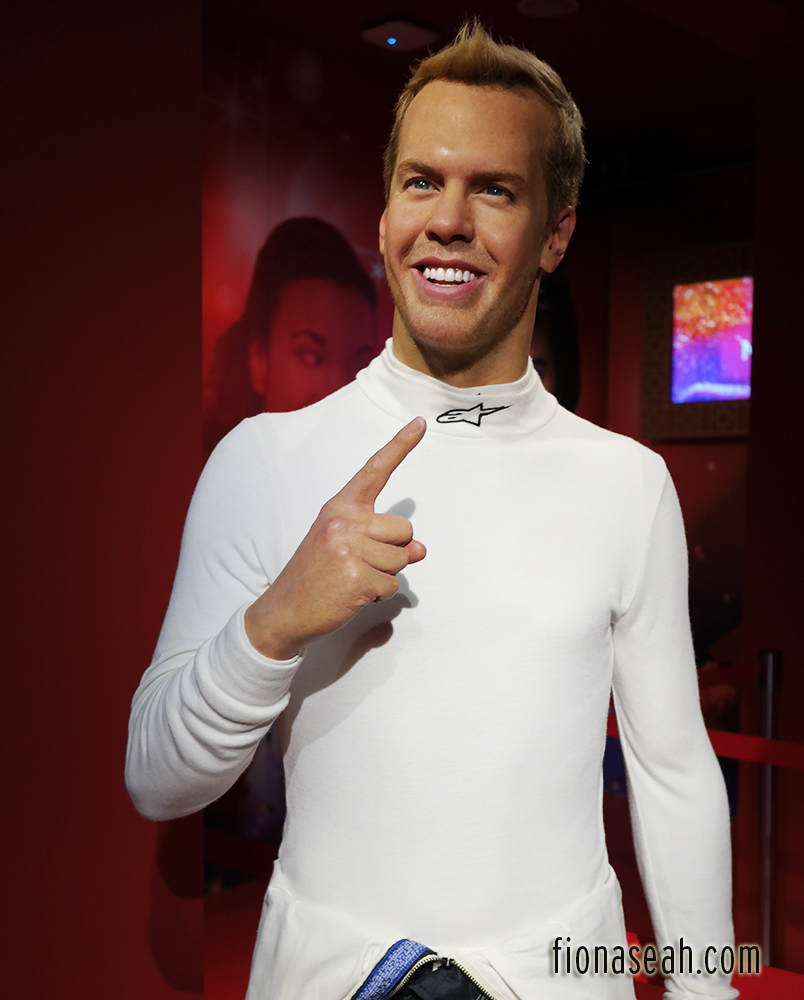
Sebastian Vettel near the ticketing counter, signalling to you where to go haha.
**Updated on 3 December 2014**
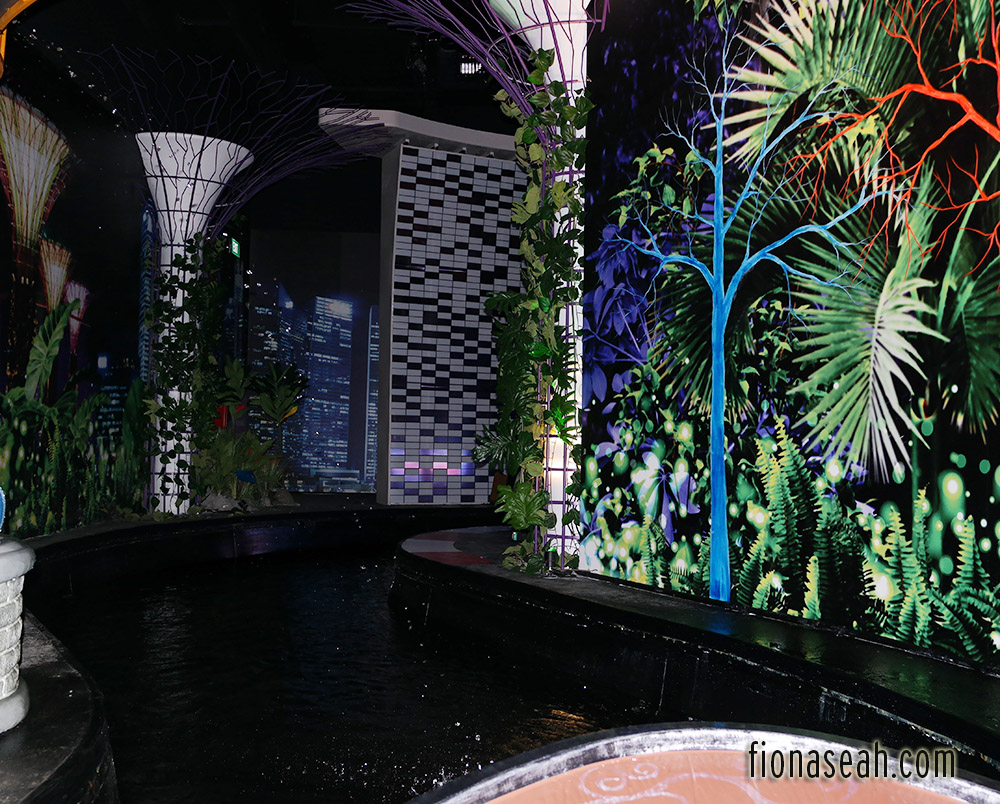
The boat is now available for use! We went back again on the last day of November since we were given a pair of complimentary tickets. Here are some pictures taken during the boat ride.
Stamford Raffles
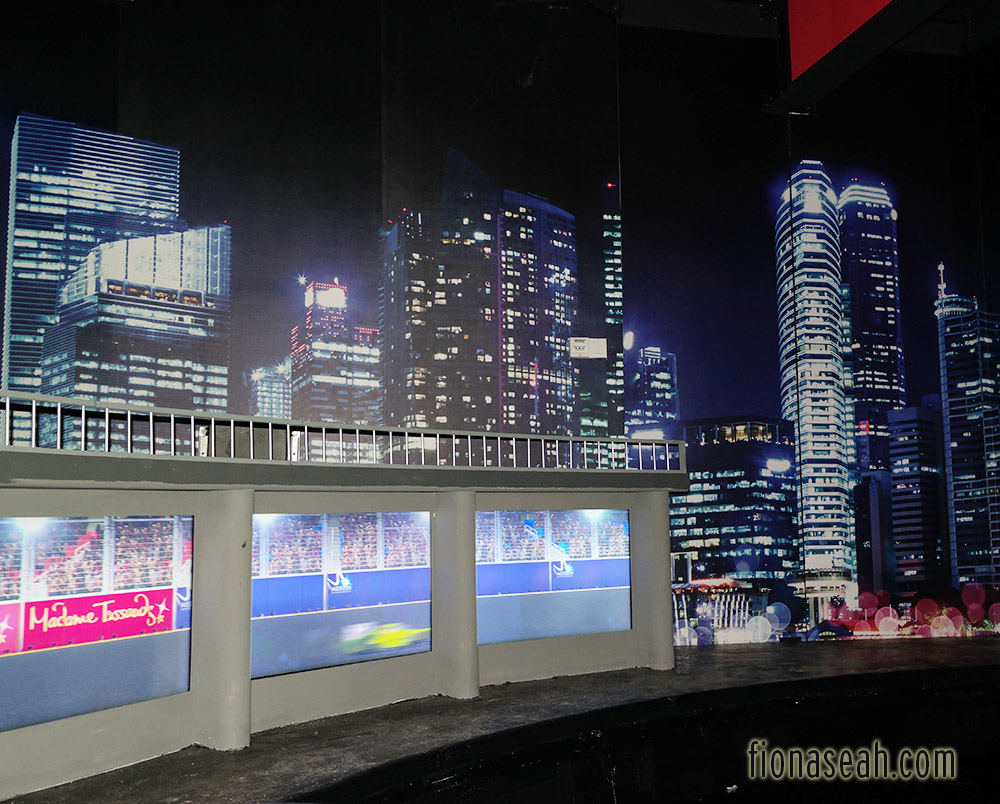
Backdrop
Merlion
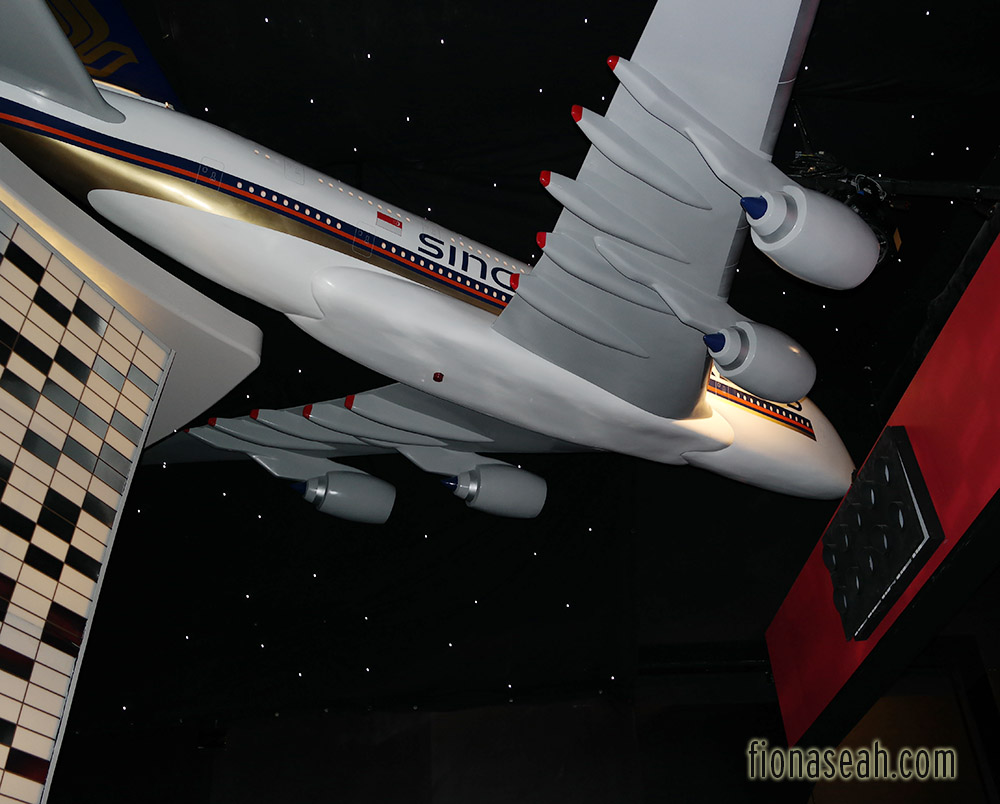
Singapore Airlines plane
More backdrop
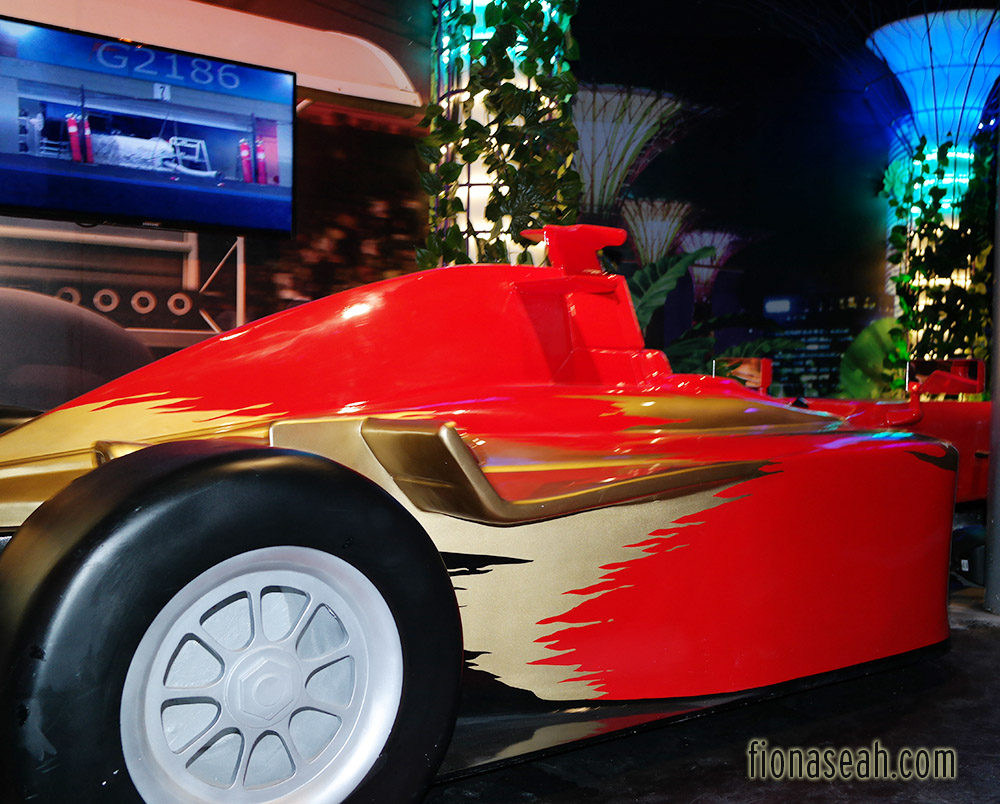
Ferrari! Guess who’s standing beside it?
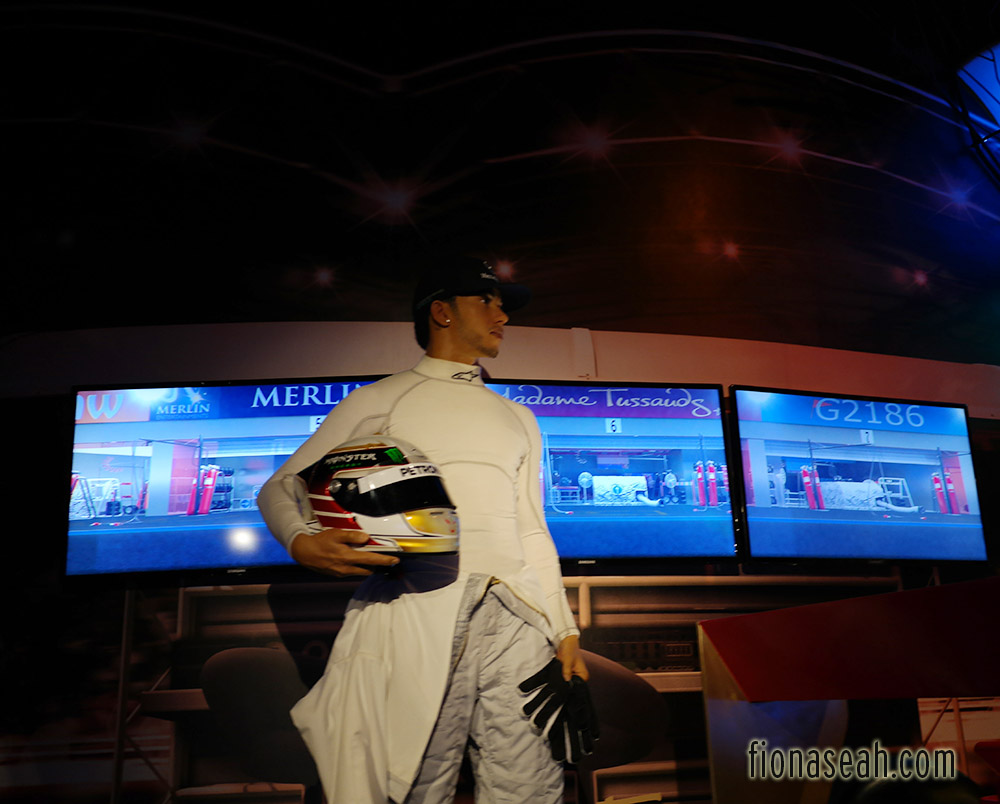
Lewis Hamilton! Not sure why he’s there though because this area is clearly about Singapore history and its culture!
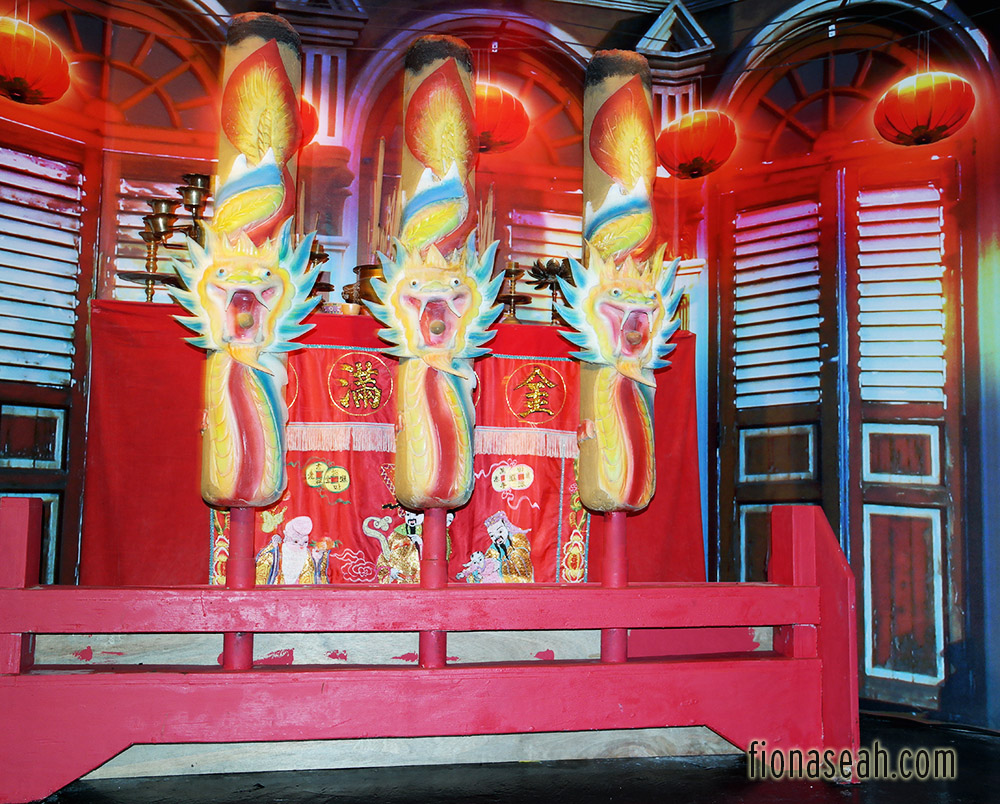
Some Chinese opera singers
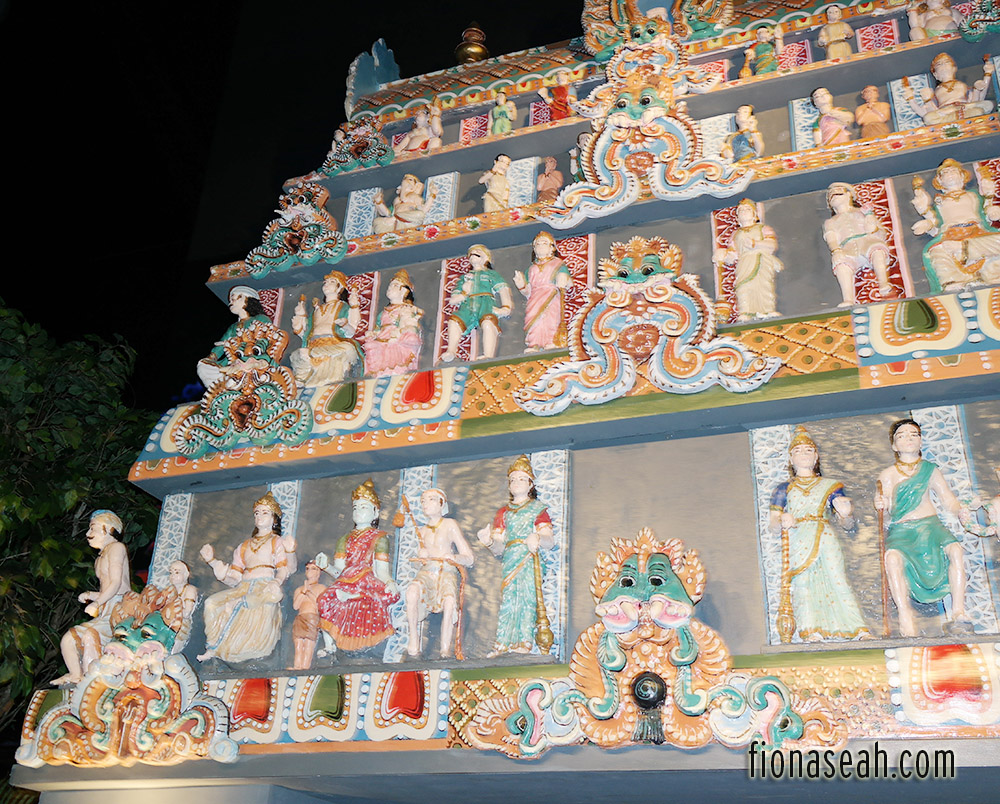
The Sri Veeramakaliamman Temple
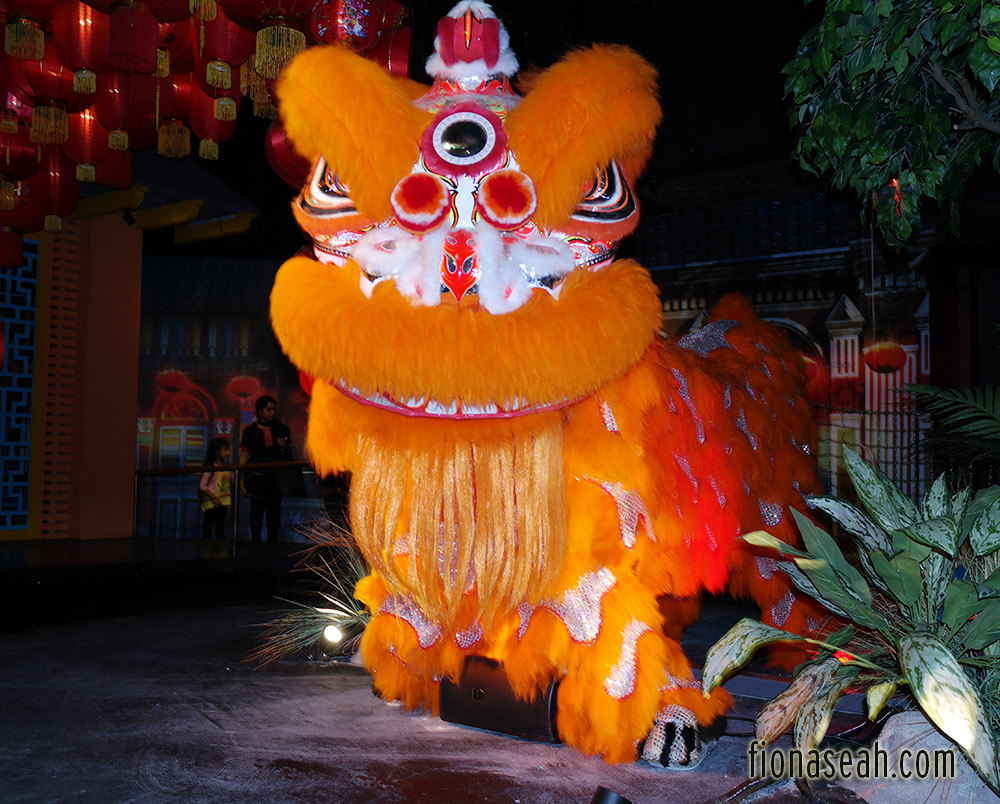
Lion dance! It actually moved when the boat was approaching.
Madame Tussauds Singapore is the first to have its own water boat right but honestly, it’s nothing to wow about. The boat went around the quay but there was nothing much to see apart from those in the pictures above. The ride only lasted for less than 5 minutes. Totally not worth the time travelling all the way to Sentosa and the $4 entrance fee 😦
Took this on our second visit!
The Leaders Area comes first after the boat ride!
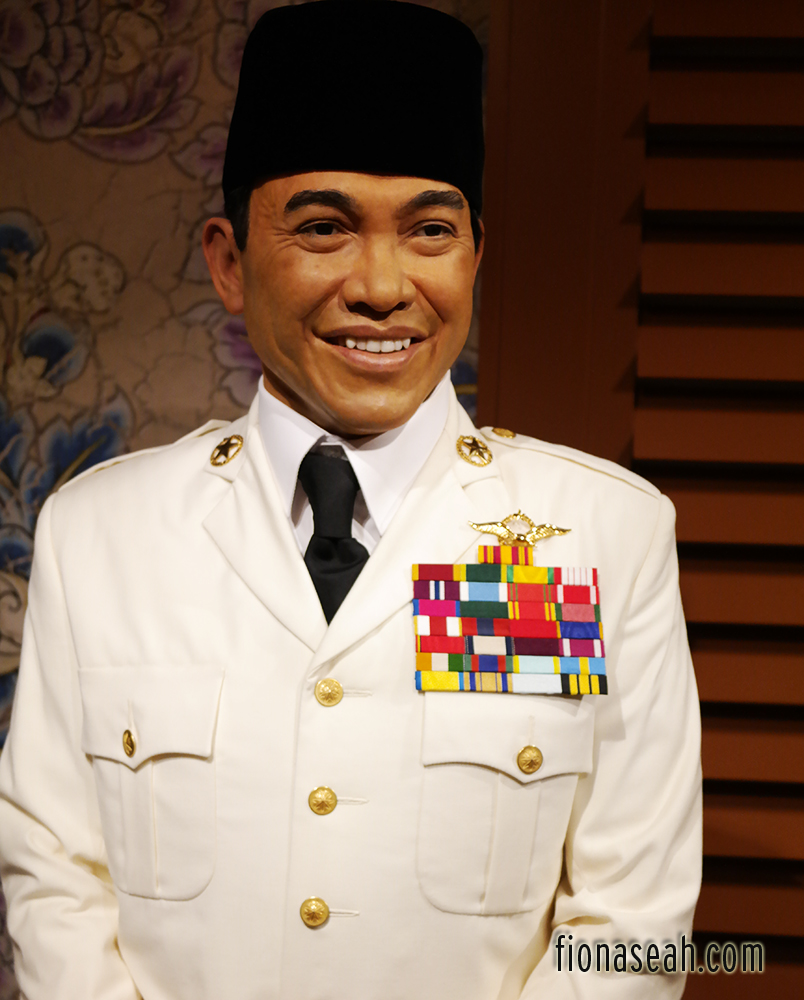
Former President of Indonesia, Sukarno
China’s Chairman Mao
Do Communist leaders share the same kind of style? Somehow Mao Tse-tung resembles Kim Jong-il here.
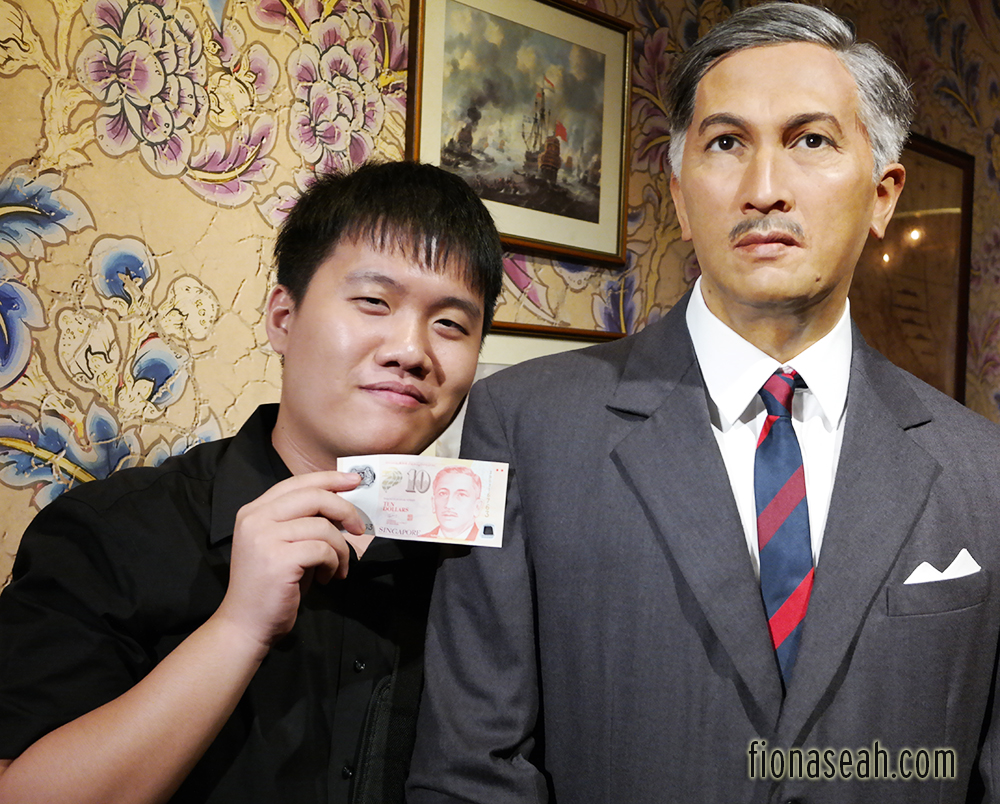
The first president of the Republic of Singapore, Yusof bin Ishak. Here’s Bf holding a ten-dollar Singapore note.
Bf suggested to be photographed with a Singapore banknote (which also has the president’s face on it) and then suddenly everyone behind us followed suit when it was their turn. -_- Well… when in Rome, do as the Romans do right? But maybe in a bid to be different, the guy after us (probably a tourist) actually pulled out a bigger note ($50) lol!
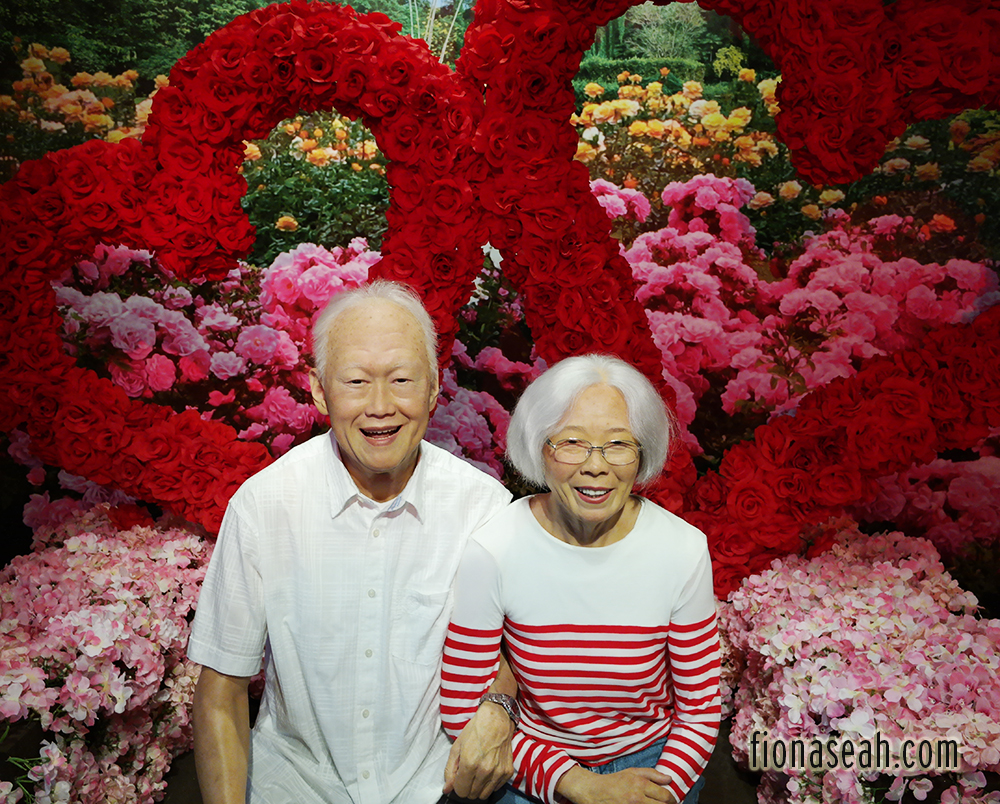
So loving: Singapore’s first Prime Minister, Lee Kuan Yew and his late wife, Kua Geok Choo. No matter what people say, LKY is still our founding father 🙂
I wonder if Mr Lee Kuan Yew has personally seen his wife’s wax figure and if he had, how did he react? It’d probably be an emotional moment for him looking at it because everyone knows how much his wife meant to him. Anyway, I thought the figures could do without the tacky flower decorations in the background.
SO realistic it’s scary.
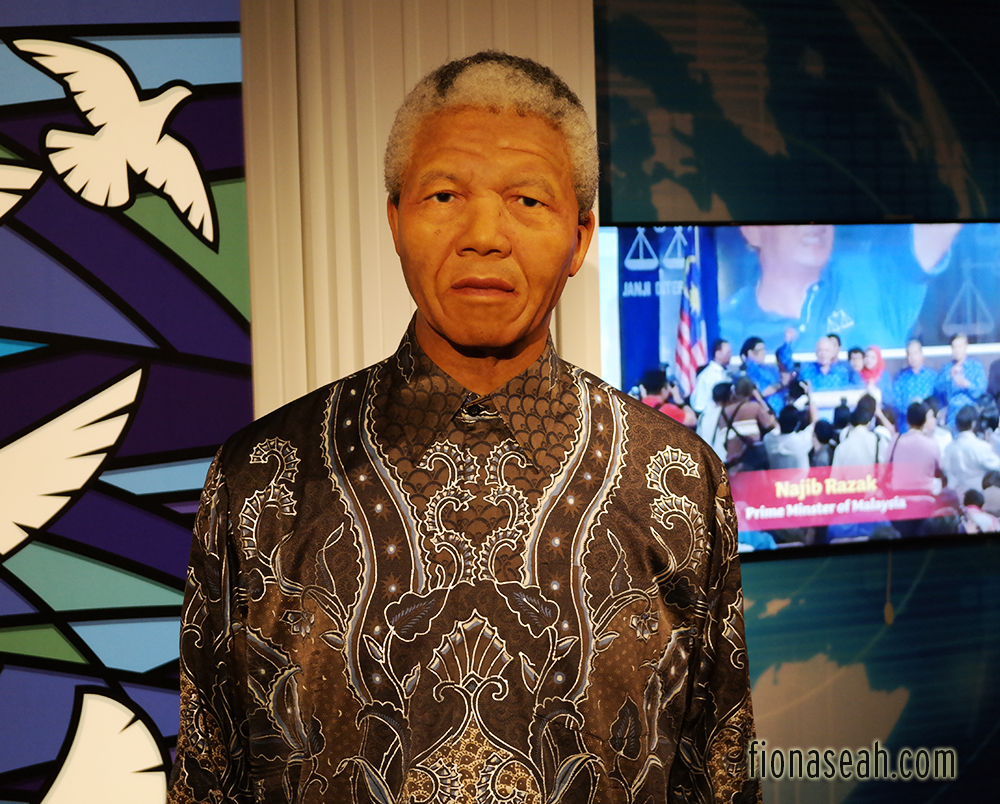
The late President of South Africa, Nelson Mandela
Current President of the United States of America, Barack Obama. I’m like a midget beside him oh myyyy.
Gandhi, the father of the Indian nation
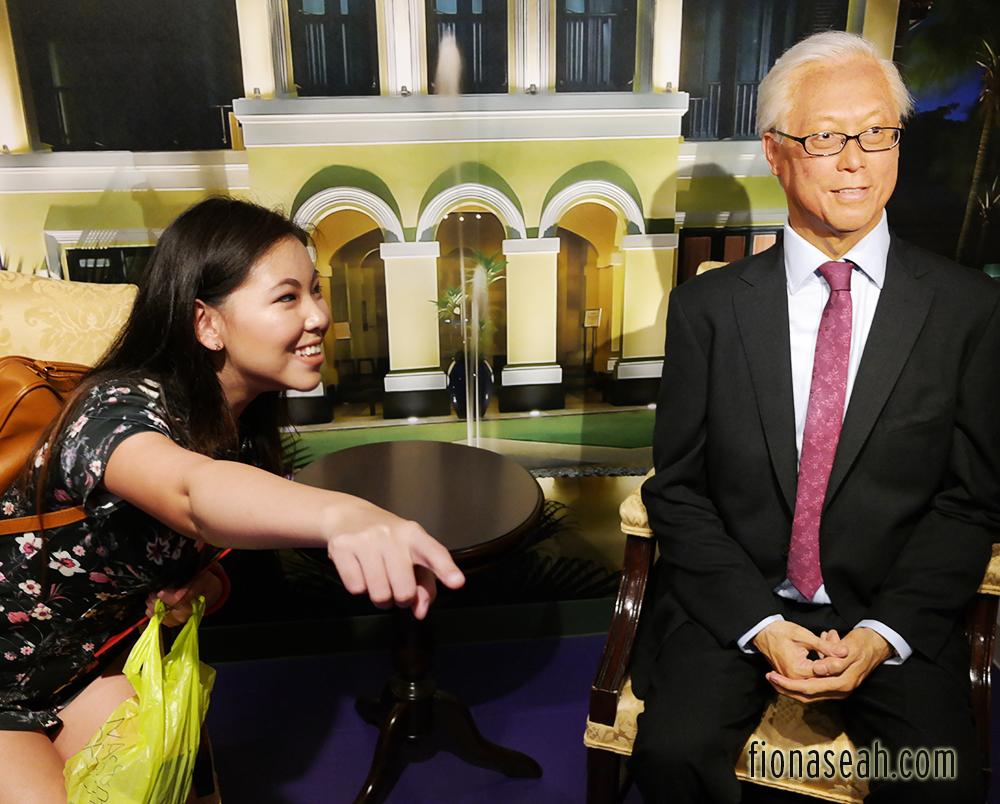
Look over there, ESM Goh!
Up-to-date appearance of Singapore’s ESM Goh Chok Tong
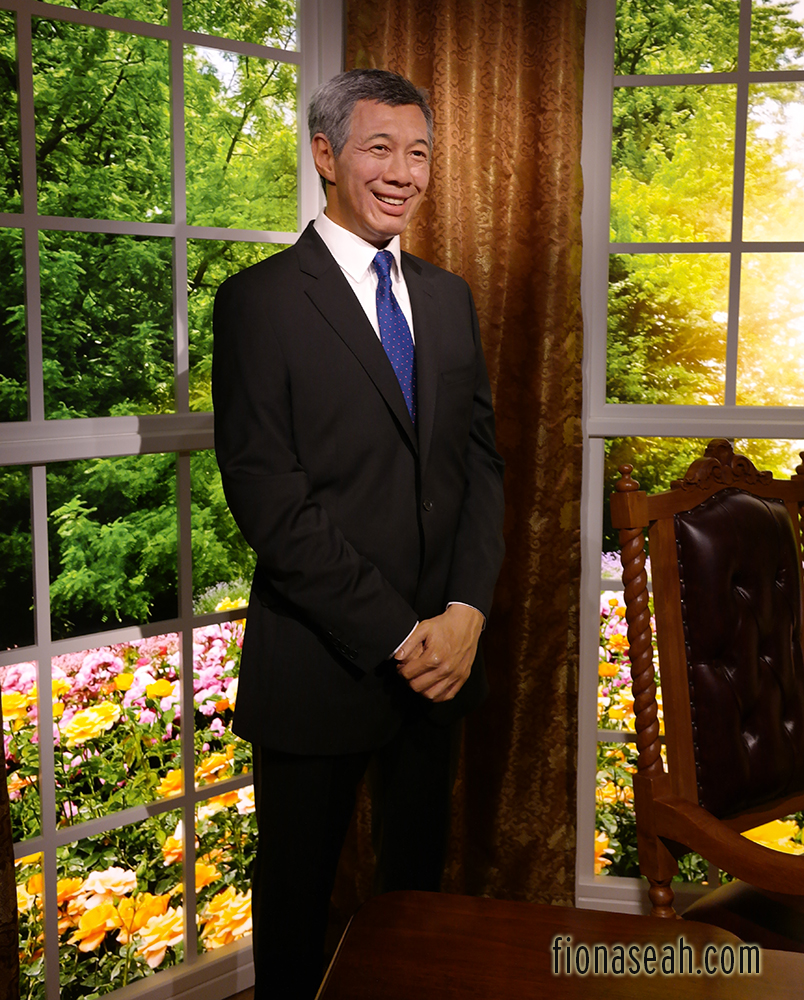
Current Prime Minister of Singapore, Lee Hsien Loong
There’s an empty chair beside him which visitors can sit to take a picture BUT the first picture must be taken using the museum’s camera (which is of course chargeable). Why pay when you can take pictures with the real PM Lee himself (at events where he’d attend)? Well, unless you’re a tourist.
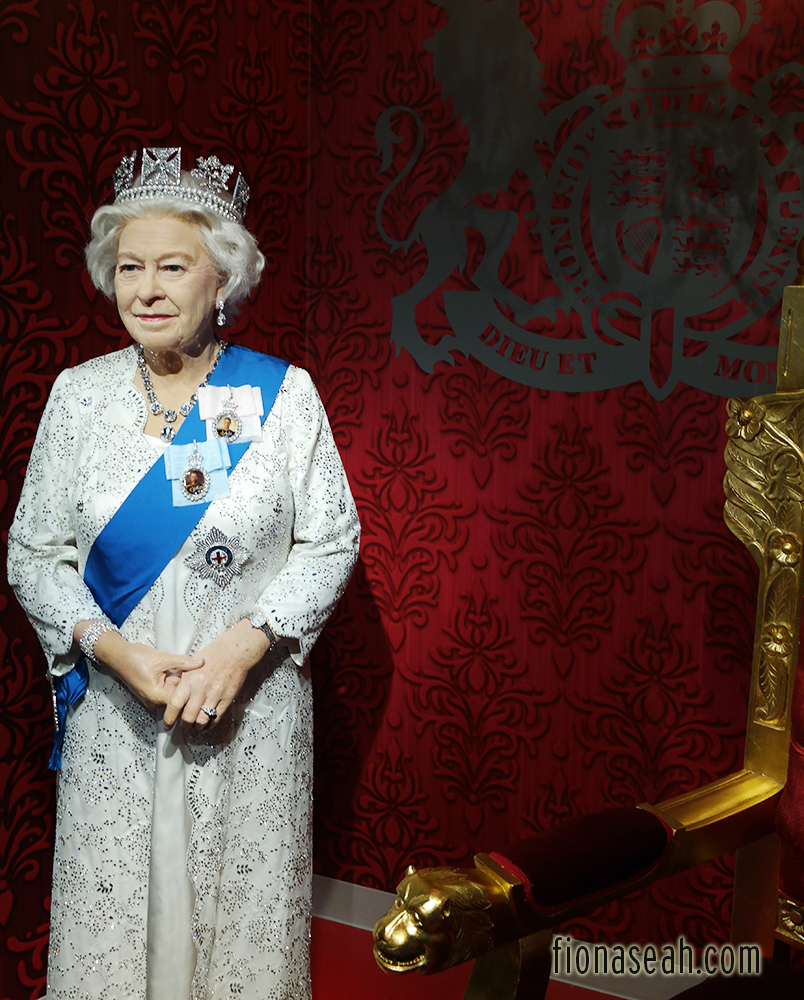
Is Queen Elizabeth II really standing there?!?
Moving on to the Sports Area…
I MELT FOR YOU, David Beckham! Kaoz, furrowed brows also so handsome.
I ALSO MELT FOR YOU, Cristiano Ronaldo!
Unlike other football players, Cristiano Ronaldo always look damn well-groomed on the field. His hair stays ALL THE TIME and he doesn’t seem to sweat (a lot). Seriously, how does he do it? What brand of hairspray does he use?!
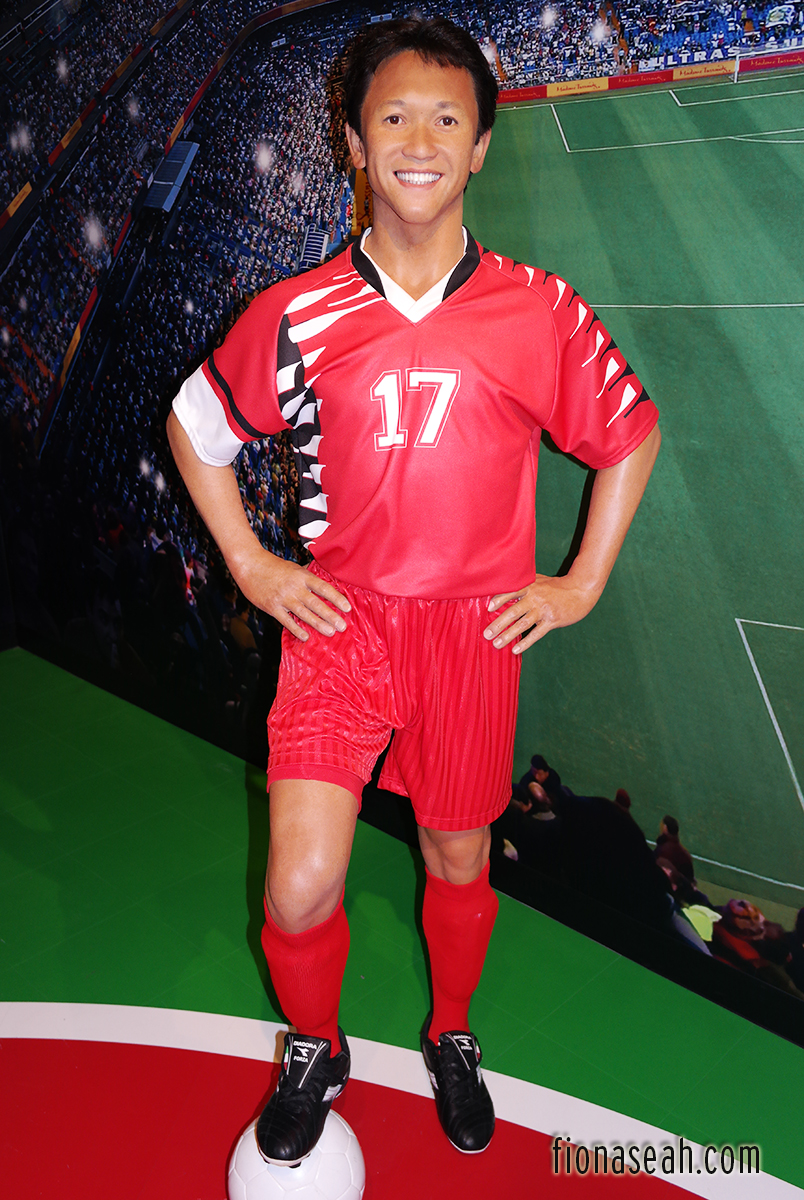
Our very own footballer, Fandi Ahmad!
I swear I scrutinised and touched those pearly white teeth. Gosh, they really looked and felt real!
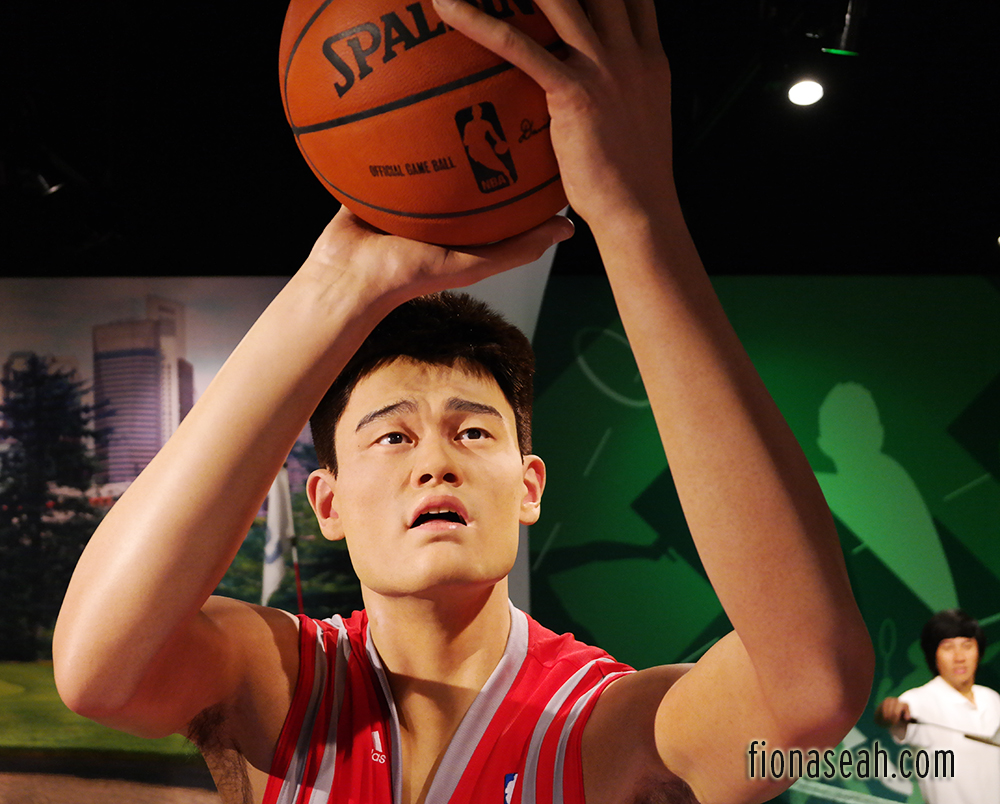
The very-tall basketball player, Yao Ming, who dwarfs everyone standing next to him
My angle. So depressing. (There’s a stool for you to stand in front of him)
I know what you’re looking at. Let me help by giving you a close-up:
YES, EVEN THE ARMPIT HAIR!
Talkin’ about 100% precision.
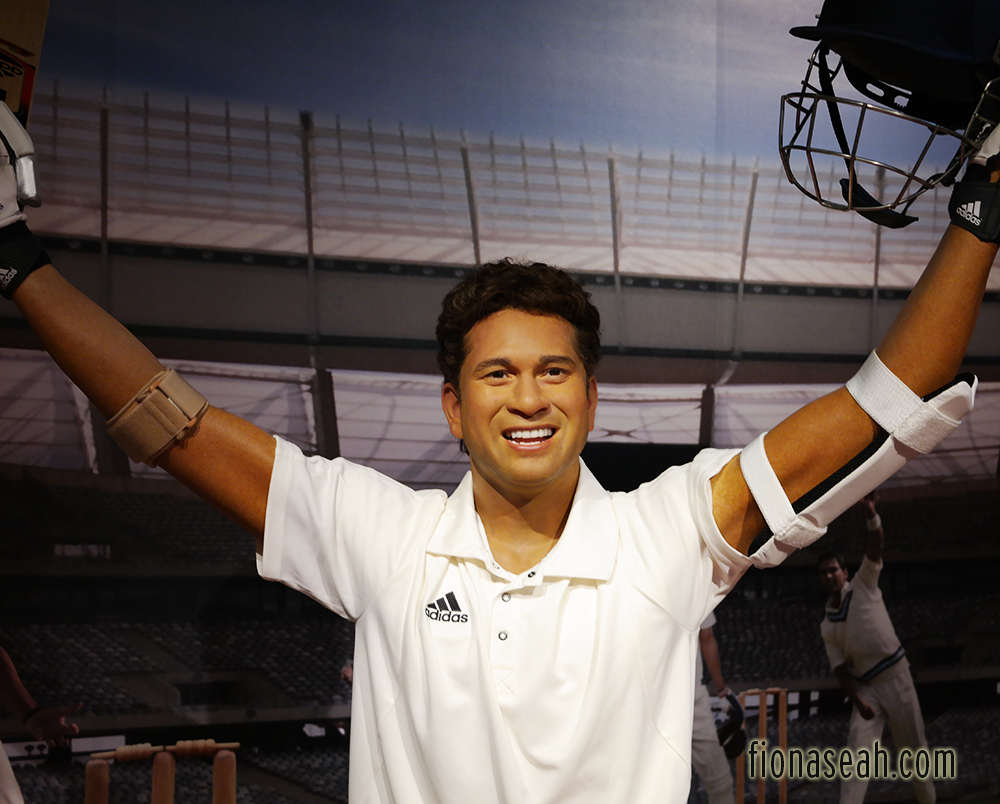
Former Indian cricketer, Sachin Tendulkar
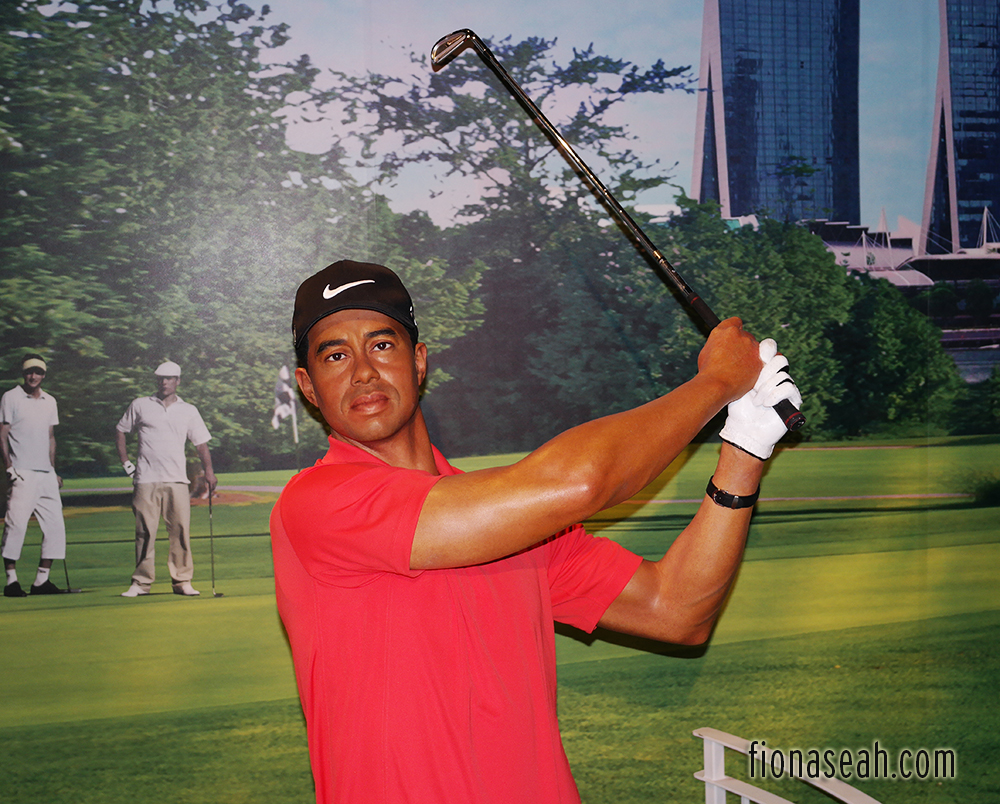
American professional golfer, Tiger Woods
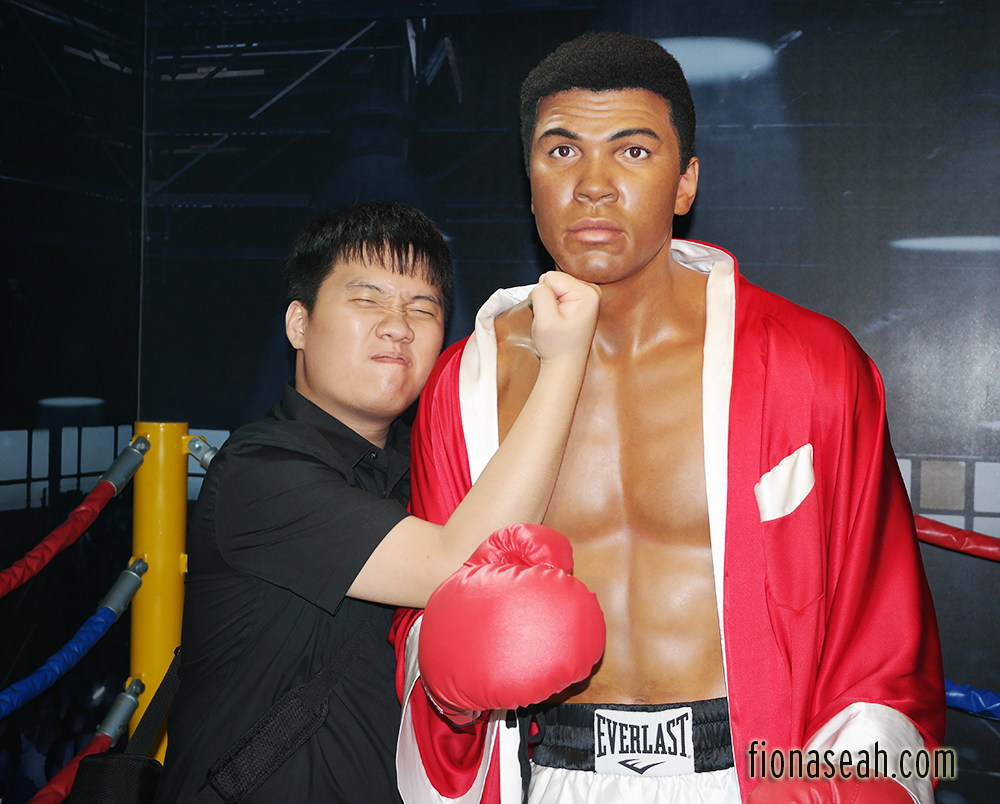
Former American professional boxer, Muhammad Ali
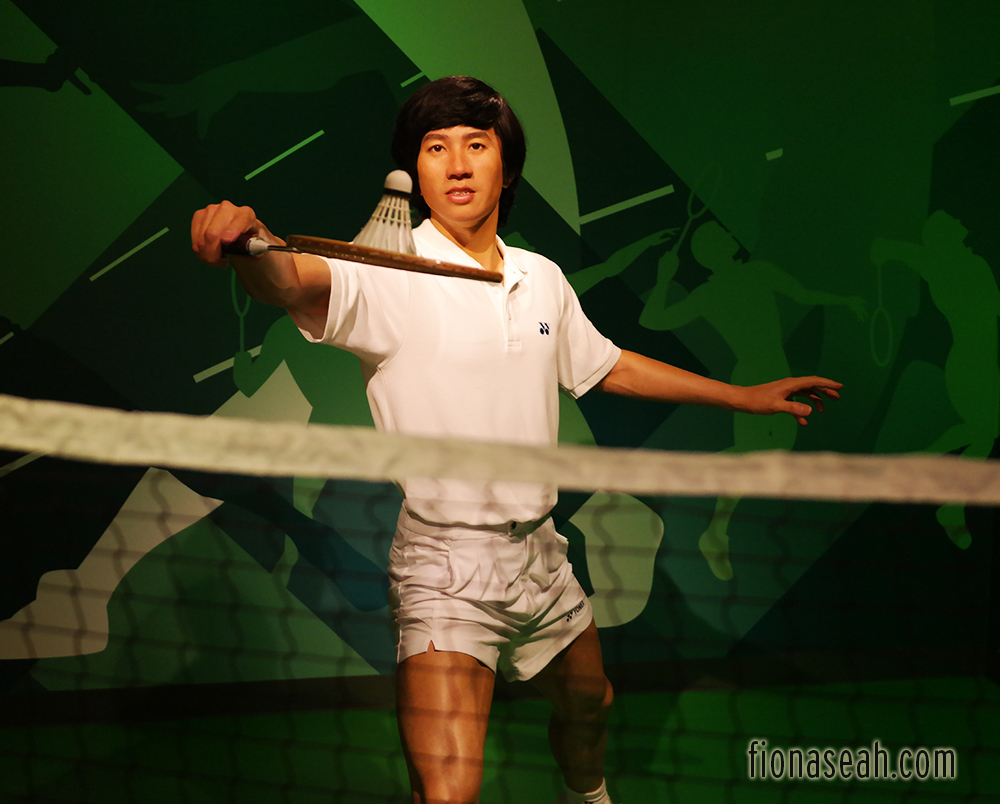
Rudy Hartono, former Indonesian badminton star who is considered to be one of the greatest badminton players of all time!
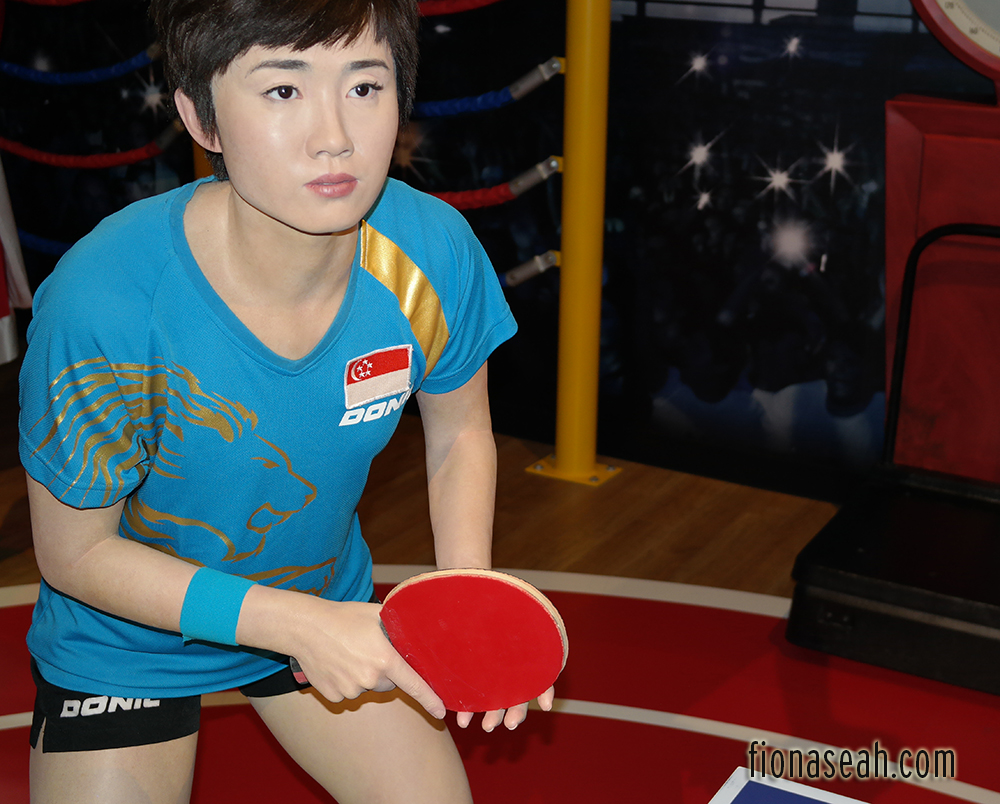
Table tennis player, Feng Tianwei
Ever wonder who Madame Tussaud (“mah-daym too-sawd”) was?
Madame Marie Tussaud, maker of wax death masks.
Very apt for Halloween.
How wax figures are made
Watching you…
There’s even a live TV studioenvironment! And guess who’s the host?
Oprah Winfrey! Thanks for inviting me to your show *_*
How about some local TV celebrities?
Our Phua Chu Kang was on set too!
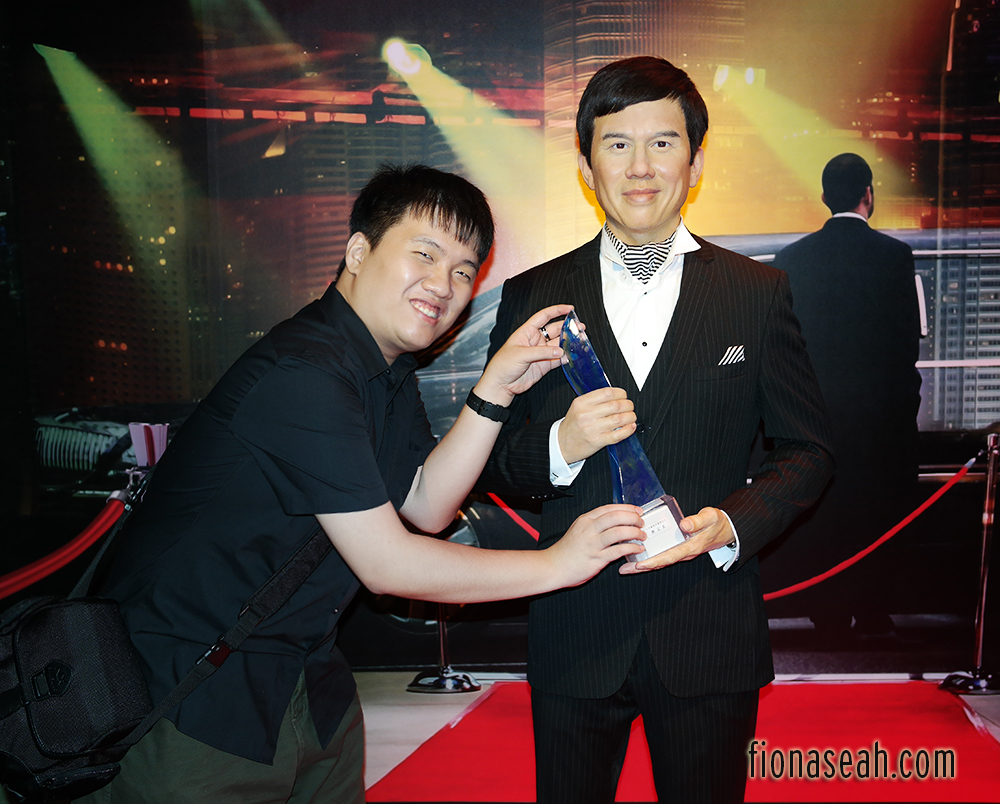
Bf attempting to steal the late Huang Wenyong’s Star Awards trophy!
I don’t get why people are complaining about Huang Wenyong’s “presence” in the museum. I think he deserves a spot in Madame Tussauds for his exemplary achievement in the local TV industry. Don’t be such spoilsports can, you all? Just enjoy the exhibits la!
A not-so-alike figure of Zoe Tay. Also, no sight of screen rival Fann Wong in the museum!
We’re slowly delving into the Film Lot!
The Neo clan. Actually Bf looks a little like Jack Neo here HAHA.
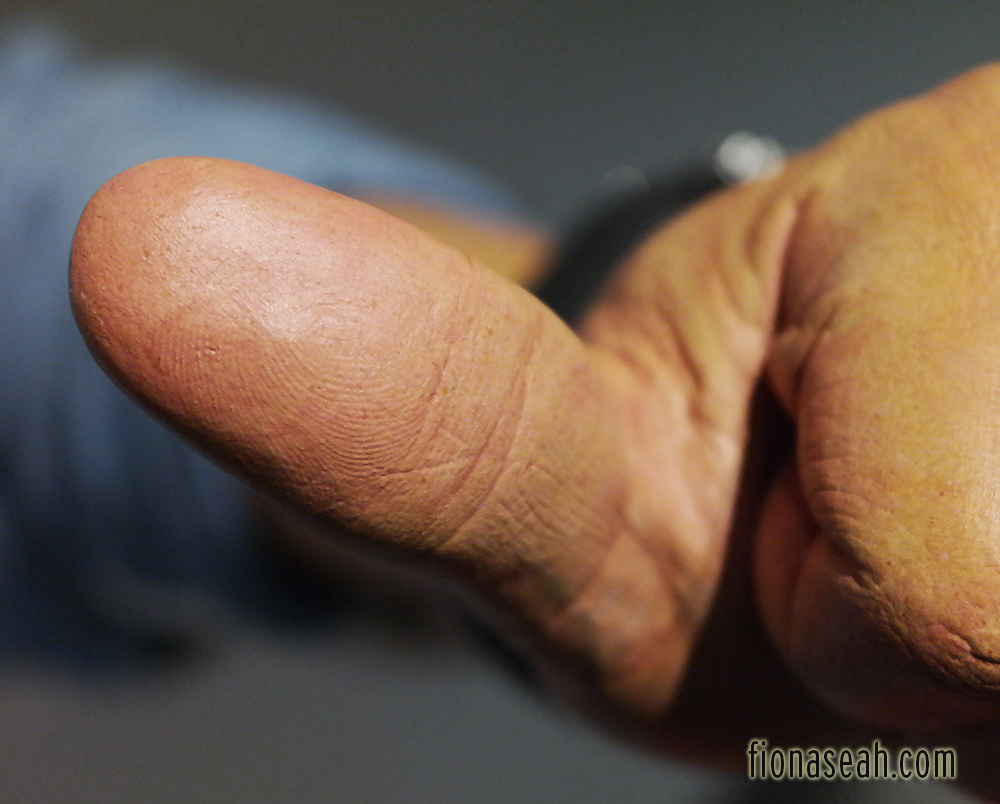
Omg fingerprint.
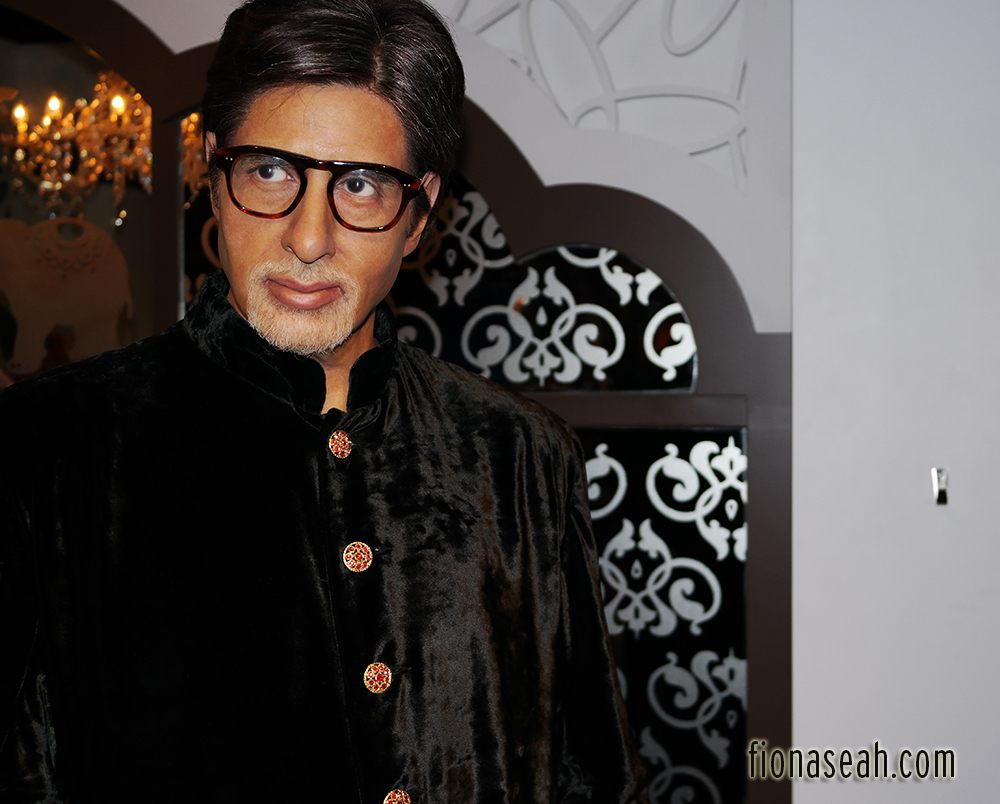
Indian film actor, Amitabh Bachchan. Quite suave ah *_*
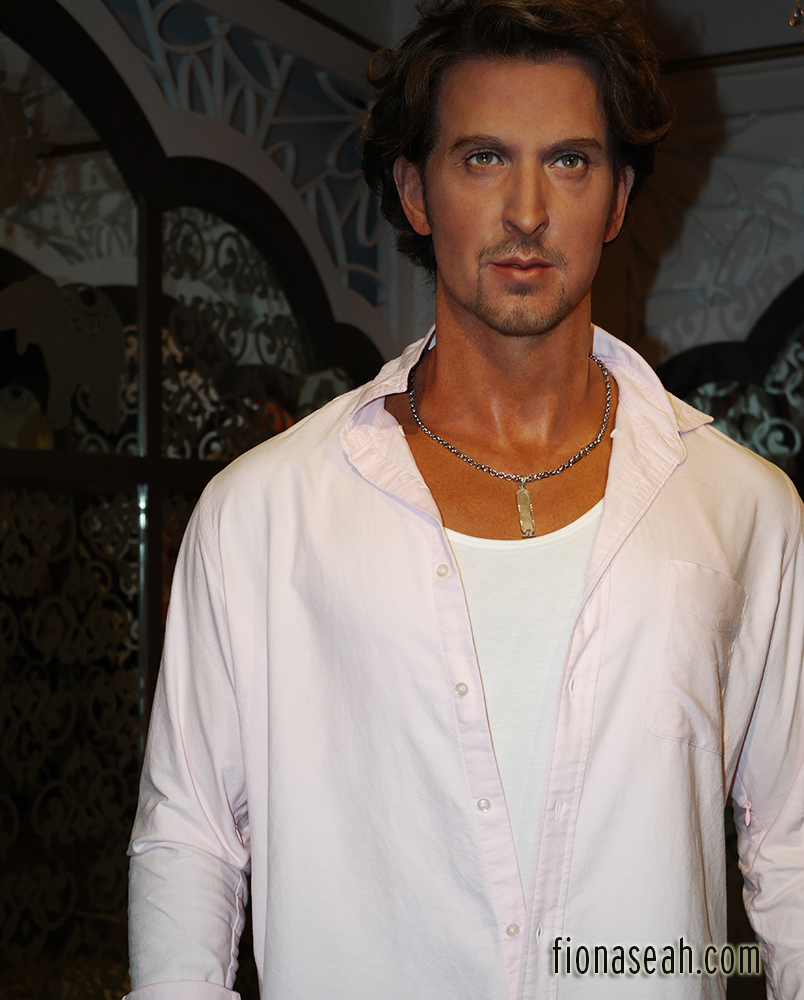
Another Bollywood actor.. I hope I get this right because I recorded the wrong description. Hrithik Roshan?
Now, to Hollywood…
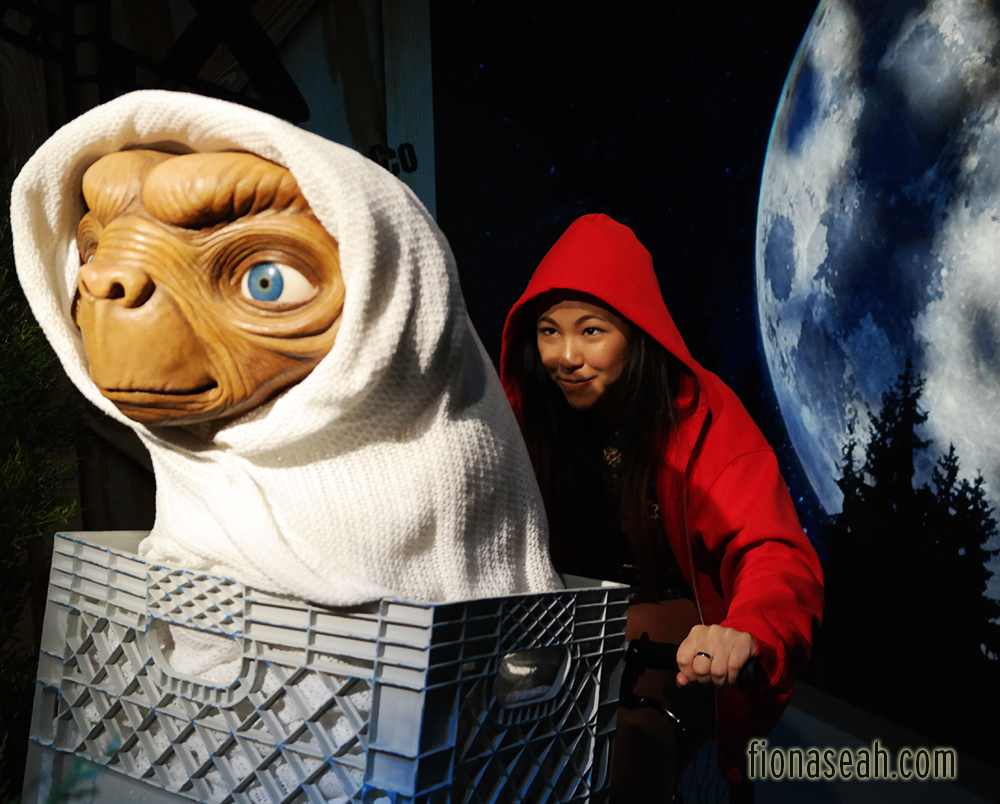
E.T. goes home!
Let me give you a ride (haha). Yup, the red coat is available for use!
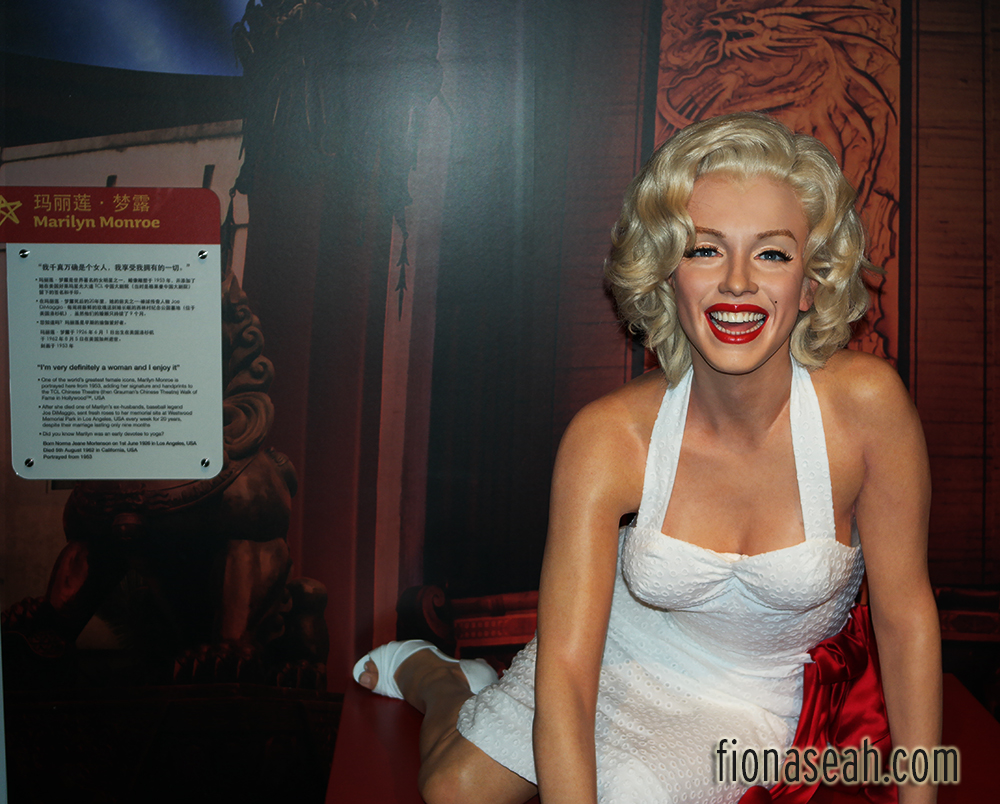
Sexbomb Marilyn Monroe
The most beautiful actress of all time! Audrey Hepburn. “Moon River” from Breakfast at Tiffany’s plays in the background only to be disrupted by the Kungfu fist swooshes sound (to simulate Bruce Lee and Jackie Chan which were placed near Audrey Hepburn)
Let me keep you company! Oh btw I just realised she was a heavy smoker and she picked up the habit since she was very young to fight the hunger pangs during wartime. I don’t blame her because smoking wasn’t known to be harmful before the 1970s. And she was reaaaaally tiny.
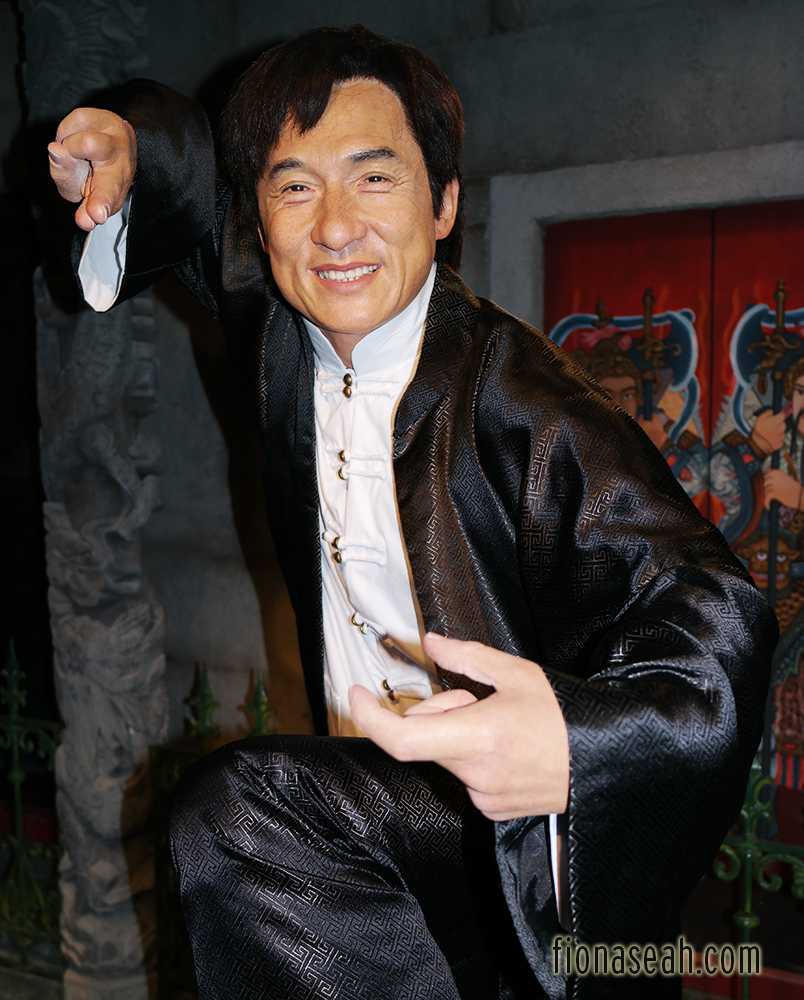
Jackie Chan
and Bruce Lee
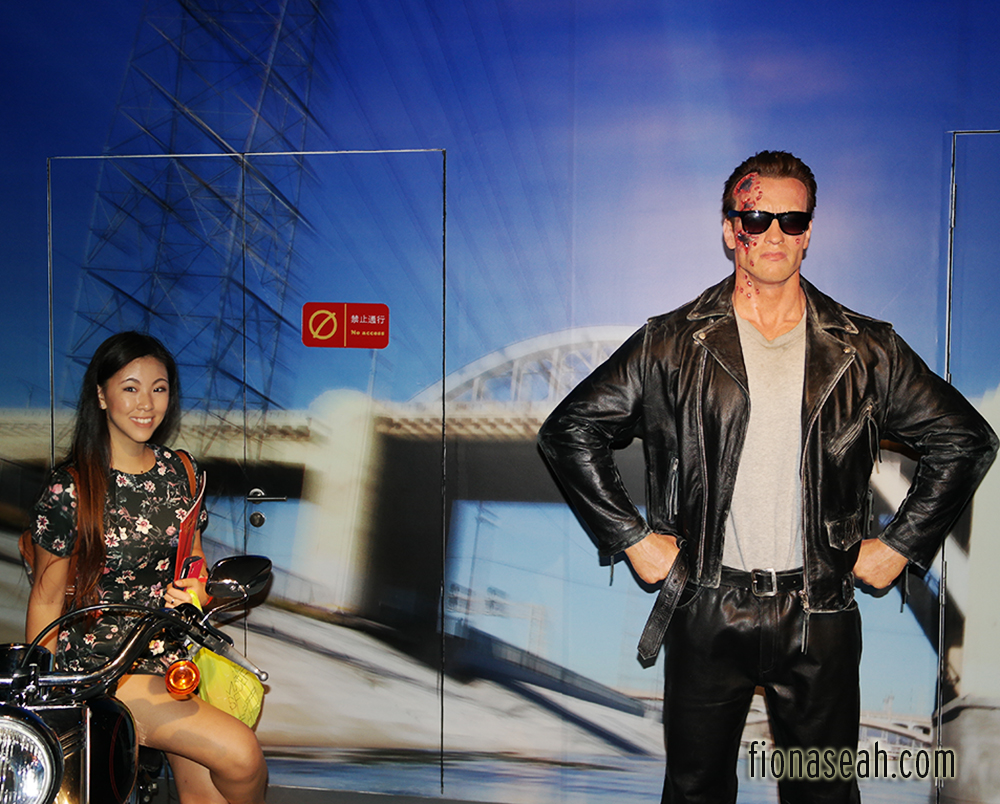
Take me away on your Harley Davidson, Arnold Schwarzenegger! Then I will say “Hasta la vista baby” to everyone around me 😀
Next, people are gonna love the Music Zone!
The late Michael Jackson
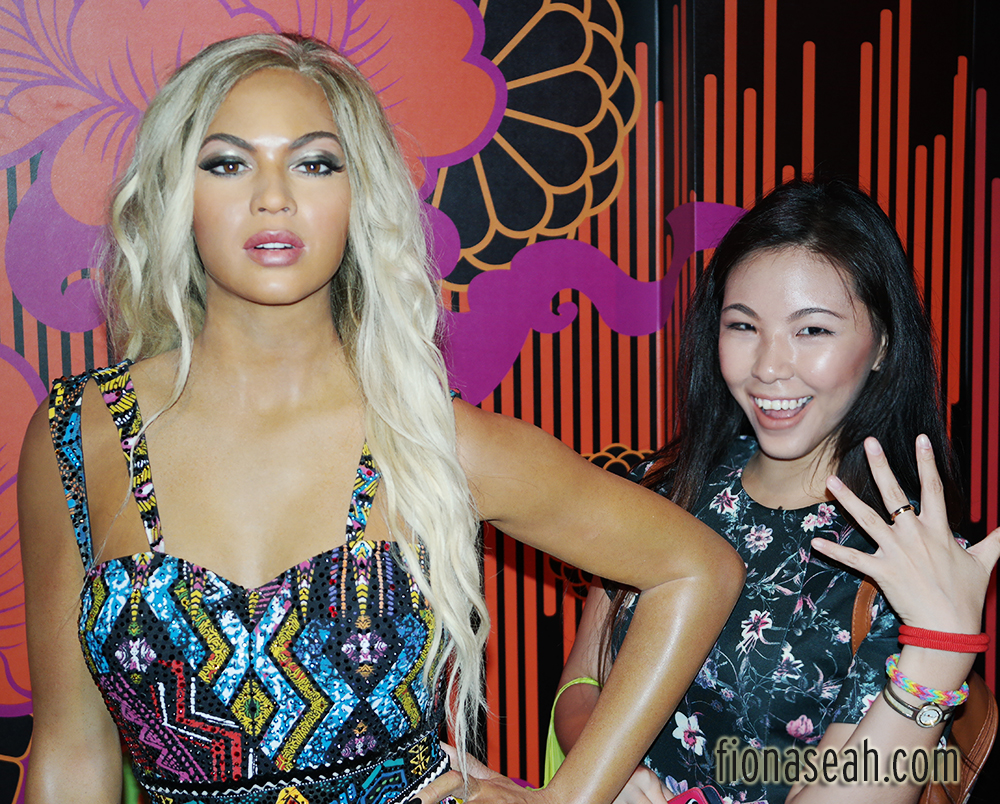
WHO RUN THE WORLD? Beyonce Knowles!
If you like it, then you should put a ring on it?
Love me tender, love me sweet, Elvis Presley!
Hand-painted eyeballs! AMAZING.
Like a virgin, touched for the very first time… by Madonna
The moon represents Teresa Teng
孙燕资 (Stefanie Sun) 听不到
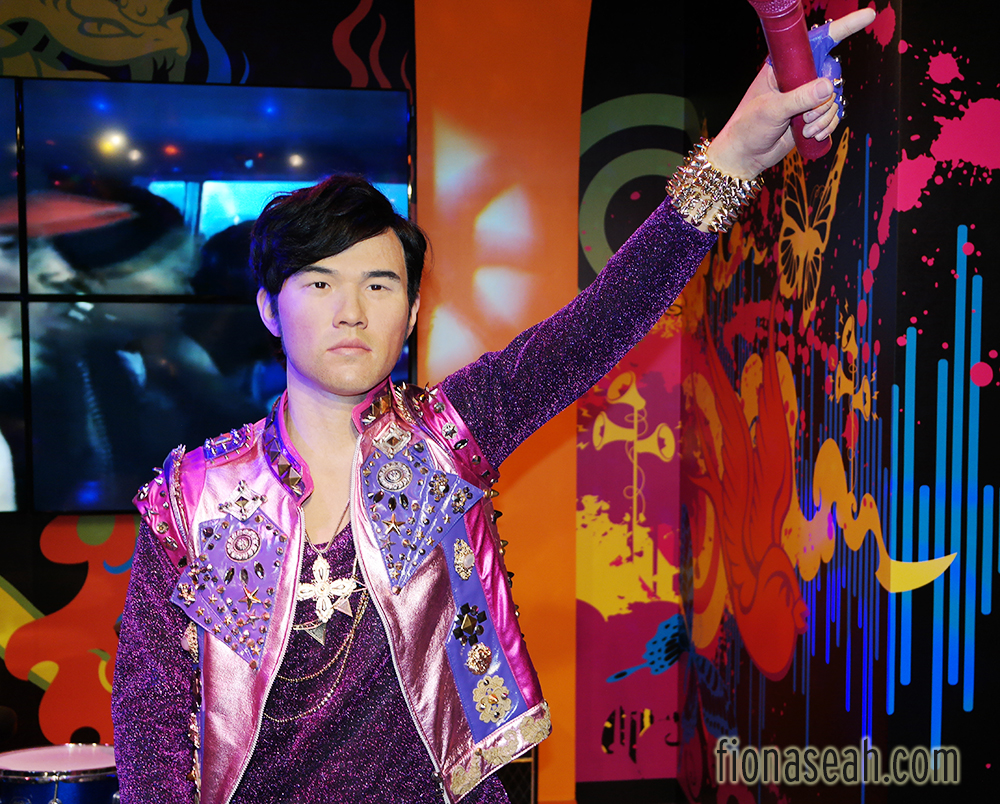
安静。周杰伦在唱歌. Jay Chou
‘Coz like Katy Petty, you’re a firework! Sing even though you know you can’t! Because nobody tells you what to do!
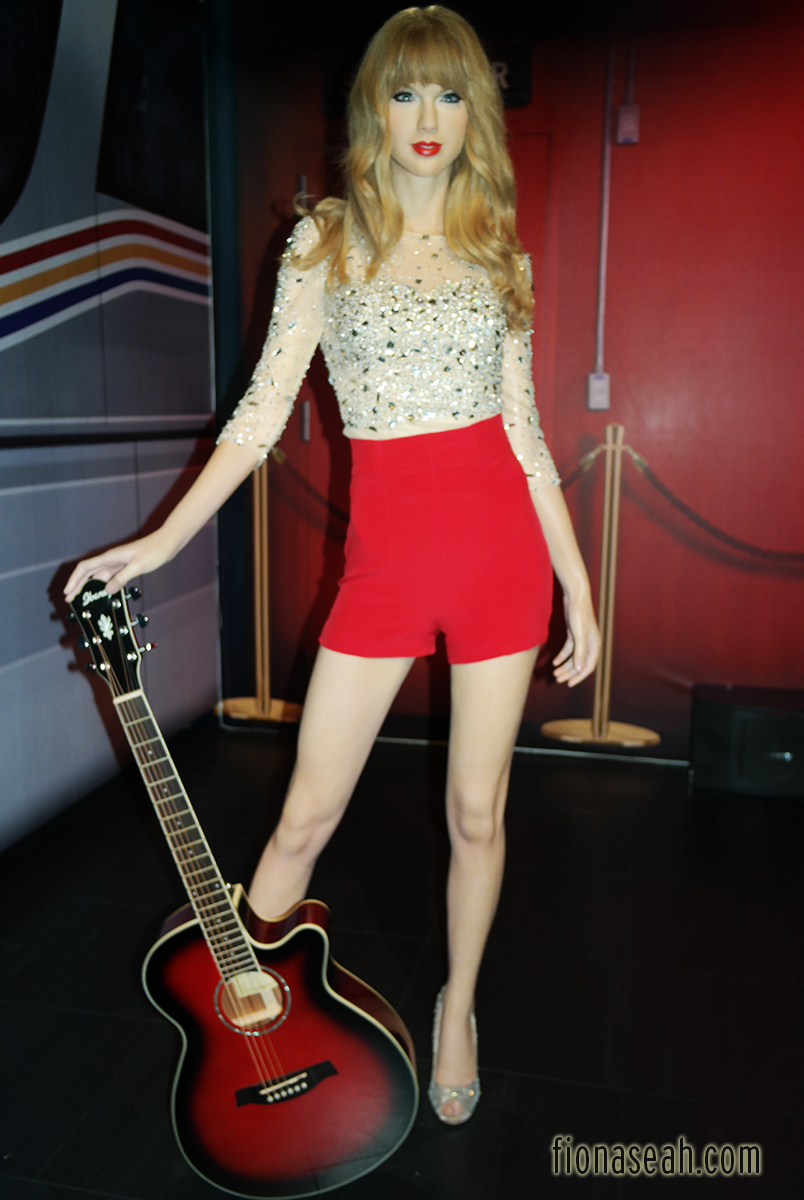
I don’t know about you, but I no longer feel 22, Taylor Swift 😦 Age is catching up. (Godammit she’s really tall and slender)
Let’s now mingle with the hottest celebrities at the A-List Party!
Who are you checking out, Shah Rukh Khan?
Oh, it’s Aishwarya Rai!
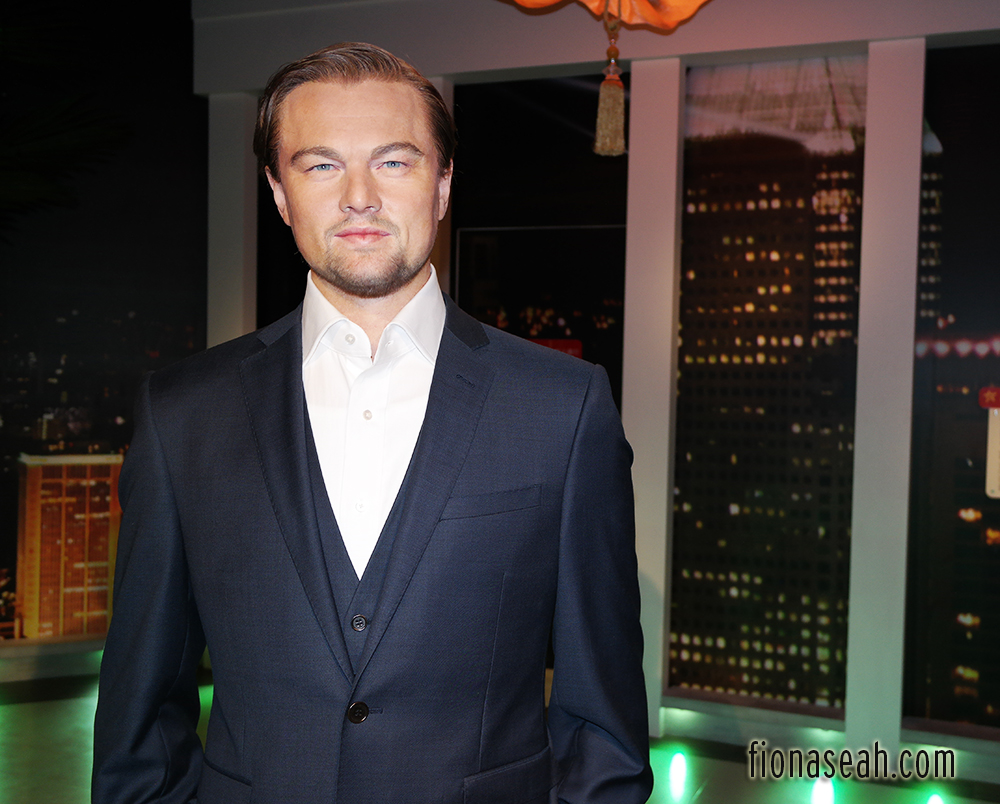
Has anyone seen Leonardo DiCaprio’s Oscars?
Error 404: Katie Holmes not found in A-List party (because y’know why). And yes, he’s as tall (short) as my Bf! What a shocker :O
Another gorgeous lady on my list! My all-time favourite martial arts actress, Michelle Yeoh!
Nicole Kidman
The extremely-versatile Johnny Depp
New addition! Only saw this on our second visit. Meet Andy Lau. Welcome to Singapore!
This is the closest I can get to him
No A-List party is complete without Brangelina! But I’m sorry, they are going separate ways for the night.
The A-List party is the final stop before the Gift Shop where they are having a Buy-2-Get-1-Free promotion for the $9 keychains! Bf and I bought one each as souvenirs.
With Serena Williams! The gift shop also sells Oscars trophies (they are actually paper weight) priced between $20-$25 each! I’m definitely getting one on my next visit. 😀 And maybe one for Leonardo DiCaprio lol.
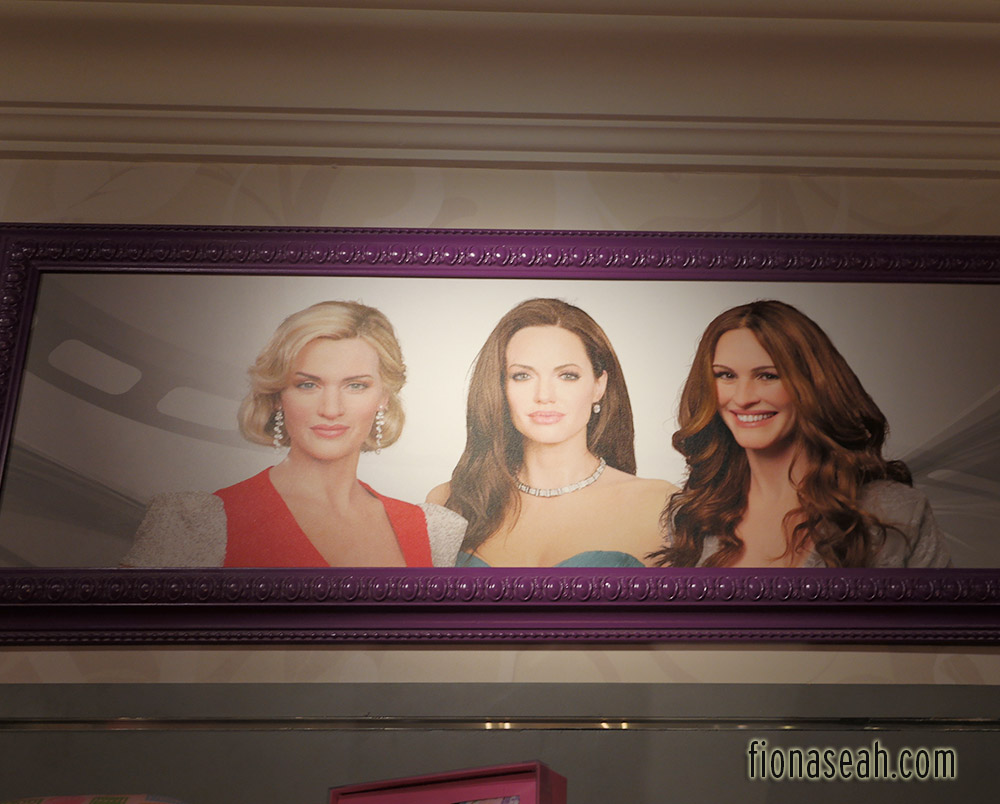
Expect more wax figures for more Hollywood celebrities like Kate Winslet and Julia Roberts in Madame Tussauds Singapore!
Some more celebrities not in Madame Tussauds Singapore at the moment: Rihanna, Britney Spears and Victoria Beckham!
And of course, our beloved Kate and Wills who are also not in the museum right now. The Queen is the only British royalty there.
Bruce Willis at the entrance/exit
Even though the entire experience lasted for about 1.5 hours, it was FUN! I was totally amazed by the realism of the sculptures. They are so real that it feels like going to Madame Tussauds is the closest you can get to rubbing shoulders with your idols.
Also not forgetting the excellent service of the staff – they were so friendly and helpful, especially the Malay (I mention the race because there were many staff around ah) girl who suggested to me to pose with Serena Williams with an Oscars trophy at the Gift Shop. I was caught by surprise because the trophy was an item on sale and usually sales assistants would be very uptight when they see items get played around with in the shop.
On top of that, I never felt watched at all during the whole time I was there hence I never felt restricted in the way I took my photos (i.e. selfies on my phone lol). Another Chinese male staff also helped to take the above photo of us with Brangelina twice without us asking. This may be a small gesture but I think it’s also the little things that make a big difference in customer service. So two thumbs up to everyone working at Madame Tussauds Singapore! 🙂
It was $20 well-spent! I will definitely return for a second visit even if I wasn’t given a free ticket haha.
That’s all for this post! Hope you guys enjoyed it ❤
Adult tickets are priced at S$30 at the counters and S$26 (oops, no more $20 sorry) for early birds. Child and senior tickets are sold at S$16 and S$23 respectively online.
Last Thursday marked the fifth year since my boyfriend and I got together and to celebrate that special day, boyfriend booked a room at a boutique hotel among the many quaint shophouses at Kampong Glam (Bugis) so that we could hang out ’til late that night without having to worry about our transport back home. He also wanted to take a break after his five-week practicum and since school is reopening the following week, he thought it’d be great to have a staycation this week before both of us get busy again!
We have stayed at numerous starred hotels (local and overseas) and we really enjoyed the experience because of the nice deco, room service and the comfort of the beds. We have even taken pointers from how the rooms are designed for our future home and the best inspirations have got to be from boutique hotel which rooms are about the same size as the bedrooms of HDB flats today. I swear, if we are financially fit to stay in hotels every week, we would!
Boyfriend stumbled upon Hotel Clover 769 while browsing Agoda and was attracted by the relatively low rates ($150/night after discount) for a four-star hotel near the city. He booked it immediately without seeking my consent -_-
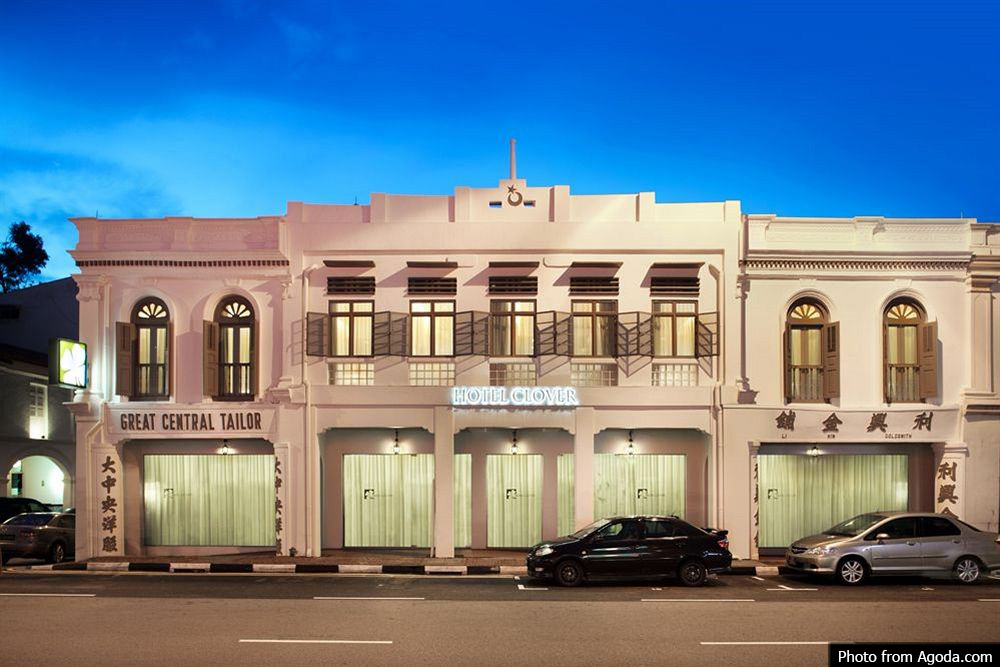
The hotel is located about 10 minutes away from Bugis MRT station. To get there, you have to go by exit B of the MRT station (towards Golden Landmark) and walk straight ahead until you see Santa Grand Hotel. Turn right into the small road and you’ll see the two-storey Hotel Clover sitting on the other end.
Definitely not as bright as depicted in the picture but yes, that’s how it looks like. The hotel looks a little run-down from the outside but it’s really not the case! 🙂
Hotel entrance
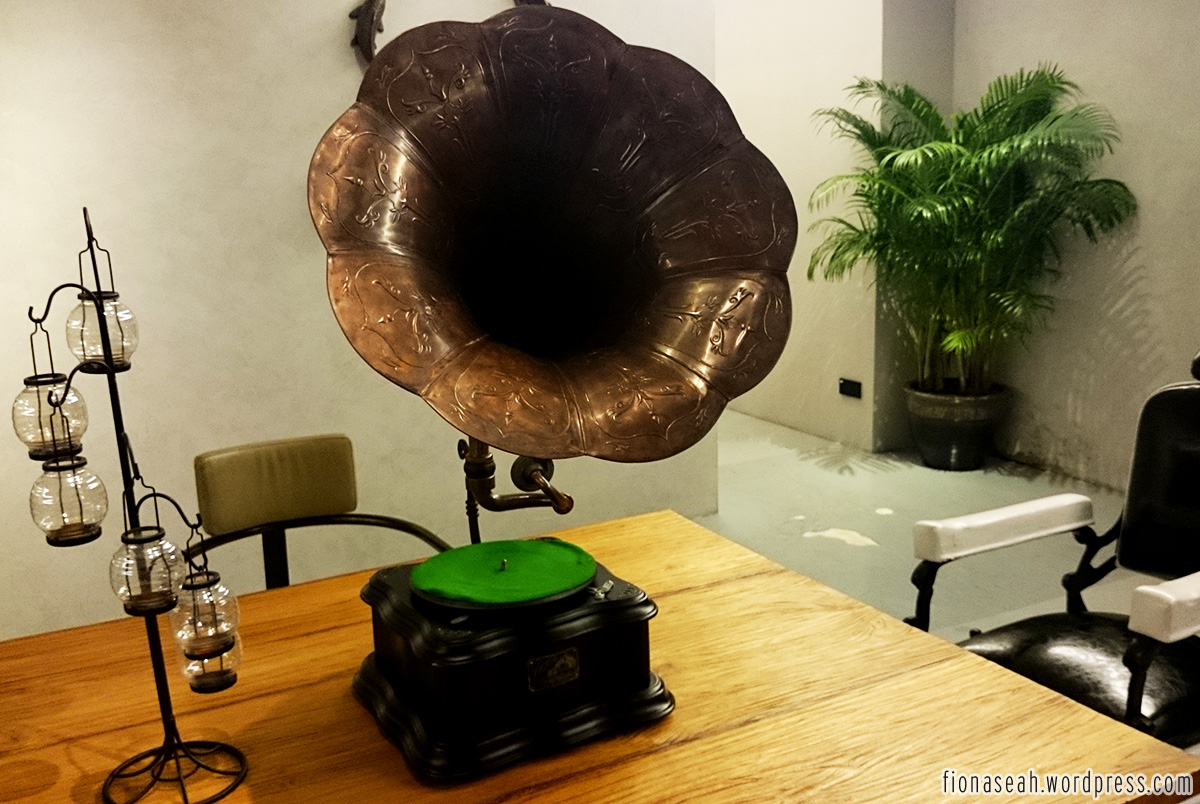
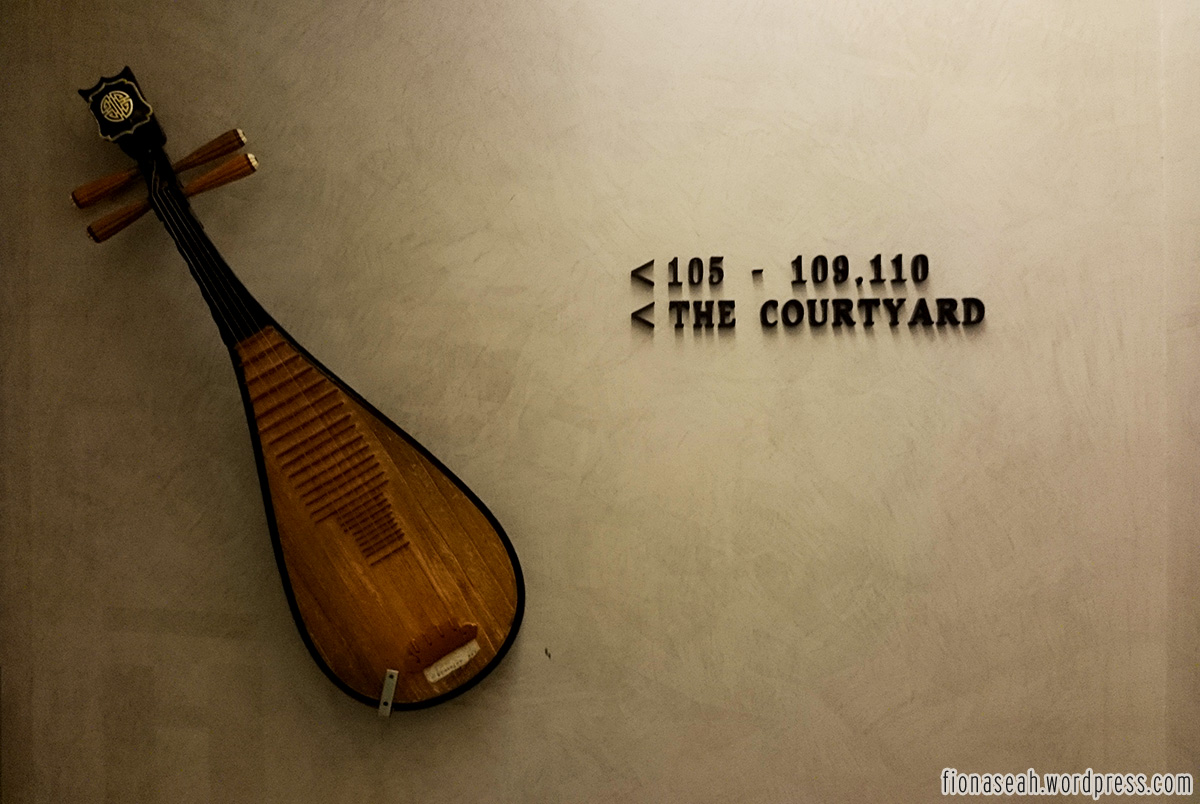
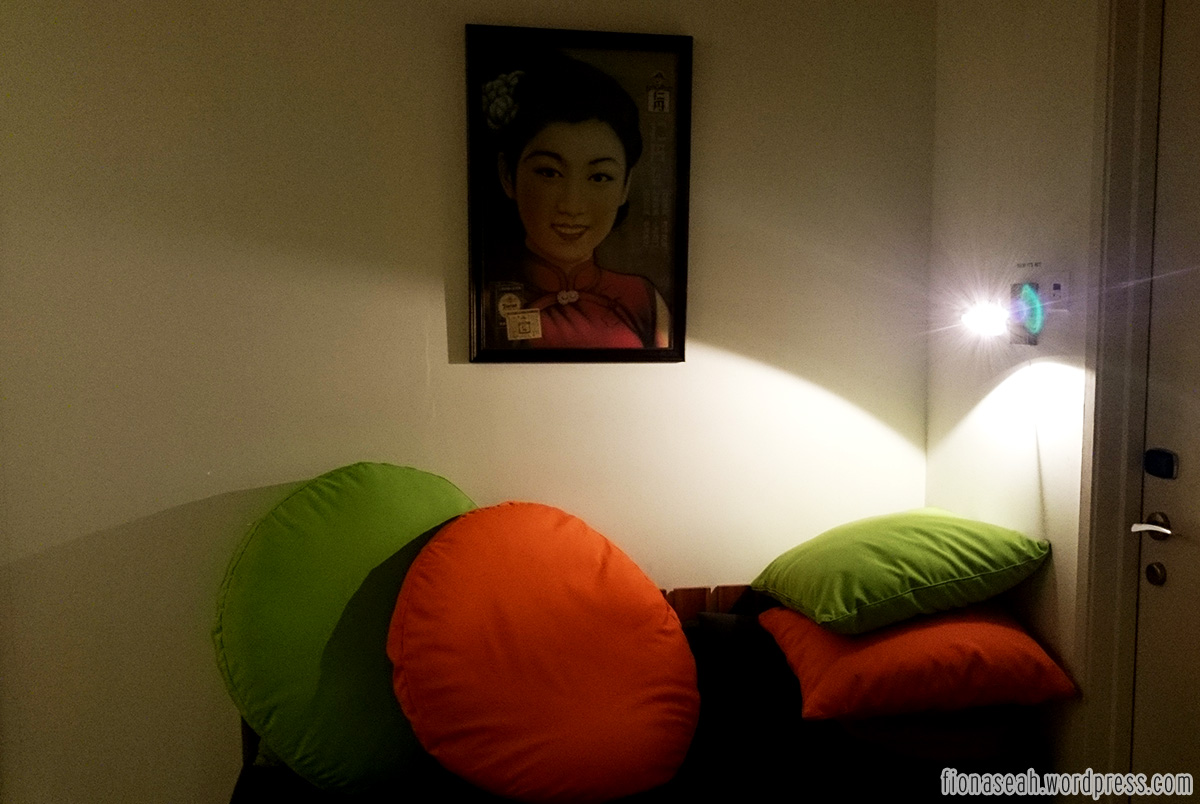
You will be greeted by a range of vintage memorabilia
You can be rest assured about the cleanliness of the hotel (not literally.. you know, some hotels are meant for quick rendezvous, right?) because all occupants are required to check-in and register for the room. I didn’t know about this policy so I went without my identity card. But they were pretty flexible and accepted my student EZ-Link card because it also indicates my IC number.
Found at the entrance of the corridor towards all the rooms
Another piece of vintage ornament
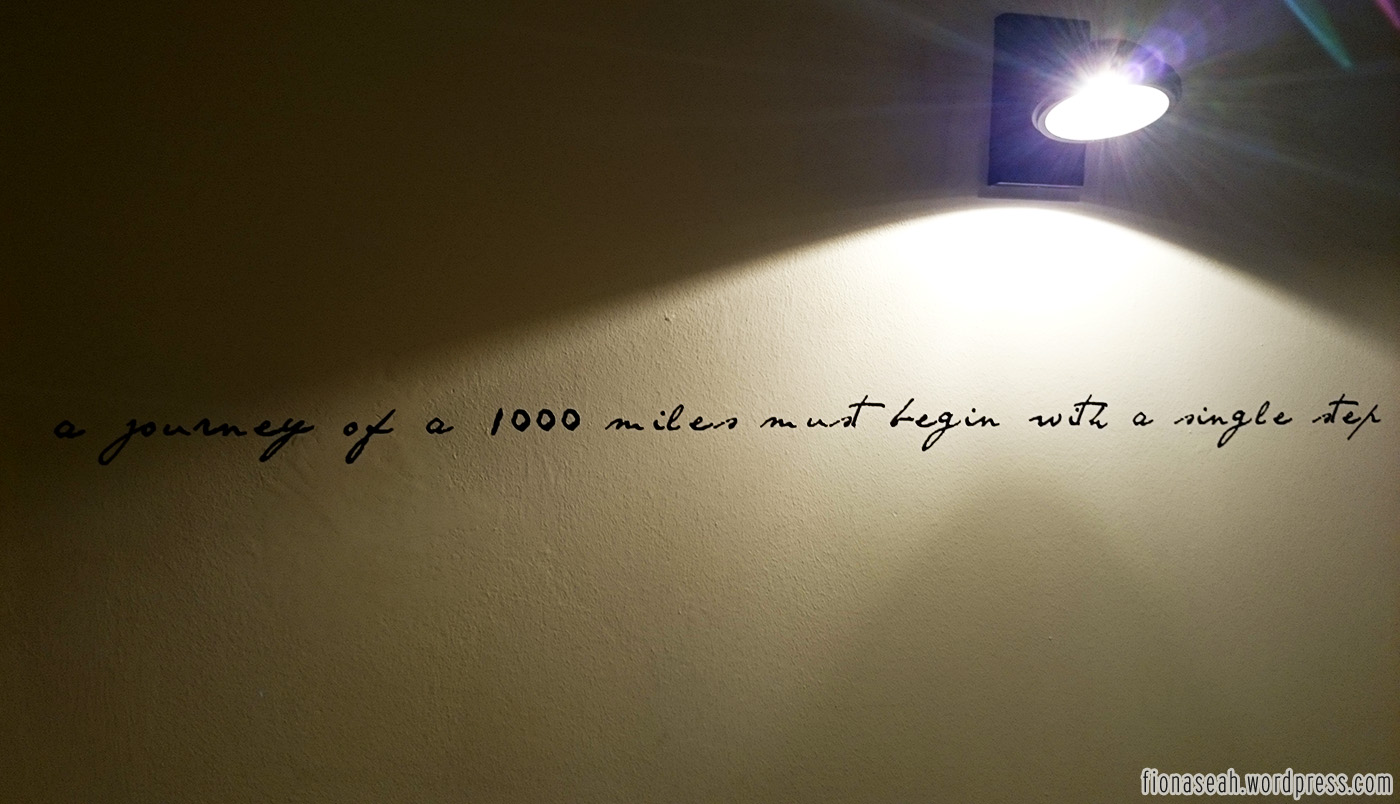
This place is filled with inspirational quotes (on walls) lol. I love the typeface, so artsy fartsy!
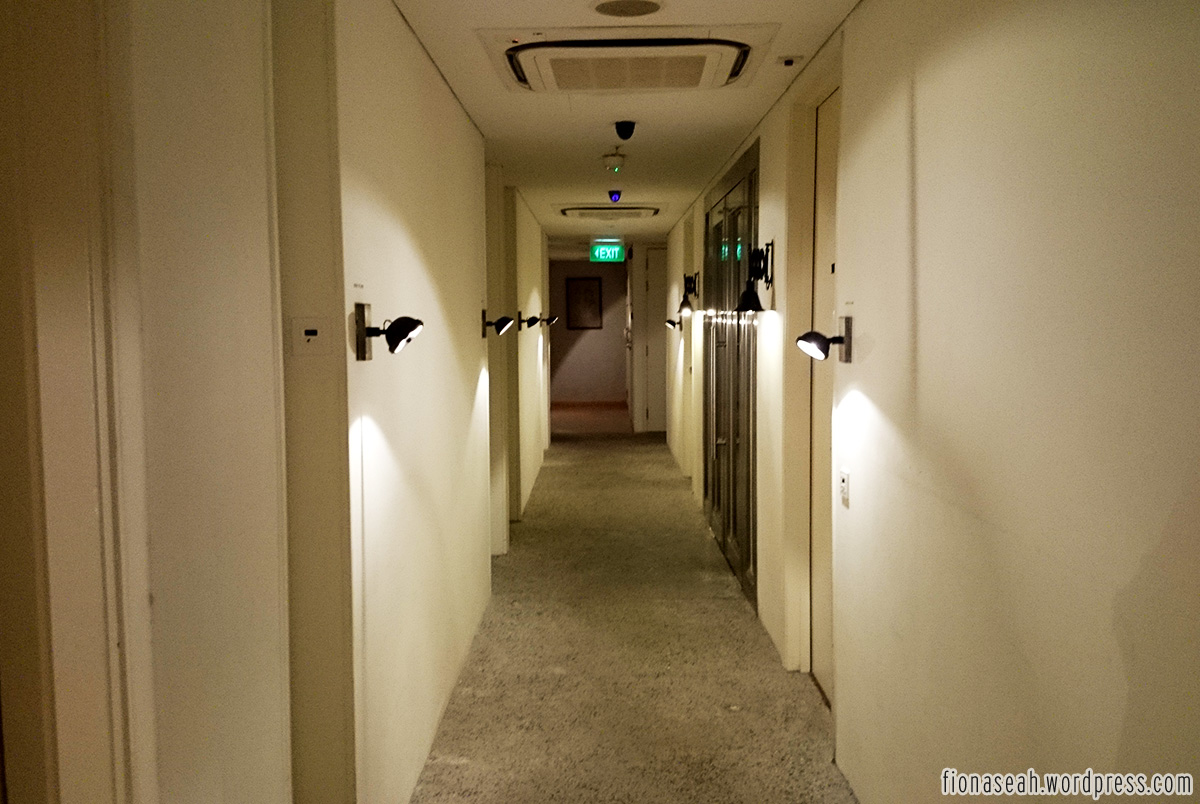
The brightly-lit corridor
Our room! It’s the first room along the corridor
Hotel Clover offers four types of room: Clover Single, Clover Select, Clover Plush and Clover Lavish. The first two are the smallest rooms in the hotel (but still rather spacious for two occupants) without window while the last two are more roomy with windows. The best is, no doubt, the Clover Lavish which has an outdoor Jacuzzi. We opted for Clover Select and was pleasantly surprised by the room layout:
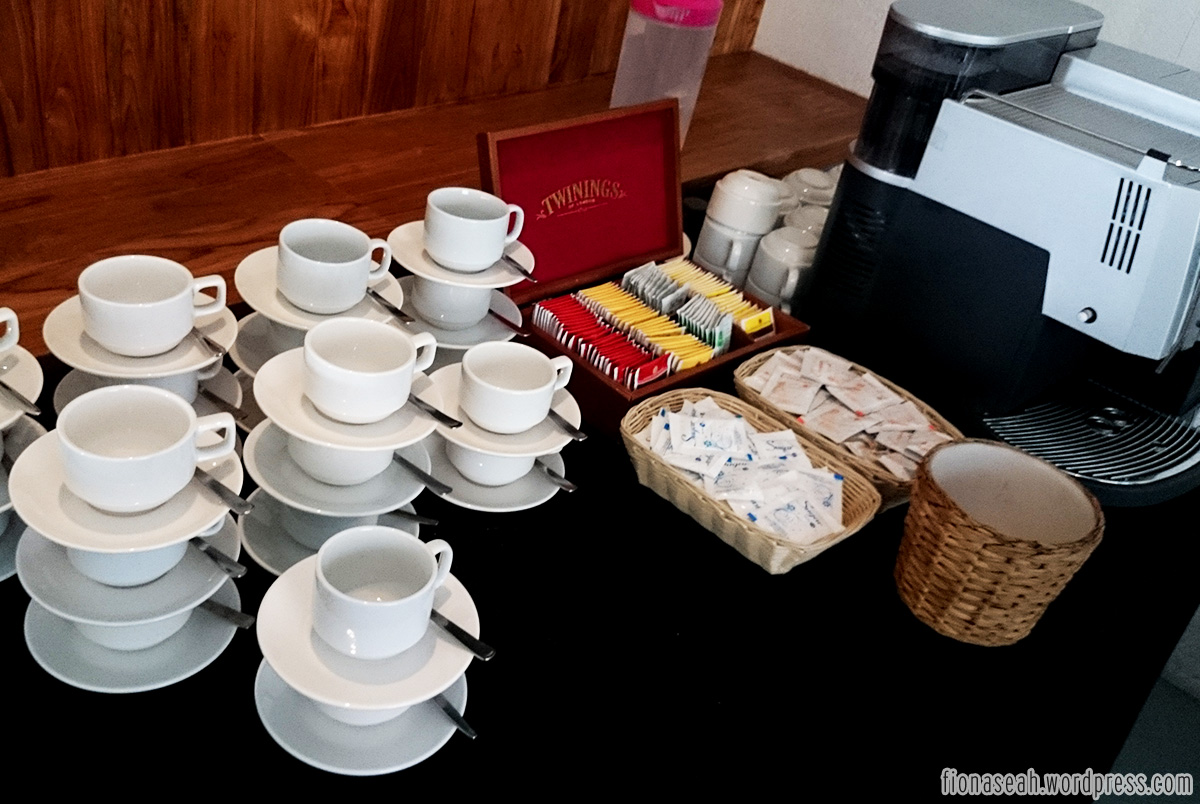
The mini bar. It has the usual essentials such as a safe box, hangers, good quality teabags, a kettle and plenty of cups with teaspoons. Hair dryer is also provided in the first drawer below – something I really appreciate because I hate requesting for it from the concierge coz I’d be obliged to give tips. #miser
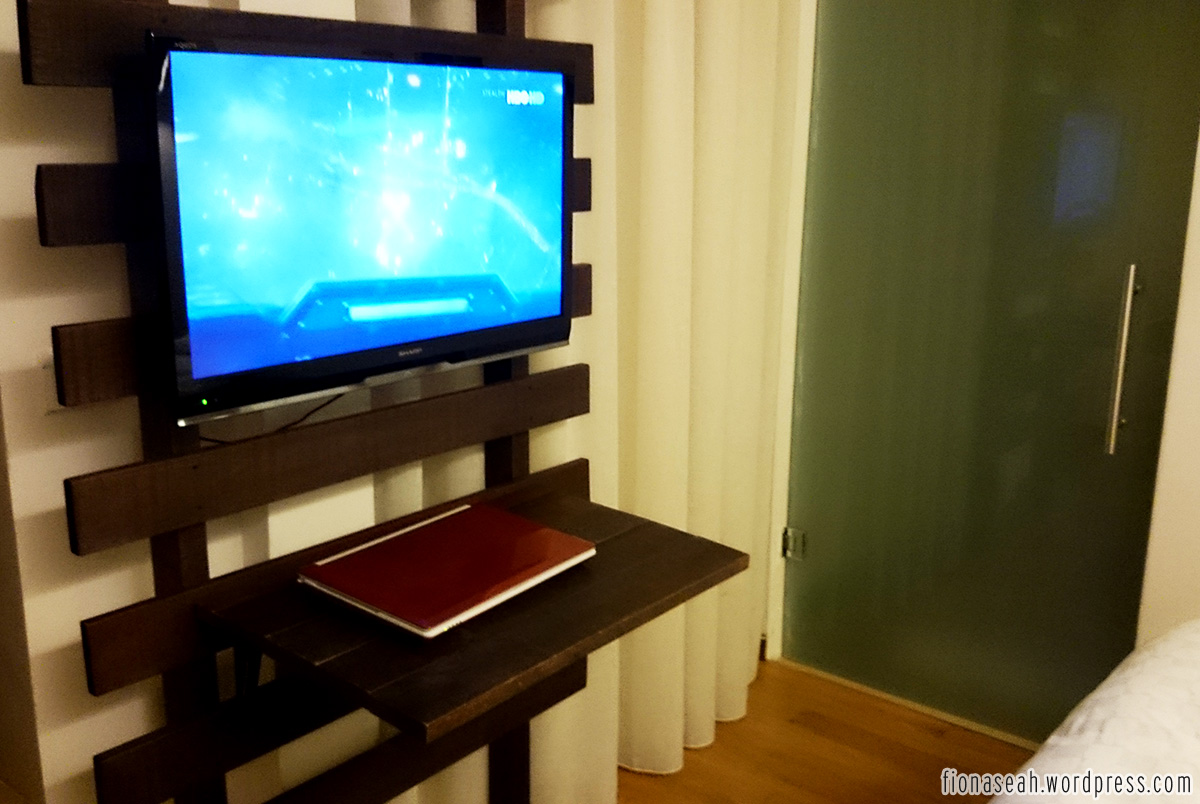
A TV big enough to watch from the bed
There is a foldable table top at the bottom of the TV. Great if you’re planning to do some work on your laptop!
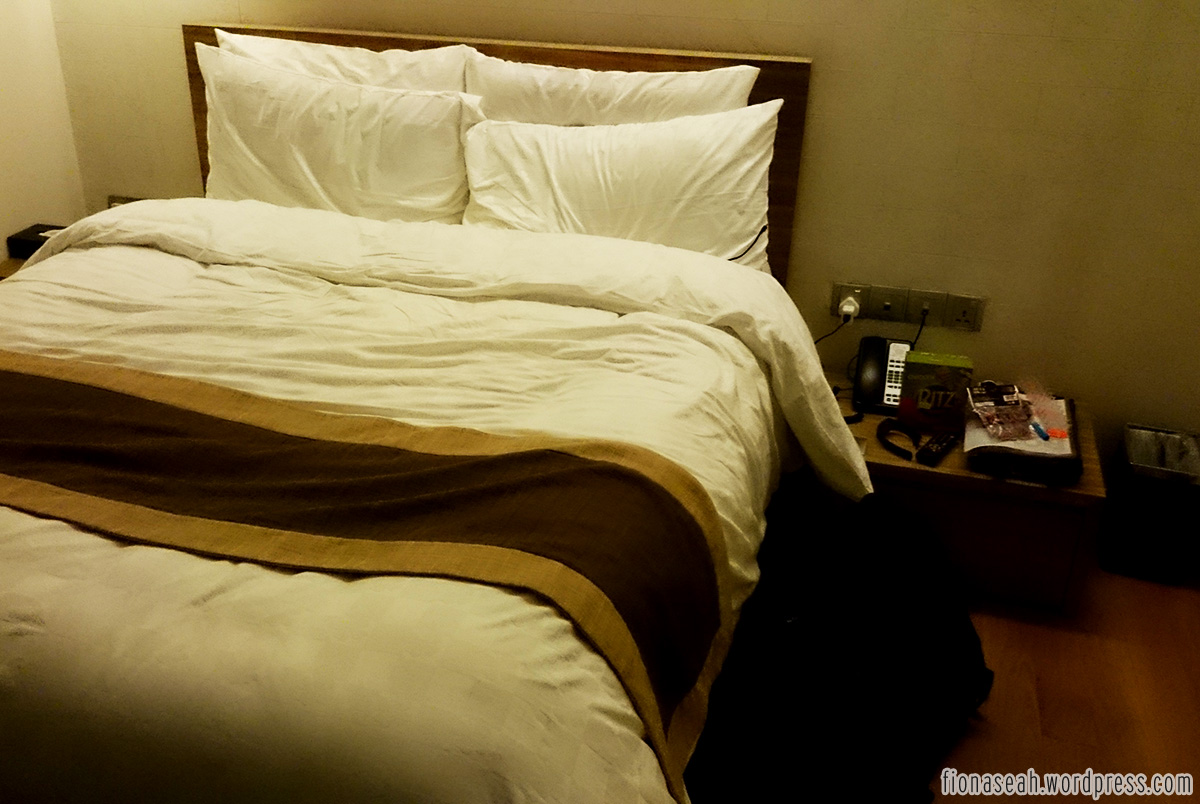
Our double bed, crumpled because boyfriend decided to lie on it before this photo was taken.
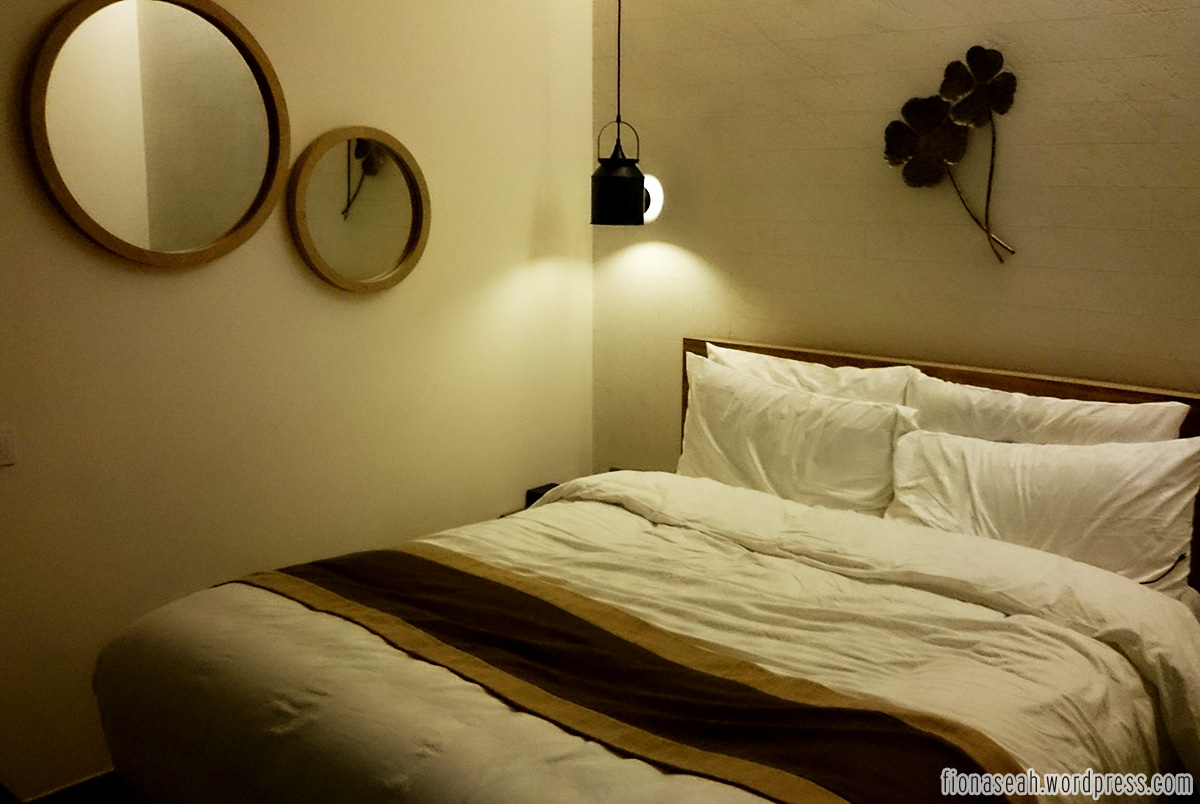
Right beside the bed hung two (vanity) mirrors on the wall! Now you know who slept on the left side of the bed! 🙂
Simple yet elegant ornament on the wall to remind you where you are!
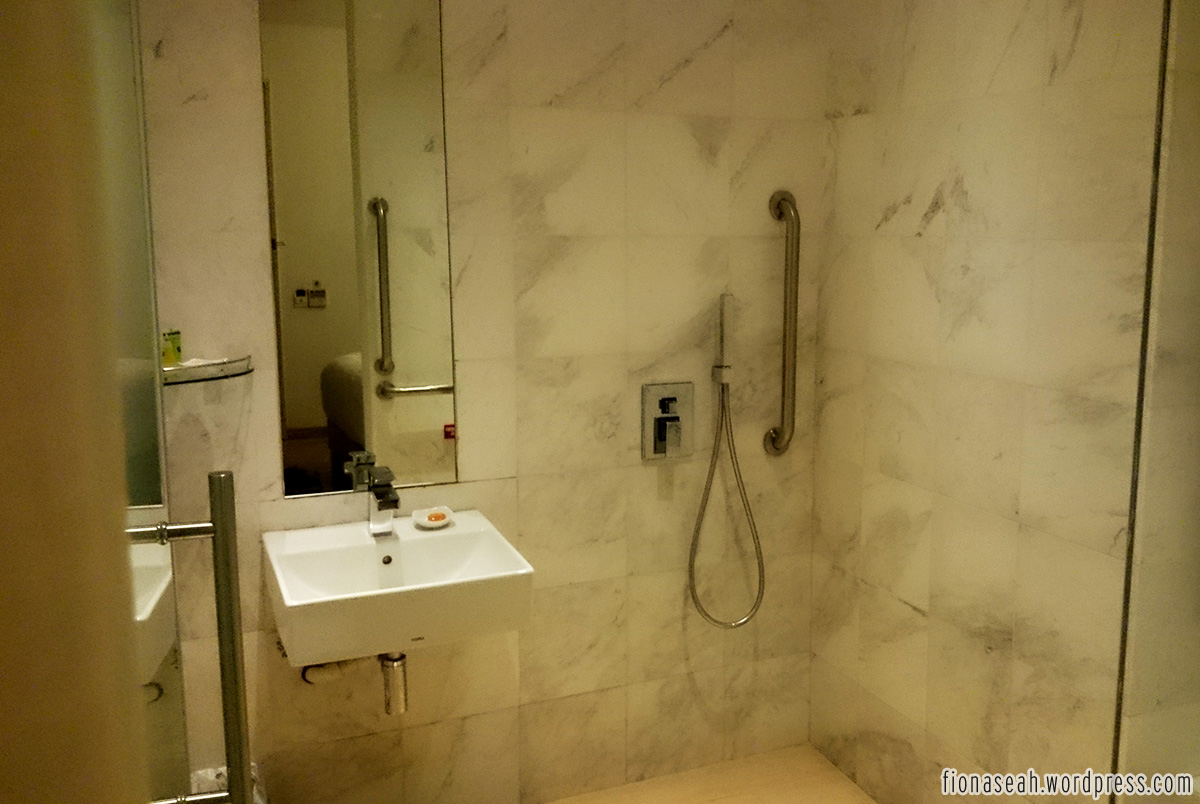
Now let’s check out the gorgeous toilet!
There are two water sources for showering, one of which is ceiling-mounted! Can you see it in the picture? Boyfriend loves this kind of shower head coz he likes to imagine himself “singing in the rain” rofl. But I don’t unfortunately. I prefer to have full control of the water direction, so detachable shower heads (also in the picture) for me any time!
The sink!
Oh by the way, the toilet door has no lock. So be sure to only sleep in the same room with someone you trust 😉
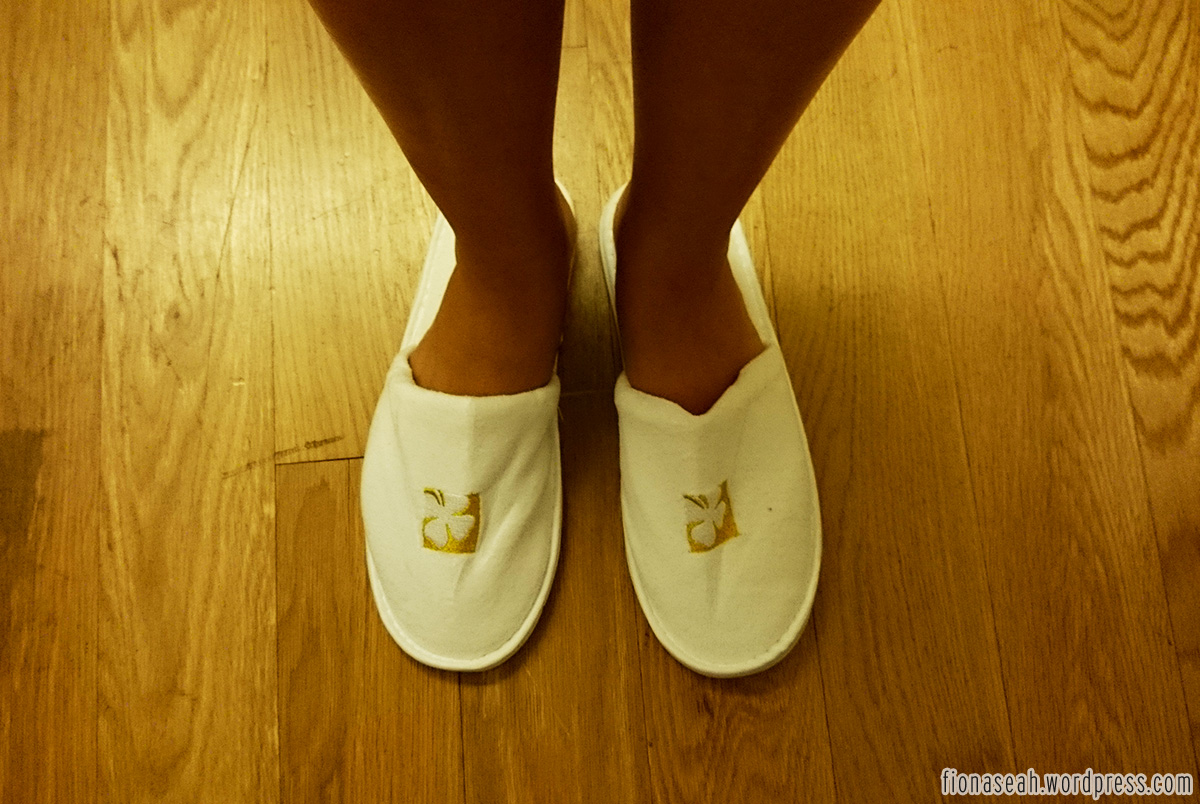
Bedroom slippers made of THICK, QUALITY, STRUCTURED fabric (can’t tell what exactly that is) that won’t spoil so easily. I’m so impressed. It’s probably the best bedroom slippers I’ve gotten so far. (Psst, took one pair home)
The only decent picture of us.. and boyfriend’s signature pose lol
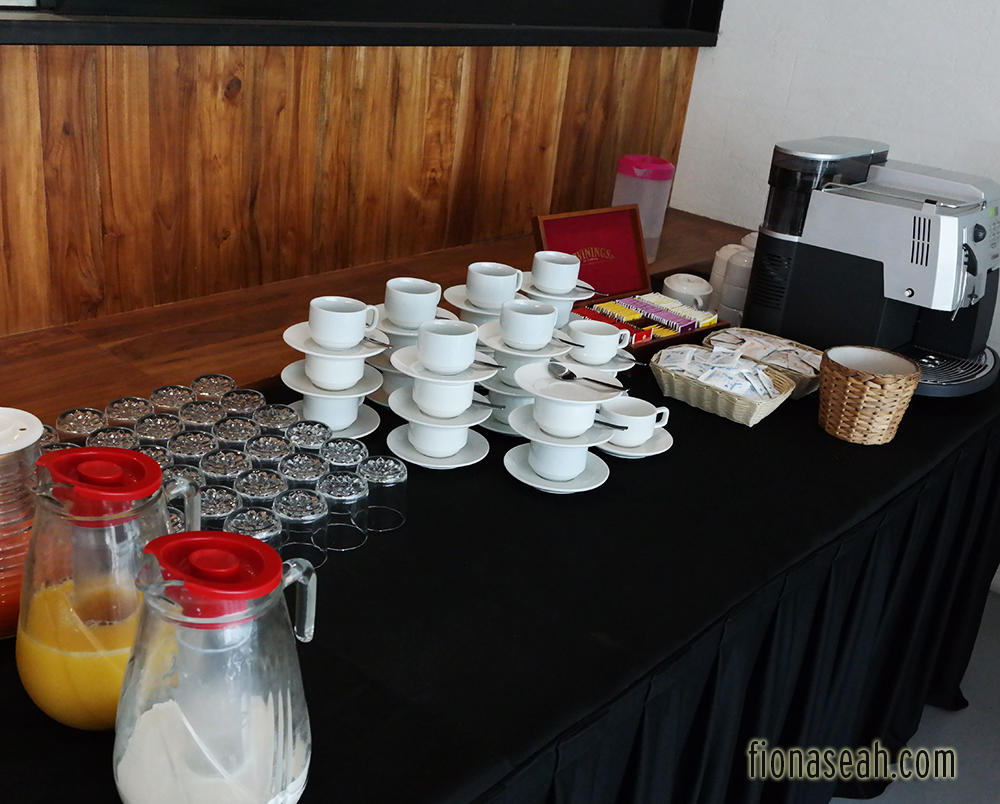
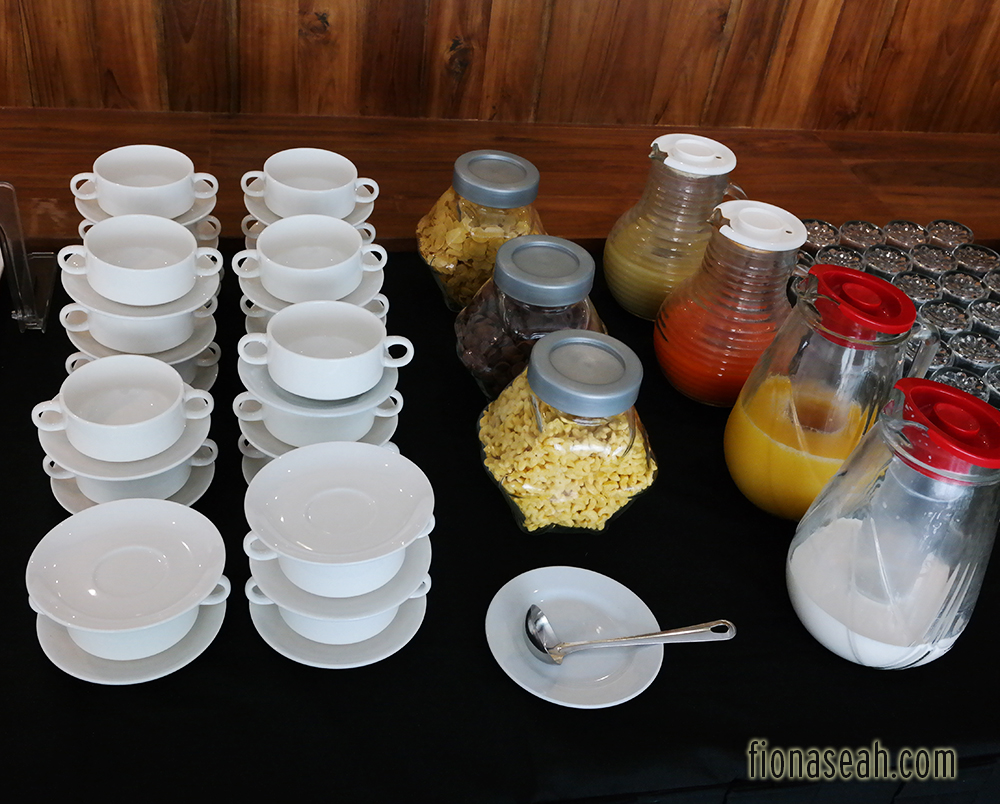
I went to bed at 4am as I was immersed with tuition lesson preparation (yes, still had to work the next day) and got up at about 9am for breakfast! I expected breakfast buffet like any other hotels but when we went to the dining area, we were told to choose between “Western” or “Asian” breakfast. Puzzled, we took a quick glance at the buffet table and saw only bread, condiments, cereal, beverages and utensils there. So yes, the young chef was definitely going to make us breakfast! We chose the Western one.
Cereals and beverages
Branded teabags which can also be found in the room’s mini bar
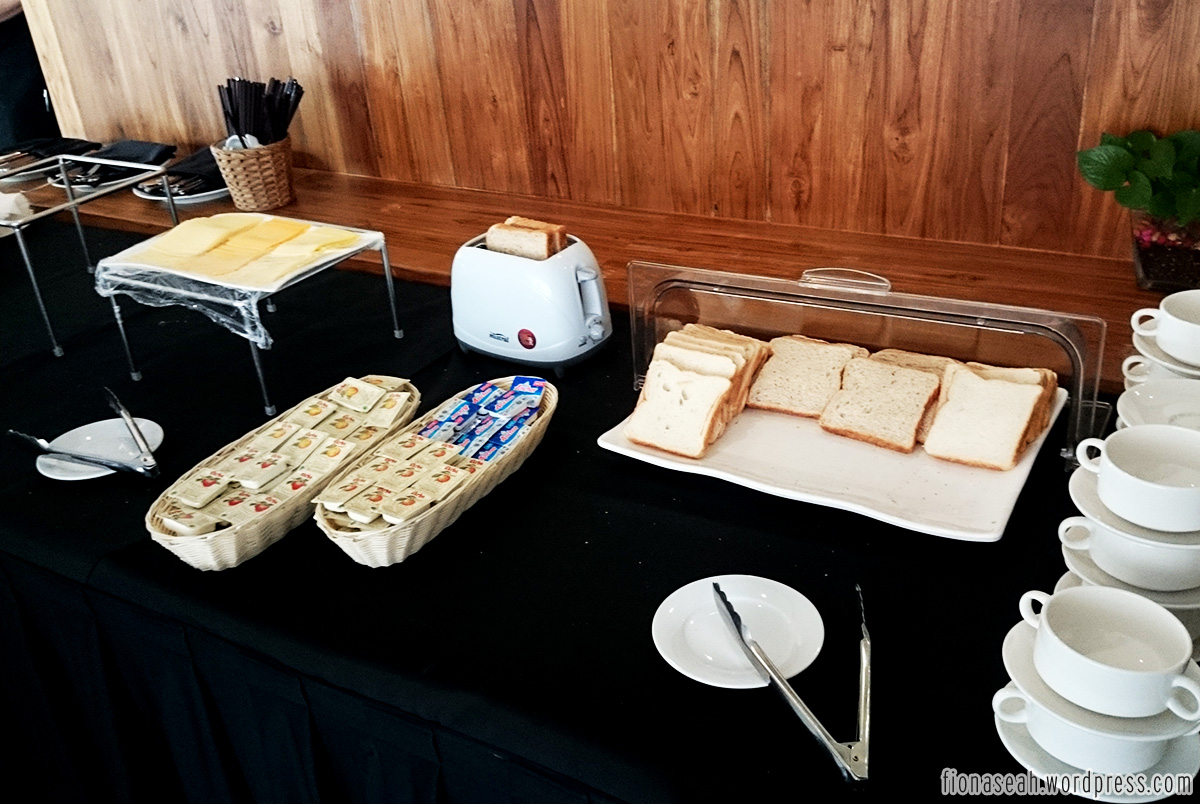
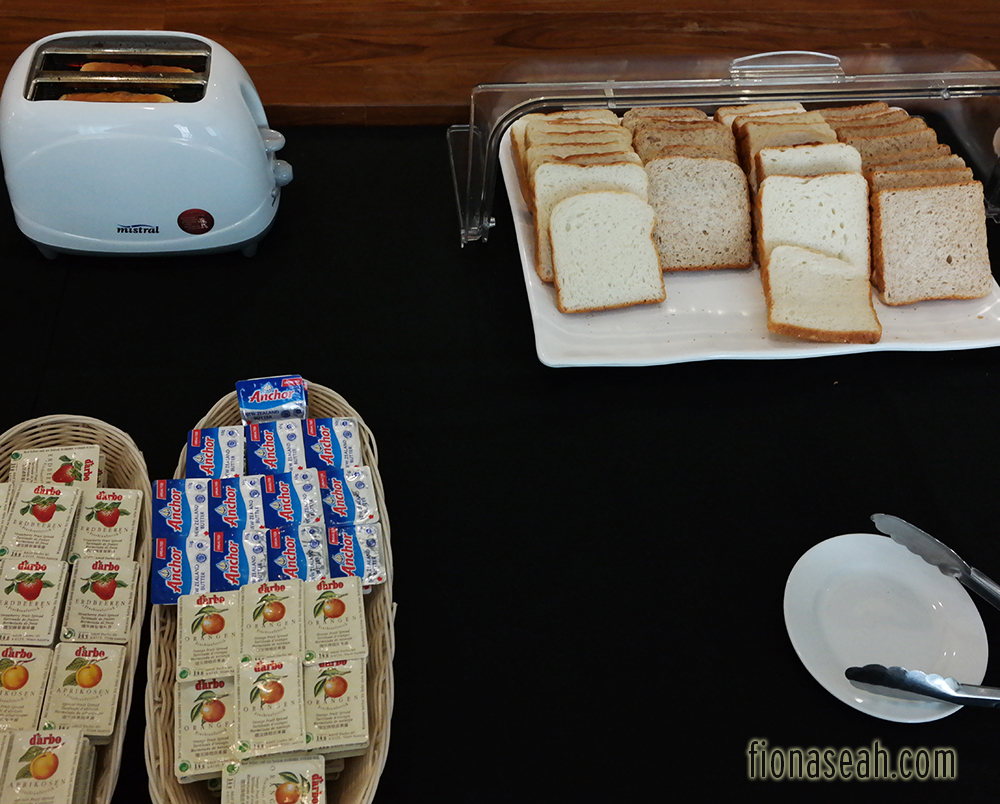
Bread and a small toaster. There are also three kinds of cheese (far left) to go with your toast.
We were excited because even at the cheapest hotel we had been to, breakfast was self-service. But when the food came, disappointment took over. The portion was miserably small for any adult, especially my boyfriend who is a pretty big eater.
Western breakfast consists of a sausage, four potato wedges and a decent scrambled egg
Trying to make the food look good coz the taste is a letdown
This does not justify the long waiting time of 10-15 minute, honestly. Furthermore, the potato wedges were served cold and the others were not steaming hot. They were in fact lukewarm which could suggest that they were already prepared beforehand. So what was taking them so long? Moreover, the kitchen was just right beside us
The breakfast didn’t leave boyfriend’s tummy satisfied so he asked if he could get another serving of sausage and eggs (he hated the wedges and gave some to me) but was told that each patron was only entitled to one breakfast plate. Feeling famished, he offered to pay for it but the hotel staff quoted him S$20++ just for ONE sausage and some scrambled eggs. Are you kidding me?! That’s tantamount to daylight robbery! Of course, we weren’t out of our mind so we politely declined the purchase. In the end, we had to fill out stomach with Honey Stars and orange juice (plus some pasta from Pastamania afterwards).
Anyway, the breakfast they served were of mediocre standard because they were served near-cold. They weren’t generous with the portions especially with that four sad-looking wedges over there, but that’s okay because they were so cold stiff and dry I wouldn’t want anymore of them. Most of the patrons left the dining area with only half of their portions eaten. I also caught a glimpse of the Asian breakfast on someone else’s table. It’s a rice dish which I’m sure is more filling than the Western one, but the taste could be equally bad because many people didn’t finish it as well.
I wouldn’t call that dining area a restaurant too because they don’t serve lunch and dinner. In other words, the dining place would be closed after they are done with breakfast at 10.30am. They had very limited tables and chairs as well so I’m not sure if it would fit everyone if the hotel is fully booked?
Indeed, my hungry belly was telling me to be displeased
I’m certainly very satisfied with our room but I wouldn’t say the same for breakfast. 😦
UPDATE:They have improved their breakfast! Scroll all the way down for pictures! 🙂
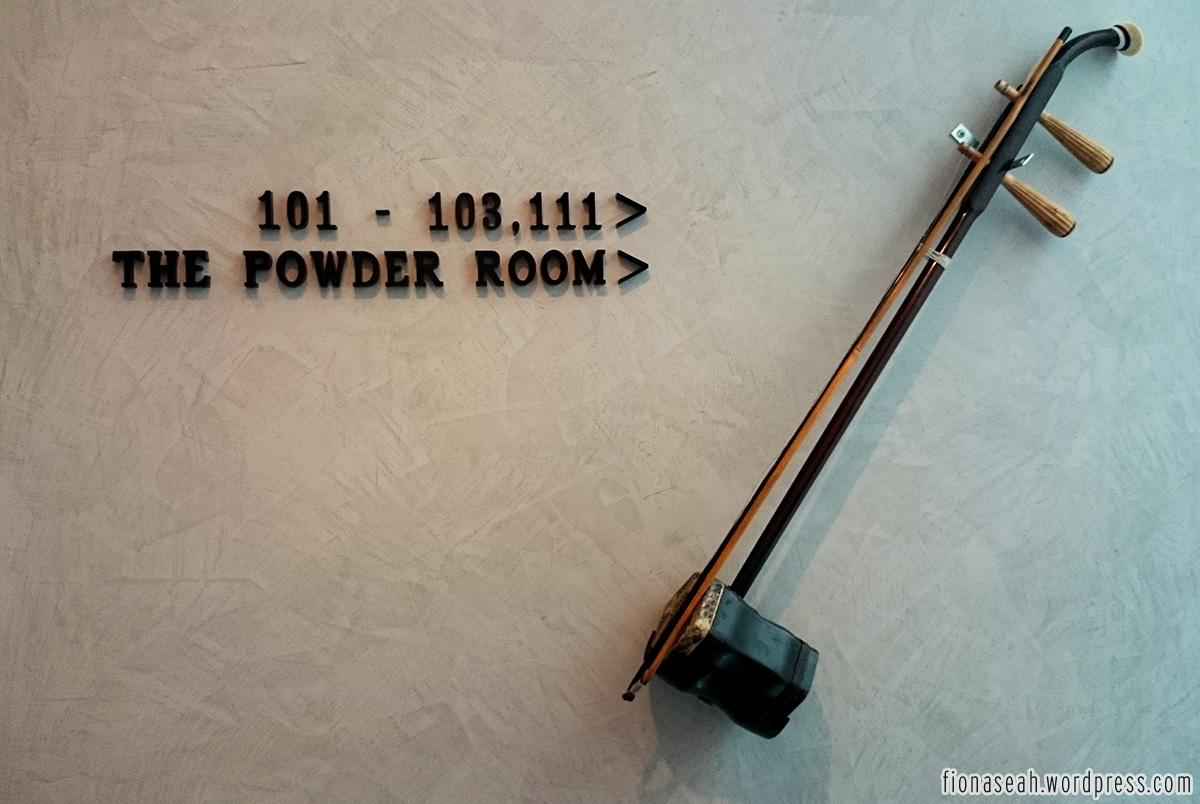
Saw this on our way back to the room. I have no idea what “The Powder Room” is but it must be somewhere cool to have its name listed on the wall. And that Er Hu is real! (Coz itchy-hand Boyfriend went to strum it)
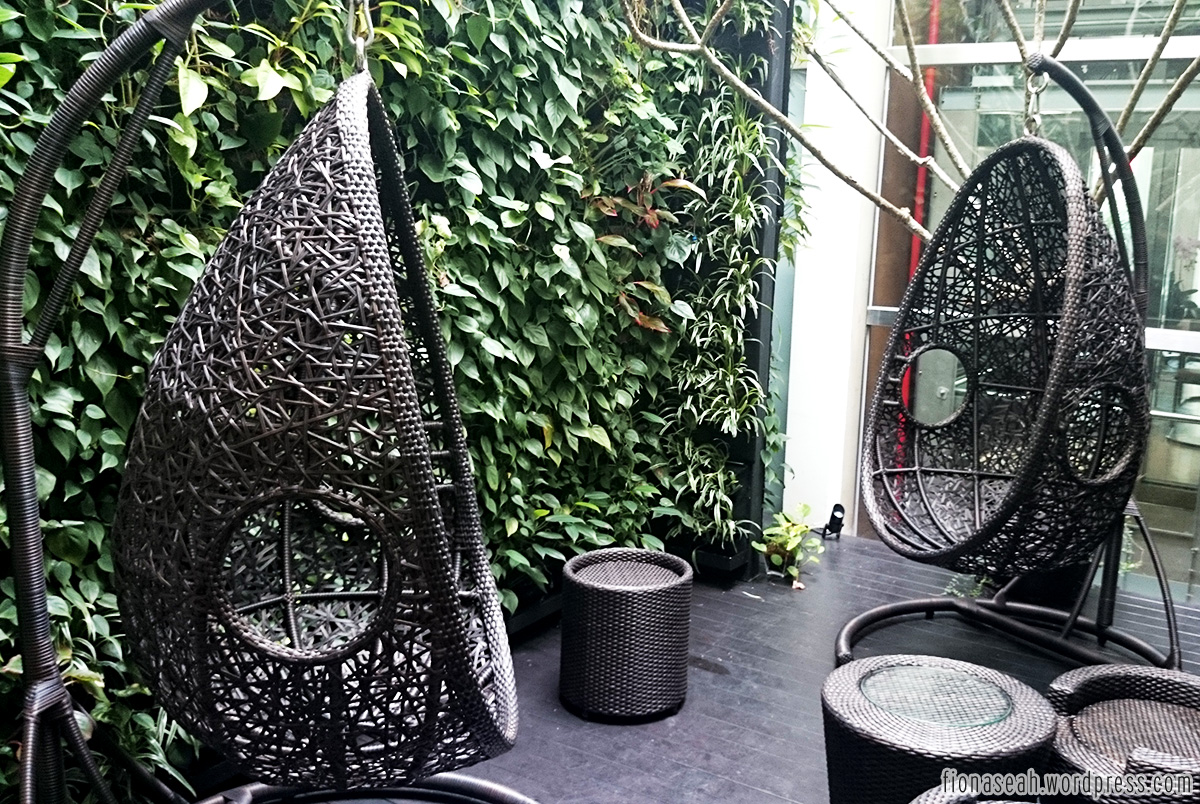
There is this relaxation corner beside our room! The roof isn’t covered (I think) so it’s open air.
All in all, it was a great staycation if not for the awful breakfast. I wouldn’t mind going back again but I will definitely prepare my own breakfast next time! I’d give this hotel a 3.5/5.
Hotel Clover was also recently featured on Groupon. Damn, we would have saved so much more if we had seen it! 😦
**UPDATE**
We decided to give Hotel Clover another chance (at our own expense)! We went back again in November and this time, it was for a birthday staycation.
And I’m glad they’ve improved their breakfast drastically since our feedback. Food came way faster than before too!
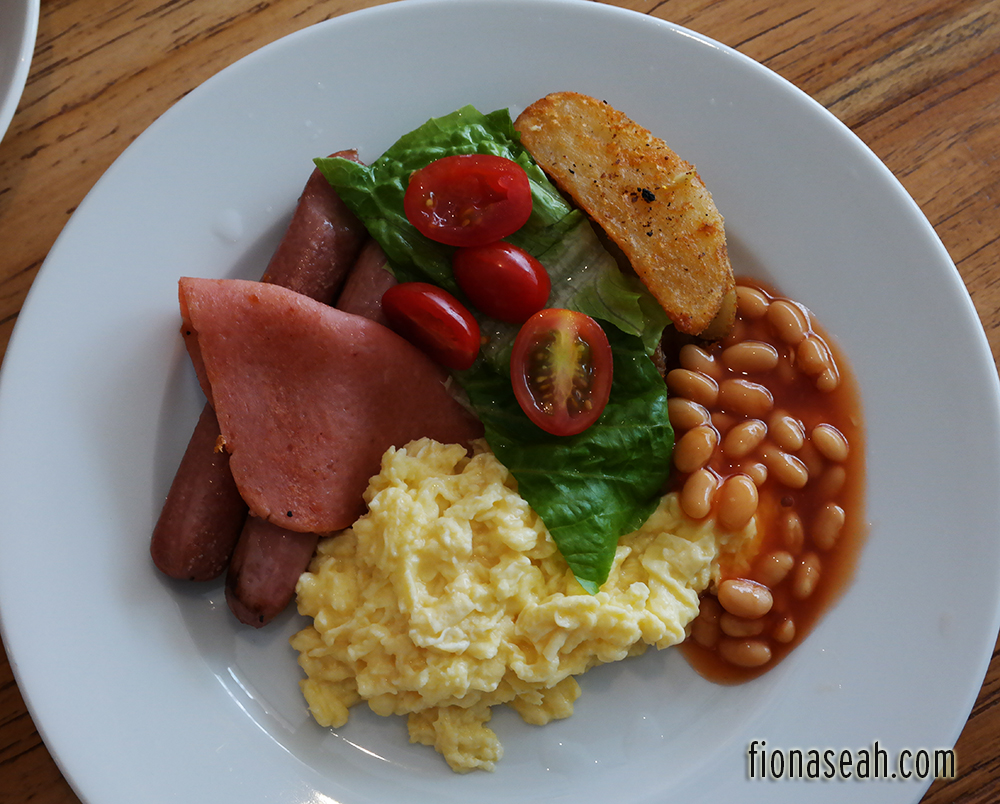
Western breakfast! They added baked beans, ham, an extra sausage and more greens!
This is so much better!
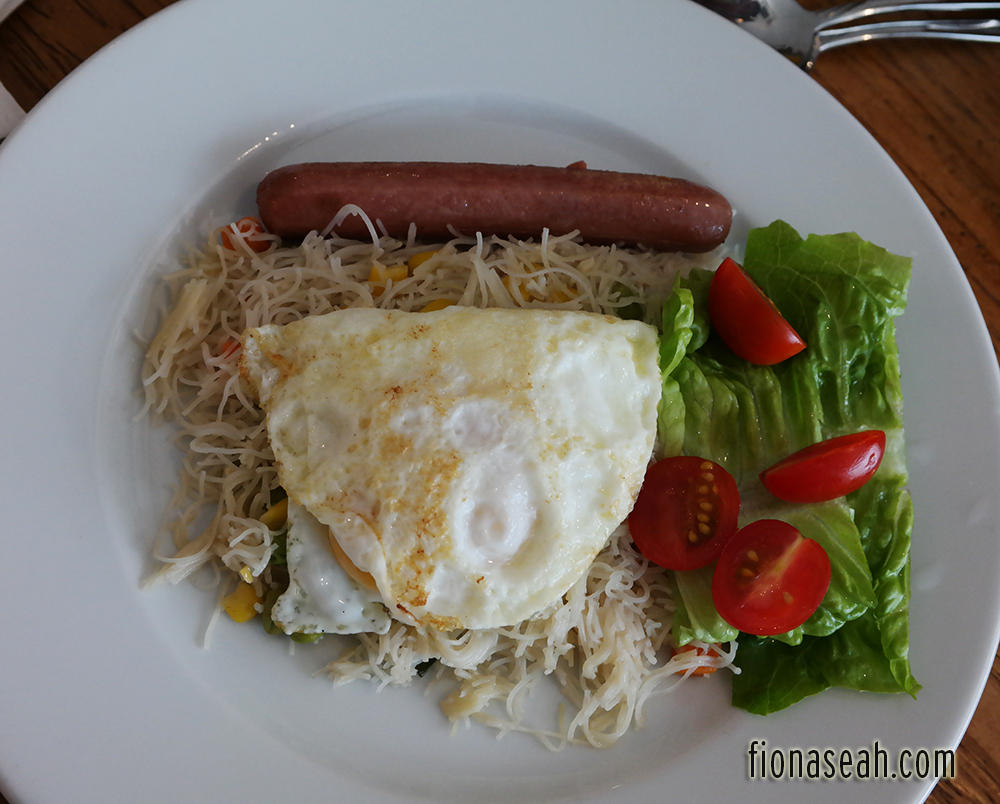
I got myself Asian breakfast this time and looking at the Western one, I kinda regret my choice hahaha.
Likewise, they added more greens and I think the sausage is new too! LOVE the runny egg! However I wish they told me it was going to be Bee Hoon (I thought it was gonna be rice) because I don’t really like Bee Hoon 😦 Still, overall taste was great!
Let’s take a look at their buffet table.
This has no change. Not that I complained anything about it the first time haha.
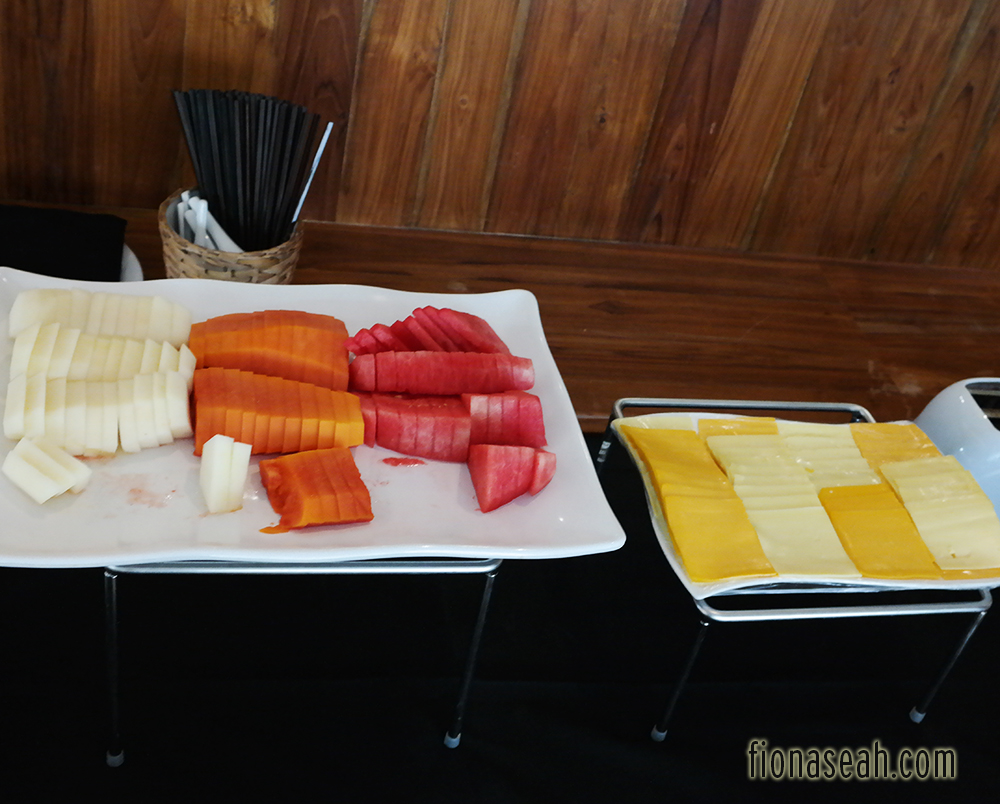
They added fruits to the buffet table! Whoopee!
Open concept kitchen! Just right next to us.
Also worth mentioning is the excellent hotel service (which has been commendable since our first stay there). Our initial room had very weak Wi-Fi coverage so I requested for another room, which the concierge gladly complied! Everything was settled within 10 minutes. And we love our new room – it’s so bright and convenient (it’s the very first room near the entrance) and of course, the Wi-Fi signal was superb!
The TV strategically covering the window because our room was on the ground floor and anyone walking past would be able to look in haha.
It’s always encouraging to know that business owners are listening and are constantly improving based on customers’ suggestions. With that, I will definitely be going back again!
Alright, that’s all for this post! Thanks for reading 🙂
WARNING: This post requires high amount of bandwidth! Wi-Fi connection advised.
Hello again, everyone!
This post has come earlier than planned because of the recent news about the merger of 8 secondary schools. It’s pretty sad as some of these schools were once a merging party not long ago, and now they have to face it again. Since there are many more schools that I did not cover previously, I thought I should do a follow-up post to try and include as many defunct schools as possible including the 8 latest victims.
In my previous entry, I mentioned some causes that could have led to the closure of most schools (e.g. population shift, ageing facilities etc.) but I failed to mention one crucial point. Remember the post World-War II baby boom during the late 1940s to 1950s? The sudden increase in population called for more schools to be built then (which makes sense, considering that most of these closed schools were built in the late 1950s-60s when most of the children were ready to be schooled) and some even had insufficient vacancies. Then came the 1970s-1980 when the Stop at Two programme was introduced to control the population growth in Singapore. The programme pushed for small nuclear families and penalised couples for having more than three children (no priority given in school registration to third and subsequent kids of parents who had not been sterilised before the age of 40). As the existing children got older, the number of schooling kids in the estate reduced (since no one dared to procreate anymore). Thus, the enrolment in most neighbourhood (or “estate”) schools started declining which subsequently forced them to close.
Therefore it was very common for students to keep changing schools as a result of school closures in the past, so don’t be taken aback by people who have attended numerous schools back then. They simply had no choice!
Anyway, back to my topic on defunct schools. Here is the continued list in no particular order again (I try my best to rearrange them according to districts):
* * *
Monk’s Hill Secondary School (Newton)
Merged into Balestier Hill Secondary School in 2007
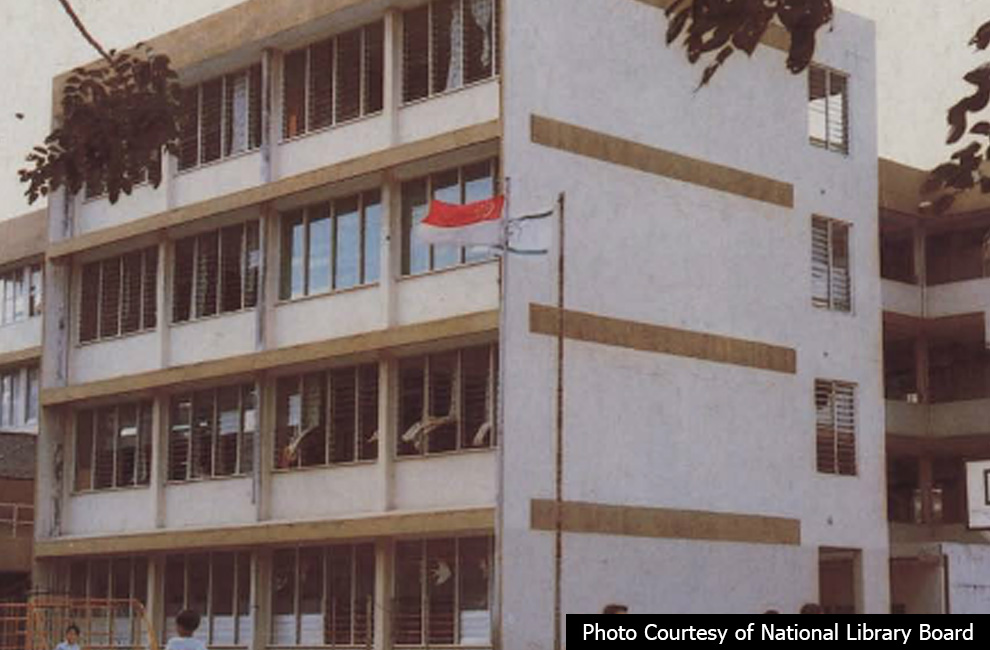
The school’s history began in 1958 on a plot of land that was once the site of a Chinese monastery, hence the name ‘Monk’s Hill’. It became an integrated school in 1961, offering both English- and Malay-medium education to its intake of pupils but both mediums were merge in 1976. From then on, it has established itself as an English-medium school. It became a single-session school when it shifted to its new premises at 12 Winstedt Road in 1993.
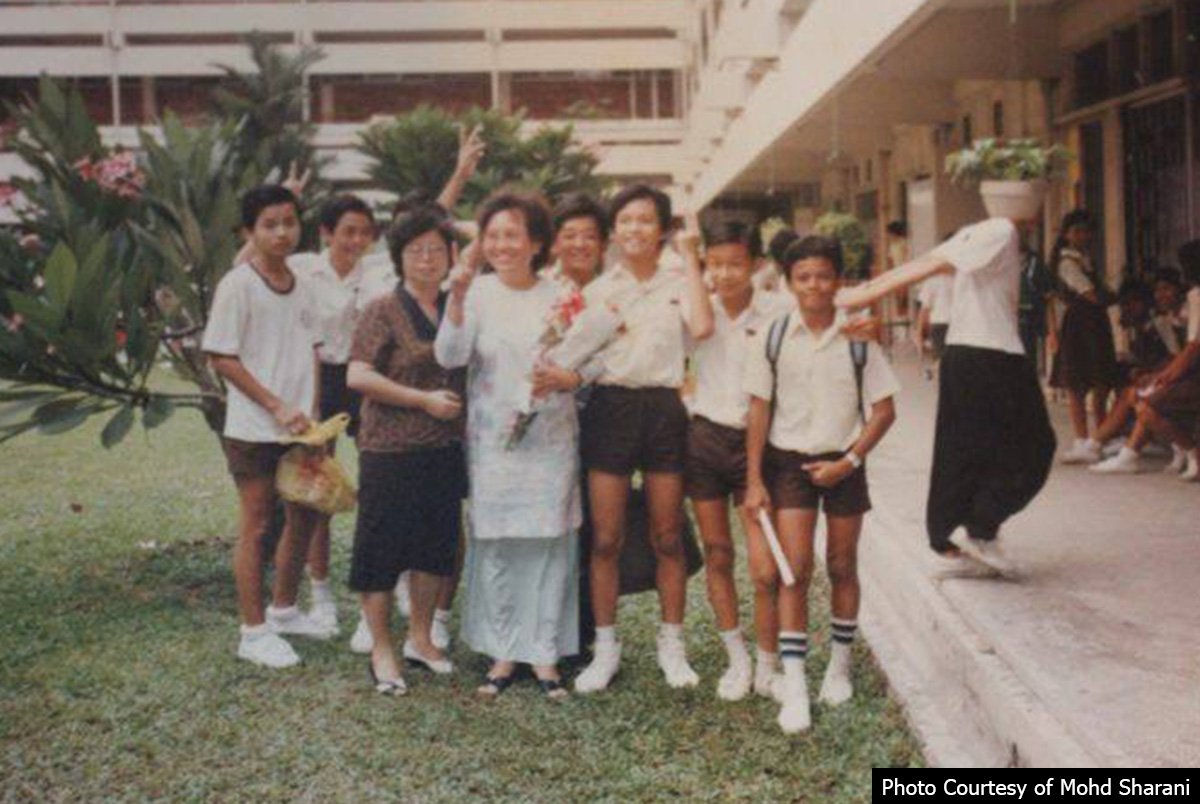
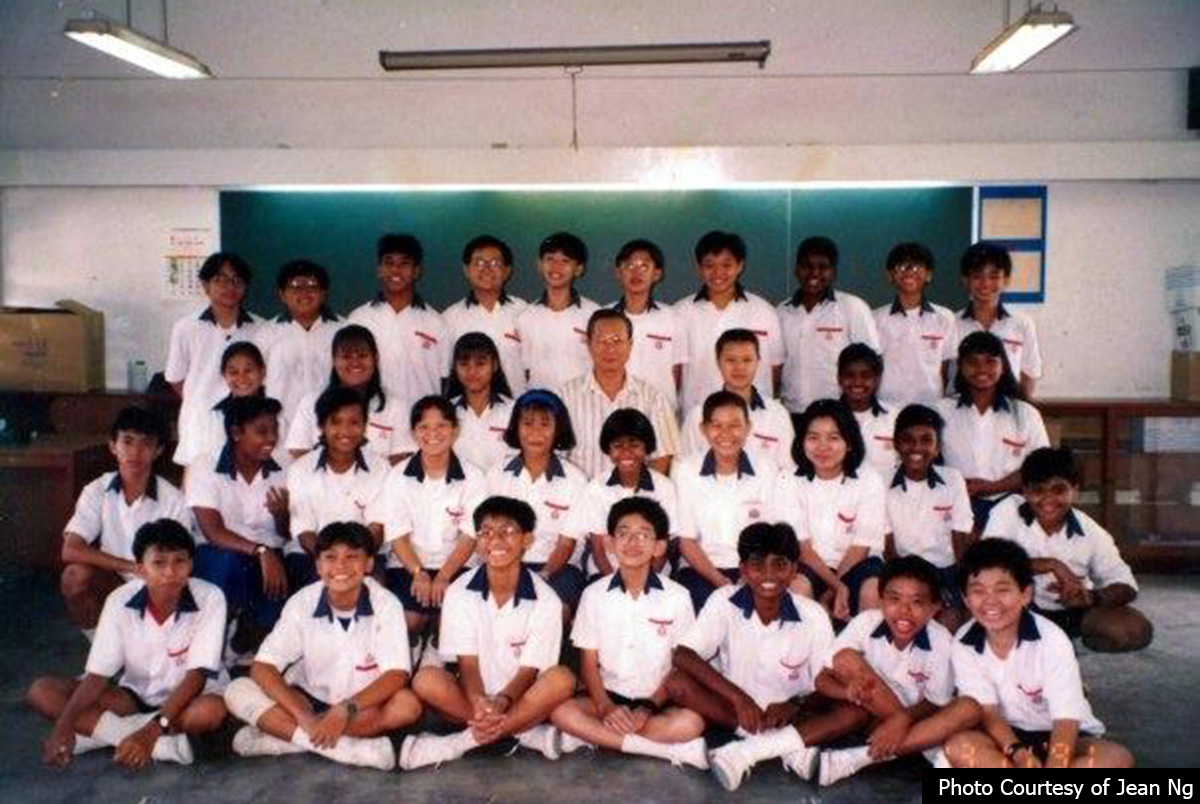
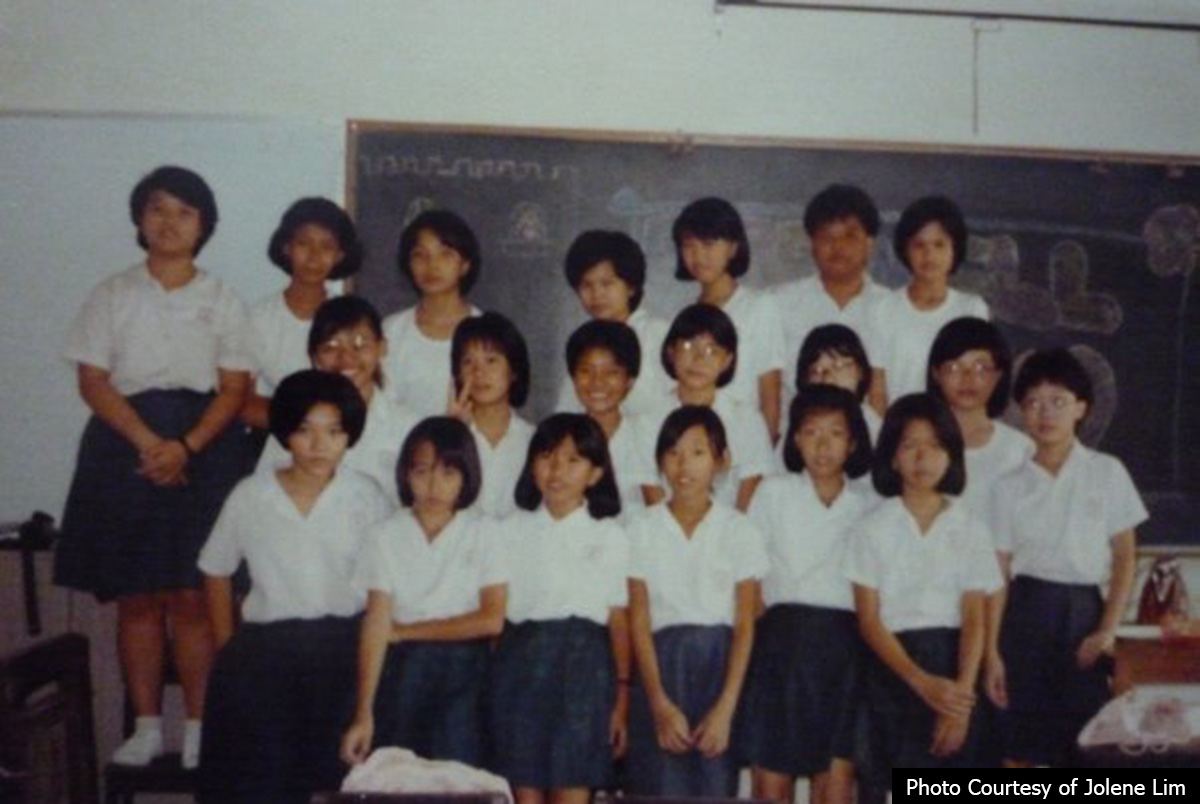
Sec4-3 of 1991
In 1960, Monk’s Hill presented its first batch of candidates for the national School Certificate Examination. In 1964, the school song was composed and it held its first Speech and Prize-Presentation Day in 1967.
Newton Boys’ was established in 1956, right next to Monk’s Hill Primary School. It was one of the schools in Cairnhill-Newton area that was hit by declining enrolment. Due to its inability to sustain economically, it ceased operations 21 years after its opening. While students could still utilise Newton Boys’ premises, they were to be under the charge of Monk’s Hill Primary School.
1968
2013
1970
1961
1968
No further information can be found. I did come across “Winstedt School” (also in the vicinity but closed in 1973) while trying to gather more information about Newton Boys’ but I am not certain if these two schools were in any way related.
Like Newton Boys’, Monk’s Hill Primary started out as an all-boys school. Monk’s Hill Primary and Newton Boys’ were relatively near to each other and students from both schools would come together to play the “Police and Thief” game. Otherwise, they (the boys in particular) would be “fighting” over girls from neighbouring Anthony Road Girls’ School.
The school’s year of establishment is not known, but it could have been around since 1950.
Monk’s Hill Primary merged with Newton Boys’ School in 1978 and operated out of the latter’s campus. One block of its building was converted into a language centre for secondary and junior college students taking French, German and Japanese under a special Education Ministry scheme. Prior to that, it was used by the Vocational and Industrial Training Board.
In 1957, Hua Yi Secondary School moved to Monk’s Hill Primary’s building (probably shared) and only stayed there for a year before shifting again to its very own building at Margaret Drive.
Started as an all-girls school in 1958 (verification needed) at the present site of Raffles Girls’ Secondary School today, it shifted to Cairnhill Road a year later and possibly at the same time became co-ed. (History quoted from Hamida Pagi)
Following a steady decline in its enrolment, the Ministry of Education then decided to phase out the school by the end of 1980. Its students were given alternative places in nearby schools such as Monk’s Hill Primary and Anthony Road Girls’ School which were also plagued by poor enrolment. Both said schools are no longer existent today.
1960
After Cairnhill was demolished, Anglo Chinese School (Junior) took over its site for about two decades before finally shifting to its present location at Windstedt Road. The site at Cairnhill Road is now occupied by Ministry of Education Language Centre (Newton). The facade of Cairnhill Primary can still be seen today.
Local actor Adrian Pang, comedian Kumar and singer Rahima Rahim attended Cairnhill Primary School. Wow, if Rangoon Road Primary (mentioned in PART 1) was a school that groomed a generation of politicians, then Cairnhill Primary definitely was one that groomed a troupe of performers!!
Merged in 1985 to form Elling Primary School (verification needed) Closed in 1996
Elling North School started functioning as a boys’ school in 1958 until 1960. It was renamed to Elling North Primary School in 1979 when it became a fully English-medium school. The school buildings were later converted into JAMIYAH Children’s Home (Darul Ma’wa) in 1993.
Elling North School
Elling Primary School – Batch 1991-1996
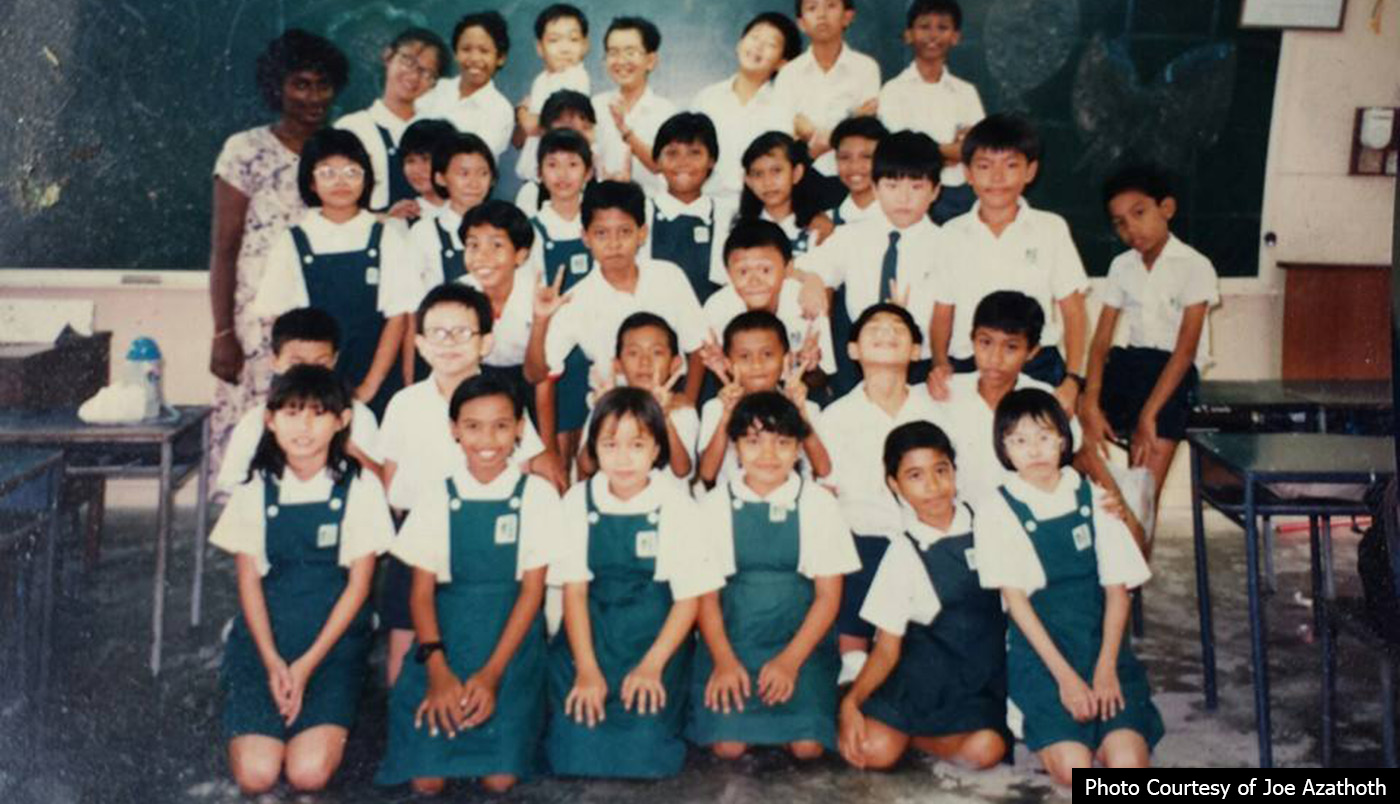
Elling South School – Class of 1981
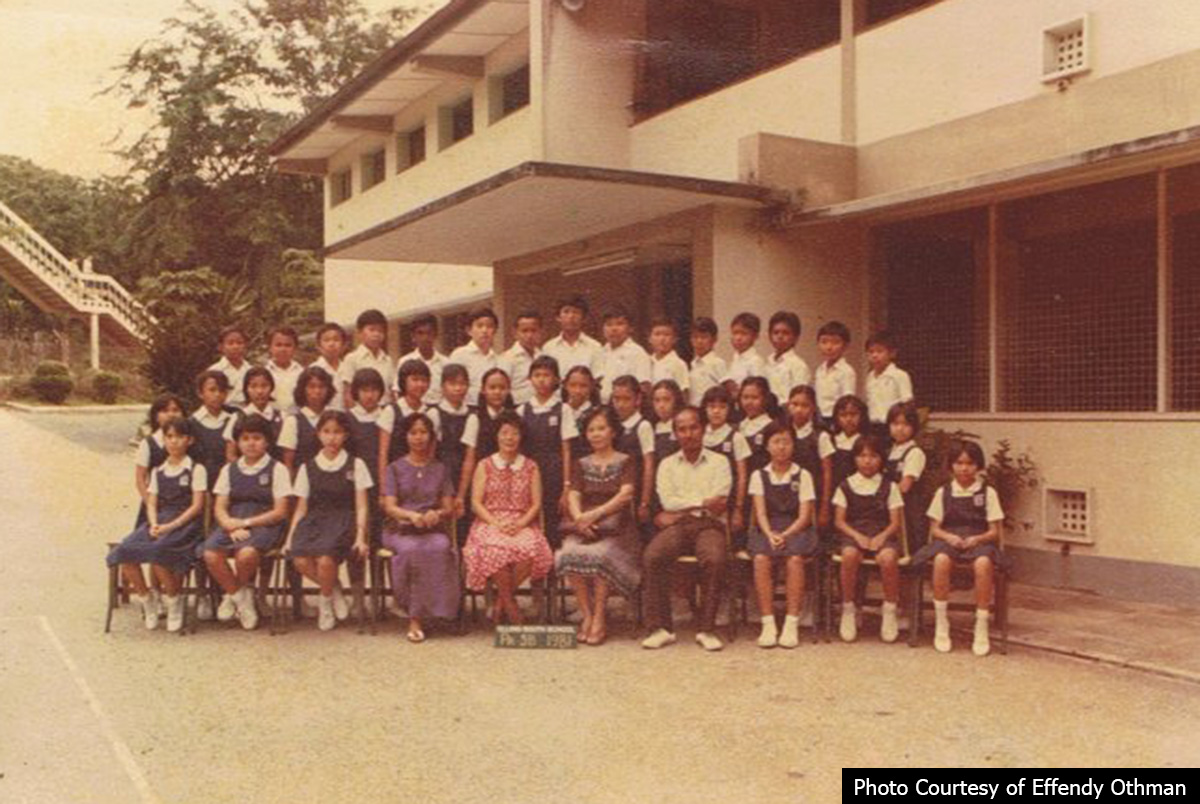
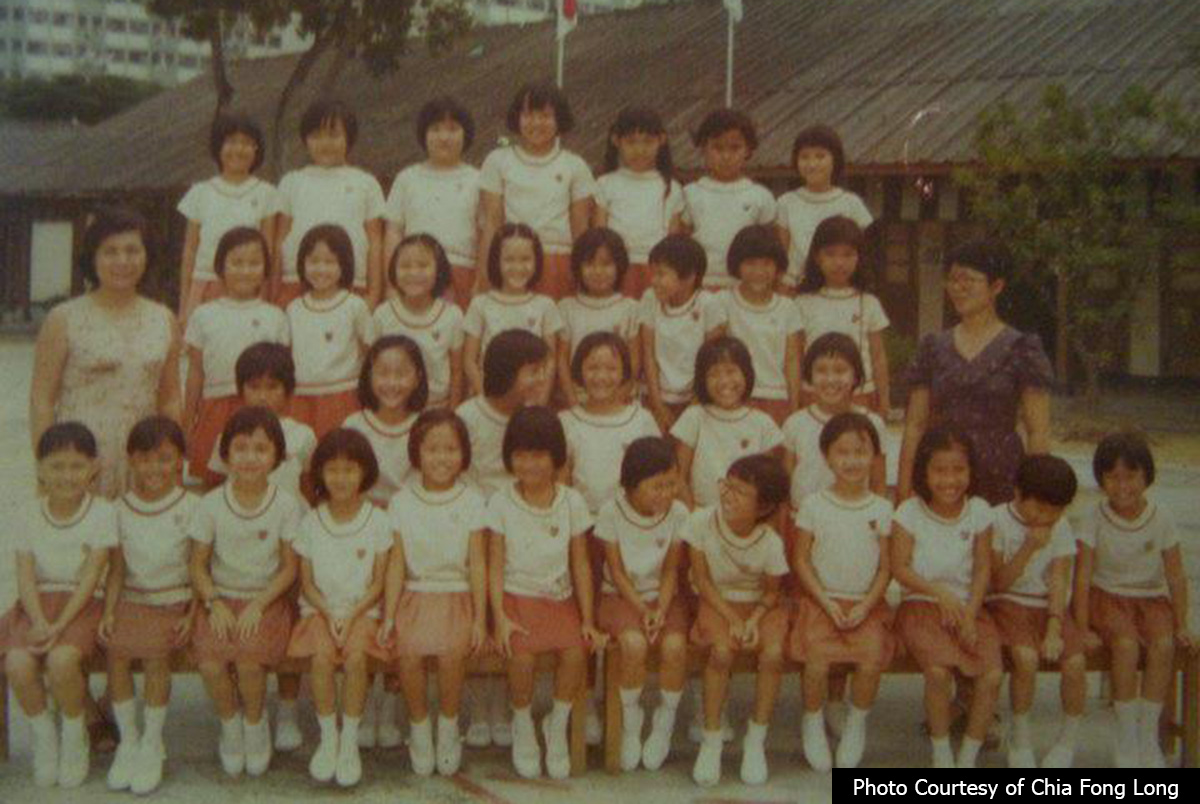
Elling South School – Class P5B of 1981
No further information can be found for Elling South and the amalgamated school except for the fact that Singapore’s first female commercial pilot Teo Ah Hong was from Elling South School.
The school was established in 1968. According to a Malay teacher there, female Maju students (or “Majuans”, as they called themselves) were allowed to wear uniform in either baju kurung or blouse. Some of the Chinese students followed suit and wore baju kurung. Not sure how true that is because all the class photos I found on Maju Sec’s Facebook page had no female students in baju kurung.
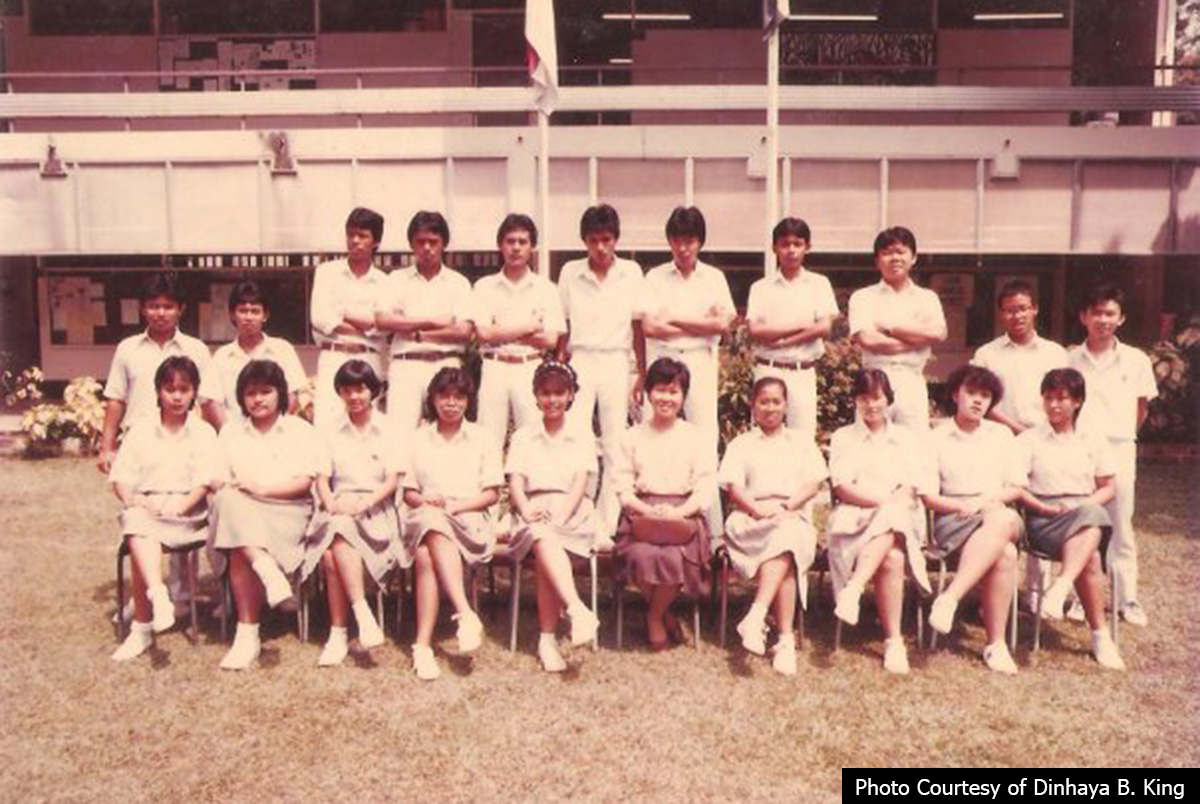
Class Sec4-5 of 1985
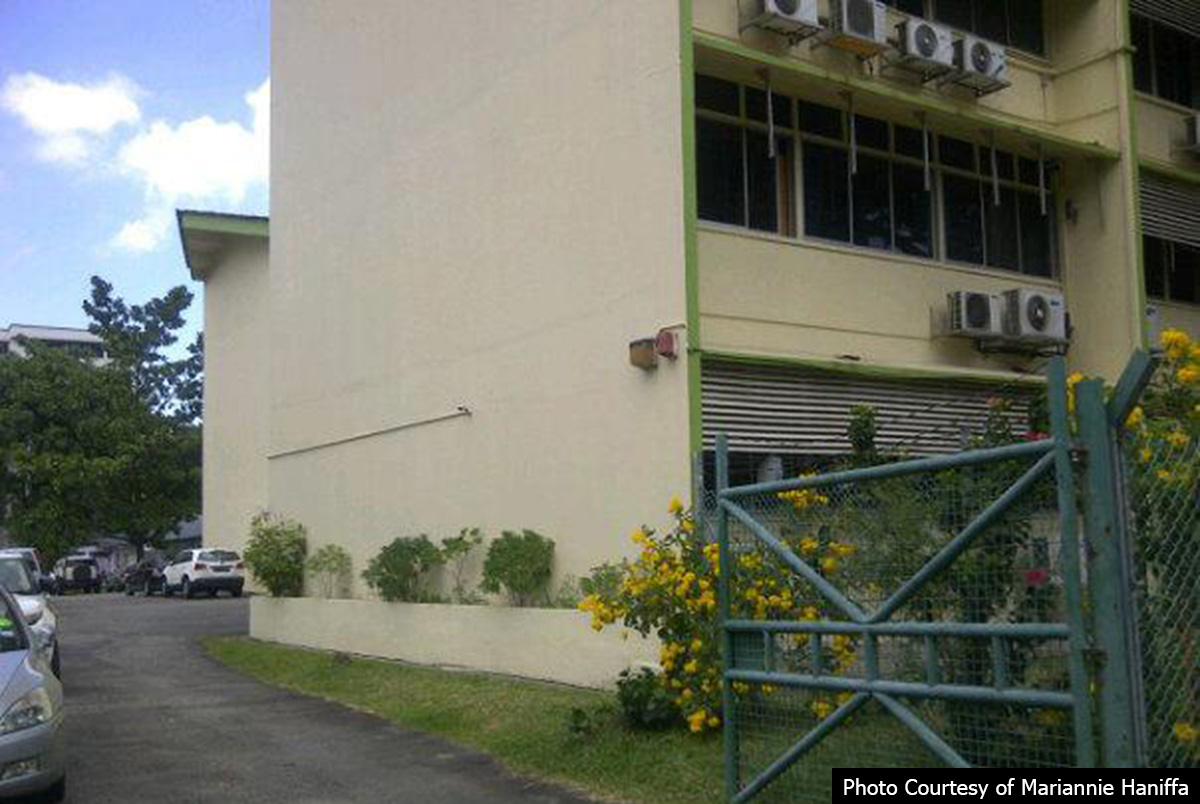
Courtyard
1995
Correct me if I’m wrong (I can’t find any supporting references), but the school gives me an impression that it was a Malay-populated school. So could it be one of the few Malay-medium schools in the early days of Singapore’s independence?
Maju Secondary was also one of the few French centres set up in 1978 to allow students to take up French as their second or third language. The centre was closed in 1983.
Mount Vernon Secondary School (Potong Pasir/MacPherson)
Closed in 1990/1991 (verification needed)
The school was opened in 1969 but was never known to produce excellent academic results until one of its deaf pupils appeared on the news for topping the two Secondary 5 classes for GCE “O” level in 1986. Having received extra coaching from a resource teacher who could do signs and lip reading, Mount Vernon was one of the few normal schools then that accepted handicapped (or in this case, mute-deaf) students. They had as many as 50 students with such disabilities in 1986.
The school was also the first and only one then to represent Singapore in a United Nations’ peace project.
To join Mount Vernon Secondary’s Alumni Facebook page (closed group), click here.
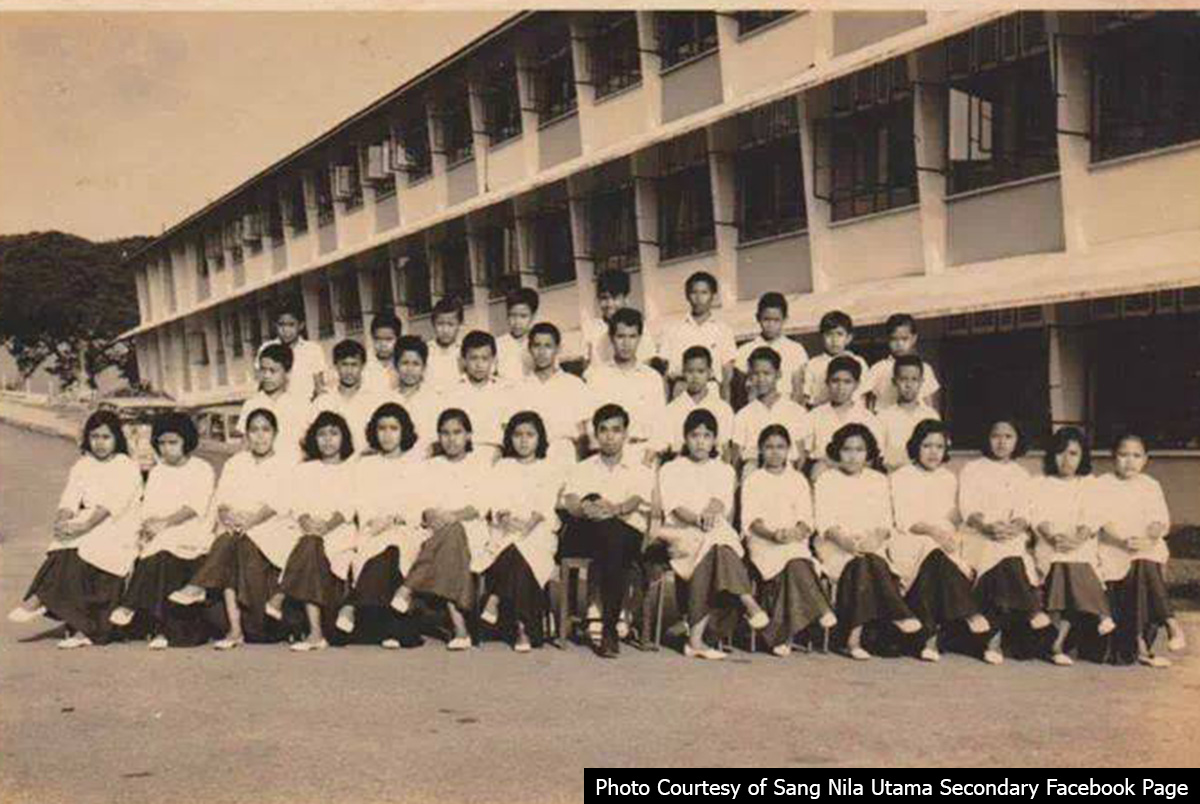
The school was the first Malay-medium secondary school established in Singapore and the third secondary school built after Singapore achieved self-government in 1959. Named after Sang Nila Utama, the Prince of Palembang who was believed to be the founder of Singapura, it was officially opened in 1961. The opening of the secondary school was seen as the most significant milestone in the development of Malay education in Singapore since the establishment of the first Malay primary school at Telok Blangah in 1856.
1969
1978
Following the Ministry of Education’s decision to phase out all non-English-medium pre-university centres by 1981, Sang Nila Utama Secondary School stopped accepting pre-university students at the beginning of 1979. The existing pre-university Malay stream classes were transferred to Bartley Secondary School. The school intake of Malay-stream secondary classes also suffered a decline over the years. By 1984, only two classes remained, with an enrolment of 37 students. The school building served as temporary accommodation for the nearby Cedar Girls’ Secondary School when the latter’s school building was undergoing renovation. The building currently houses the Gurkha Contingent.
Closed/Merged into Guillemard West Primary School in 1987 (verification needed)
Founded in the 1960s, the school was formerly known as Kallang Integrated Primary School – a merged school between Kallang Government Chinese Primary School and Kallang English School.
Receipt for school fees payment. All schools had it.
It had a very remarkable principal (Mrs Molly Chan, transferred to Swiss Cottage Primary in 1983) who pioneered the Care, Save and Share programme “to save many innocent children from going astray”. You can read snippets of her interview here. Principals like her who tries to build rapport with staff and students are hard to come by these days..
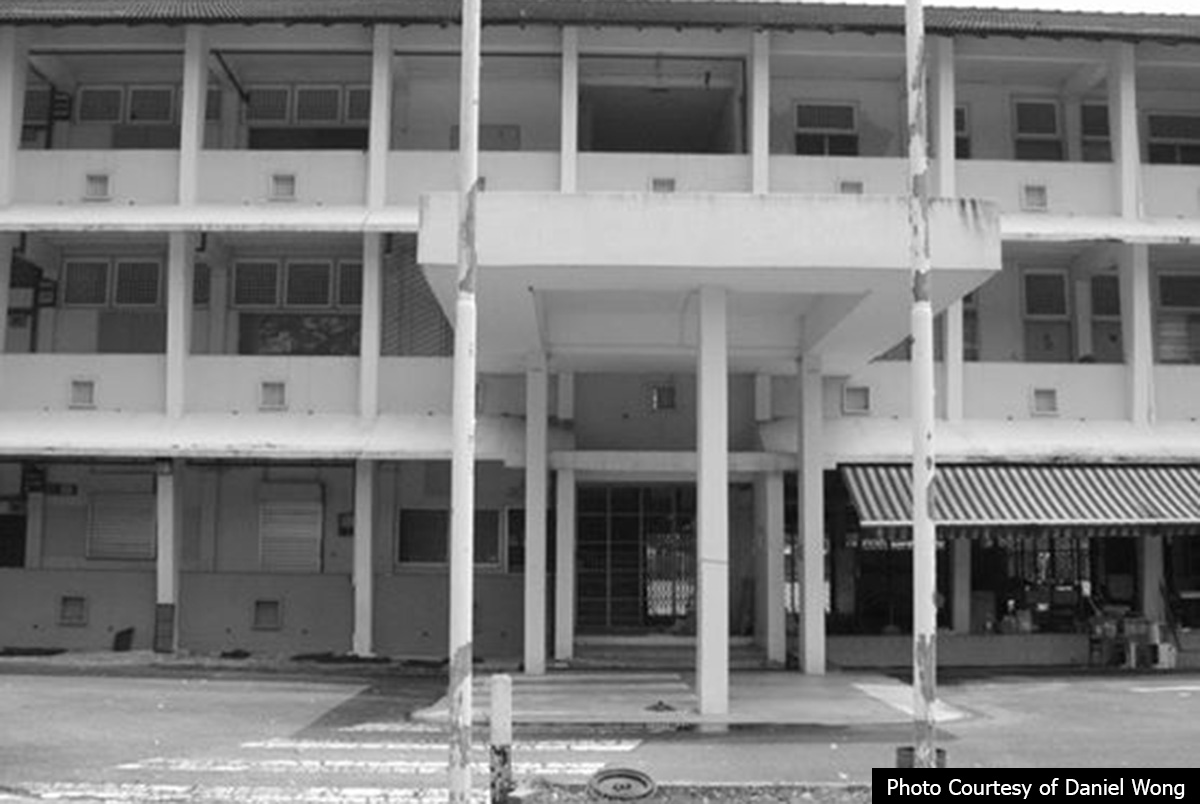
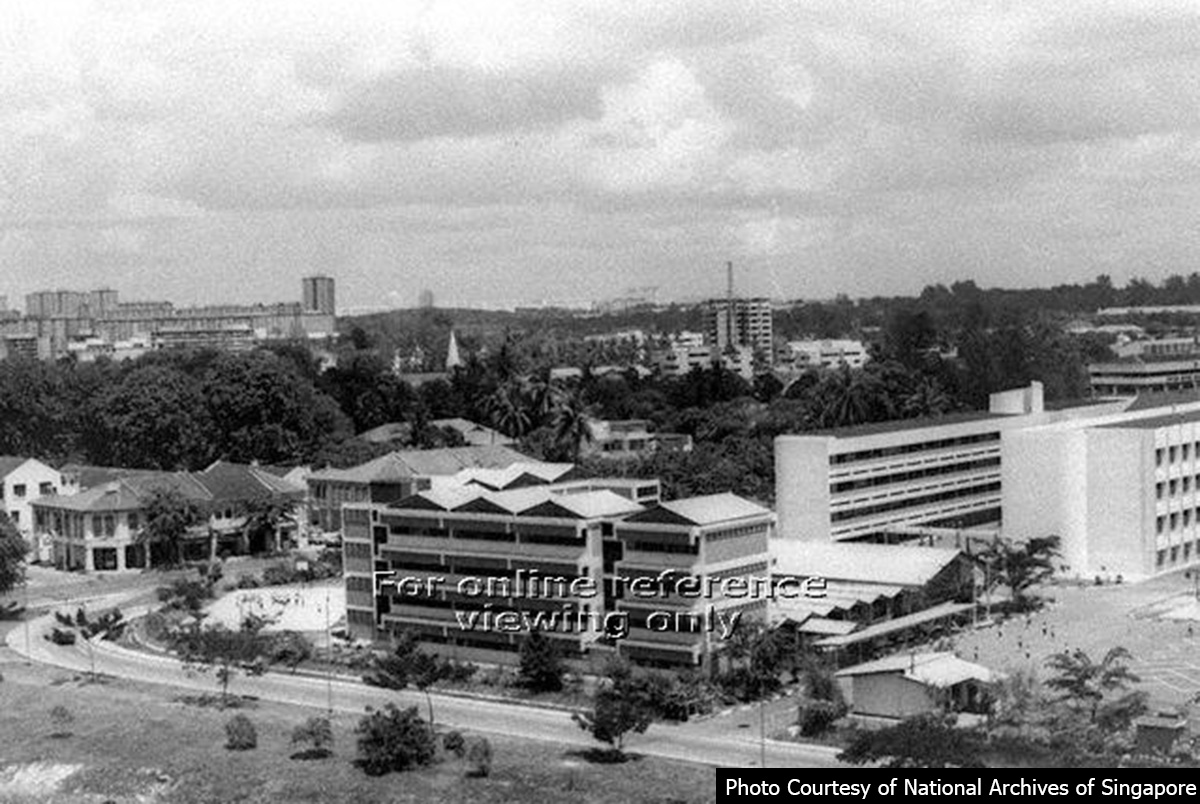
The school (秉文小学) started functioning in 1977 with pupils from Griffiths Primary, Beatty Primary, Balestier Boys’ School, Balestier Girls’ School, Balestier Primary and Kwong Avenue schools. At the same year, Bendemeer Secondary functioned at Beng Wan’s building for three months before it shifted to its new building. Beng Wan Primary was also where the first Hindi classes (organised by the Pro-Tem Hindi Committee to look into the study of Hindi in Singapore) were conducted.
Aerial view in 1978
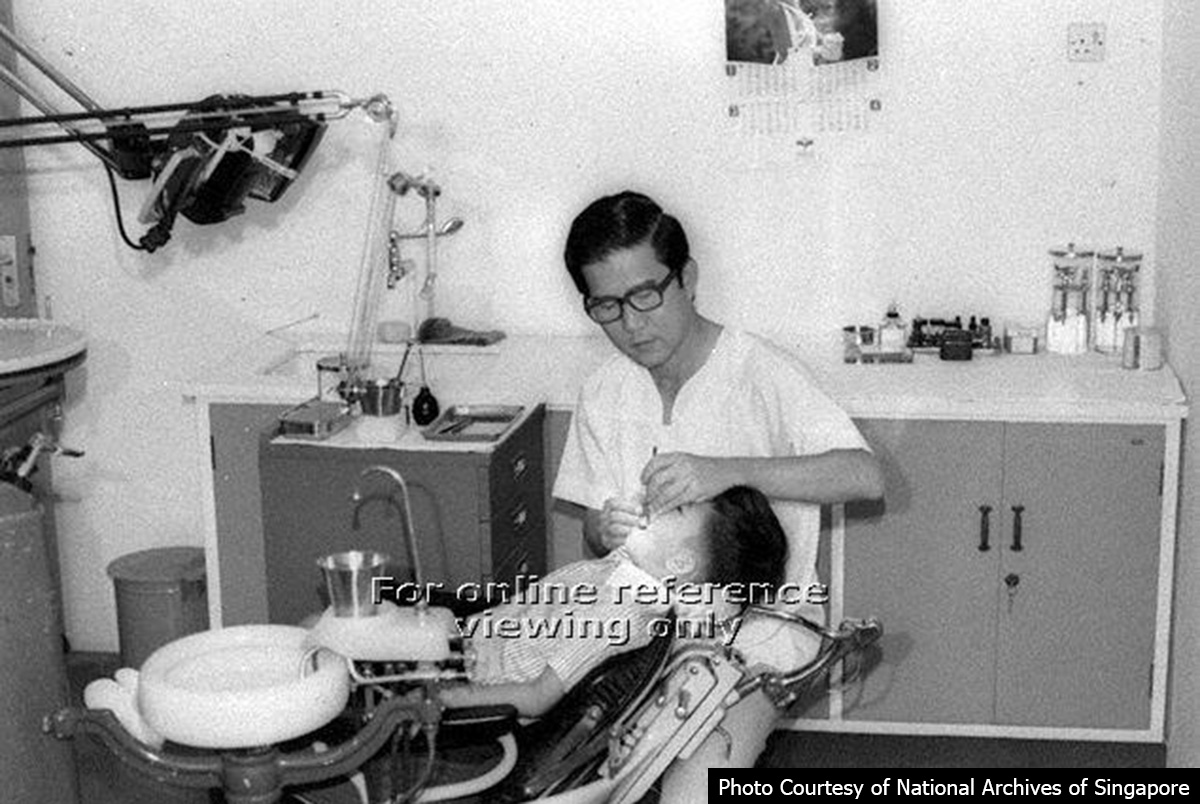
The most-feared person in schools.. (except for me. I loved visiting the dentist. Always wished that my milk teeth would be shaky so that I could visit the school dentist LOL I’m hella weird)
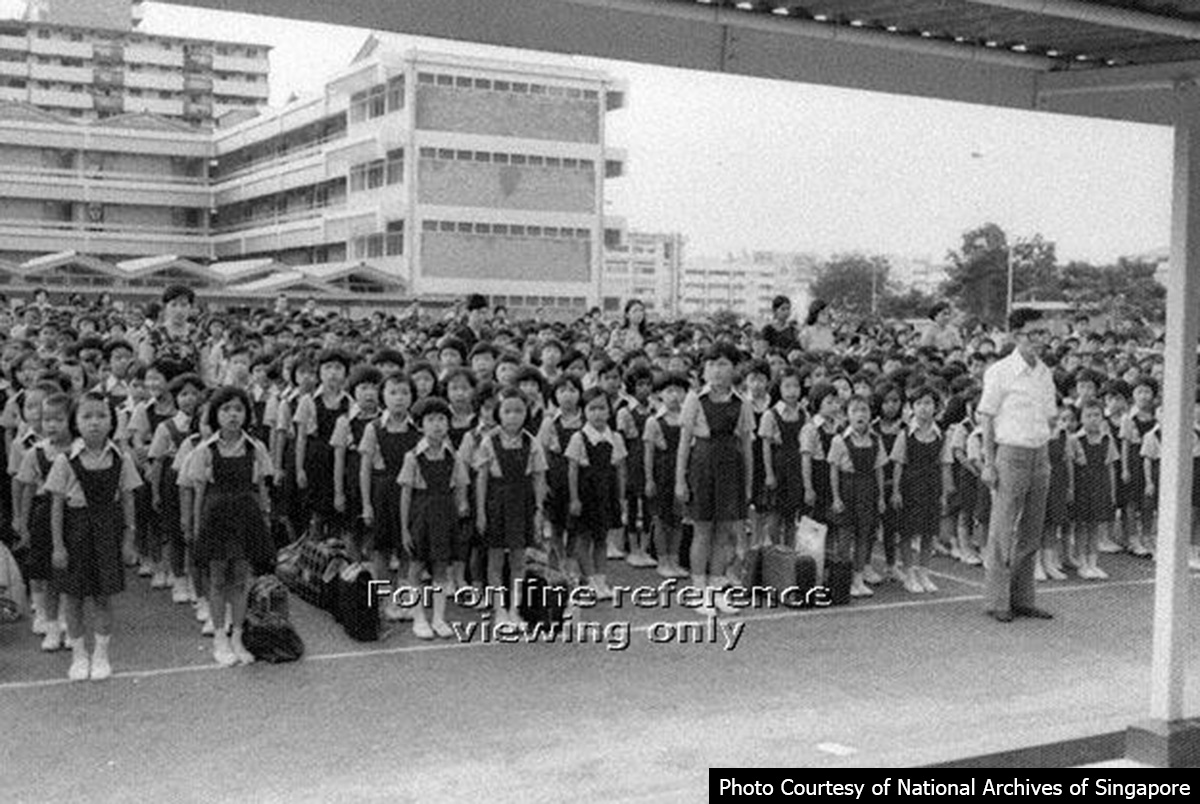
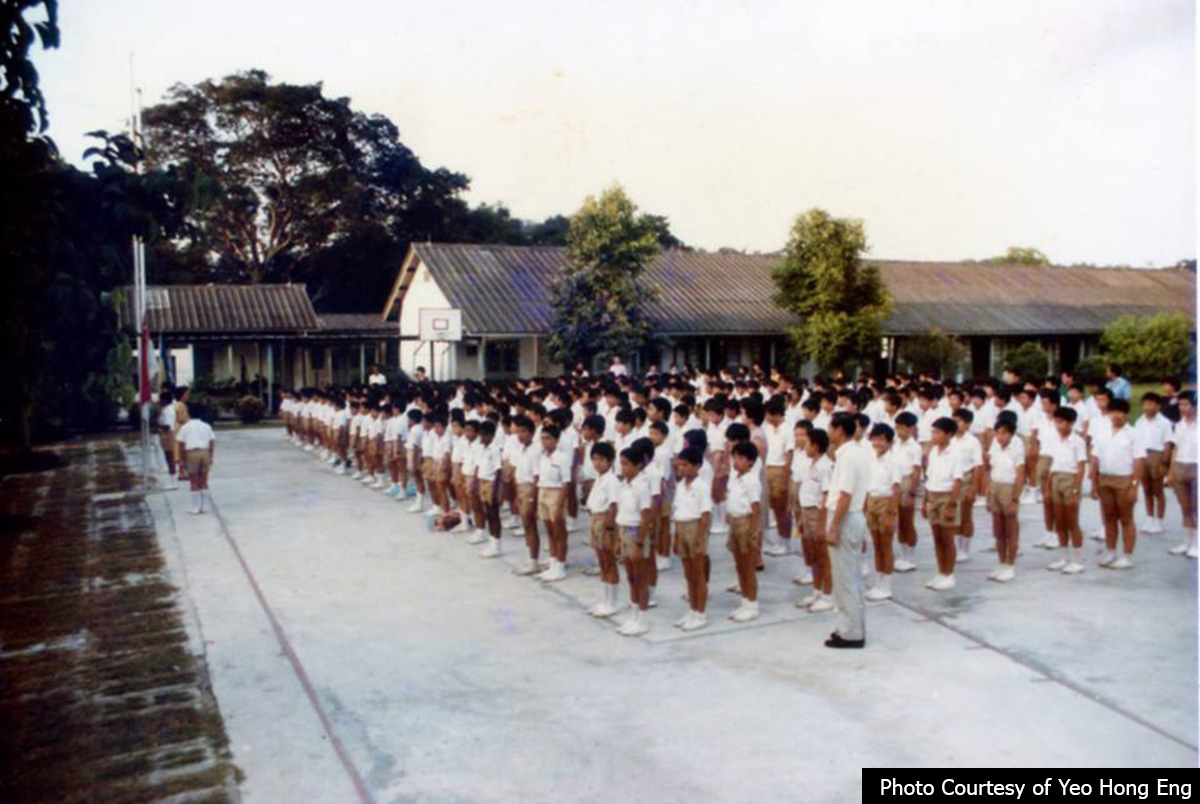
Morning assembly in the 1970s
The main Beng Wan Primary Facebook page is locked so I am unable to retrieve information from there. To join, click here.
Opened in 1984 when a growing emphasis was placed upon the use of English, Jaya Primary was as an English-medium school which offered Chinese, Malay and Tamil languages just like any other schools today. However even before the school was officially opened, there were feedback about the inconvenience of the school for it was located near light industries and away from the major portion of the residential area. There were also no direct bus service to the school. Could all these be the reasons for its closure?
Anyway, it’s quite common for primary schools in the past to have a mini “zoo” within the school compound. For Jaya, they had 2 geese named Ganda and Gandi which were, according to some ex-students, killed by some thieves who broke into the school.
Sadly, the school had a really short history. Its remaining students were received by East Coast Primary School when it closed.
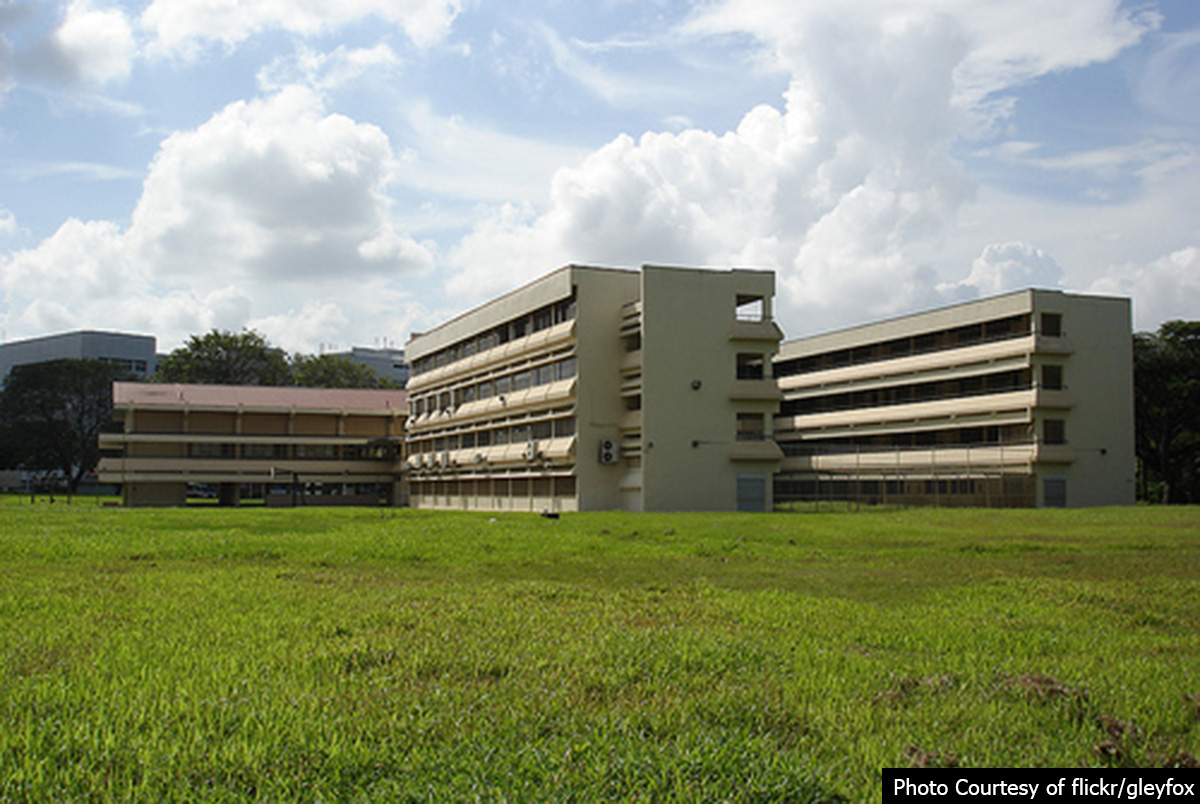
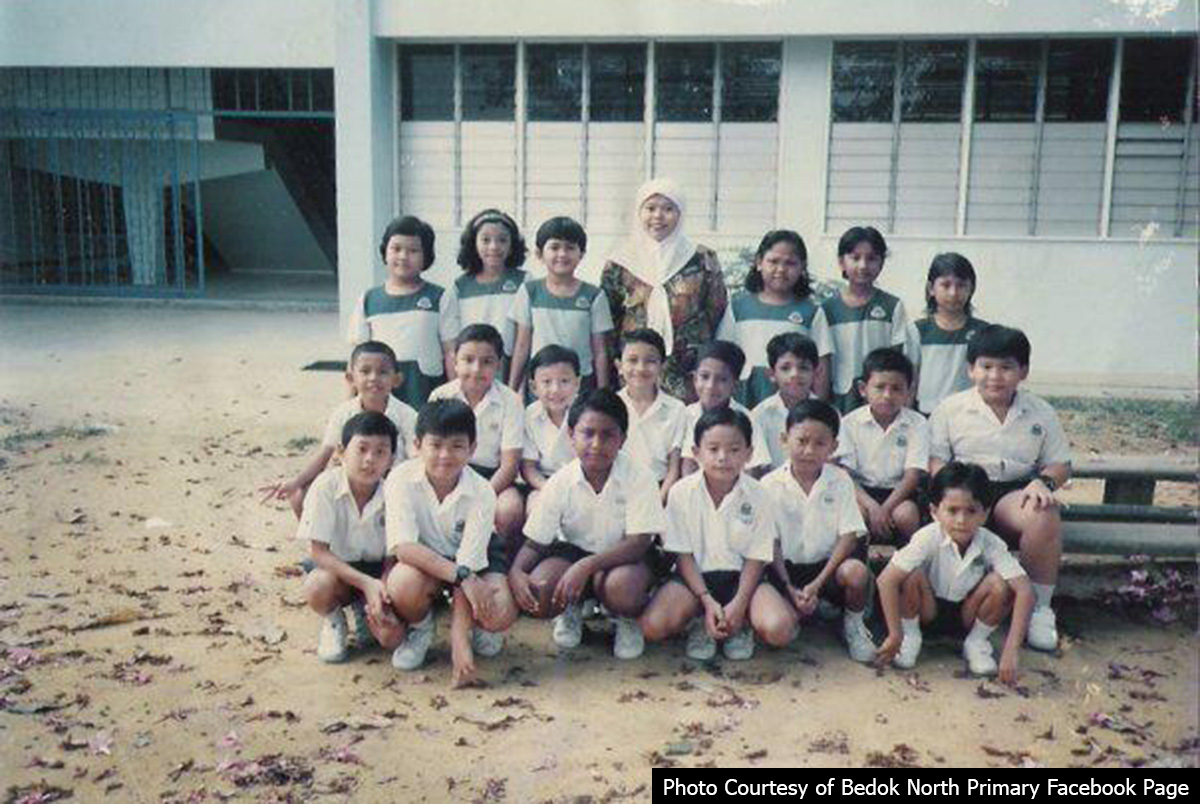
One of the many primary schools in Bedok (quite evident from this post and the last), this school was established in 1980 and was the first of the new generation schools to be built in Bedok North HDB estate. It however received poor enrolment even when registration first started, probably due to the excessive number of new schools (way too many if you ask me) built in the same area at the same time and stiff competition from other popular schools. Like Jaya Primary, it was pretty short-lived and was also absorbed by East Coast Primary upon its closure.
The small school started in 1982. 19 years later, it got merged with Telok Kuraru Primary. The land that used to sit Bedok Town Primary is now an open field. Right beside that plot of land is Bedok Town Secondary, also closing by the end of 2015.
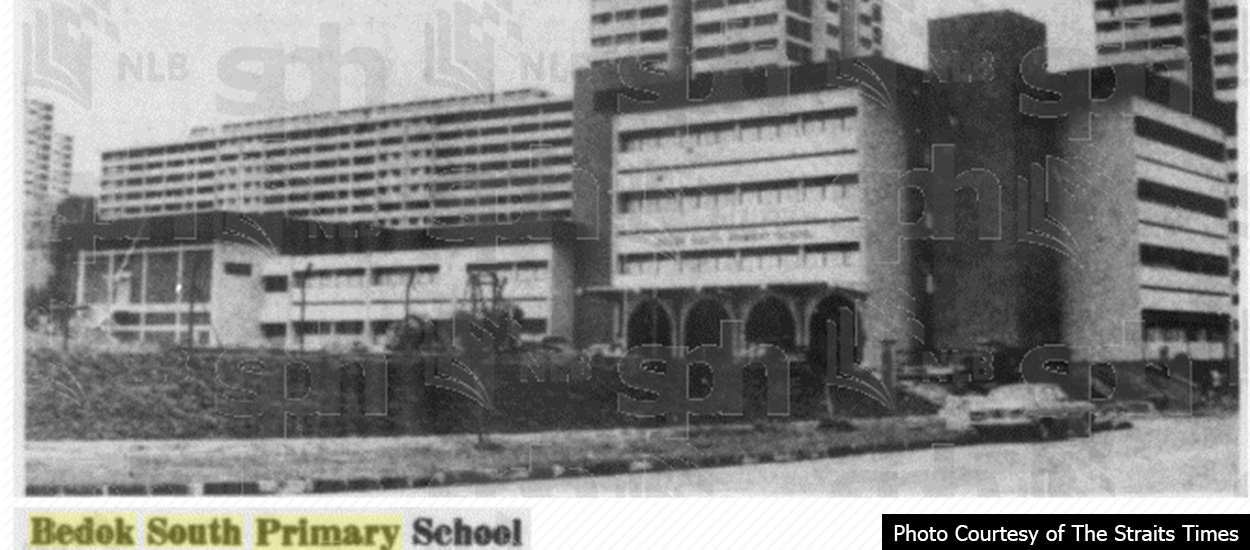
Bedok South Primary School Bedok View Primary School (Bedok)
Merged in 2002 to form Bedok Green Primary School
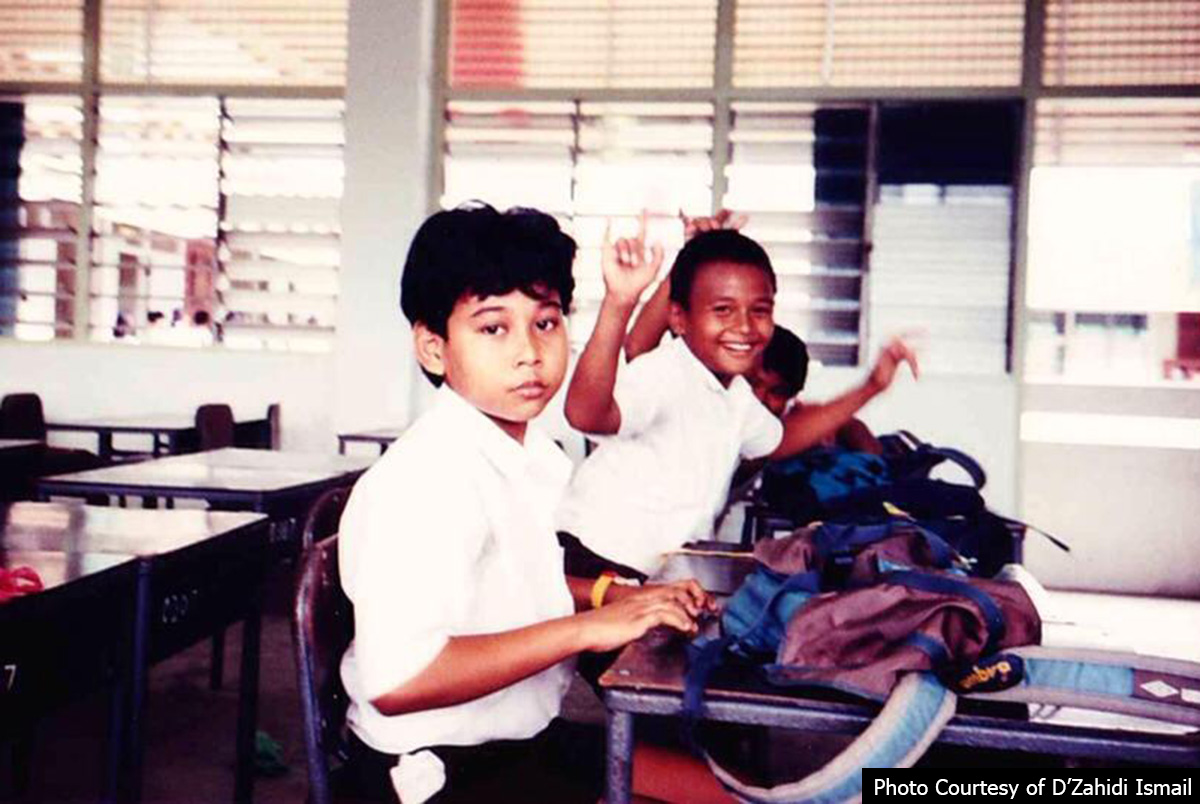
Officially opened in 1981 (but started accepting students in 1980), Bedok South was the second (newer?) primary school built in Bedok. The school was recognised for its exemplary performance in sports – soccer in particular – as it won in an inter-school soccer match against schools from all over Singapore in the 1980s. One of their players was Nordin Khalil, who got selected to play in the national soccer team.
Bedok South Primary School
Bedok View was opened in 1977 and was joined by students from Pin Ghee High School at Chai Chee, and Bedok Primary when both schools closed in 1976 and 1996 respectively. It shifted from the junction of New Upper Changi Road and Bedok South Avenue 3 (now Katong School run by Association for Persons with Special Needs since 2007) to Bedok South Avenue 2.
Bedok View Primary School
Local actress Priscelia Chan attended Bedok View Primary.
Fun fact: Including schools that were closed previously, there are more than 20 schools bearing the name “Bedok”. They include Bedok North Primary, Bedok North Secondary, Bedok Primary, Bedok South Primary, Bedok South Secondary, Bedok Town Primary, Bedok Town Secondary, Bedok View Primary, Bedok View Secondary, Bedok West Primary, Bedok Girls’ School and Bedok Boys’ School. All of these schools experienced receiving letters and calls addressed to other schools at least once. Well, you can’t really blame the postman. Being someone who rarely travels to the east, I am genuinely confused either. [Source]
Min Xin Primary School (Bedok)
Merged into Yu Neng Primary School in 2003
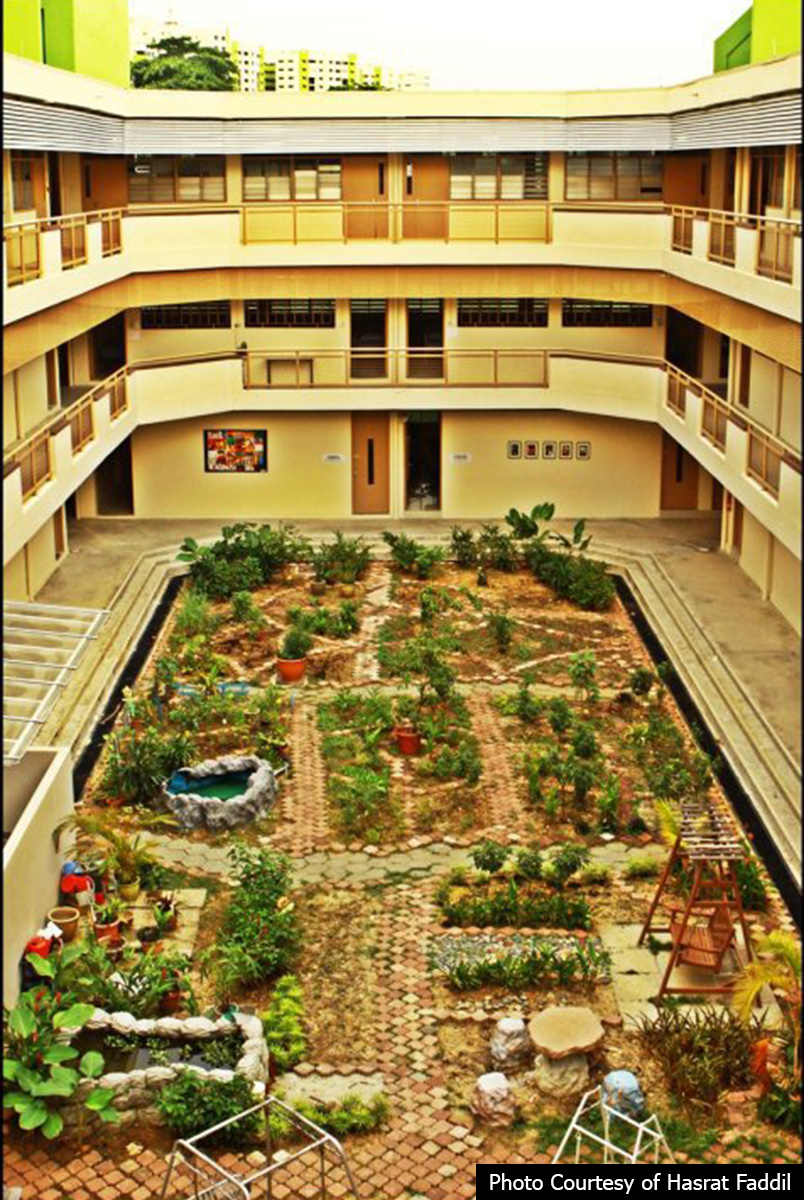
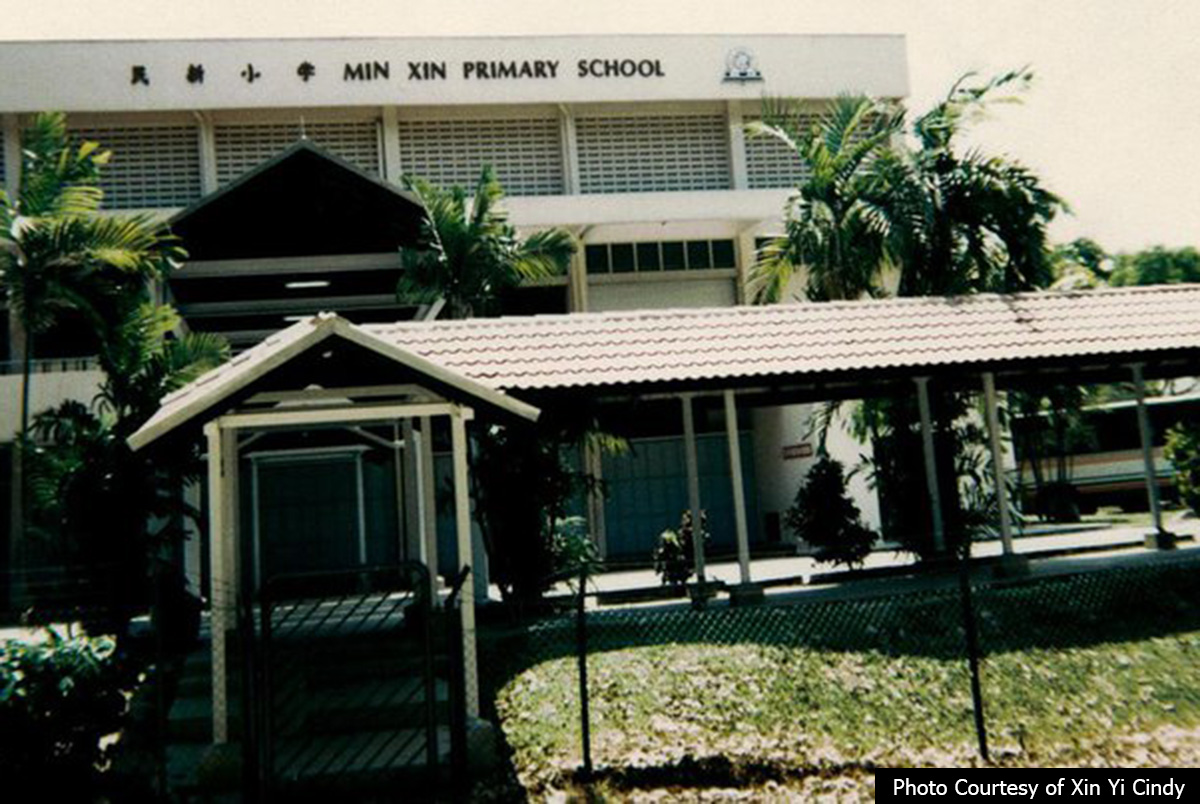
Located next to Yu Neng Primary (which made merging so convenient), Min Xin was started in early 1960’s by a group of Chinese businessmen to promote Chinese education in Singapore. It was originally at Jalan Bumbun Utara (also in Bedok) and called Bin Sin Chinese School. In 1982, the school was taken over by the Government and the medium language was converted to English. It was also renamed to Min Xin Primary and relocated to Bedok North Street 3.
Then
Now (it should be gone by now)
The school exterior
Min Xin Primary, I believe, is one of those schools that people can hardly remember today. This is not surprising considering that when you try Googling its name, “Xinmin Primary” shows up in the results instead. No, they are not affiliated to each other.
Today its premises are occupied by the Rumah Kebajikan Muhammadiyah (RKM) or Muhammadiyah Welfare Home for the youth and children.
Did you know that prior to the construction of Ping Yi Primary (unable to find when), that land was dedicated to a cemetery? I know, everyone says something similar about their schools and there’s indeed no concrete evidence to this hearsay, but there are quite a number of spooky stories about Ping Yi Primary floating around on the net. So whether you believe it or not, it’s up to you. 😀
Old map that shows the location of Ping Yi Primary
The merged school is now functioning at the new school built at Bedok North Rd (former Ping Yi Primary Site). Part of the Ping Yi’s building has also been demolished and converted into Fengshan’s school field.
Telok Kurau Malay Girls’ School Telok Kurau West School (Bedok)
Merged in 1983 to form Telok Kurau West Primary School Merged with Telok Kurau East School in 1985 to form Telok Kurau Primary School
Merged with Bedok Town Primary School in 2001 to form Telok Kurau Primary School
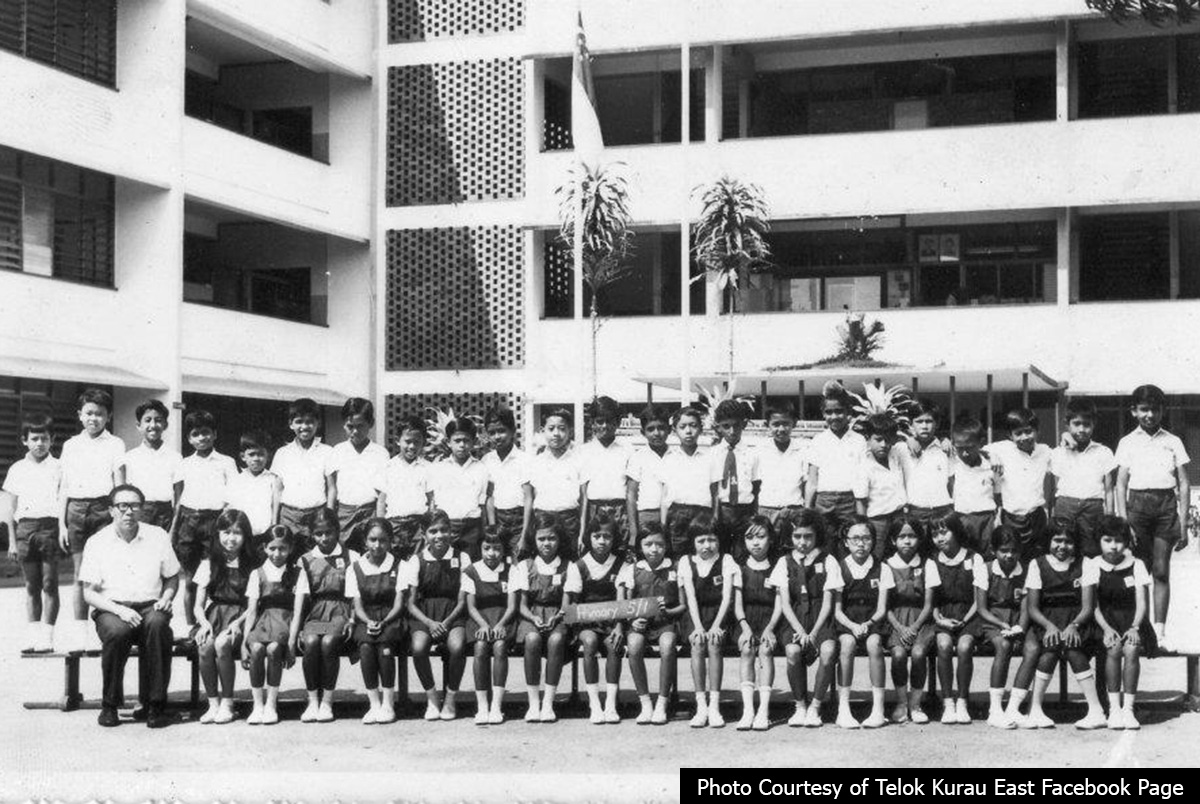
As you can see, the Telok Kurau Primary we have today is actually an amalgamation of several schools – Telok Kurau Malay Girls (formed 1960), Telok Kurau West (formed 1692), Telok Kurau English School (formed 1926, later renamed to Telok Kurau East School in 1962) and lastly, Bedok Town Primary schools (read history above). Our Minister Mentor Lee Kuan Yew was an ex-student of Telok Kurau English School – a fact that the school today boasts about. A lot.
Telok Kurau East School
Telok Kurau East School
Telok Kurau Malay Girls’, as the name suggests, is a Malay medium primary school. On the other hand, Telok Kurau West and English schools had their lessons conducted mainly in English and they only admitted boys until the former changed its name and both schools merged.
The school was officially opened in 1979 at the junction of Jalan Kolam Ayer and Aljunied Road (near to housing estates but it was very congested) and was the second school to be opened that year.
In 1987, the school adopted an unusual programme to instill a sense of responsibility among its students, and foster goodwill among the teachers. This programme included a free-wheeling book system where students could pick up books and keep them for as long as they wanted without having to step into the library and going through any formal lending procedures. On top of that, (now here’s the interesting part) teachers were encouraged to “adopt” students from broken families by giving them pocket money, buying them books or supplying them uniforms. According to the principal, the scheme worked but whoa, if it were to be devised today, I’m pretty sure it would backfire. Haha.
During the same period, the school also had a discipline master (Mr Clifford Oliveiro) who was also an accomplished musician. Every week when teachers were having contact time, the students had to read their storybooks until the meeting ended. To save the entire school from boredom, Mr Oliveiro would go on stage with his guitar and strum to a variety of songs (e.g. El Condor Pasa, Those Were The Days) that got the whole school singing. The school’s winning of their first SYF Gold Award was probably attributed to the frequent singing “practices” the students had.
(While writing this portion of text, I had the sudden urge to listen to songs by Simon and Garfunkel (I’m an oldie junkie, remember?). If you’re feeling the same, you can listen to them on Spotify hehe)
A quick search on the school’s name online would reveal that the school (formed in 1977) was pretty adroit at sports. It had a swimmer (Sandy Ang) who created Singapore track history when he became the first schoolboy to smash the 22-second barrier in the 200-metre relay in 1984. Even famous local blogger Bong Qiuqiu, also an old girl from Woodsville, was part of the school’s netball team. There are also reports of the school participating in various sports competition such as basketball, badminton and gymnastics.
Tanjong Rhu Boys’ School Tanjong Rhu Girls’ School Tanjong Rhu Primary School (Kallang)
Merged in 1984 to form Tanjong Rhu Primary School Closed in 1989
Tanjong Rhu Boys’ was built in 1950 beside Tanjong Rhu Girls’, also formed in the same year. Boys would occasionally intrude into the girls’ side of the field, much to the displeasure of the staff from Tanjong Rhu Girls’.
Tanjong Rhu Boys’ School
Tanjong Rhu Girls’ School
Tanjong Rhu Girls’ School
Canteen shared by Tanjong Rhu Boys’ and Girls’
Tanjong Rhu Primary already existed before both single-sex schools merged. It was a Chinese-based school until its enrolment started falling and eventually drove the school to become integrated (by having both Chinese and English based curriculum). After the merger, the amalgamated school occupied the grounds of Tanjong Rhu Boys’ and Girls’ while the original Tanjong Rhu Primary building was leased out. The school had been demolished to make way for Dunman High School.
I won’t comment much on the history of these three schools as there are other sites that have done so. These authors had first-hand experience and me paraphrasing what they wrote would seem like I’m discrediting them and disrespecting the schools. So please, click here and here for more information 🙂 These schools also have an (combined) active Facebook group.
Norfolk Primary and Cambridge Primary sat side by side thus it was only economical to share the same field (which was also where the rivalry between both schools began). Norfolk’s year of establishment is not known.
Flooding was a commonplace in the olden days of Singapore. Norfolk and Cambridge (below) were badly affected on several occasions.
When Norfolk shut its doors in 1984, students were conveniently transferred to Cambridge Primary.
Cambridge Primary (est. 1963) and Norfolk Primary have similar history. There used to be a tidbit stall just opposite both schools and students usually flocked there to buy shaved ice. A room on the second level of Cambridge Primary was dedicated to caning students (that’s what one person said.. haha) while the most feared dental room was on the ground floor. According to most people who studied there, there used to be a well-liked Eurasian principal called Mr Dragon who unfortunately passed away in the 1980s.
Cambridge was also one of the few schools in Singapore to have their school song entirely in Malay.
Today, Cambridge Primary serves as dormitory. This is the main entrance.
Where flag raising ceremony used to be held at
The back gate
The school field shared with Norfolk Primary.
In 1993, the school came first in an Art Olympiad. Beating 33 schools and 99 other pupils, the triumph brought much glory to the school. The event was even reported on a Chinese newspaper!
Art Olympiad
The rest of its students joined May Primary School which is now known as Farrer Park Primary School. The site of Cambridge is now a foreign student dormitory.
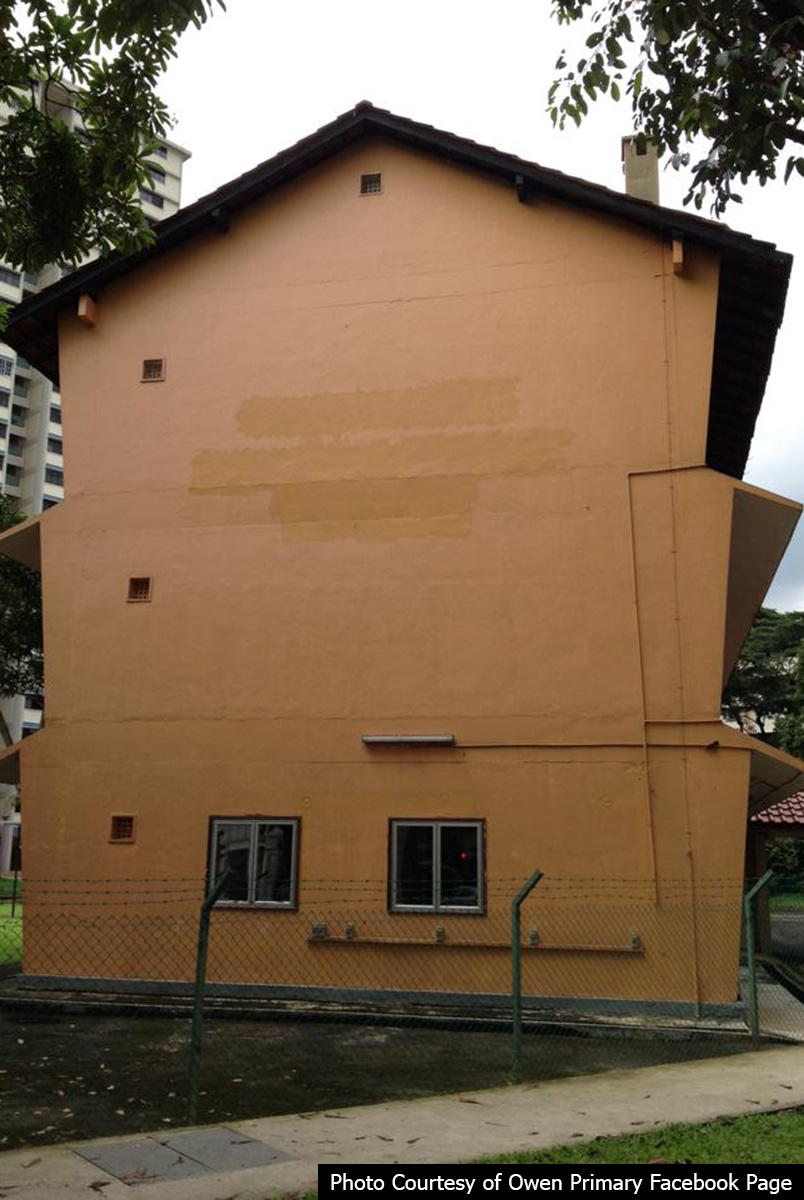
The school started in 1955. People who are aware of the 2 missing “McDonald’s” boys in 1986 would most probably know about this school as well, because those two boys studied there and disappeared before just their class commenced. Not a very glamorous thing to be remembered and known for, especially when the school was already on the brink of closure.
Owen Primary’s tuckshop
Owen School didn’t have a multi-purpose hall, so students had to sit on the grass field during assembly. When it poured, the playful ones would take the opportunity to catch earthworms and red ants on the field.
The school was at the junction of Owen Road and Oxford Road. The ill-fated Hotel New World (collapsed in 1986) was just nearby along Owen Road.
Apart from the 2 missing Primary 6 boys, there were of course other famous alumni as well, the most well-known being Singapore Democratic Alliance Party’s Desmond Lim (you may remember him as the one who spoke at the SDA’s online rally last January).
Cambridge Primary absorbed the students of Owen Primary when the latter closed. The building of Owen School remained on the ground for decades until it was finally torn down in July this year. At one point it was converted into “Cambridge International Hostel”.
The last in the Farrer Park cluster of primary schools I’m going to talk about. While researching on this school, I found myself getting limited information for “Dorset Primary School” but a lot more when I removed the “Primary” from it. Dorset School, according to an article, was an all-boys school originally named Dorset Road School and established in 1954. But I actually read an ex-student’s account about it being a mixed school (plus all the Dorset Primary photos from NAS have girls in them)! Did Dorset start accepting female students along the way? I don’t know.
Anyway, there’s no reports about its official closure but it could be in 1981 when Catholic High took over the premises of Dorset School completely. Students from Dorset were given the option to transfer to CHS Primary or to other schools but I saw that a lot of Dorset kids went to Cambridge instead. Whatever it is, the facts for this school are a little contradictory so it would be good if more ex-students could come forward and verify the facts.
The school was formed around the same time as Owen School. However, Dorset proved to be the more popular choice as it received more applicants than its vacancies. But the popularity obviously didn’t last.
Tuckshop
Ang Mo Kio Primary housed its Primary 1 students at Dorset Primary School for the first three months of its opening in the late seventies while waiting for their own building to be completed.
Ex-students who are interested to join Dorset Primary’s Facebook group can request permission to do so here.
Parry Secondary School Hwi Yoh Secondary School (Serangoon)
Merged in 1984 to form Peicai Secondary School
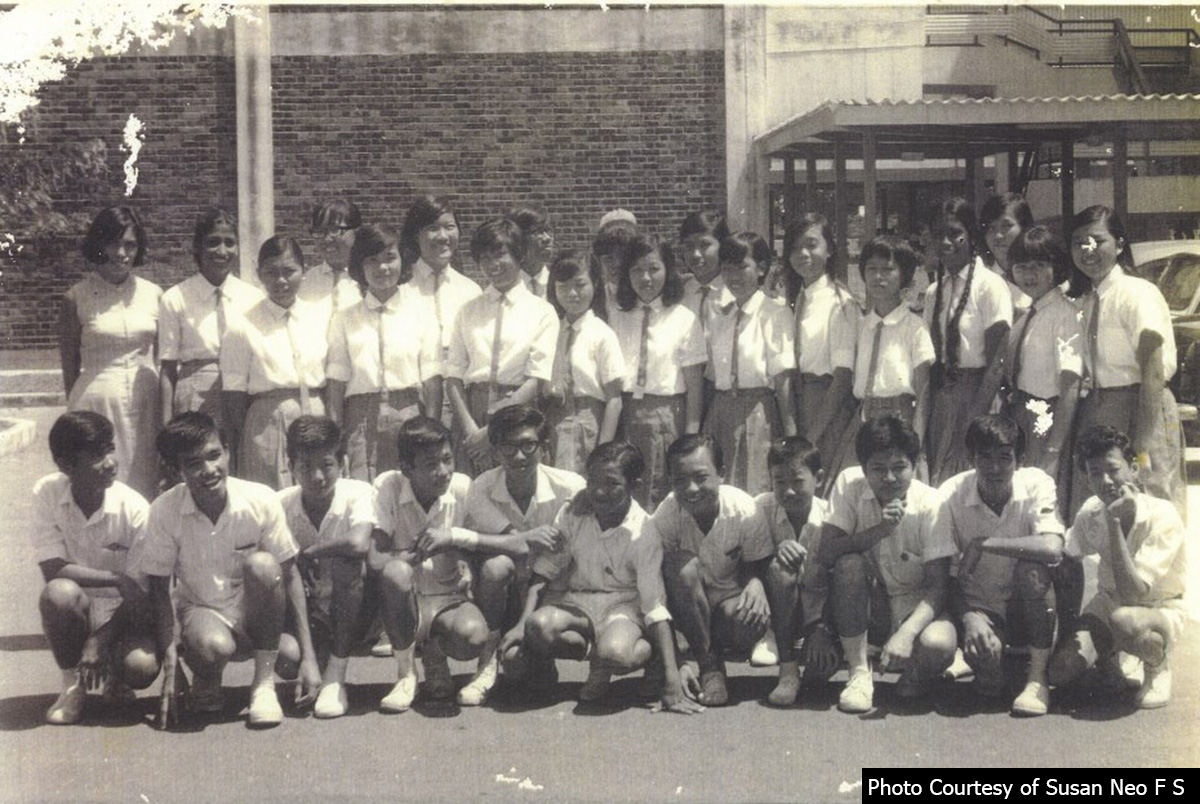
Parry Secondary was formed in 1966 and officially opened in 1968 (first batch in 1969) at Parry Avenue. The school uniform, considered “smart” at that time, comprised of a compulsory school tie where students had to pin the school badge on, a white shirt with light green skirt that had two inverted pleats in front complete with a belt made from the same cloth as the skirt. That’s for the girls, of course. For the boys, I’m not too sure, but pictures suggest that the white top could be paired with white shorts (no long pants – that’s only for prefects!).
Parry Secondary School 1981
Parry Secondary School 1981
Parry Secondary School 1981
Parry Secondary School 1981
It offered Normal and Technical subjects (students were allowed to choose between the two freely). The subjects offered in Normal stream were Geography, Literature, Maths, General Science, Biology, Chinese and Domestic Science (kind of like our present Home Economics). Domestic Science was offered as an “O” level subject. Technical subjects were purely related to carpentry working on machinery.
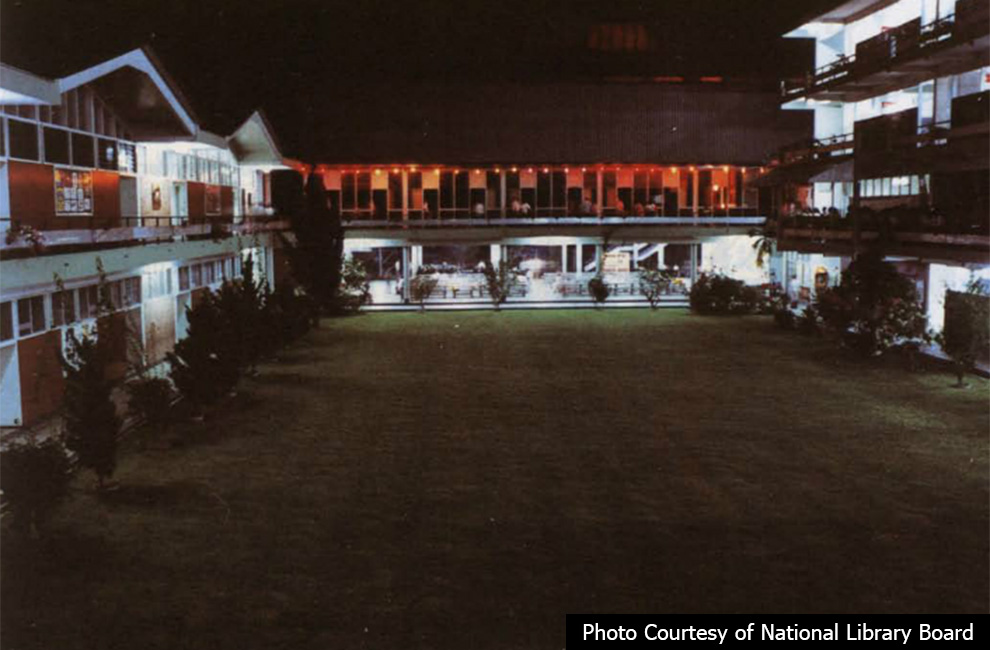
Parry Secondary night view
The school had an exhibition of creations made with paper and wood with Serangoon Garden Secondary in 1980, 3 years before its closure.
After it closed, Rosyth School moved to the site of Parry Secondary due to space constraints in its previous premises.
Hwi Yoh Secondary was completed in 1967 and it admitted its first students in 1968. It was the 103rd school built by the then-government and was judged the cleanest secondary school in the inter-school cleanliness competition in 1971. The school was a centralised workshop catering for students from nine schools due to its availability of facilities for the studies of technical and academic subjects in the English and Chinese medium.
Hwi Yoh Secondary School 1971
Like Parry Secondary, Hwi Yoh actively participated in extramural activities.
In 1982 however, the school’s Principal Mrs Jillian Scully took her own life together with the rest of her family at their home. It was speculated that she, together with their two young children, was coerced by her husband Victor Scully, a swindler who was close to be arrested and jailed for the second time, to do so.
Both schools merged and Peicai Secondary was born, but how did the name Peicai come about? Apparently, Parry in Hanyu Pinyin was “Peili” while Hwi Yoh was “Xicai”. The new name was derived by fusing the head and the tail of the two names in Hanyu Pinyin. The merger, as expected, was a result of falling enrolment and population shifts to new town and these two schools were the only secondary schools that merged that year. Today, Peicai Secondary is located at Serangoon Avenue 4.
Charlton took in its first batch of students in 1954 and was temporarily housed at Serangoon English Afternoon School because its own building at Arazoo Avenue was not ready for occupation yet. The school was remembered by students to have a little gardening area where pupils could cultivate some flowers and plant some common vegetables. It was also there where students got to interact with one another from different classes.
There is no Facebook group for Charlton except for this which has only 53 likes but the admin doesn’t really post much school-related stuff. Time to start reconnecting with your ex-schoolmates, Charltonians! What do you say? 🙂
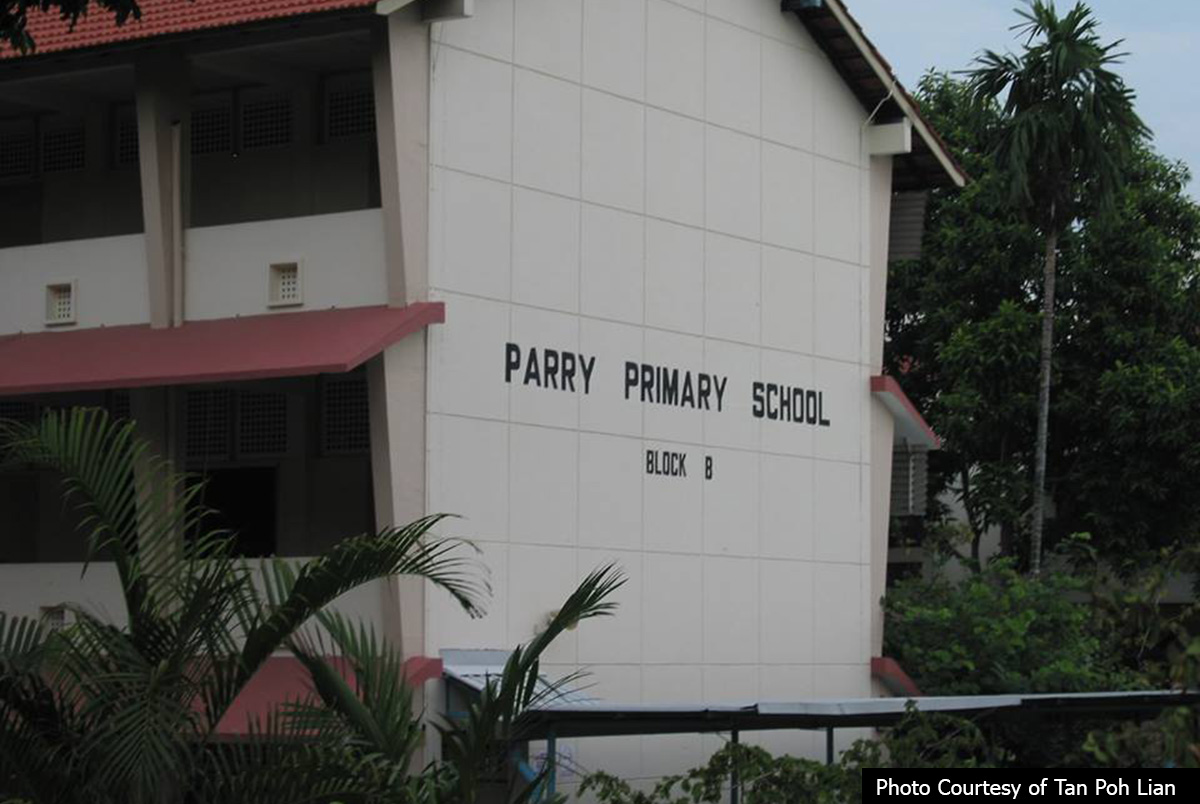
Among the primary schools in Kovan in the 1980s were Parry Avenue Boys’ School, Parry Avenue Girls’ School and Parry Ave Government Chinese Middle School (co-ed) which were set up in the mid-late 1950s. All three schools merged in 1981 to become the new Parry Primary School, using the blocks of the parent schools (thus had three canteens). They were labelled blocks A, B and C and were former Parry Avenue Boys’ School, Parry Avenue Girls’ School and Parry Chinese School respectively. Each block hosted different levels of classes – Block A housed the primary threes and sixes, Block B for the primary ones and twos and Block C for the primary fours and fives.
Parry Primary’s oversized school field which was also shared with Rosyth School when latter took over Parry Secondary’s site until it shifted.
Think that you’ve seen the field before somewhere? Well, you had probably seen it on TV in the late 90’s/early 2000s (thanks Tammi!):
Blast to the past: check out 00:26 to 00:34 of Kit Chan’s Royal Umbrella commercial!
The new Parry Primary became one of the first two primary schools in 1981 to go full day (meaning being lessons to function from 7.30am to 2.30pm or 3.00pm depending on the level and thereafter, students would proceed with their ECAs. Of course, homework was lessen and teaching became more laxed) but the programme wasn’t well-received and was eventually scrapped in 1983.
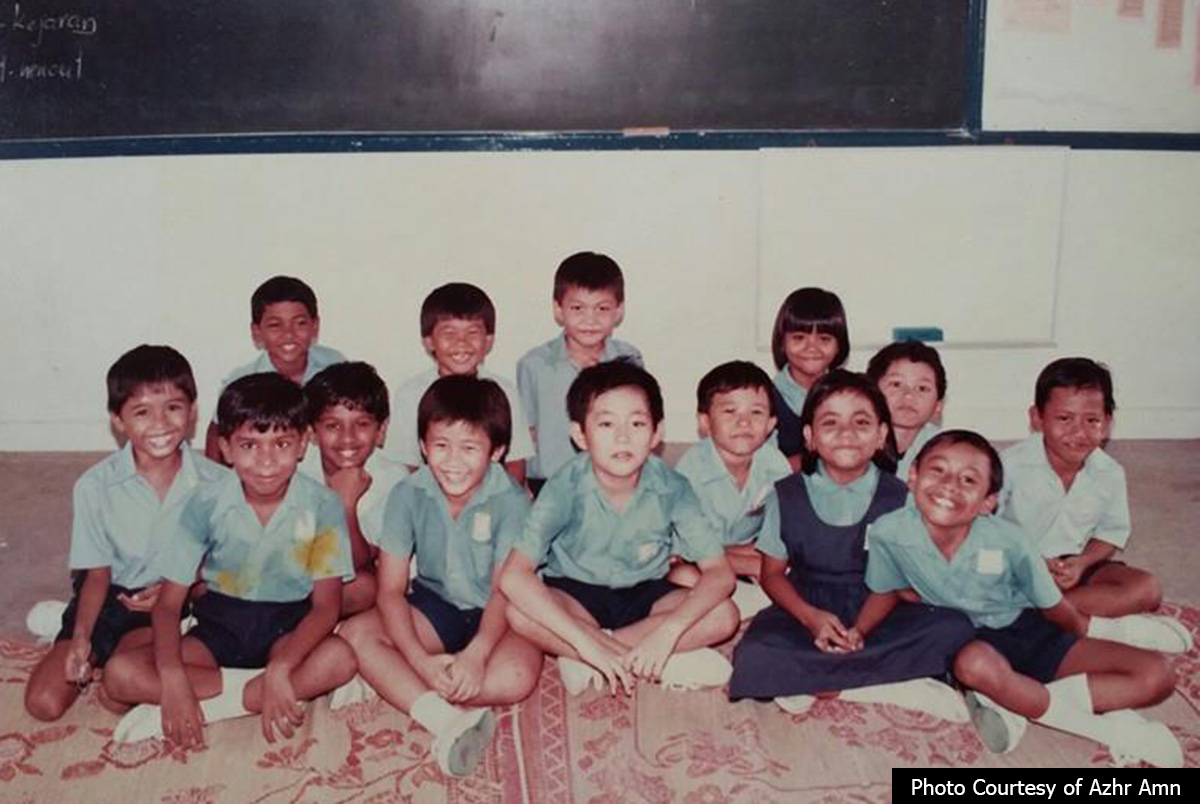
Students there wore blue uniform.
Along Parry Avenue lay a Japanese cemetery, several private and abandoned houses. There were also factories nearby. The school building now is vacant. Previously it was used as a student hostel.
One of Parry’s ex-students is 97.2fm DJ Violet Fenying.
Most schools in the past were named after the street the building was built on (you should already be able to tell by now). Jalan Kayu Primary was no different. Built in 1955 and officially opened in 1958, it was named as such due to its locality. Jalan Kayu is Malay for “Wood Road” but colloquially, “Kayu” is used to describe someone stupid. Thus, Jalan Kayu Primary’s students often get teased.
… whenever I say I am from Jalan Kayu (Primary), people reply “Then you must be kayu (dimwitted).”
– 11 year-old Zhang Yijin who was the first student in the school to score 4 A stars in the 1987 PSLE
The school started with every class filled to capacity. Students generally were children of farmers shopkeepers, and technicians and labourers employed by the R.A.F. (Royal Air Force). The school first experienced a dip in enrolment in the early Seventies when people started moving out of the area to other satellite towns.
Class of 1968
Jalan Kayu Primary (JKPS) has 2 conflicting years of cessation. According to the history of Ang Mo Kio Primary, they were joined by pupils and teachers from JKPS in 1978. However a 1989 article from The Straits Times indicated that the school was only closed in 1988. Not sure which to believe, but I’m sure a national newspaper is a more reliable source. The school is now submersed beneath the TPE (Tampines Expressway).
Merged in 1984 to form Keppel Primary School Closed in 1996
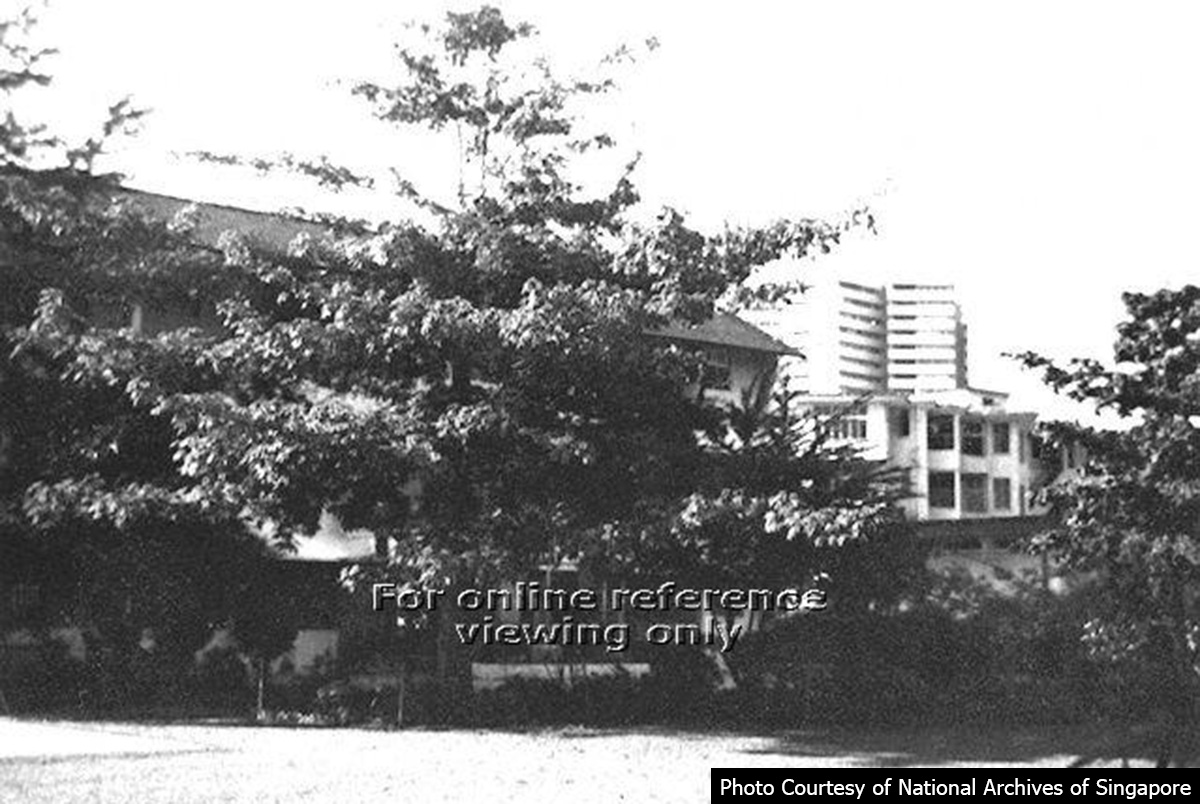
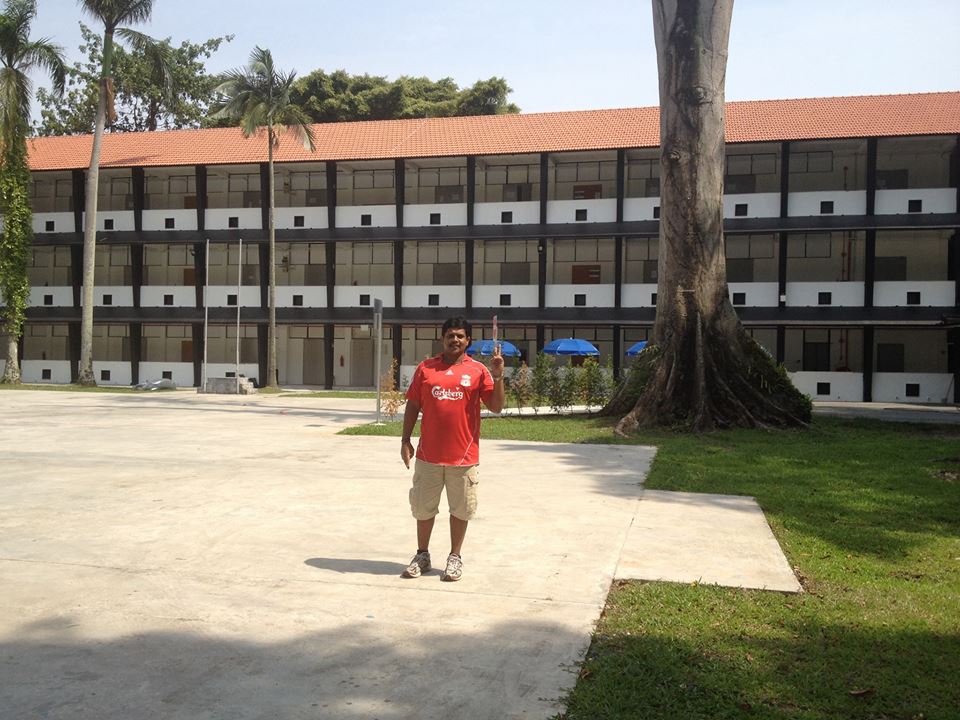
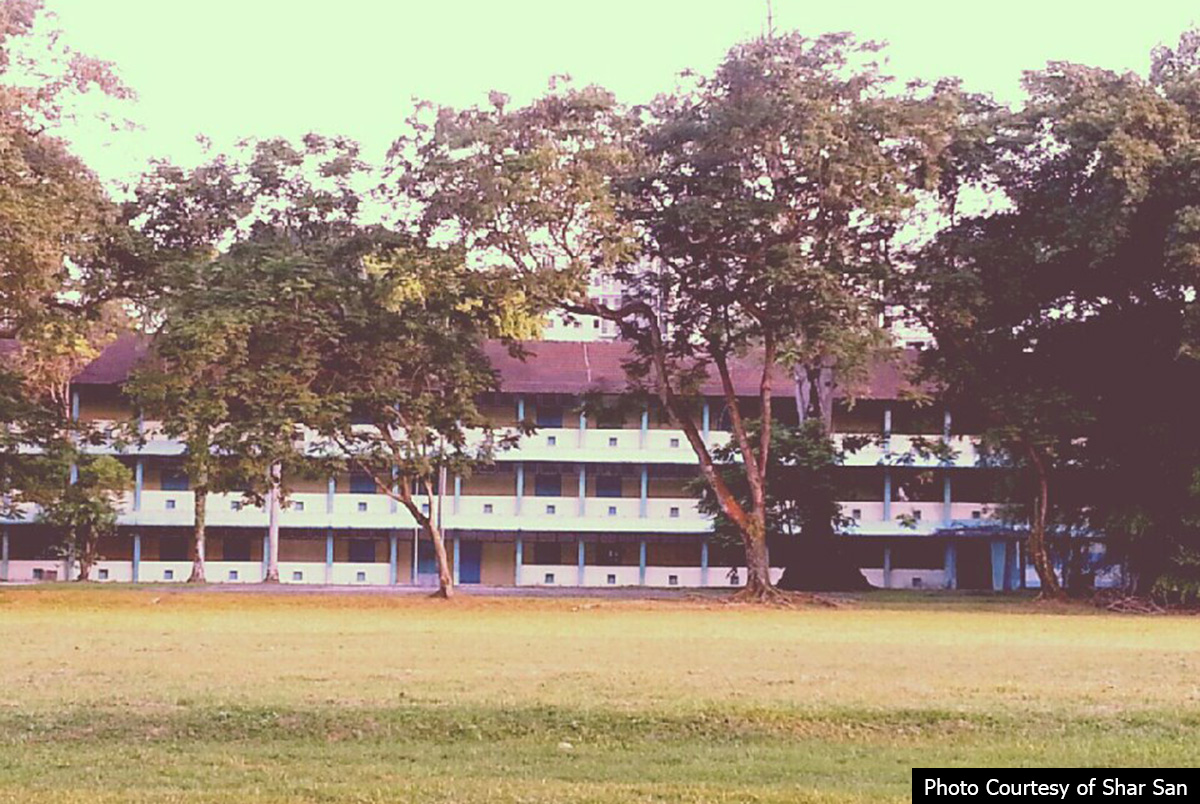
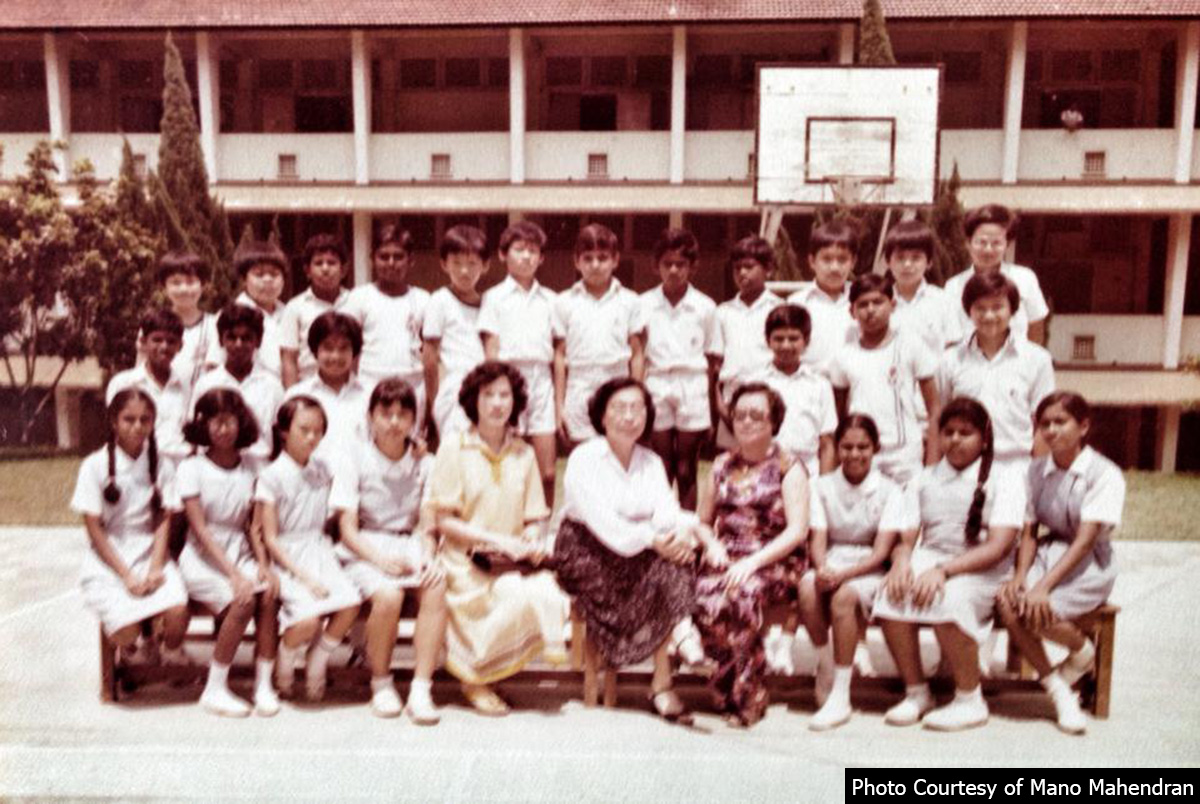
Keppel and Cantonment were established in 1954 and situated next to each other without a barrier separating them. Despite that, students were not allowed to cross over to other side. Prior to having their own buildings, students from both schools temporarily accommodated in Gan Eng Seng School.
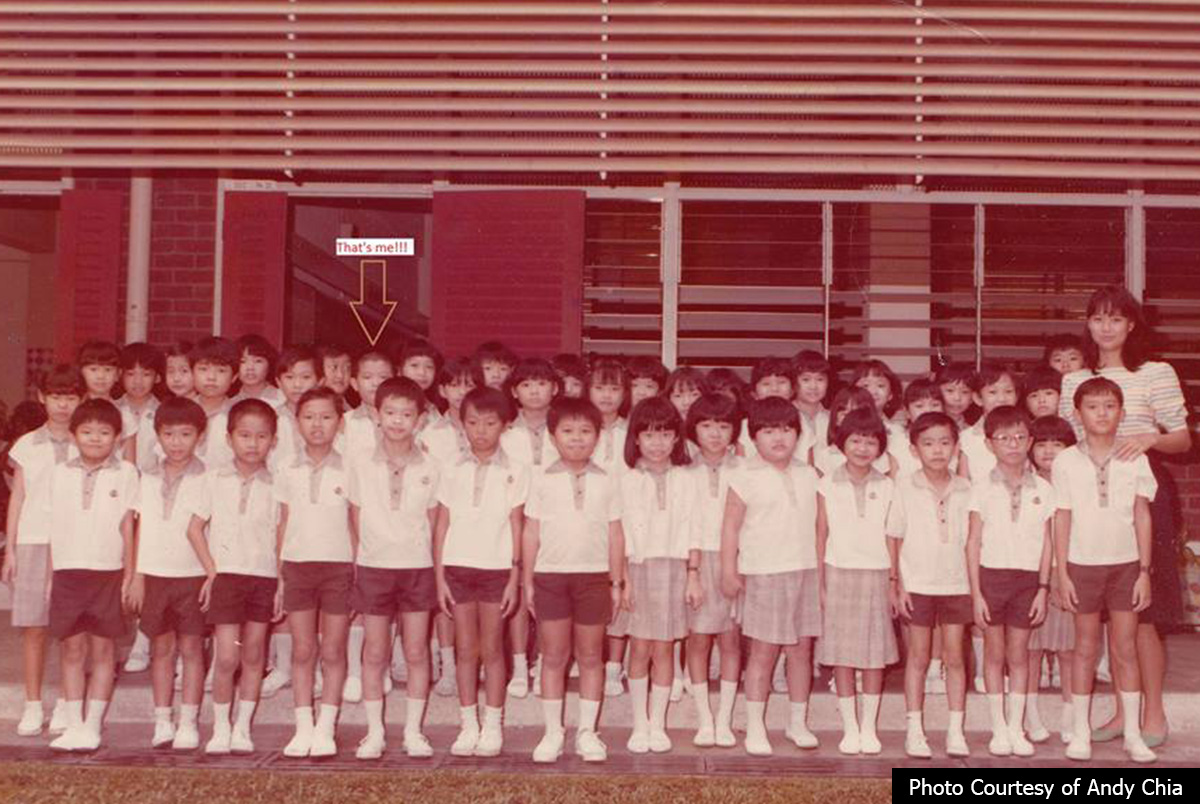
Primary 3A of 1980
Keppel Primary School
The schools were named after the busy roads of Keppel and Cantonment. The noise of traffic using Cantonment Road was so loud that classes had to be conducted using microphone. The government even considered resitting both schools as their sites were uncondusive for learning.
Students from Keppel Primary going on an excursion to an unknown place
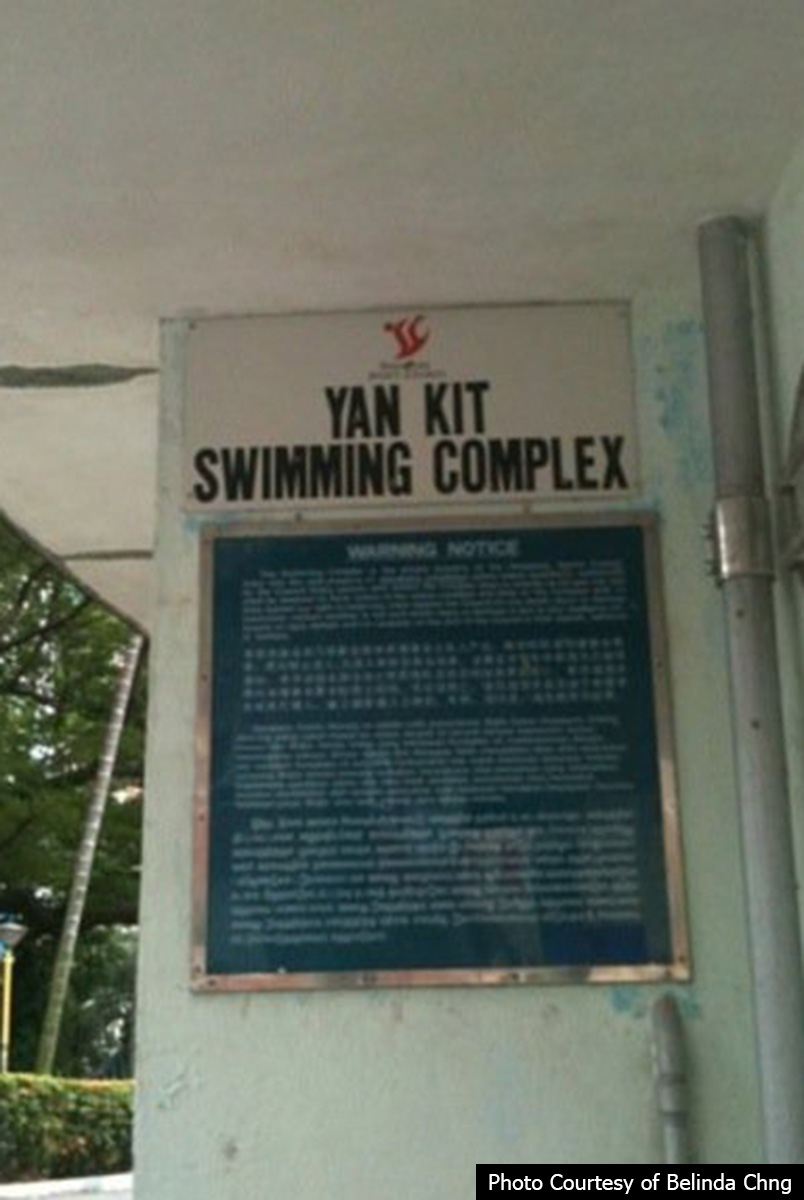
The merged school had a very accomplished band having won several Gold awards. The school also used to conduct lessons at the nearby Yan Kit Swimming Complex. According to an old student, when news about the merger broke, both schools had a swimming competition to determine the name of the school. Cantonment School eventually won but they were kind enough to let Keppel keep its name. Interesting! But this arrangement looks too informal to be true. Can anyone confirm this? Haha.
The old Cantonment School is not to be confused with the present Cantonment Primary School (established in 2011 at Cantonment Close). The merged school became offices for the Corrupt Practices Investigation Bureau until 2004. Now, the building is used by private businesses as offices.
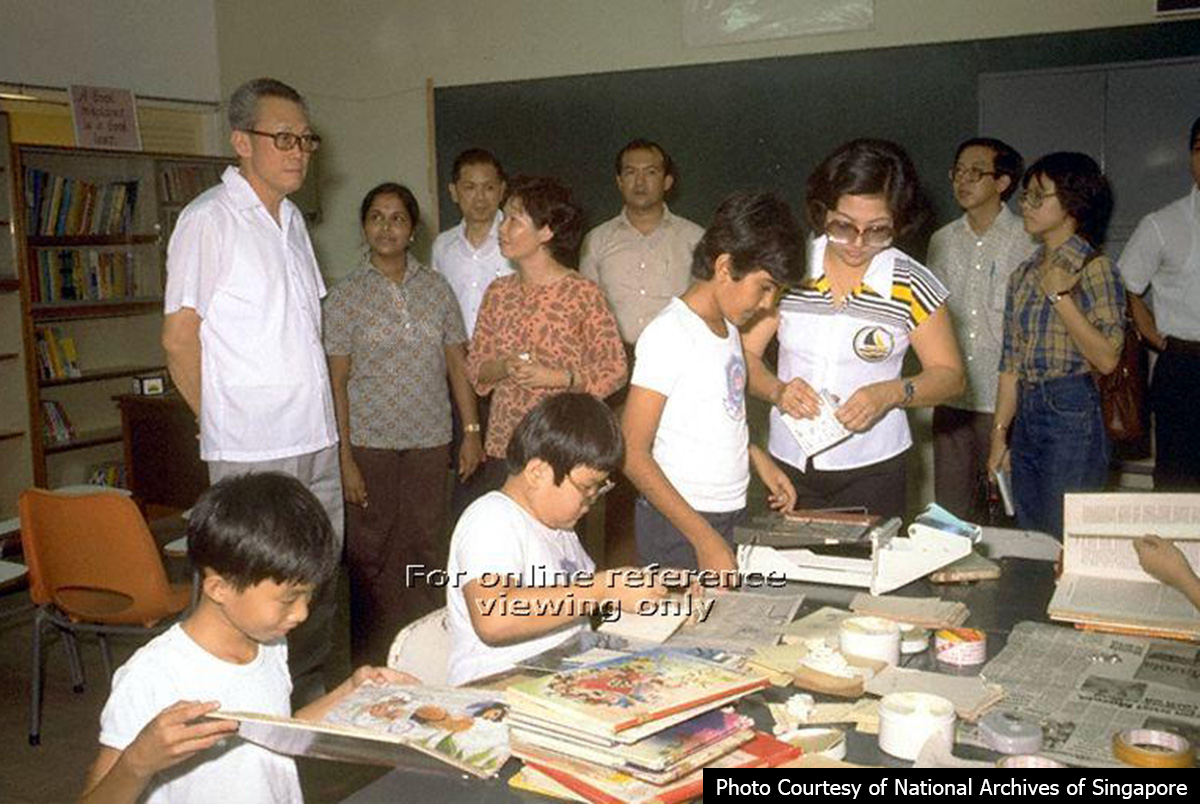
Our then-Prime Minister Lee Kuan Yew at Cantonment Primary for the Use Your Hands Campaign in 1978
By the end of 1996, Keppel Primary closed its doors and its remaining students joined Zhangde Primary.
Established in 1961 at Pasir Panjang Road, the four-storey school accommodated students of four streams – English, Chinese, Malay and Tamil. Most of the students seem to be of Malay descent though, judging from the pictures and conversation posted on their Facebook page.
The Labrador Primary School today
Class outing to what seems to be Little Guilin
The school closed because of falling enrolment and its 172 pupils were transferred to Jagoh Primary. The campus was then used by Singapore Polytechnic for its Business Administration course to meet the increased demand for places in the course. Today, it houses Bayanihan Centre (training centre for Philippines association).
The school was established in 1985, officially opened in 1987 but closed about 14 years later after not offering Primary One places since 1998. That’s a very short survival duration. I don’t get it though.. why build another school when the one nearby (Labrador Primary) was already suffering from declining enrolment?
There used to be a Kampong Jagoh Primary School in the late 1960s too. However I am not sure if both schools were related.
Jagoh Primary School
A Chinese class in 1988
Gosh! Anyone remembers this? This was also implemented during my primary school days (1997-2002)! No one was allowed to exit the class without this. But after awhile, the school kinda stopped reinforcing it haha.
After 1999, students were transferred to Blangah Rise Primary School.
The site where Jagoh Primary used to stand is now Telok Blangah MRT station.
Formally known as Joo Koon Public School at Jurong Road, Yuqun Primary shifted to Jurong East Street 24 in 1984 and was officially opened in 1986. It was originally set up by a Chinese businessman (same history as Joo Hwa Public School – now known as Yuhua Primary) in the 1930s but was destroyed during the Japanese occupation. It was rebuilt after the war and subsequently became a government-aided school in 1950.
I vividly remember the facade of the school because of the chimney-looking roof. The unique roof is still there but has already been painted purple.
Since its closure, its premises have been used as a holding site for schools undergoing PRIME such as Dazhong Primary and St. Anthony’s Primary (presently there until December 2014). You are still able to see the building if take the Jurong East-bound or Marina Bay-bound trains along the North-South line as its somewhere between Jurong East and Bukit Batok stations.
The school was established in 1981 at West Coast Road. It used to be a popular choice among parents living in that area because of its convenience and good teaching facilities.
Before it got demolished
Pandan Primary’s first batch of Primary 1 students
Primary 2C of 1983
The school’s canteen-cum-hall
The school hall
Pandan Primary’s last day
There was a drain that led to the school compound and latecomers often sneaked in through that secret passage without getting caught (oops, secret exposed!). It has now been barricaded.
Boon Lay Primary started out as Boon Lay Lama Primary at Old Jurong Road in 1960 before it shifted to Jurong East in 1984.
Here’s a more detailed description of the old Boon Lay Lama Primary:
Across the school there was a row of shop houses. There were two entrances into the school. One entrance was next to the girls’ toilet and the other was the main one that leads to the administration and staff, and principal office. There were two rows of buildings that housed all classes. In between the rows, there were at least two small open fields that used for assembly and as a playground. There were three verandas with roof that connect these buildings. To the west, a large football field which was fenced with metal wire and some tall trees along its parameter. The fence separates the Chinese school and ours. The whole school was fenced, once go in there, nobody could escape or leave without authorized permission. One end of the building was the canteen (a.k.a tuckshop) to the north, the boys’ toilet, next was the girls’ toilet. The other side of building was the school keeper’s house
– Extracted from David Yon’s description on the Boon Lay Primary’s Facebook Group
Batch 1989
Class 7Extended2 (students were born in 1978)
The new Boon Lay Primary produced some of the best national talents such as 10-year-old Loh Xiao Wei who beat 12 other aspirant chess players to win the girls’ National Schools Junior Individual Chess Championship under-10 Championship. She also became the youngest female winner at the 1994 National Championship. Hence, the school was widely known for being strong in chess. The spotlight was shone on the school again in 2004 as Primary 6 pupil Siti Nur Alyssyah emerged as champion among primary and secondary school students in a public speaking competition.
With such exceptional performance, no one would have expected the school to close. In fact, it was also slated to be upgraded by 2007 according to a 2003 report. So what exactly happened?
Anyway, it is also worth noting that our very first Singapore Idol Taufik Batisah attended Boon Lay Primary too 🙂
Opened in 1967 at Bukit Timah, it was an integrated school using English and Malay as the media of instruction. It was later merged with Jubilee Malay School in 1983 when English education became more popular with parents, and the school relocated to the latter’s site at West Coast.
In 1996, the school closed with impressive PSLE results with a pass rate of 94% and out of which, 76% of them were qualified for the Express stream. Jubilee was the first school to merge with Qifa Primary (the second was Jin Tai Primary, as mentioned in my first entry).
The school opened its doors to pupils in 1967 and was originally known as Chip Bee Secondary (named after the estate). However, the name was changed to what it was last known as on the eve of its official opening in 1968. It was one of the three government schools then which conducted classes in English, Chinese and Malay streams. In the 1970s, the school band joined forces with Tanglin Secondary School band and won several awards.
Digress: As I was trying to get more information about this school, I stumbled upon at least two news reports on its students’ suicide. First was a student who plunged into Jurong Lake because she failed her GCE in 1973 while the other took poison after the school principal reproved her for playing truant in 1971.
Okay.
I mean no disrespect but sigh, why is student suicidal so common last time? It’s so depressing. But I’m glad students are more sensible today (I hope). Remember, life isn’t a joke.
The one in this picture is Mr Chong. If you’re reading this, your student Connie Koh is looking for you!
The building of Buona Vista Secondary is now occupied by Anglo-Chinese School (International).
Queensway Secondary also absorbed Mei Chin Secondary, which closed in 2000.
The school was formed at a low cost in 1958 with just 17 classrooms, an office and a tuckshop. Over the years, more new and better-equipped schools were built and parents preferred to send their schools elsewhere. With that, the enrolment of Margaret Drive Primary fell and the school closed after 28 years of service.
Photo courtesy of Yahoo News (Wong Kok Leong)
Not long after Margaret Drive Primary was demolished, a new building was constructed for Margaret Drive Special School for autistic children. The special school was then renamed to Rainbow Center.
Margaret Drive Primary was legally known as Margaret Drive School, but I choose to include “Primary” to avoid confusion due to the ambiguity in its name.
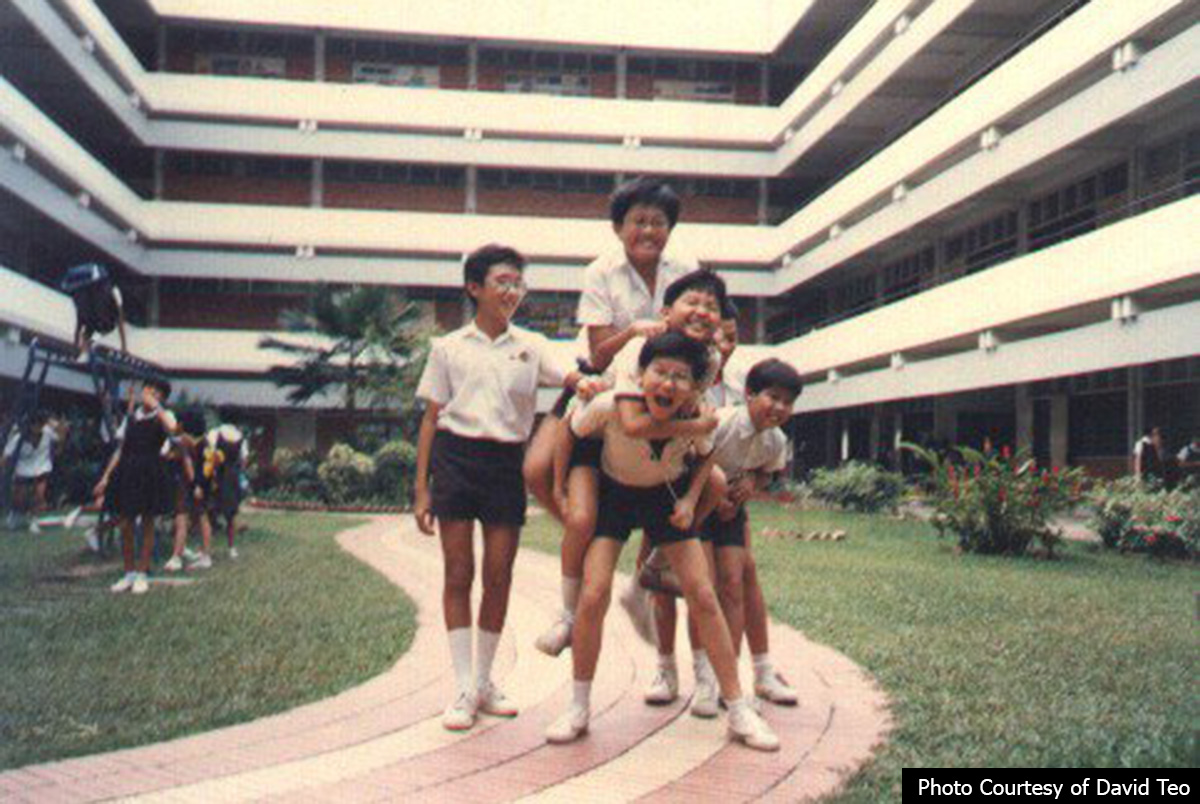
The school was the last primary school built for Ang Mo Kio residents in 1985. With the completion of the 188th school built by the government, no more new school were constructed for children in Kebun Baru constituency and the surrounding private residential estates around Yio Chu Kang and Thomson Hills.
Kebun Baru Primary School
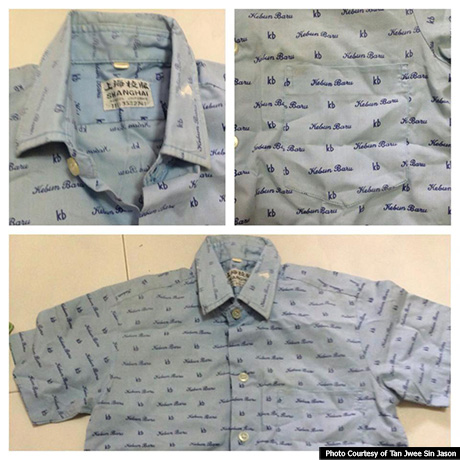
Kebun Baru Primary School uniform – so unique!
Primary 6B of 1988
It started functioning with an enrolment of 320 students in eight Primary One classes and 11 teachers and lessons were originally held at the now-defunct Li Hua Primary School.
The building is now a holding site for Anderson Primary School which is also a merged school (refer to my previous entry for its history).
Midfielder Fabian Kwok was a student of Kebun Baru Primary.
The school was built in 1980 and used to stand side-by-side at Ang Mo Kio Avenue 4 with Chong Li and Anderson Primary schools. Prior to that, it was known as Chong Boon School in Lorong Kinchir at Braddell and was there since the 1940s. Not sure why it shifted in the end but the school was given an eviction notice in 1956 by the new landlord. It wouldn’t take three decades for the school to move so I guess they eventually succeeded in preventing the notice from being enforced.
Chong Boon Primary School in 2003 (before it was demolished)
Inside the school
In the classroom of Primary 6N2 (1987)
The building has been refurbished to accommodate more students from Pathlight School.
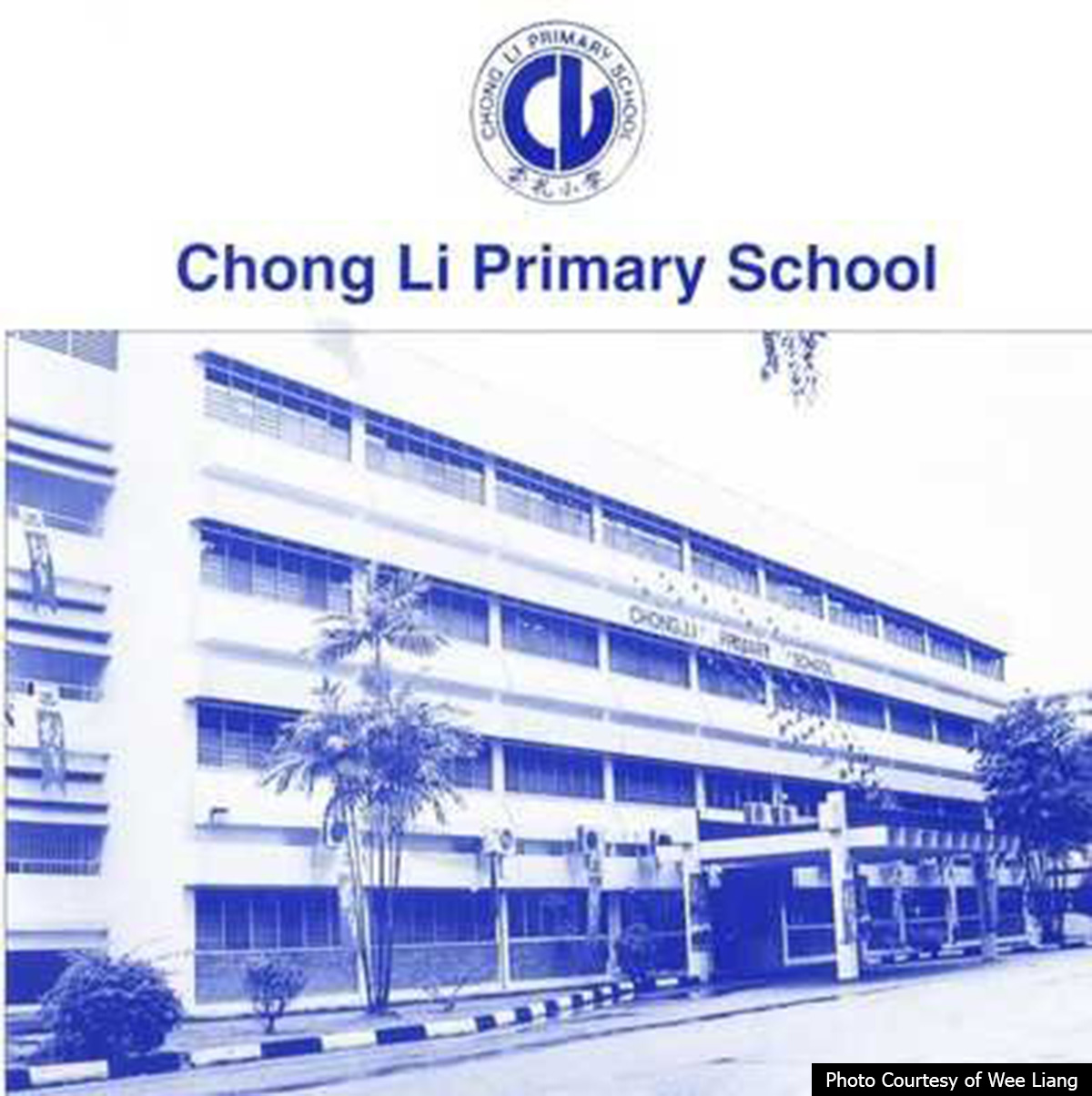
Chong Li Primary began in the late 1940s as Chong Lip Chinese School, located off Upper Thomson Road. The school catered to children living in villages that area. It became a government school later on and was officially opened again in 1983 (the school started in 1981), holding classes in the old premises of Braddell Secondary School. As its student population grew bigger, it shifted again to 4 Ang Mo Kio Street 44.
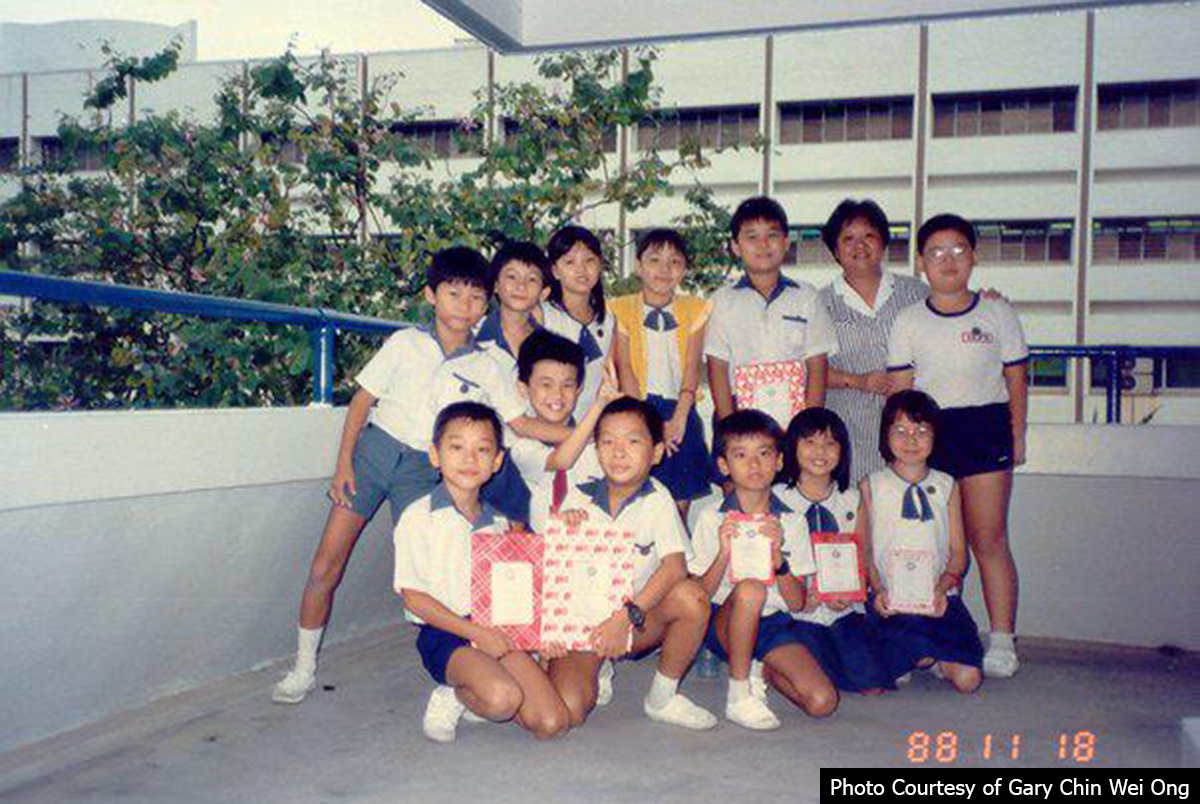
Female students from Chong Li before the 90’s would don in sleeveless blue polka dot blouse with a blue ribbon attached to the middle of collar. But it was later phased out and replaced by a shirt with sewn-on badge to resemble the boys’ attire which remained unchanged throughout the years.
The $4.28-million school was ready for occupation in 1982 but it started accepting students in 1981, who had lessons at neighbouring Ang Mo Kio North Primary and then at Chong Shan Primary School before moving to their own building. Chong De was the 12th primary school constructed in Ang Mo Kio.
Its remaining students joined Chong Shan Primary School again after its closure. Townsville Primary now sits on the former site of Chong De Primary.
And yes, I’m equally puzzled by the number of schools in Ang Mo Kio with names beginning with “Chong”. Was it a coincidence? Schools in Ang Mo Kio bearing “Chong” in its name were: Chong Boon Primary, Chong Li Primary, Chong De Primary, Chong Shan Primary and Chong Boon Secondary.
Heng A Khe Bong School (Toa Payoh)
Closed in 1993
Heng A Khe Bong School was an amalgamation between two Chinese primary schools in the vicinity of Telok Ayer. They were Heng A School (est. 1918) and Khe Bong School (est. 1920). As the schools were poorly equipped and the population around the area was diminishing, the enrolments in both schools declined steadily. Thus, the management committees of both schools launched a fund-raising project for the construction of a new school in a populated area. Both schools merged and relocated to Toa Payoh New Town in 1971. It was officially opened in 1975.
Heng A Khe Bong School
An ex-student’s impression
All boys
Primary 6A of 1986
Thanks to a donation, the school was the first primary school in Singapore to own a computer.
Founded in 1976 and officially opened in 1977, it was located at the modest town of Toa Payoh. It was situated beside an old wet market along Lorong 8, where the school’s main gate overlooked Blk 225 Toa Payoh. The school began as an integrated school comprising 38 English medium classes and 8 Chinese medium classes. The majority of the English medium students and teachers came from Whitley Primary School which closed in 1975. The other group of Chinese medium stream students were from Nam Ann Primary School which also closed in the same year.
MacRitchie Primary School
The school shared the same field as Braddell Primary School and typically, students from both schools would fight with one another.
An ex-student’s impression of the school
Dr Koh Poh Koon, a PAP candidate for Punggol East in the 2013 General Election, attended MacRitchie Primary. Other alumni include music composer and singer Azmeer, national footballer Rezal Hassan, Artist-Scriptwriter-Producer Djohan ‘Bobo’ bin Abdul Rahman and Had Adnan from rock band Rancour.
Merged into First Toa Payoh Secondary School in 2004
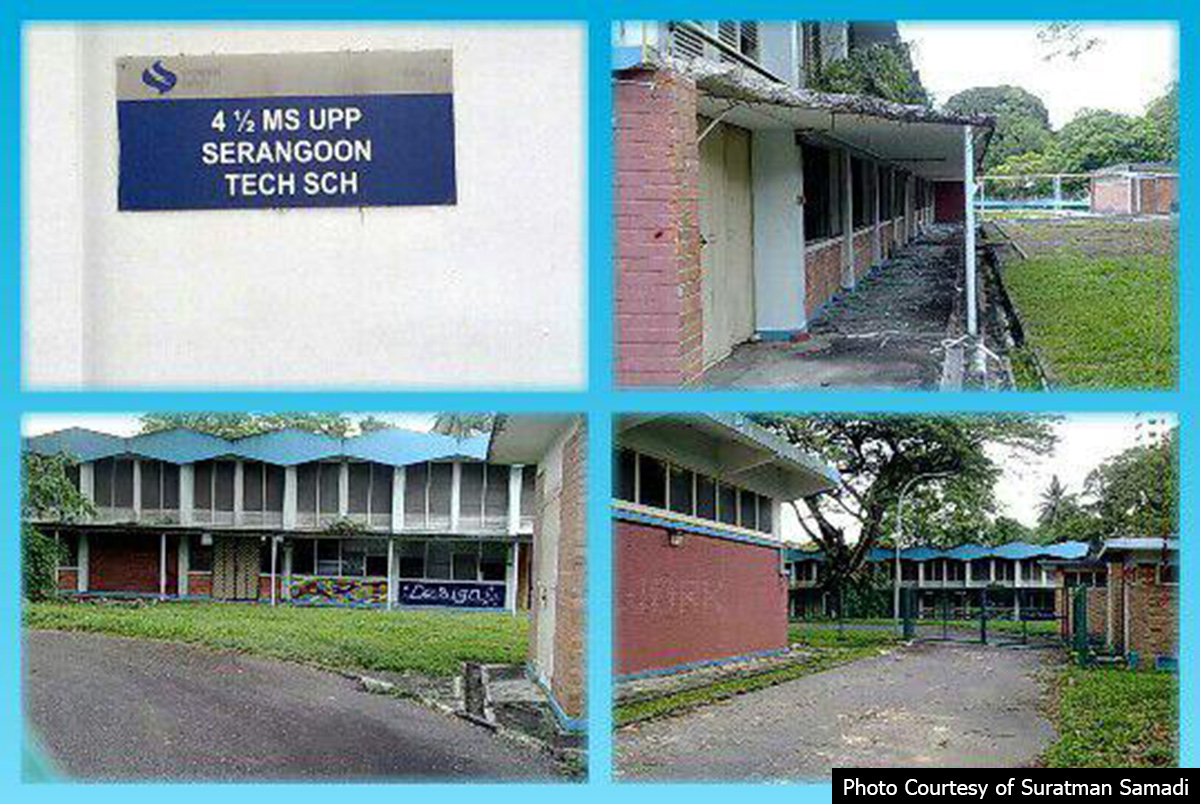
Located at 279 Upper Serangoon Road, it was previously known as Upper Serangoon Technical School (USTS). USTS officially opened in 1966 to offer technical education for the Malay-medium students. I am not sure if UTST relocated when it was renamed, but my intuition tells me that it could be.
Stamford American International School now stands on the former ground of Upper Serangoon Secondary.
Ex-students visiting their alma mater
Upper Serangoon Technical School
Upper Serangoon Secondary School
Upper Serangoon Secondary School
Yam Ah Mee (you may remember him as the one who delivered the results of the 2011 and 2013 General Elections) attended USTS.
The school was completed in 1975 and declared open in 1976 along Lorong 7 of the Kim Keat Constituency which was part of the large Toa Payoh estate. It was the 114th school built by the government. The four-storey building offered general and technical education in the English medium for both sexes.
Taken from a classroom
ECA within the school compound
East Payoh Secondary School in 1978
After it closed, its remaining students were transferred to Pei Dao Secondary School (renamed to Punggol Secondary in 2001 when it shifted from Toa Payoh to its current site at, duh, Punggol). Pei Chun Public School now occupies the land that East Payoh Secondary once stood on.
First Toa Payoh Secondary School (Toa Payoh) Bartley Secondary School (Bartley)
To merge in 2016 to form the new Bartley Secondary School
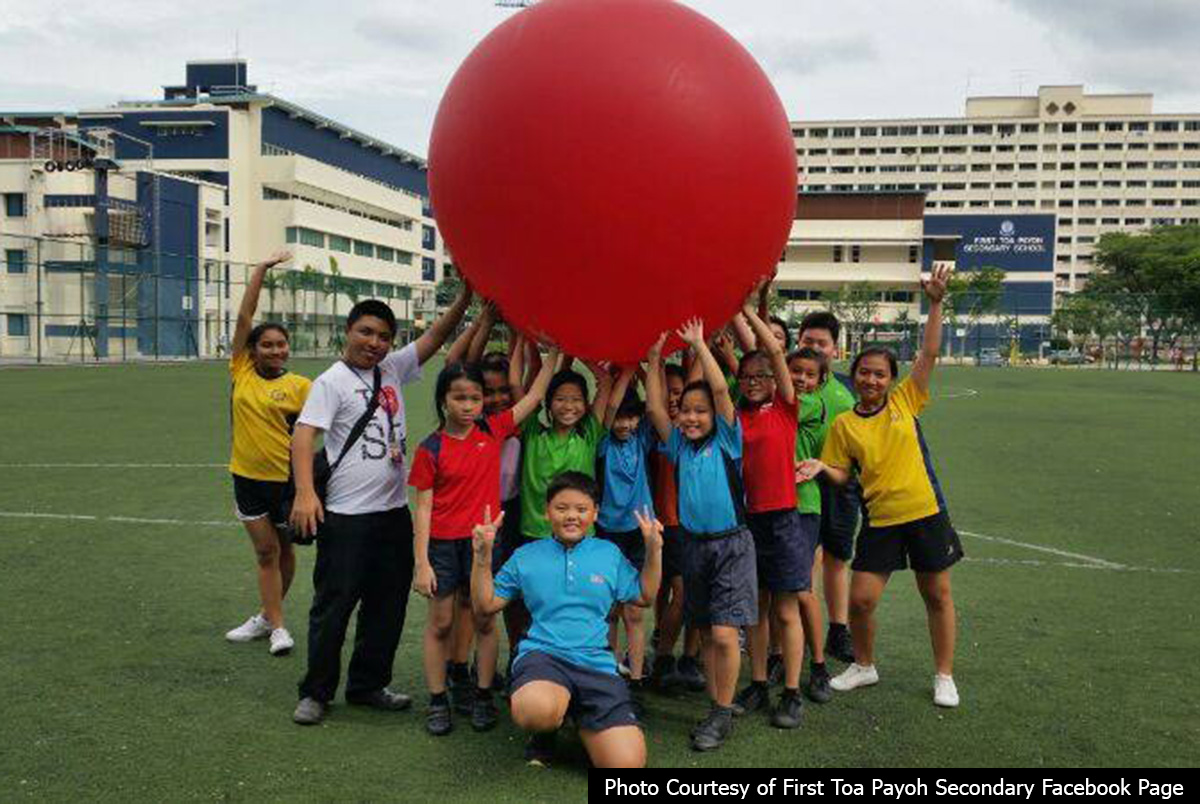
First Toa Payoh Secondary was the first secondary school built to cater to the secondary school population of Singapore’s first satellite town, Toa Payoh. Established in 1975 and officially opened in 1979, it was an integrated school offering both English and Chinese. In 2001, it merged with Thomson Secondary and Pei Dao Secondary, and Upper Serangoon Secondary in 2004. In 2003, it relocated to its new campus with better facilities.
First Toa Payoh Secondary School on Google Maps
First Toa Payoh Secondary School
First Toa Payoh Secondary School
First Toa Payoh Secondary School
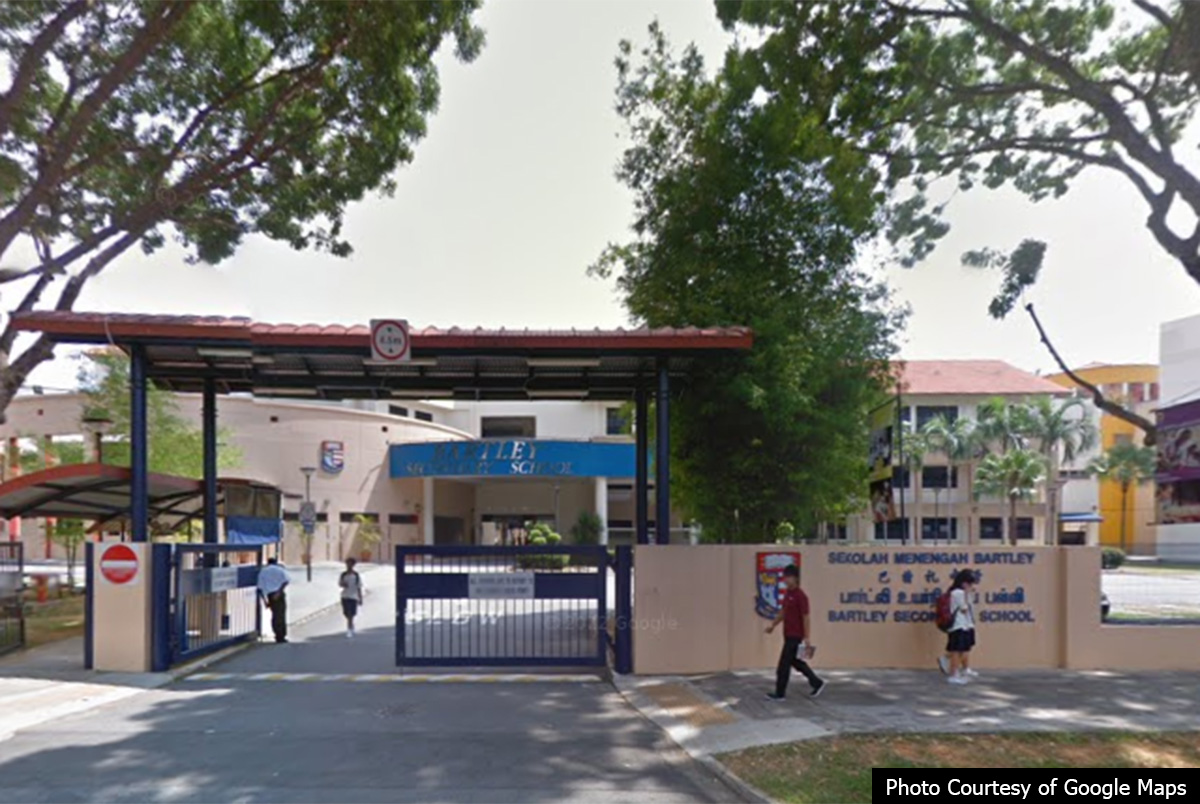
Bartley, the first co-ed secondary school in Singapore, was formed in 1952. However it became a boys’ school in the secondary section (the school had a pre-University level until 1996) when the girls were transferred to Cedar Girls’ School to form the school. It became co-ed again in 1995. It moved to a holding site (former Mount Vernon Secondary) while waiting for its present building to be completed in 1995.
Bartley Secondary School on Google Maps
Bartley Secondary School students with exchange students from Indonesia (in printed uniform)
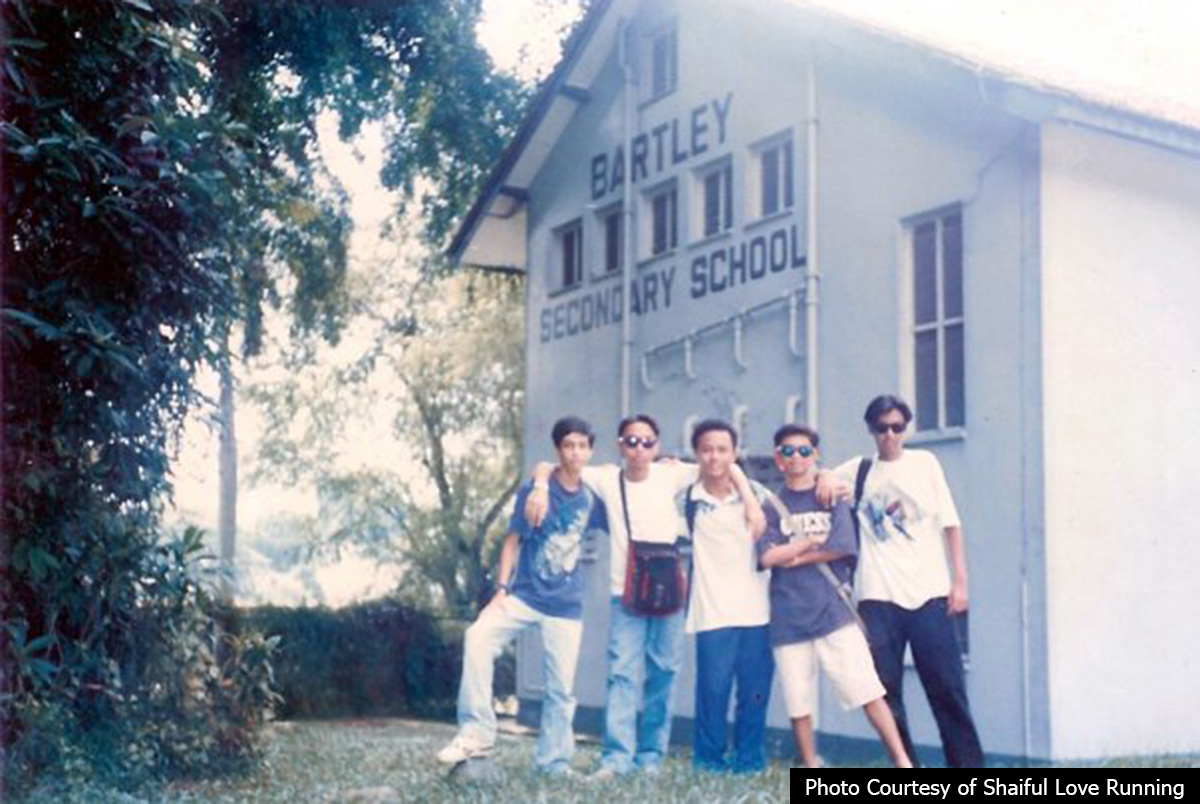
The old Bartley Sec building
Barley Secondary school hall
The merged school will function at the site of Bartley Secondary.
Established in 1965 (the year Singapore gained independence) as Kaki Bukit Secondary School, it provided education in the English and Malay media to children living in what was once a rural area of Singapore. Their school song “Sekolah Menengah Kaki Bukit” was written by Mr Zubir Said, the same person that composed our national anthem. Between 1965 and 1984, the school attained the status of a top Malay medium school with good results in the Malay medium GCE ‘O’ level examination. In addition, the school had also established a reputation for excellence in sports and games such as Sepak Takraw, football, hockey, athletics and cross country.
What an accomplished school, don’t you think? What a pity that it has to go, together with its school song that was written by a legendary person 😦
Bedok Town Secondary School on Google Maps. This was taken in the year when Bedok Town and Chai Chee merged.
Long before Bedok Town Secondary’s first merger
It also merged with Chai Chee Secondary School (previously Sennett Road Secondary) in 2011. When news of the merger broke out, both schools had an online brawl. Hopefully it won’t happen again between Bedok Town and Ping Yi!
One of the first secondary schools set up after Singapore gained independence, the school catered to the education and development needs of the children in the Hillview, Woodlands, Teck Whye and Bukit Batok areas. It was established in 1968 and declared opened in 1969. It is the 105th school built by the government.
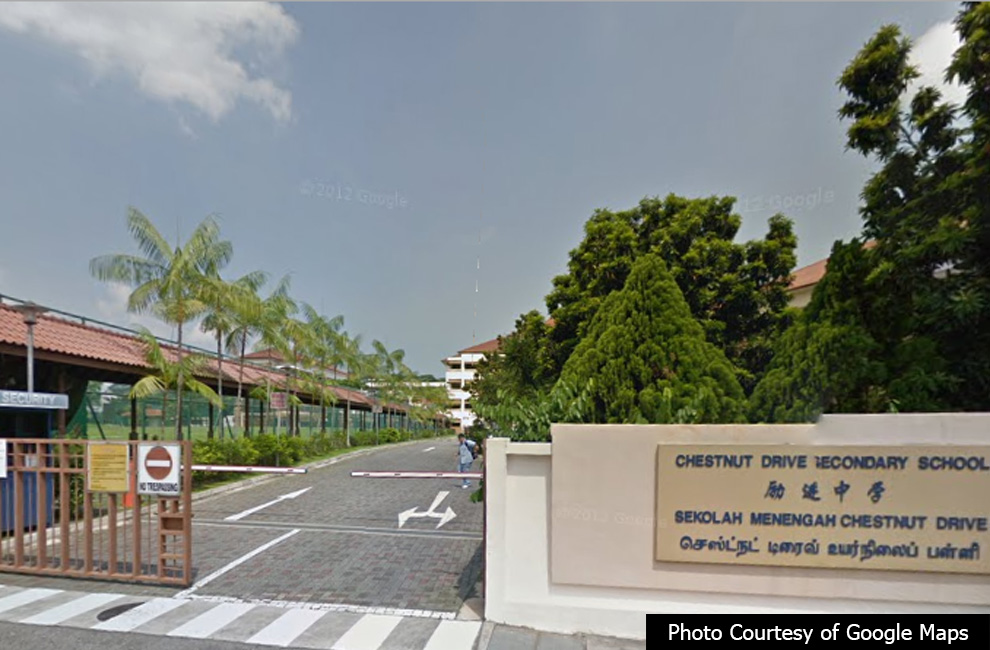
Chestnut Drive Secondary School
Chestnut Drive Secondary School on Google Maps.
Chestnut Drive Secondary School on Google Maps. The school is surrounded by private houses and greenery.
In 2005, the school was reported to be a target of an unidentified sniper with six shots fired. The latest incident damaged a windowpane on the third floor of the school. The shooting was believed to have happened during non-school hours in a duration of three months thus no one was hurt. However the police later established that there was “insufficient evidence to suggest the presence of a sniper, and that no air gun pellets or projectiles had been found at the school.” Till date, the cause of the damage to the windowpane remains a mystery.
Students from Chestnut Drive Sec wear uniform in the nicest shade of blue
Come 2016, Chestnut Drive Secondary will merge into Fajar Secondary and will operate out of the latter’s upgraded campus from 2018. In the meantime, Chestnut Drive’s compound will serve as a holding site for the newly merged school, which will also retain Chestnut Drive’s Chinese name “Li Jing”.
I came across this school while choosing my secondary schools in Primary 6 (donkey years ago) and was undoubtedly amused by its name. I’m sure many people who are not familiar with the roads in Singapore would react the same. Apparently, the place Chestnut Drive EXISTS (it’s even part of its address, duh!) and many other roads in Bukit Panjang are actually named after nuts. For example, Cashew Road, Chestnut Drive, Almond Street and Hazel(nut) Park. There are even roads that are named after fruits! Read more here. It’s super intriguing! 🙂
Thanks everyone for your warm support and contribution! I hope I have covered more schools this time around and help some of you trace back to your roots (like how I successfully did in my previous entry). Once again, due to the lengthiness of this post as well as time constraints, I can only cover this many. I will definitely be back with a third instalment (believe it or not, I have already compiled another list of closed and merged schools) but that won’t happen so soon as my new school term is commencing next Monday. It’ll probably be up in my next break in December. Meanwhile, if you enjoyed this post or if you find it useful in some ways, please feel free to share it with your peers! 🙂 Thanks for reading this record-breaking 9400-word essay!
Have a story to share about your decommissioned school? Let me know in the comments below! I may include that in my next write-up (in progress) 🙂 And as you can see, some schools mentioned above don’t come with pictures. That’s because I can’t find them online so if you have some pictures of your school, feel free to share them!
















































































































 fionaseah.com